Built for wider sightlines at busy outdoor sites
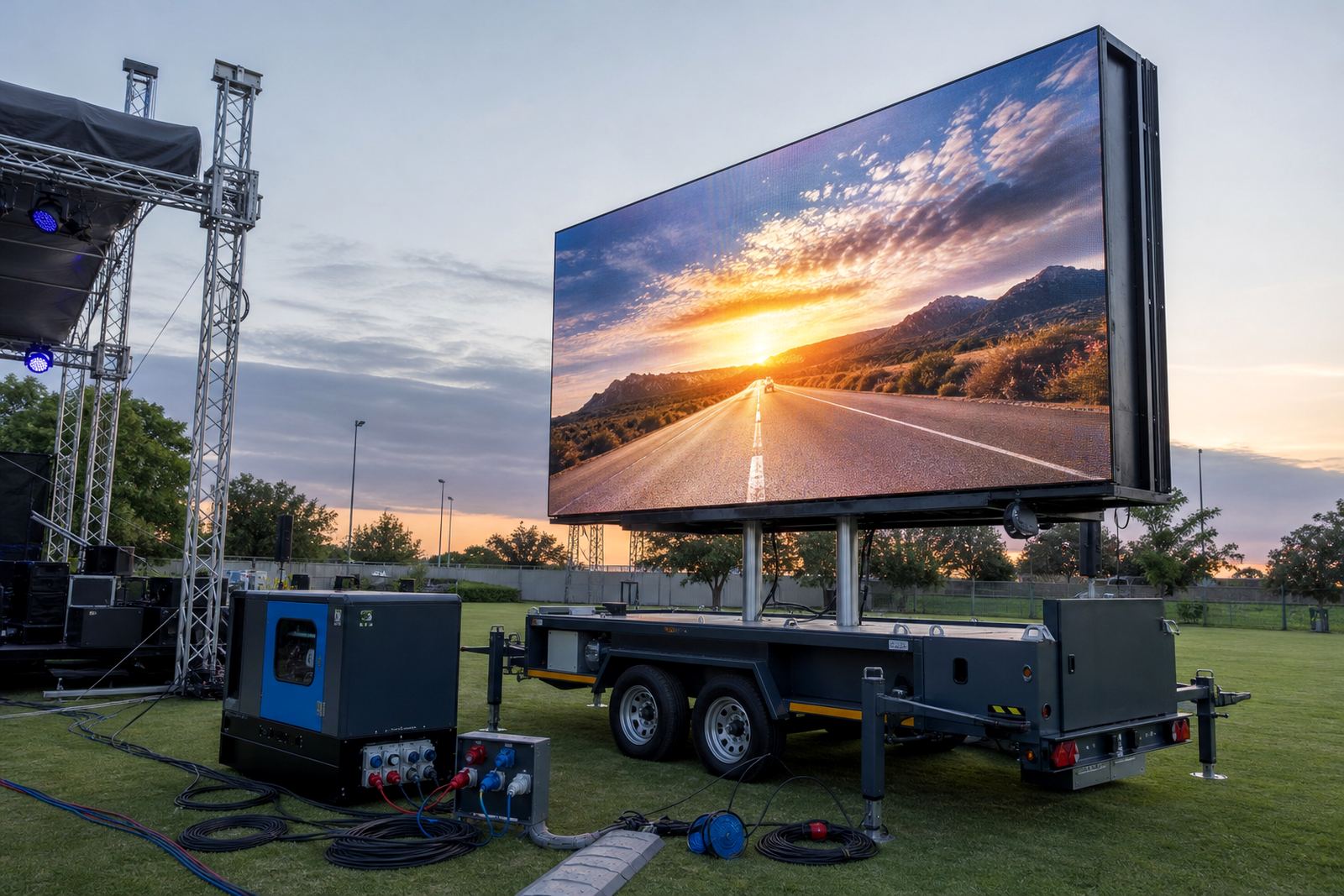
The Large LED Box is the bigger-format option in our outdoor range, used where viewers stand further back or the site opens out across a field, forecourt or roadside frontage. It is set up for clear viewing in daylight, with a high-brightness LED surface that holds colour and contrast under direct sun.
Screen size is selected around the viewing distance, site access and transport route. For larger outdoor setups, pixel pitch is usually chosen in the 4 mm to 10 mm range, depending on how close people will stand. A tighter pitch gives finer image detail, while a wider pitch suits longer-distance viewing and larger picture areas.
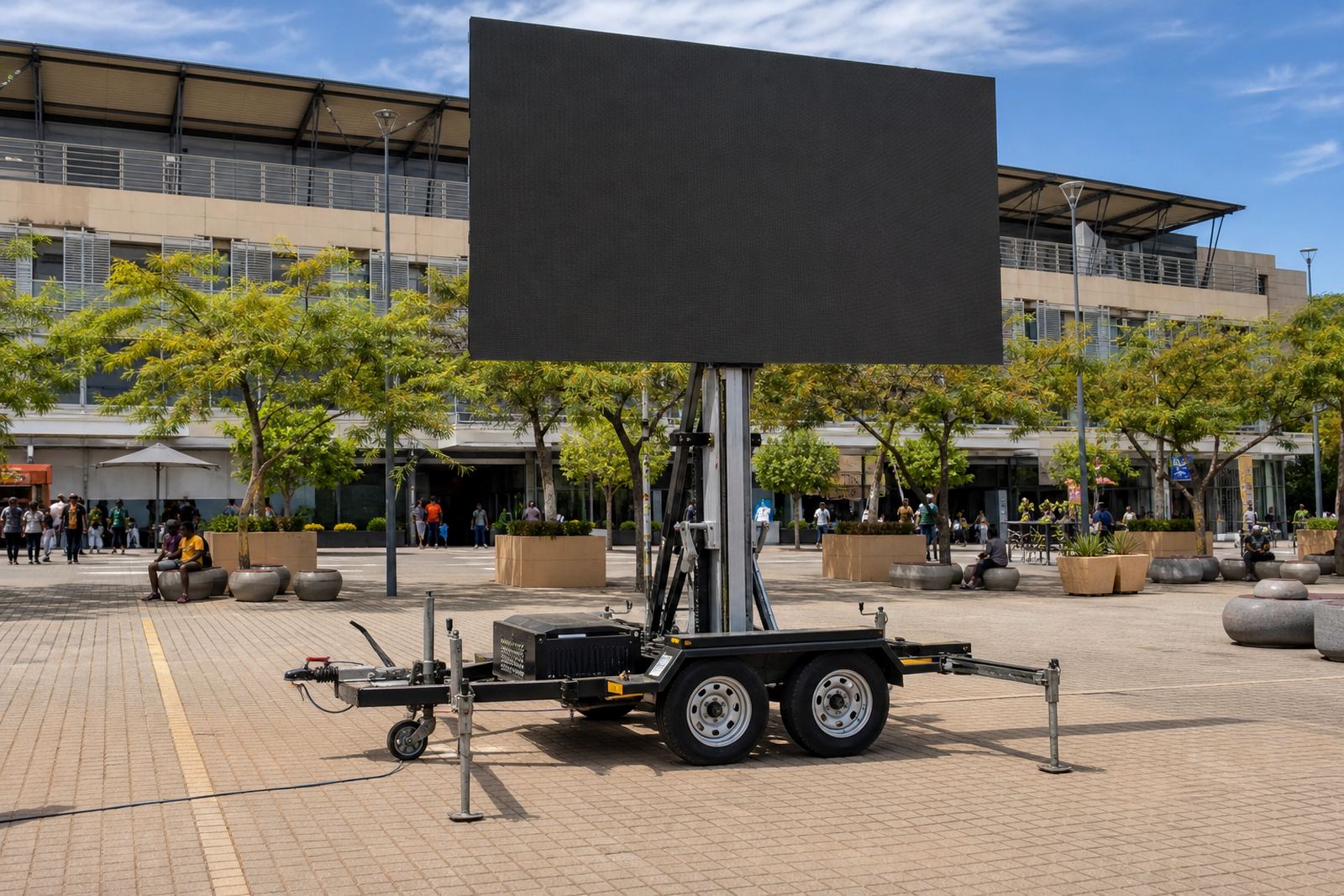
The box can be supplied as a trailer-mounted unit or as a fitted screen assembly for a fixed position. On trailer units, hydraulic lift helps raise the screen into position and the screen can rotate to suit the site line. That matters on uneven ground, or where the audience approach changes during the day.
Size choices that fit roadshows, campuses and open venues
Large LED Box setups are usually planned around the width of the display face, the trailer footprint and the space available for towing and parking. A larger unit needs enough turning room for access, plus level ground or a prepared stand area. For roadshows, the screen is often chosen for visibility from several points, not just from the front row.
We match the screen dimensions to the message and the site. A long banner-style layout works well for sponsor loops, scoreboards or event messaging. A taller format can help where the viewer line is more direct and the content has to carry video, text and logos together.
Where the site has tight entry points or mixed terrain, the setup plan needs to allow for the trailer, stabilisers, viewing angle and cable runs. This is where a site check helps, especially on municipal land, school grounds or event sites with access control and posted vehicle routes.
Power, playback and live feed work on the day
The Large LED Box can run from generator power or mains power, depending on the site and the event plan. Power choice depends on the screen size, the length of the run and whether extra kit is being used nearby. A stable supply matters because playback, brightness control and processing all rely on clean power.
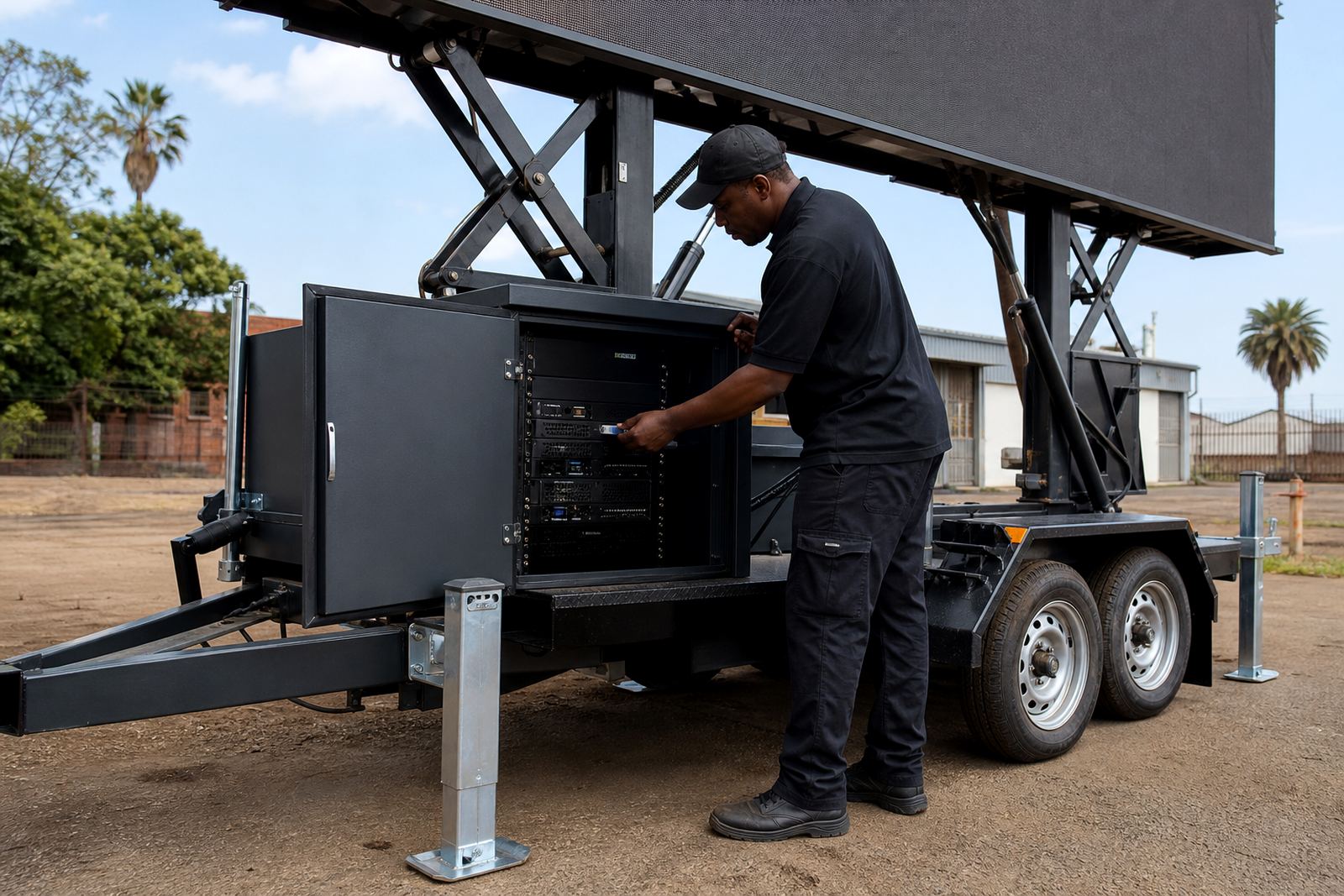
Our team handles content loading and playback management, with live feed support where the event needs cameras, score information or a presentation source. The technician on site checks input formats, cable routing and screen settings before the unit goes live. That keeps the display aligned to the programme, not just switched on and left.
For outdoor work, weather monitoring is part of the setup. Wind limits are checked before and during use, and the screen is only operated within the safe range set for the structure and site conditions. If municipal permission is needed for placement or roadside visibility, that is usually planned with the venue or local authority in advance.
Where the larger format earns its place
This product suits advertising campaigns that need strong roadside presence, sporting days with moving crowds, concerts with wide audience areas and roadshows that stop at more than one location. It also works for brand launches, municipal activations and school or community events where the screen has to carry a message across open ground.
Because the unit is built for outdoor visibility, it can be used in places where ordinary screens fall short. That includes fields, parking areas, venue entrances and public-facing sites with daylight glare. The content has to stay readable from a distance, so the copy, video and artwork need to be planned for large-screen use rather than benchtop viewing.
We also use this format for schedules with multiple stops. The trailer can be delivered, set up, run, packed down and moved on with the route already planned. That reduces wasted time on site and keeps the screen aligned to the next stop.
Fitting, cabling and ground prep before the screen goes live
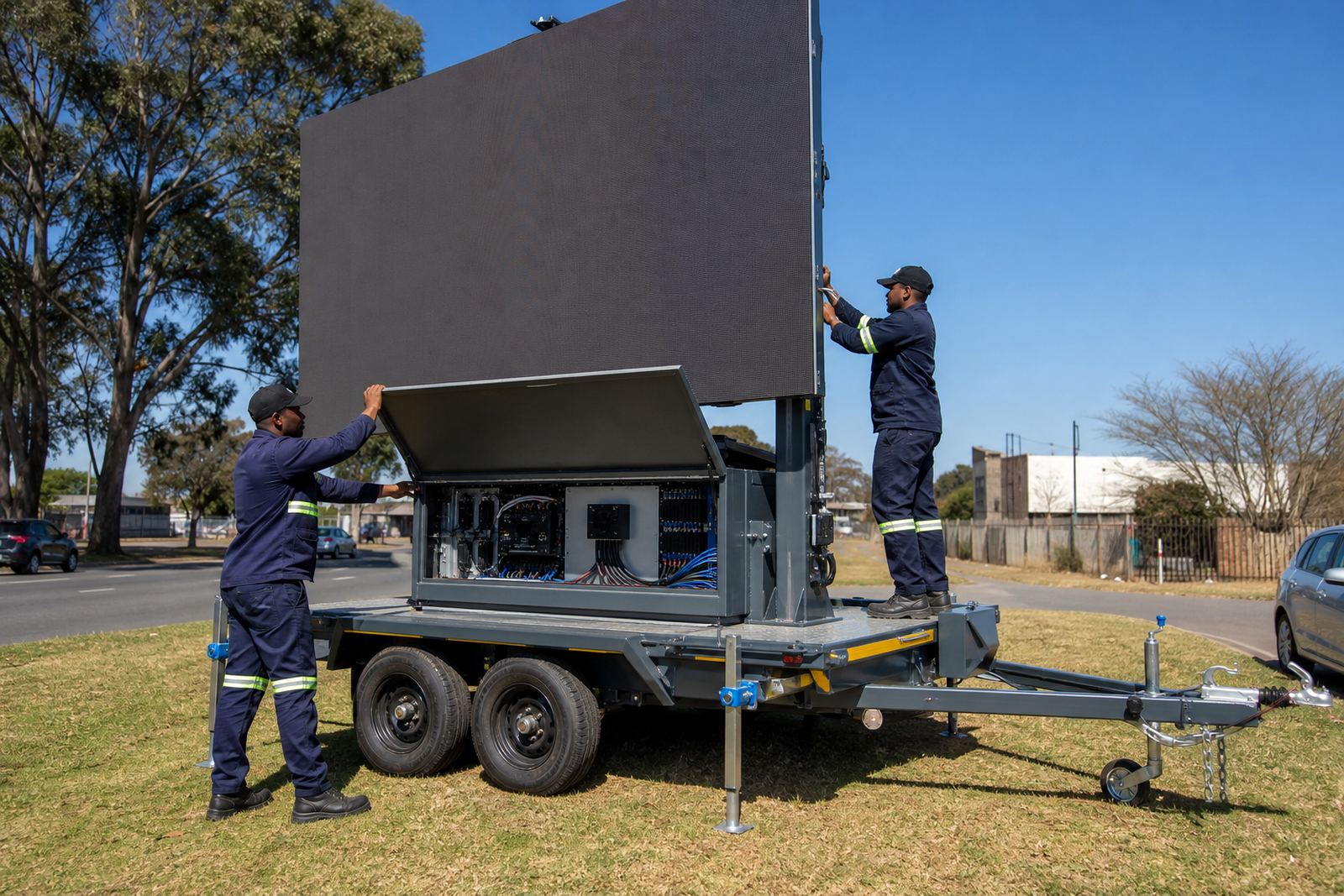
The fitting of a Large LED Box is about more than putting the trailer in place. The site has to allow safe access, enough turning room and a clear position for the audience view. If the screen is raised by hydraulic lift, the ground must be suitable for stabilising the unit and keeping the structure steady during use.
Electrical and signal cabling are laid to suit the chosen power source and the playback position. If the screen is running from mains power, the cable route must be planned around access points and protected where needed. For generator work, space for the unit, fuel handling and noise control need to be considered before setup begins.
The technician will also check the content format, aspect ratio and screen resolution before loading. A close match between the footage and the screen settings helps avoid stretched images, black bars or soft text. That matters most when the display is being used for logos, fixtures, pricing or short campaign messages.
Keeping the screen clean, bright and ready for the next stop
Outdoor LED units take dust, road grit and moisture in normal use, so the surface, connectors and trailer frame need regular inspection. After a wet or windy day, the screen should be checked for dirt build-up, loose fittings and any signs of movement on the mounting points. Coastal humidity can also leave residue on contacts and casing, especially on routes heading toward Durban.
Care also includes safe loading and transport between sites. The screen face must be protected during travel and the hydraulic parts need to be kept in working order. A clean trailer body, tidy cable storage and organised playback gear all help when the unit is moved between Germiston, Johannesburg, Pretoria, Bloemfontein, Polokwane and other South African stops.
Our service team handles pack down, delivery, setup and on-site technician support for each booking. For ordering, confirm the screen size, the site address, the viewing distance, power source, content format, access route and whether permit guidance is needed. That information helps match the product to the event without guesswork.
Key facts
| Product type | Outdoor LED screen trailer or fitted LED box |
|---|---|
| Pixel pitch | Typically selected between 4 mm and 10 mm |
| Brightness | High-brightness daylight viewing specification |
| Power options | Generator power or mains power |
| Motion and positioning | Hydraulic lift with rotation on trailer units |
| Use areas | Advertising campaigns, sports days, concerts and roadshows |