A trailer screen tied into venue power
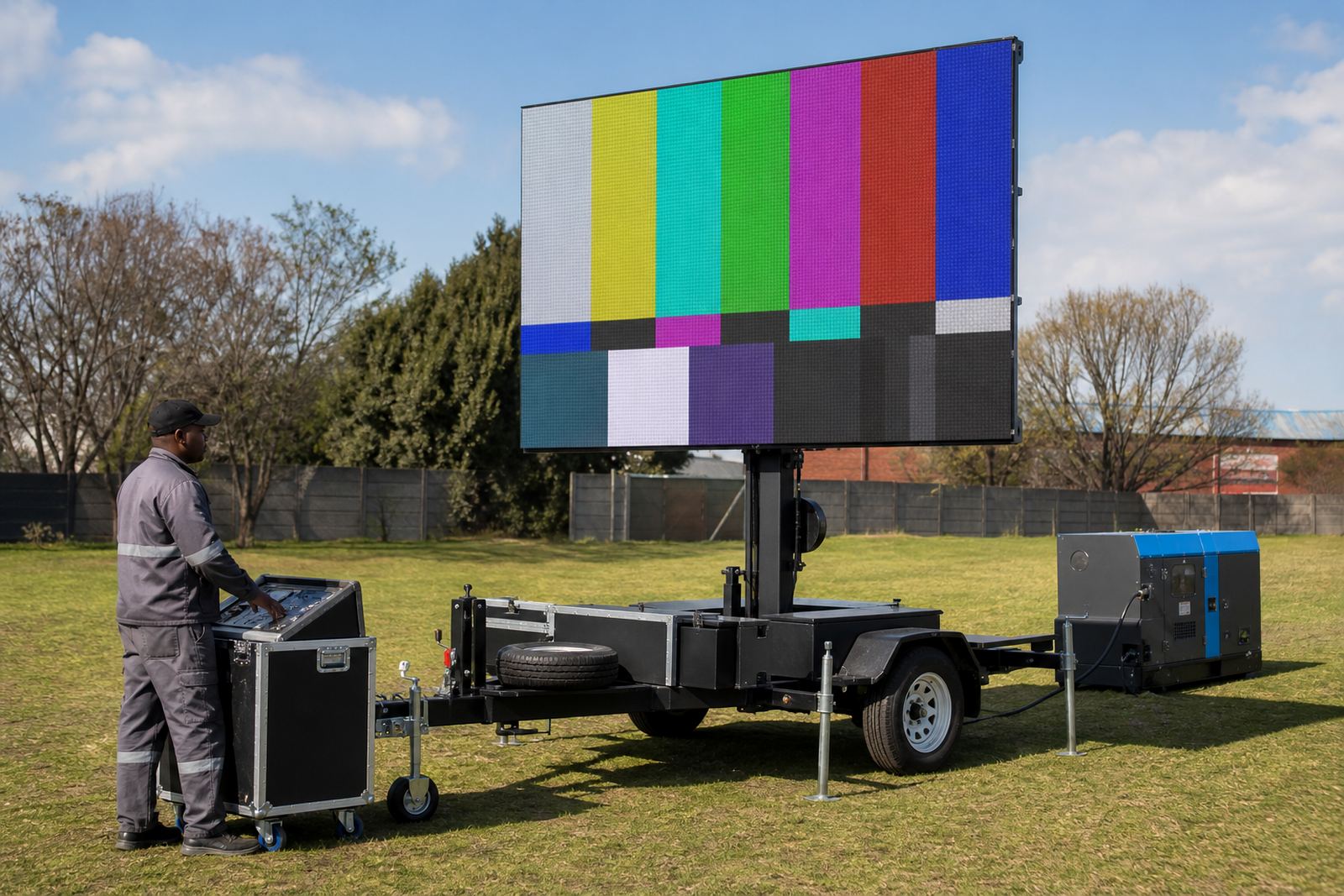
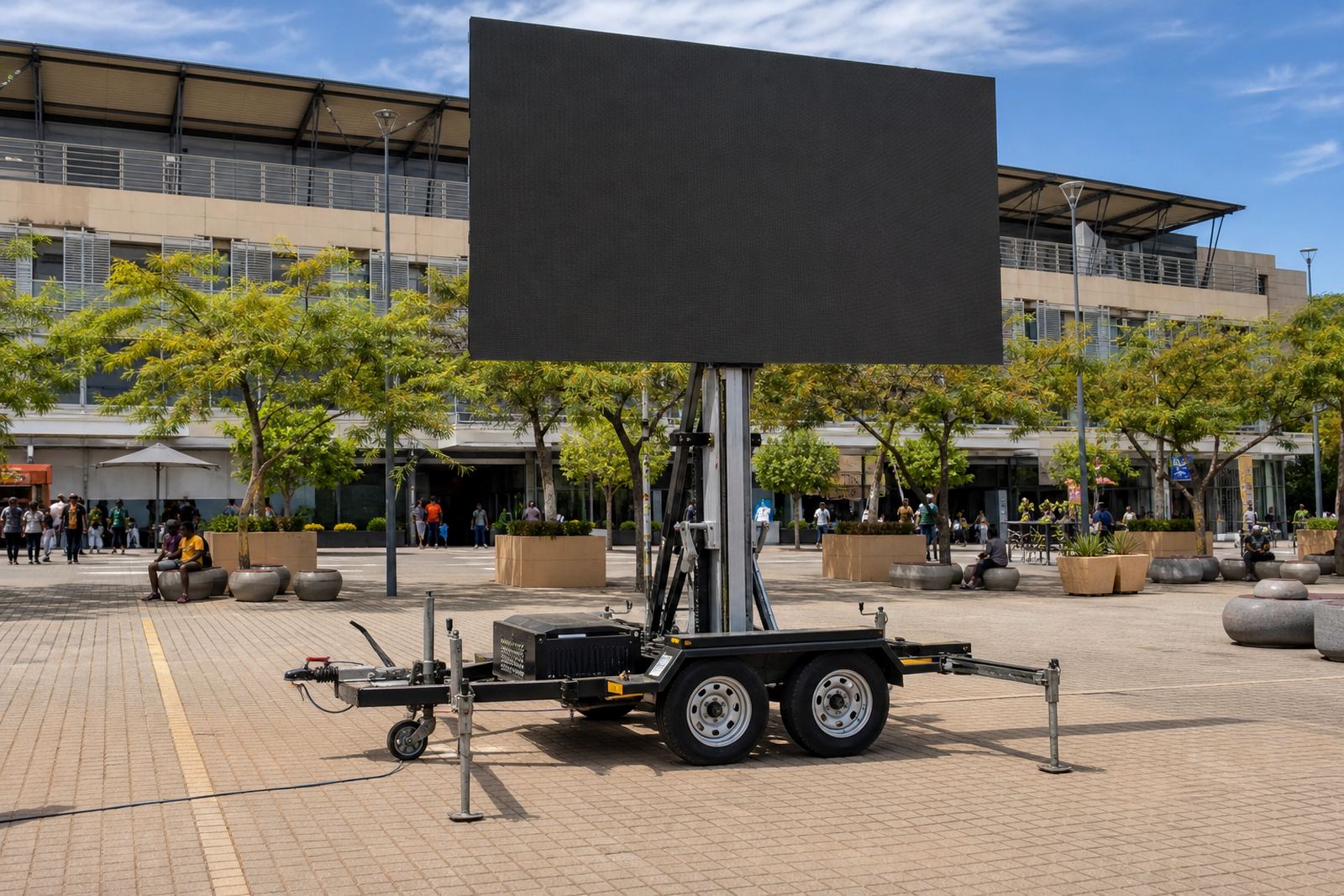
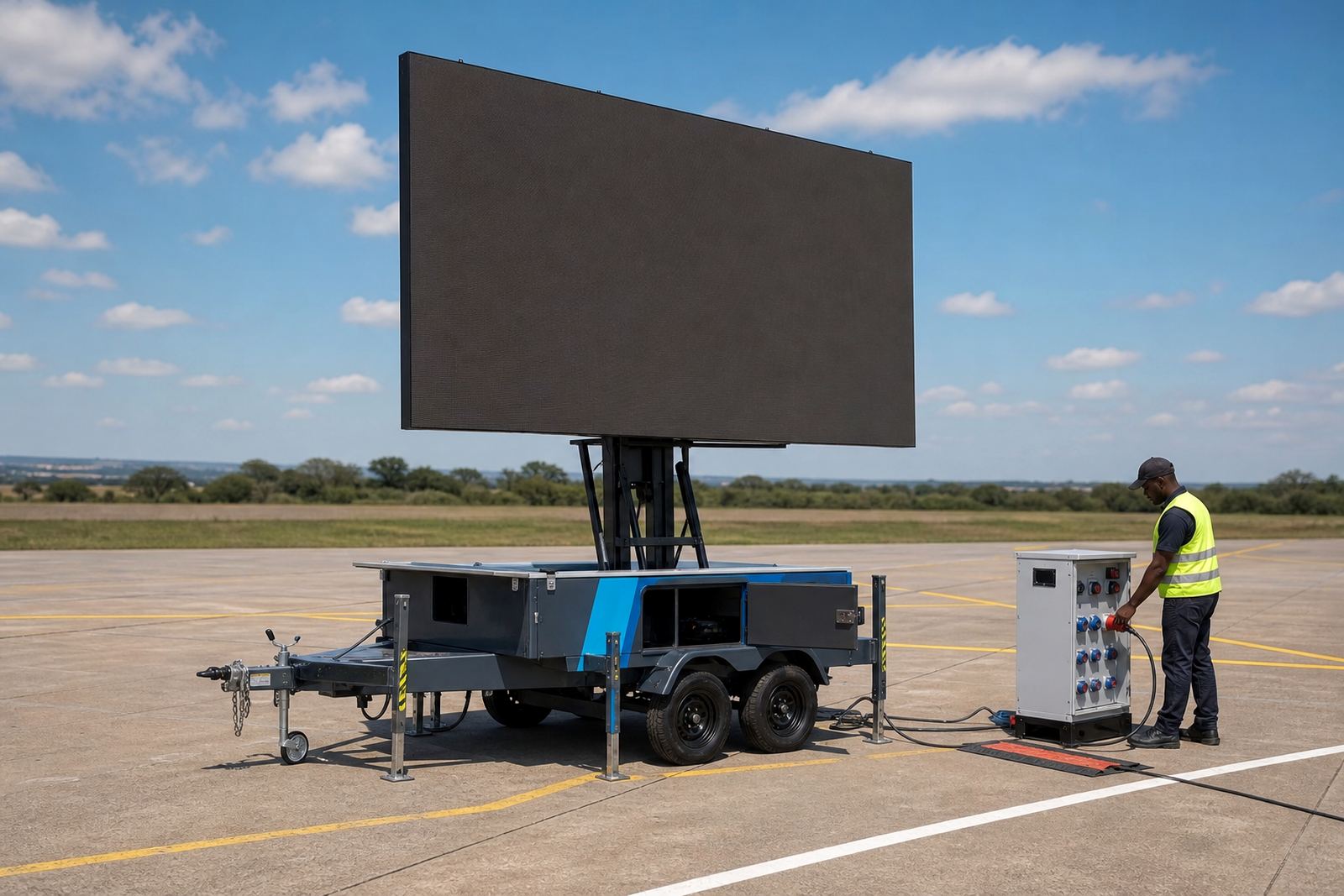
A mains powered LED screen trailer is a mobile outdoor screen unit configured to draw power from a suitable event supply, rather than carrying a generator on the trailer. That setup is useful where the venue already has a dependable electrical point, enough capacity and safe cable routing for the screen, signal equipment and control kit. The trailer carries the LED display, lifting frame, control hardware and structural support, then the screen is raised to viewing height and locked in place for the event.
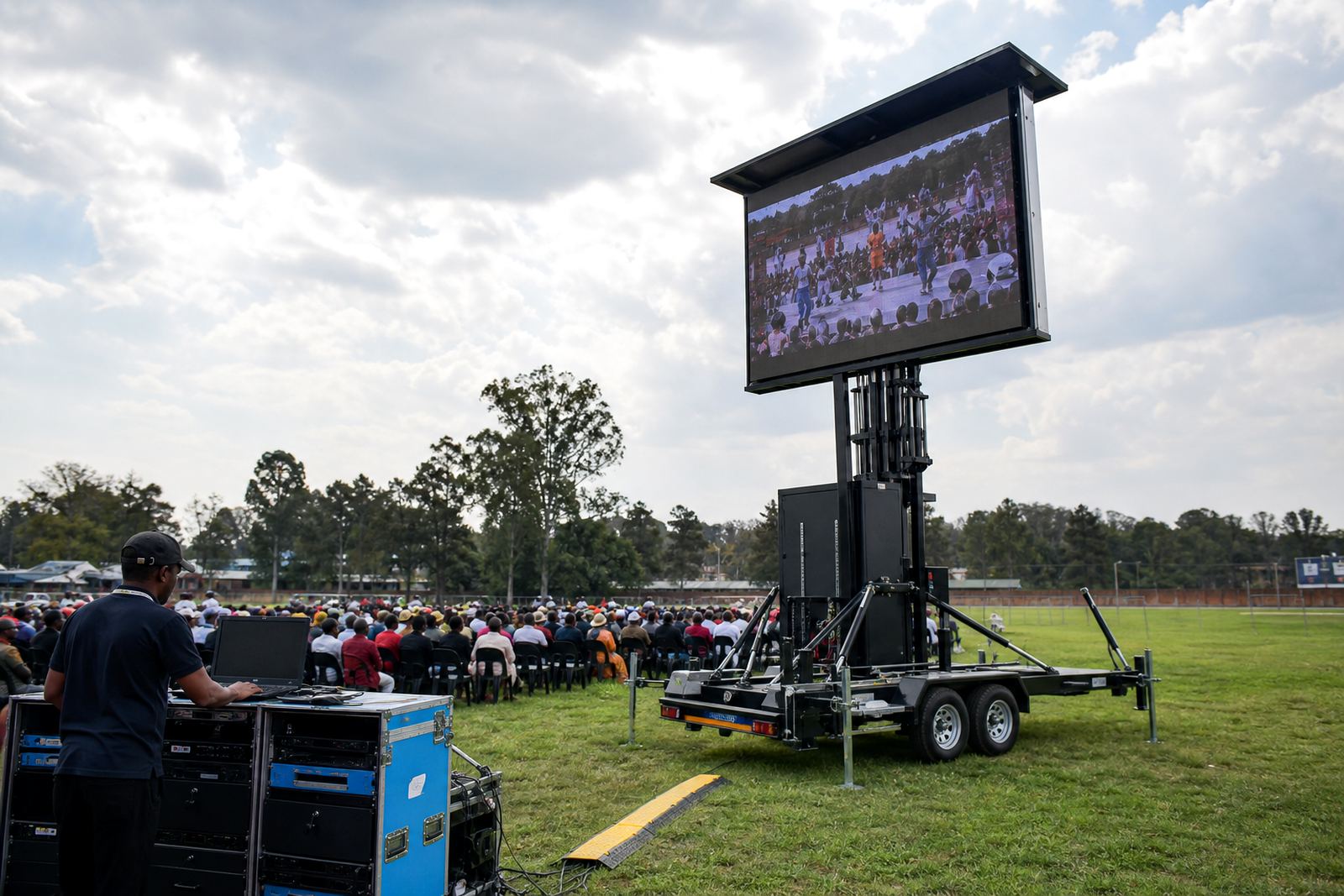
These units are used where organisers want a large outdoor display with clean cabling and a fixed power point on site. The screen can run scheduled content, live camera feed, stage graphics or sponsor loops, with content playback managed by a technician on the day. In windy conditions, the trailer must stay within the stated operating limits, with anchoring and placement planned around the site layout.
- Suitable for event power, venue supply or generator feed where required by the site
- Outdoor LED cabinet design for daylight viewing and wide audience visibility
- Trailer-mounted structure for fast positioning, lift and strike
- Playback can support looped adverts, live input and event messaging
Screen sizes, pitch and daylight visibility
Outdoor trailer screens are usually specified by overall display size and pixel pitch. Pixel pitch describes the spacing between LEDs and affects how sharp the image appears at different viewing distances. For roadshows, sports days and public events, the right pitch depends on how close the crowd will stand and whether the content includes small text, logos or moving video.
Brightness matters just as much. Outdoor screens for daytime use are typically built for high brightness so the image holds its shape in direct sun and under bright skies. A tighter pitch is useful for finer detail, while a wider pitch can suit larger viewing distances and bolder motion graphics. The screen format can be matched to portrait or landscape content, and the trailer structure may allow the display to rotate, depending on the build and event plan.
- Common outdoor sizes are planned around audience distance and site access
- Pixel pitch influences clarity, particularly for text-heavy content
- High brightness is needed for daylight and open-air viewing
- Rotation options depend on the trailer configuration and safe site clearance
Where mains power suits the job
This format works well where a venue, municipality or event site can provide a proper electrical supply close enough to the screen position. It is often used at stadium spill-out areas, public celebrations, school grounds, expo forecourts, church events, municipal functions and roadshows with a fixed operating zone. If the site has a stable supply, mains power can simplify the setup and reduce the space needed for fuel handling.
Planning still matters. Cable runs must be kept tidy and protected, and the point of supply needs to match the load on the screen and control system. In some places, the trailer sits close to an audience route, so placement has to consider sight lines, emergency access and local safety rules. Municipal permit guidance is often part of the process when the unit will stand in a public area, near a road reserve or on shared municipal ground.
- Useful where venue electricity is available and approved for event use
- Better suited to sites with controlled access and defined audience areas
- Permits may be needed for public placement, roadside use or municipal land
- Power planning should account for cable length, load and safe routing
Lift, lock and run the screen safely
Installation starts with site checks, trailer positioning and levelling before the hydraulic lift raises the screen into operating position. Once the frame is up, the technician checks locking points, signal path, power supply and content playback. If the trailer includes rotation capability, the final viewing direction is set after the site has been assessed for wind exposure, audience flow and vehicle movement.
On-site support is part of the service because the screen needs proper handling from start to finish. The technician can load content, confirm aspect ratio, switch between playlists and manage live feed input where the brief calls for it. For longer events, weather monitoring becomes part of the work, especially when wind picks up on open ground or on elevated sites around Gauteng and other inland areas.
- Hydraulic lift raises the display to operating height
- Locking points and stabilising steps are checked before playback begins
- On-site technician support covers content loading and live feed handling
- Weather and wind conditions are monitored through the event window
Care, handling and day-to-day use
Outdoor LED panels need careful handling because moisture, dust and vibration can affect performance. The screen face should stay clean and dry, and the trailer must be packed down with care after every job so connectors, cabinet edges and lifting parts remain in working condition. On coastal jobs, humidity can be a factor, so the equipment should be protected during transport and storage, especially if the unit is moving through Durban or other high-moisture areas.
A sound process also helps with image quality. The content file should be checked before loading, brightness should be matched to the light conditions, and any last-minute updates need to be tested on the actual screen format. If the job involves a multi-stop route, the playlist and playback notes should be prepared in the right order so the screen can move from one point to the next without confusion.
- Keep panels clean, dry and free from rough handling
- Check cables, locks and lifting parts during pack down
- Protect the unit from heavy rain, dust and vibration in transit
- Prepare media files in the correct aspect ratio and resolution
Details to confirm before the trailer rolls out
When ordering a mains powered trailer, the important details are the site address, display size, audience distance, viewing direction and the power point available on location. It also helps to know whether the screen will show a single loop, live camera feed, sponsor messages or a mixed programme with scheduled changes during the day. If the venue has its own access rules, those need to be shared early so the trailer can be placed without delays on site.
Other useful details include ground conditions, available turning space, preferred arrival time for the setup crew and any municipal permit requirements tied to the location. If the screen will stand in Johannesburg, Pretoria, Kempton Park, Ekurhuleni or beyond, the travel route and stop sequence should also be clear. That makes it easier to match the trailer, the technician team and the playback plan to the actual event ground.
- Site address and access details
- Screen size, pitch and orientation
- Available electrical supply and cable distance
- Content format, live feed need and playback schedule
- Permit notes, ground conditions and turning space
Key facts
| Product type | Outdoor LED screen trailer configured for mains power connection |
|---|---|
| Display style | Large-format outdoor LED screen with content playback support |
| Brightness | High-brightness daylight viewing specification |
| Pixel pitch | Selected to suit audience distance and content detail |
| Lift system | Hydraulic raise and lock trailer frame |
| Service area | Germiston, Ekurhuleni, Johannesburg, Pretoria, Durban, Bloemfontein and Polokwane |