Start With The Distance People Will Stand Back
Pixel pitch is the space between LED pixels, measured in millimetres. Smaller numbers give a finer image, which helps when people stand closer to the screen. Larger numbers suit longer viewing distances and usually cost less for a given screen size.
For outdoor trailers in Germiston, Johannesburg or Pretoria, the first question is not the trailer size. It is how far the nearest viewers will be from the screen and whether they will keep moving, as they do at roadshows or along a race route. If people are mostly 5 to 10 metres away, a finer pitch makes sense. If the crowd is 15 metres away or more, a mid-range pitch can work well.
- Closer viewing needs finer detail.
- Longer viewing allows a larger pixel gap.
- Moving crowds need strong contrast and clear motion.
- Static messages can use a coarser pitch than video-heavy content.
Match The Pitch To The Content You Plan To Play
Text slides, sponsor boards and live score updates need cleaner edges than a simple looping video. Fine print becomes harder to read as the pitch opens up. If the screen will carry logos, schedules, presenter names or directional signs, keep the pitch tight enough for those details to stay legible at the expected distance.
For concerts, sports days and public viewing, motion content often matters more than small text. In that case, a balanced outdoor pitch can be more practical than chasing the finest option available. The file quality also matters. A sharp source file, correct scaling and proper playback settings all help the image look better on the day.
- Text and graphics need stronger clarity than full motion video.
- Live feeds ask for stable playback and proper input handling.
- Simple brand loops can tolerate a wider pitch than fine copy.
- Low resolution files will look rough on any outdoor screen.
Brightness, Sunlight And South African Daylight
Outdoor LED screens need high brightness to stand up to direct sun. A screen that looks fine in shade can wash out badly at noon on an open site. Brightness matters most where the trailer faces north light, open veld, or a wide municipal square with no cover nearby.
Brightness is not the only factor, though. Screen angle, content contrast and the placement of dark backgrounds all affect readability. White text on deep colour often performs better outdoors than pale text on a bright background. For Kempton Park and other open suburban sites, a technician should check the viewing angle before the first playback file goes live.
- Daylight asks for high brightness and strong contrast.
- Dark backgrounds often read better outdoors.
- Glare can reduce visibility even on a bright screen.
- Angle and placement matter as much as raw output.
Trailer Features That Change The Viewing Result
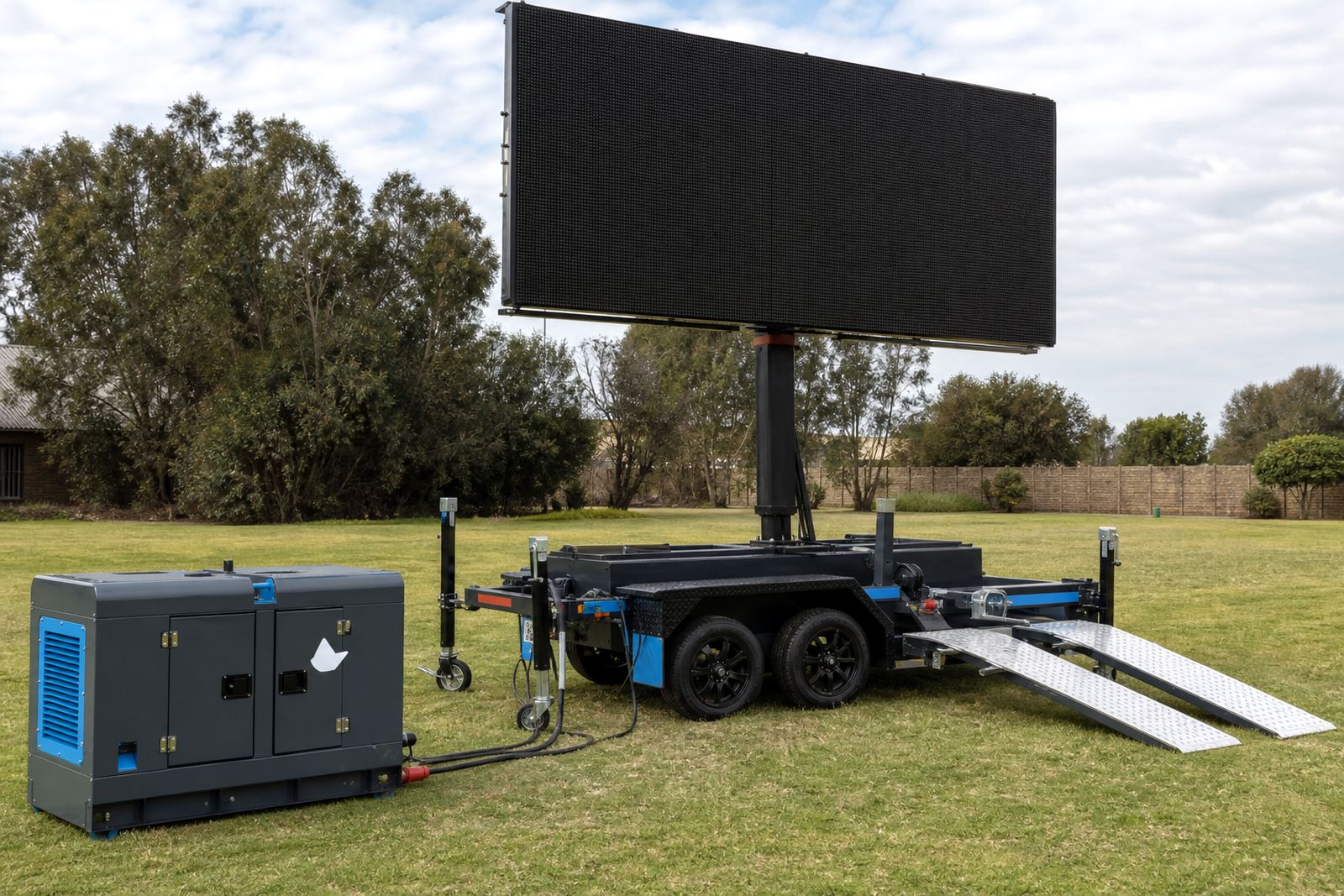
An outdoor LED screen trailer is more than a panel on wheels. Hydraulic lifting lets the screen rise to a useful height, and rotation helps position it for a street, parking area or field edge. Those adjustments can change how far the audience sits from the image and how evenly the crowd sees the screen.
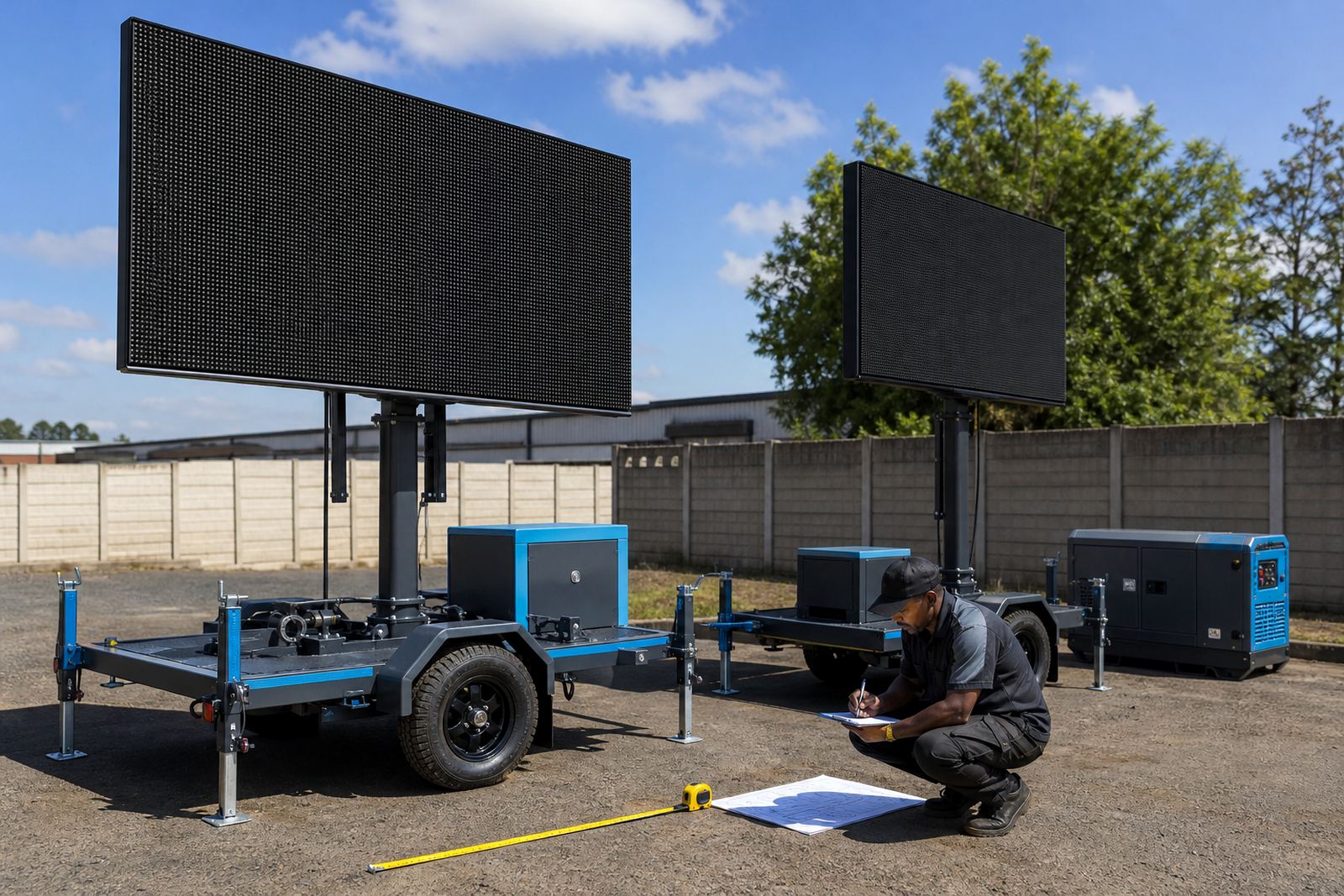
Power planning also changes the job. Some sites run from a generator on the trailer, while others use mains power when the venue allows it. A technician will also look at wind conditions, ground level, cable paths and any municipal permit needs that may apply to public space or roadside placement. Those checks help keep the trailer steady and the site compliant in general terms.
- Hydraulic lift changes screen height for better sightlines.
- Rotation helps face the strongest viewing zone.
- Generator or mains power depends on the venue setup.
- Wind limits and permit needs must be checked on site.
A Simple Way To Narrow The Right Pitch Range
Use three questions before you settle on a pitch. What distance will the nearest viewers be from the screen? Will the screen show mostly video, or does it need to carry text and logos? Will the trailer face bright daylight, late-afternoon sun or a shaded area?
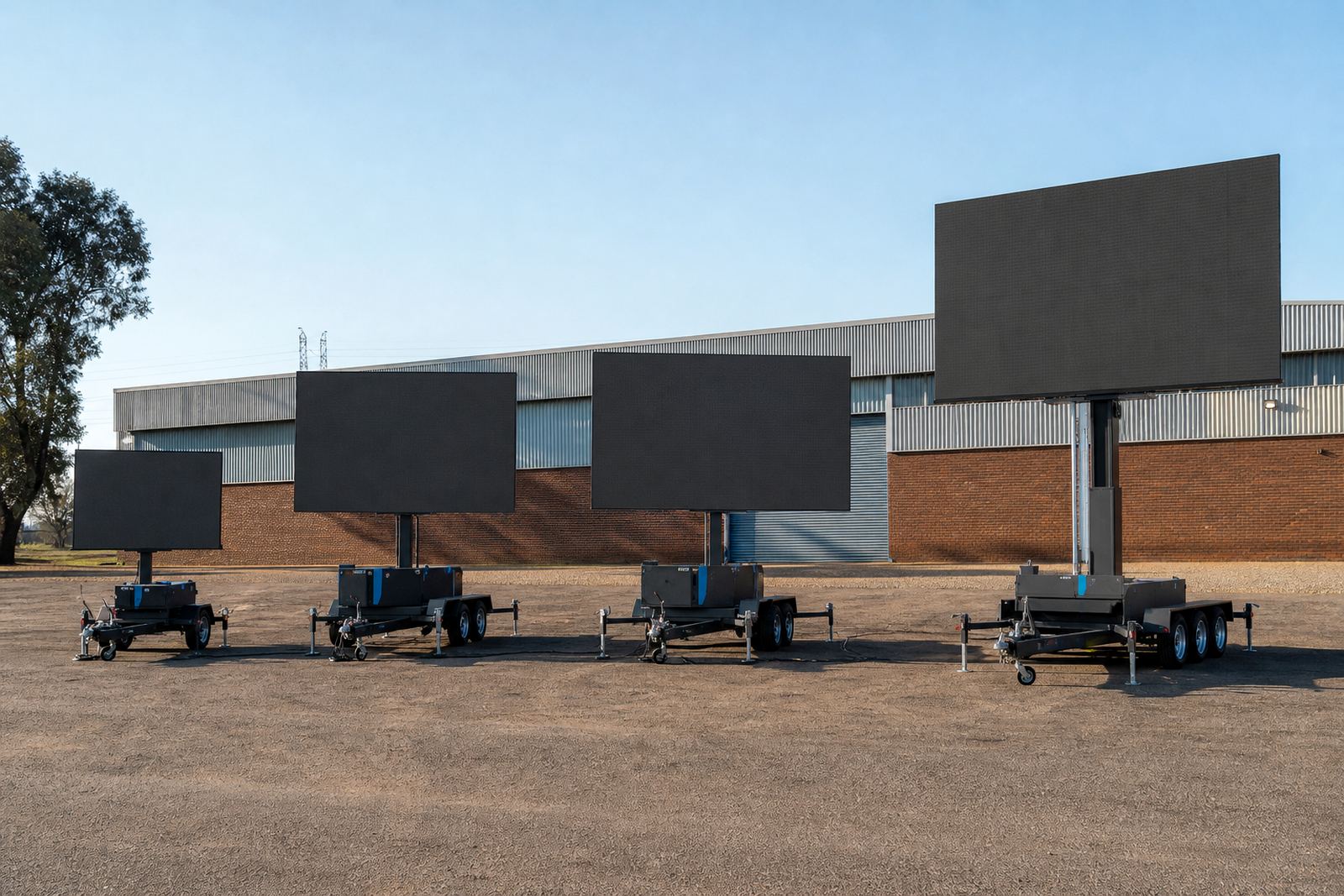
If your answers lean toward close viewing, detailed content and full sun, move to a finer outdoor pitch. If the audience is further away and the message is mostly moving video, a wider pitch may do the job properly. That balance matters for roadshows across South Africa, where one site might be a tight urban forecourt and the next a broad open field in Bloemfontein or Polokwane.
- Close viewers plus text call for finer pitch.
- Far viewers plus video allow a wider pitch.
- Sunlight pushes you toward stronger brightness.
- Changing sites need a plan that can travel.
What Our On-Site Team Checks Before Playback Starts
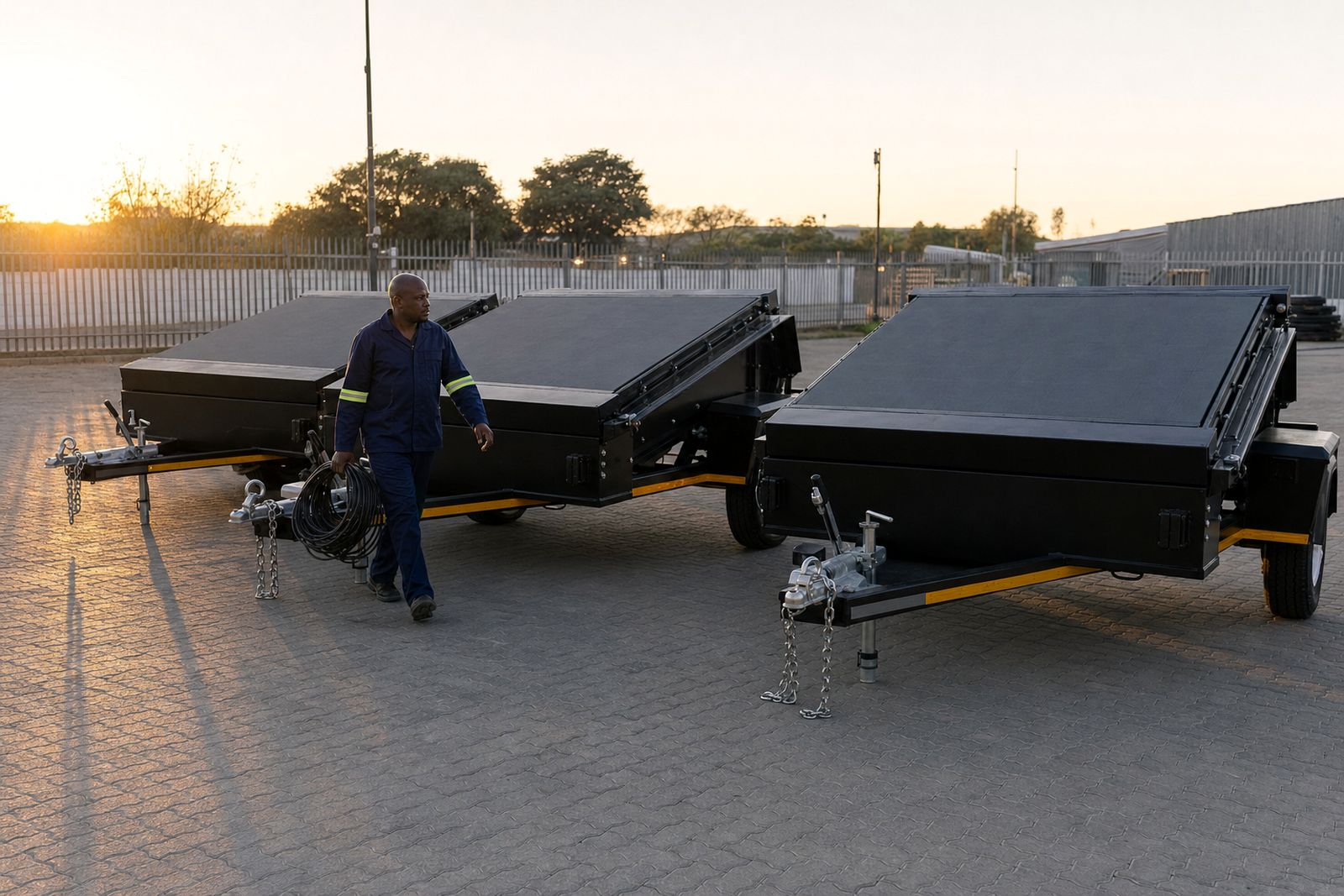
Once the trailer is in position, the work moves to setup and content loading. The screen technician checks the image size, scaling, playback order and live feed inputs where needed. The logistics side covers delivery, pack down and any multi-stop route, while the operations team keeps the day moving in the right sequence.
A practical pre-show check is worth doing every time. It helps catch awkward file ratios, missing sound links, wrong brightness settings or an image that reads too small at distance. For advertisers and event organisers in Germiston, Johannesburg, Durban, Bloemfontein and Pretoria, that extra checking keeps the screen useful instead of merely bright.
- Confirm content format before loading files.
- Check visibility from the furthest viewing point.
- Set brightness for the actual daylight level.
- Test live feed inputs before the crowd arrives.
- Review cable routes, ground conditions and wind exposure.
When A Shorter Checklist Saves Time On Site
When you compare trailer options, stay practical in your choice. The best pitch is the one that suits the people in front of the screen, the content on the day and the conditions around the site. A finer screen is not automatically better if the audience is far away. A coarser screen is not a problem if the message is built for distance.
For outdoor advertising campaigns, sports days, concerts and roadshows, the right pitch sits where image quality, viewing range and budget meet. That is the point where the screen does its job without drawing attention to itself for the wrong reasons. In the field, that balance matters more than any spec sheet headline.
- Distance first, then content style.
- Brightness matters more in open daylight.
- Trailer position changes sightlines and readability.
- Site checks help avoid poor placement choices.