Let the screen load guide the choice, not the generator size
Outdoor LED screens are normally rated by average and peak power draw, and the pixel pitch changes what that draw looks like in practice. A fine pitch panel, such as 2.9 mm or 3.9 mm, can need more power than a coarser pitch unit of the same physical size, especially when the content is bright and busy.
For daylight viewing, brightness is usually set high, often around 5,000 nits or more, so the system must cope with full output during the brightest part of the day. A generator that is too small will show up as voltage drop, shaky playback, or shutdowns when the screen draws harder under load.
- Measure the total screen area in square metres.
- Confirm the panel pitch and maximum brightness setting.
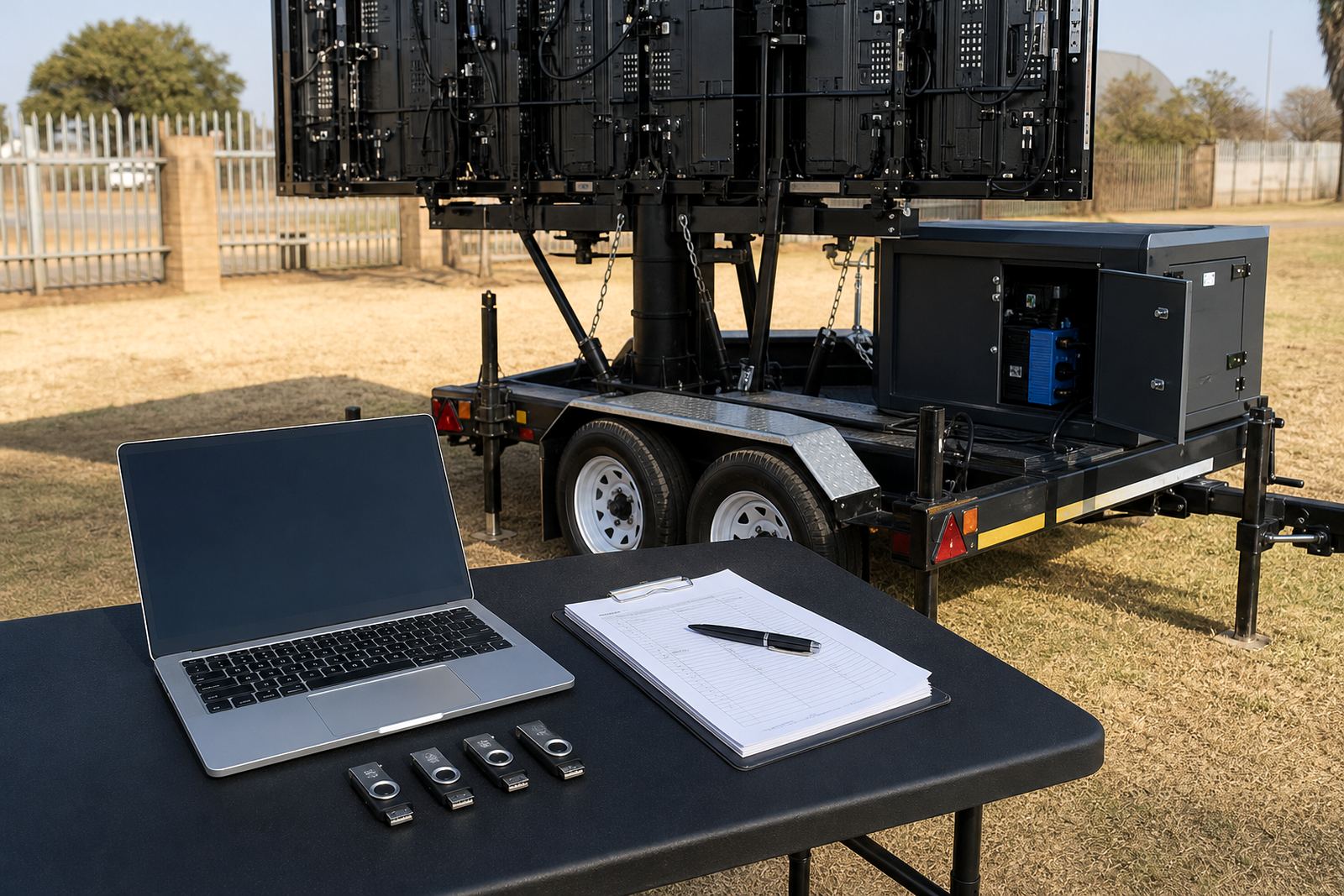
- Include processors, routers, audio gear and any live feed kit.
- Leave headroom for starting surges and uneven content loads.
Trailer screens need power for more than the pixels
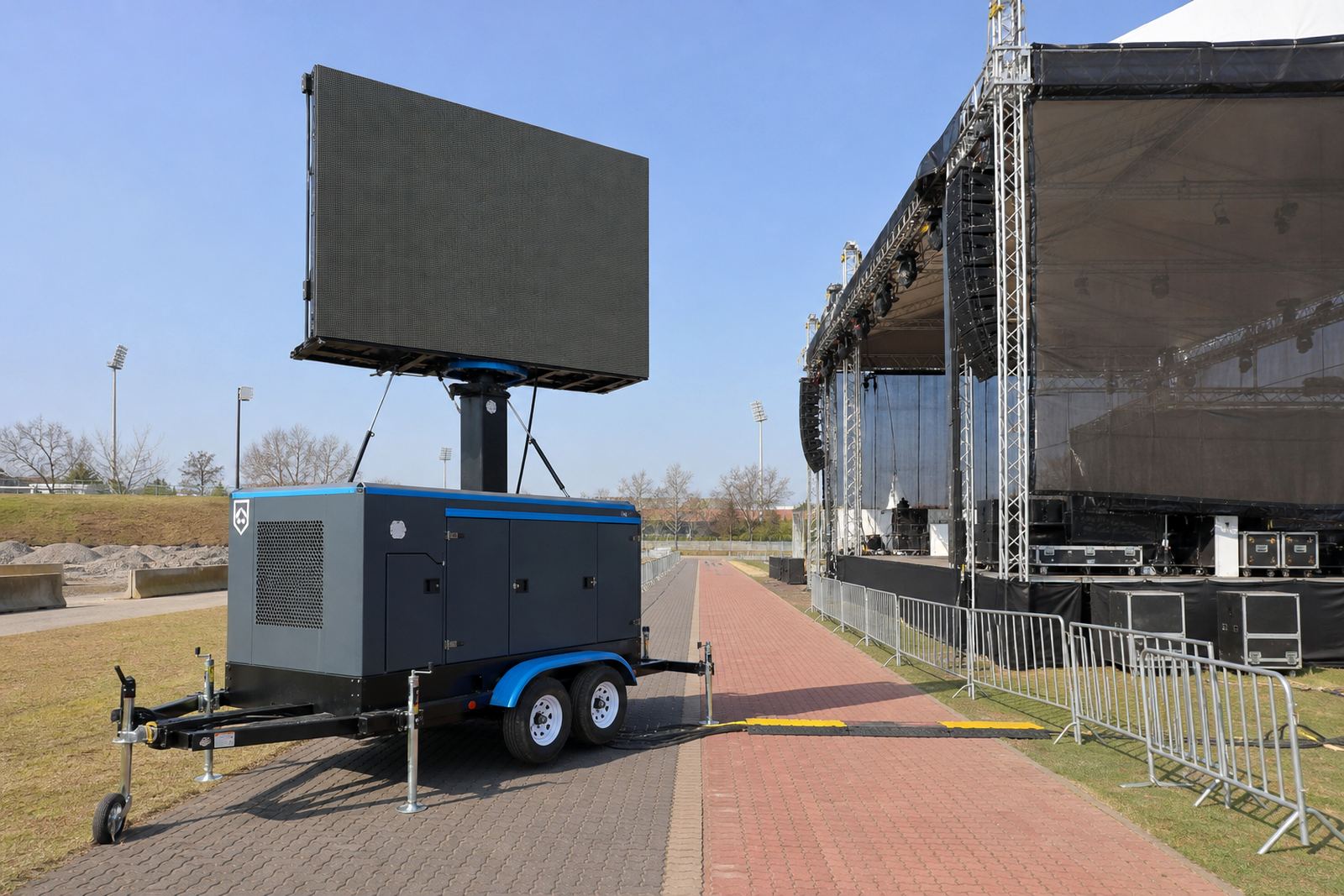
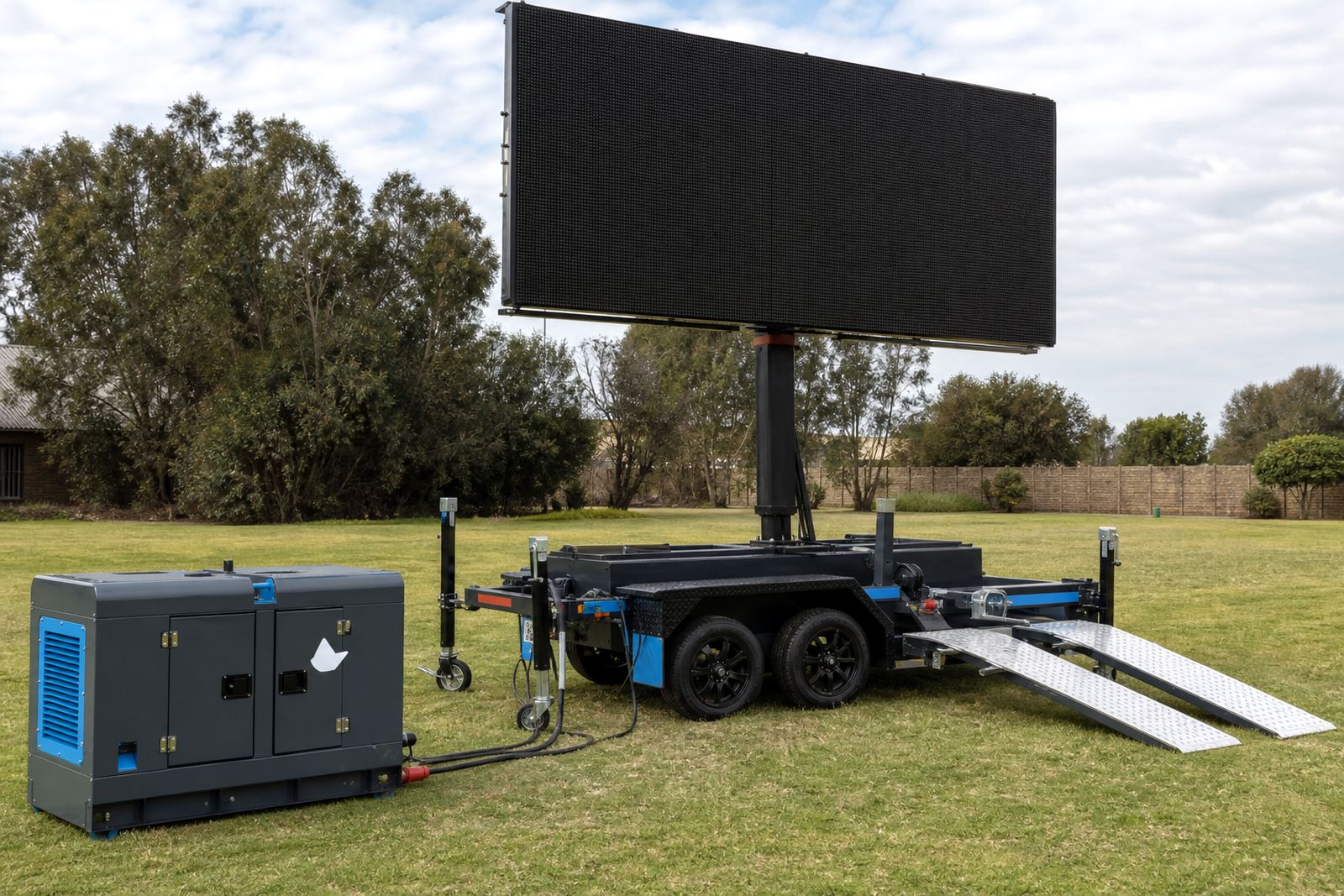
An LED trailer is not only a display. It may include a hydraulic lift, rotation system, stabilisers, control hardware and sometimes internal lighting or monitoring gear. The generator must support the whole trailer package, not just the visible screen.
Hydraulic lift and rotation are useful on roadshows and sports days where sightlines change from one stop to the next. If the trailer is moving between sites, the power plan should also consider battery support for safe shutdown, control reset and content handling while the unit is parked or being prepared.
- Check whether the trailer uses mains power, generator power or both.
- Allow for the lift cycle and the rotation function during setup.
- Confirm if the screen remains live during repositioning or pack down.
- Ask about any accessory boards or playback racks inside the unit.
A practical sizing check for South African sites
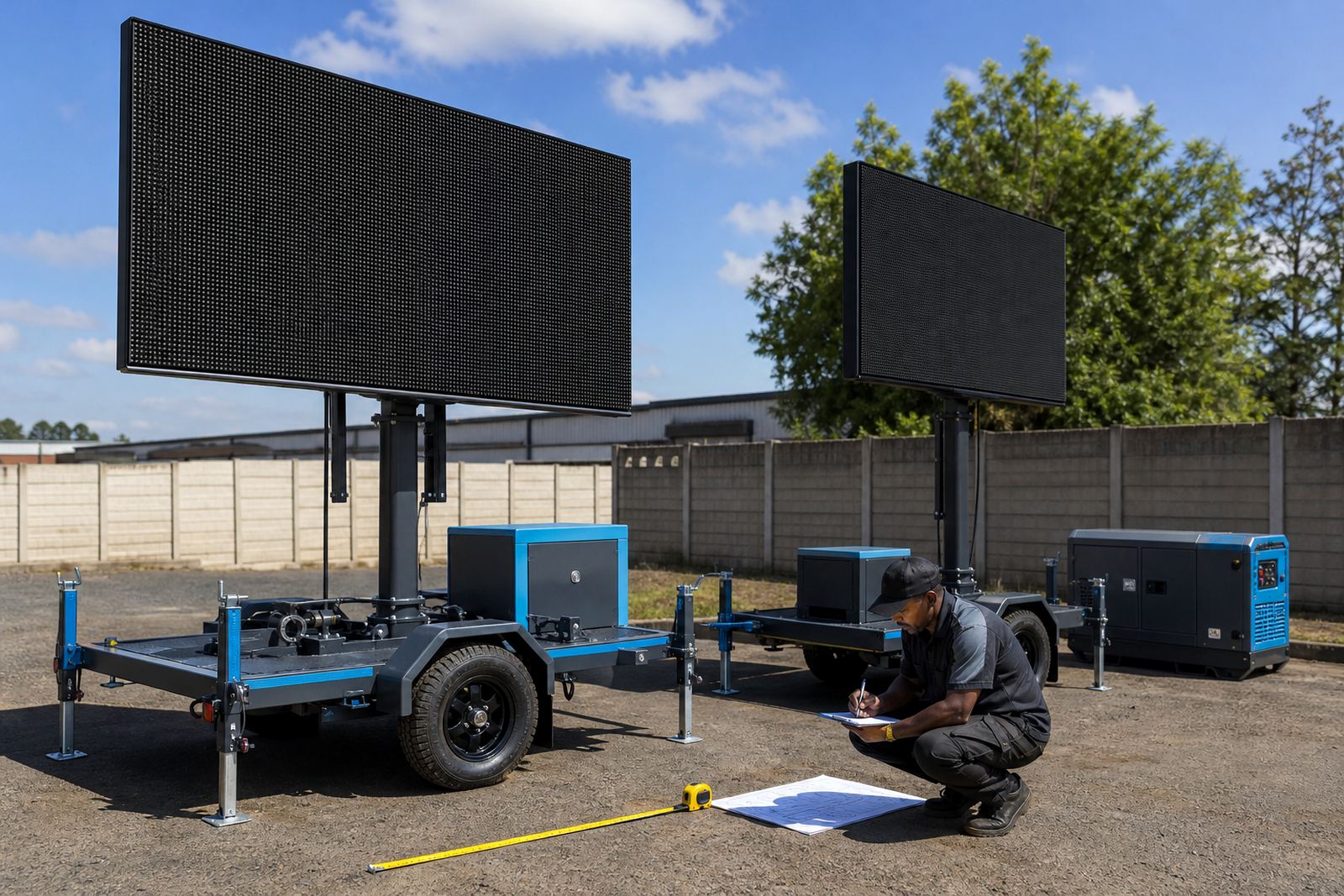
We pick the generator only after walking the ground it will stand on. Large outdoor events in Germiston, Kempton Park or Johannesburg often have access rules, parking limits and noise conditions that affect where the generator can stand. Roadshows in Pretoria, Durban, Bloemfontein or Polokwane may have tighter space, so the set down point and cable run need to be factored in early.
As a basic rule, the generator should not sit right on the edge of its rated capacity. A screen that draws a steady load may still need extra capacity for the first start, content changes or a live feed switch. In humid coastal areas, and around dusty inland venues, clean cabling and weather protection matter just as much as raw size.
Content type changes the power picture
Static adverts, motion graphics, live camera feeds and sport playback do not all behave the same way. Bright white content usually asks more of the screen than darker artwork, and a full daylight campaign can push the load higher than a shaded venue with evening viewing.
When content is loaded for a roadshow or event, it helps to check the file format, the playback device and the number of sources that must stay active. If there is live feed support, the generator should also cover the video chain from camera input through to the final output on the screen.
- List every source that must stay powered during the programme.
- Note whether the content will run in daylight or after sunset.
- Confirm if live switching, looping clips or split-screen output is needed.
- Allow extra headroom when the screen will run at full brightness for long periods.
Permits, wind limits and safe running on site
Kilovolt-amps on the spec sheet are just the start. Municipal rules may control where a trailer can stand, how long it may remain in place and whether a permit is needed for the display or the road presence. The site team should also check the local access route, ground condition and any restrictions around noise or parking.
Outdoor LED trailers are usually operated within stated wind limits, and the technician should lower the screen if conditions turn unsafe. That decision matters as much as power supply because a stable generator cannot fix a trailer that should not be raised in strong wind. Good planning keeps the screen usable, but safety comes first.
What to send when asking for generator advice
When the run times and load are written down early, the crew spends less of the morning on the phone. The most useful details are the screen size, pitch, event location, viewing hours, content style and whether you need generator power, mains power or a mix of the two. If there is a trailer, say whether it must lift, rotate or stay fixed for the whole run.
For a quick planning pass, send the venue or route, the date range, the number of stops, and any permit concerns you already know about. That gives the team enough information to match the display, the trailer and the power package without guessing at the load.
- Screen size and pitch
- Venue or roadshow route
- Daylight hours and viewing times
- Content type, including live feed use
- Power source available on site
- Wind exposure and access limits