
The sun changes the whole brief
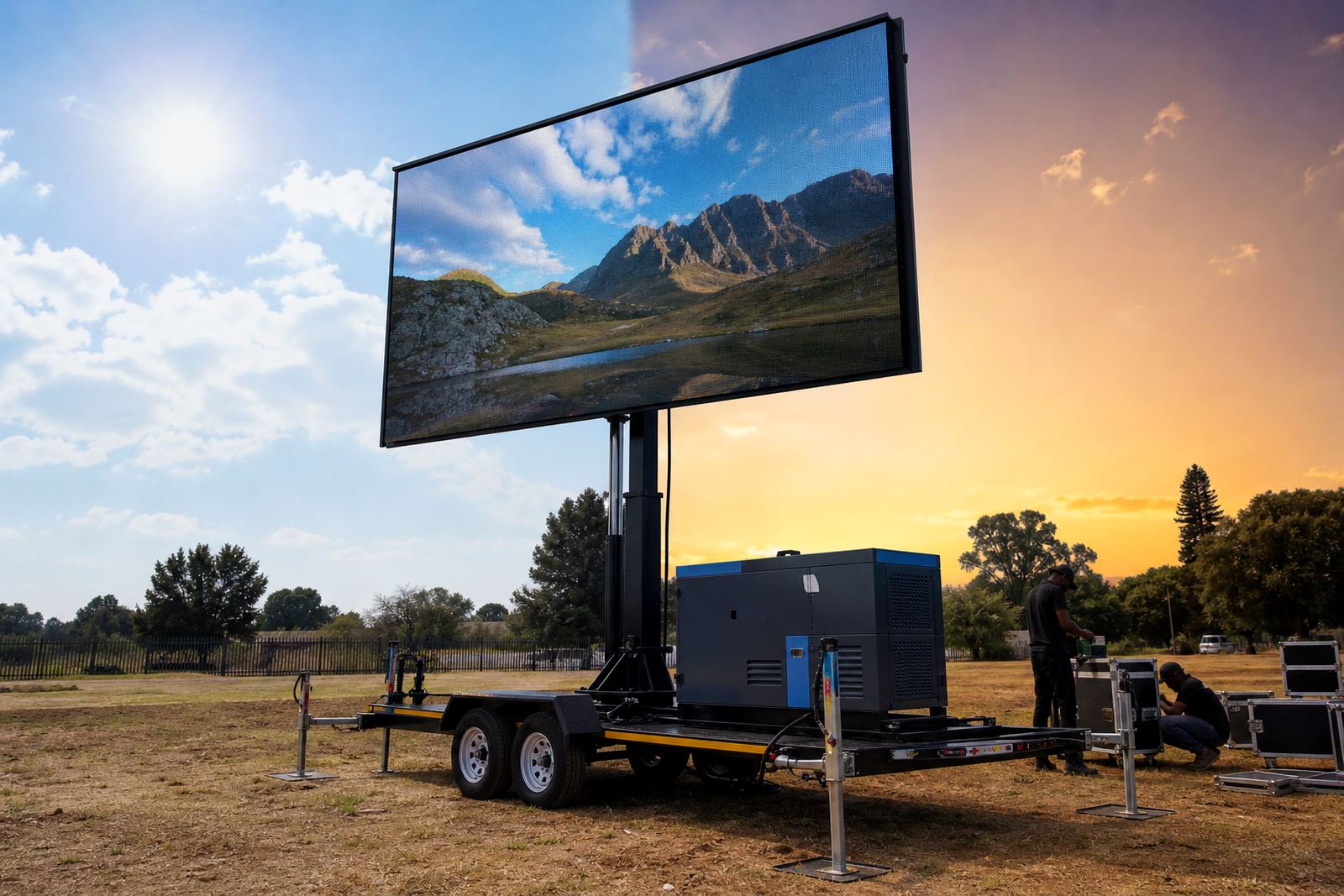
In full daylight, the screen has to fight glare from the sky, reflective paving and bright clothing in the crowd. Outdoor LED boxes used for advertising campaigns and roadshows are normally specified with higher brightness and tighter pixel pitch when viewers stand closer, while a larger pitch can still work for viewers farther back. The useful test is not only whether the image is visible, but whether text, logos and motion still read cleanly from the main viewing points.
Night events are different. Once the light drops, a screen that looked perfect at midday can feel too bright if it is set too high. That is where audience comfort matters. People seated near the trailer should not be squinting, and nearby neighbours should not feel the screen is throwing harsh light across the site.
- Day use: higher brightness, strong contrast and bolder graphics.
- Night use: lower brightness settings and cleaner motion content.
- Closer viewers: finer pixel pitch helps text stay sharp.
- Farther viewers: larger screen size can matter more than pitch.
Where the trailer sits decides what people see
Placement is part of the picture. A trailer parked too low behind a barrier, tree line or marshal point loses value quickly, no matter how good the panel is. For daytime viewing, the screen often works best where the audience faces it without looking directly into the sun. For evening programmes, the angle can be adjusted to avoid glare from floodlights, stage wash or reflective venue surfaces.
The hydraulic lift and rotation on a trailer matter here. They allow the screen to rise above heads, vehicles and temporary fencing, then turn toward the main crowd flow. On a roadshow route through Johannesburg, Pretoria or Durban, that flexibility can save a site where access is tight and the viewing line keeps changing from stop to stop.
- Keep the main audience cone in front of the screen face.
- Avoid placing the trailer where passing traffic blocks sightlines.
- Check tree cover, poles, tents and stage edges before final positioning.
- Use the trailer height to clear seated crowds and standing crowds.
Brightness settings need a daylight and night plan
Brightness is not a one-setting decision. A daylight campaign in Ekurhuleni may need the screen running harder to stay readable against reflected sun and open-air noise. At night, the same content can be tuned down so the image stays clear without overpowering the space. Outdoor LED screens are commonly adjusted in steps, because the right setting depends on weather, cloud cover, nearby lighting and how close people stand.
Content also has to match the light level. Thin typefaces, pale backgrounds and busy transitions can disappear in strong sun. In the dark, over-saturated graphics can become tiring. If the screen is carrying live feed support, sports-day results or sponsor loops, the playback file should be checked for contrast before the truck or trailer leaves the Germiston base.
- Use darker backgrounds and stronger type contrast for daytime.
- Trim fast flicker and tiny text when the audience is far away.
- At night, reduce glare and keep motion steady.
- Test live feeds, videos and still graphics before the event starts.
Power, wind and permits are part of the day-versus-night call
Some sites run from mains power, others rely on a generator on board or nearby. That choice changes the sound footprint, cable layout and the time spent on site planning. For daytime activations in busy public spaces, power planning also needs to consider how many hours the trailer will stand open in the sun. For evening events, cable runs and refuelling points have to be arranged so the crew can work safely after dark.
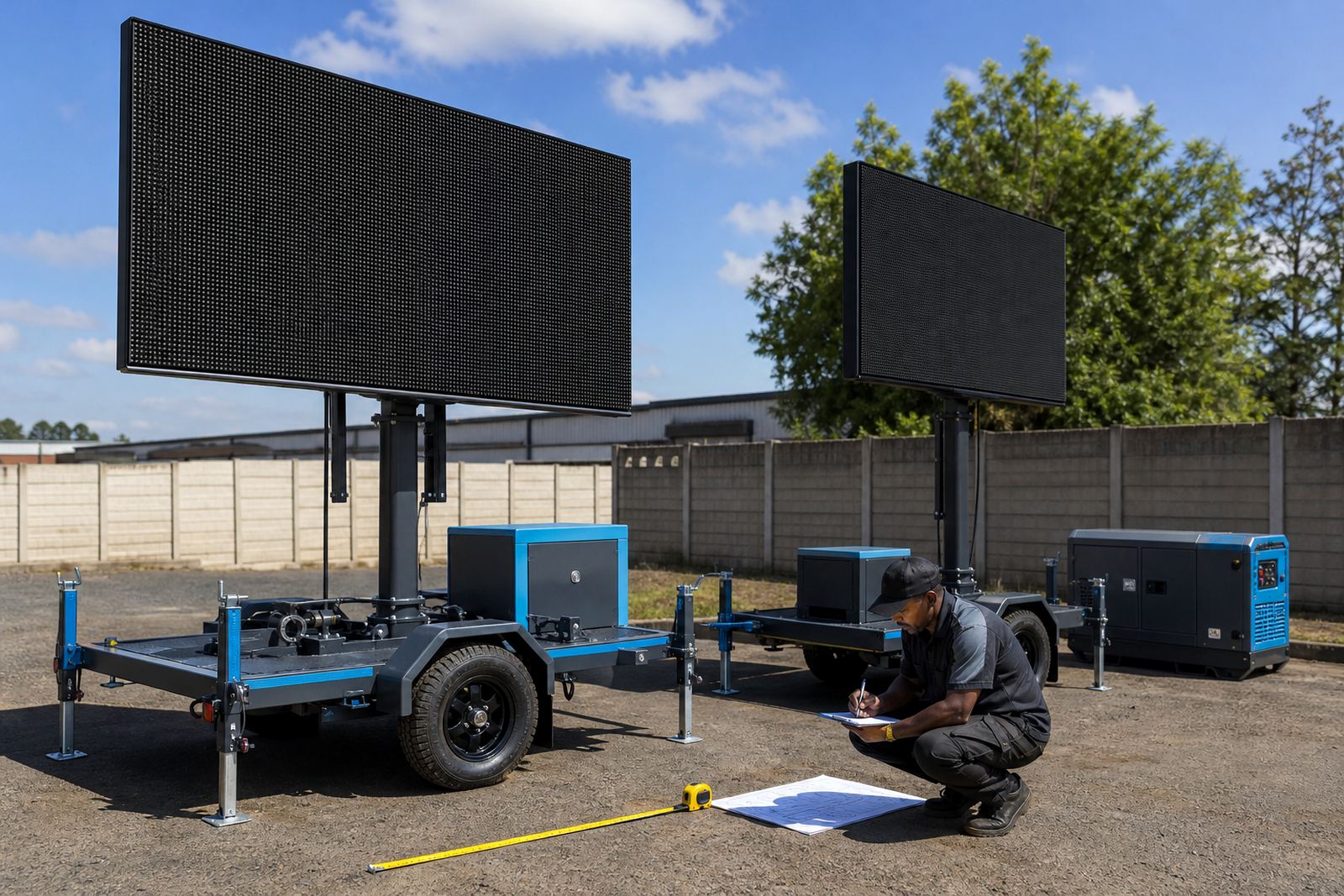
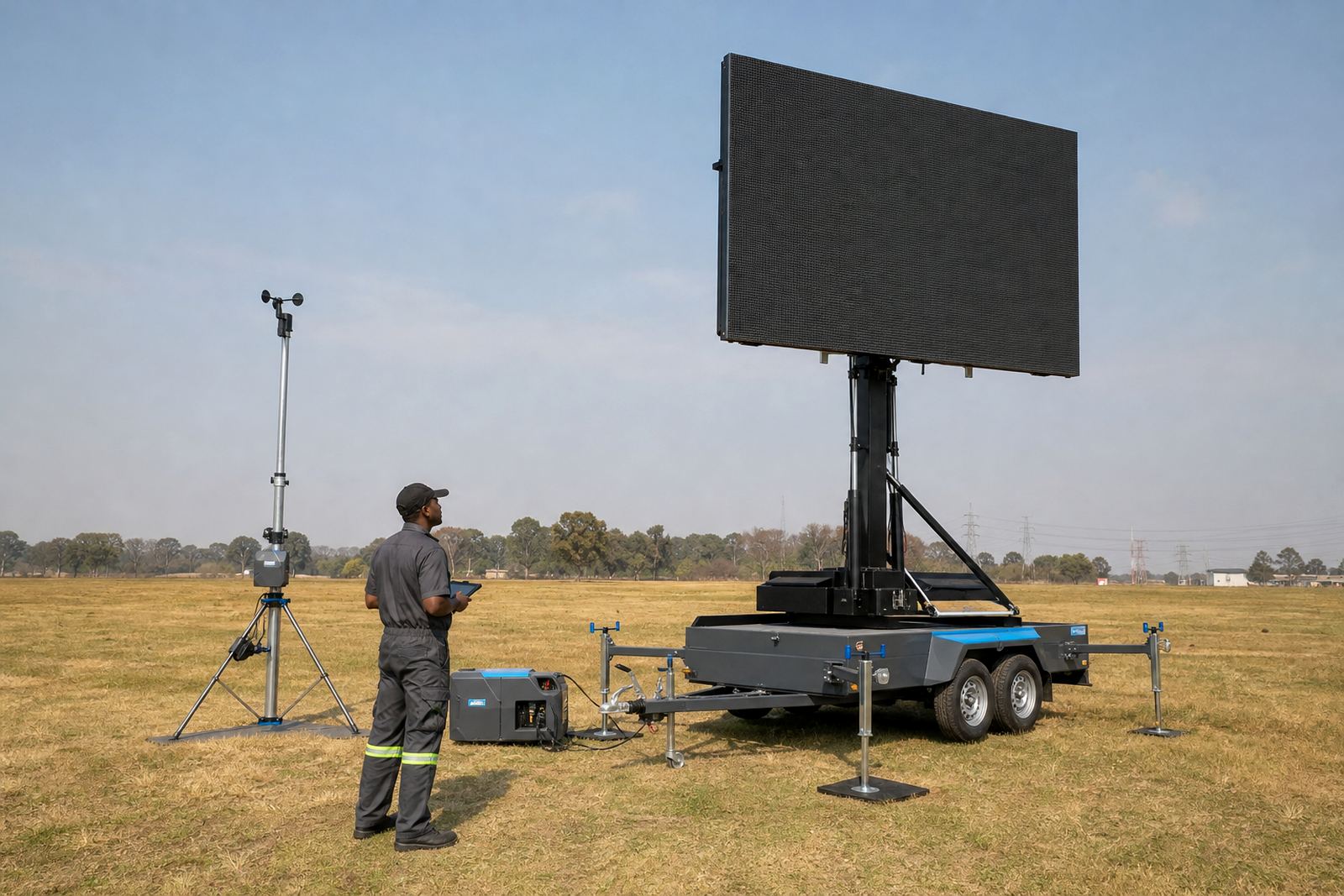
Wind and municipal rules matter for both day and night. A lifted screen presents more surface area, so the site needs wind limits to be taken seriously. In some areas, especially where the trailer stands close to roads or public walkways, permit guidance can shape the final position, operating hours and access control. This is where a proper site check helps before the screen is deployed.
- Confirm mains power or generator use before dispatch.
- Keep weather monitoring active when the screen is raised.
- Check local access rules if the trailer is near public roads.
- Allow for safe pack down if wind picks up late in the day.
What the on-site technician watches during the run
A technician on site is not there just to switch the screen on. The job includes checking the content playback, watching for signal drop, handling brightness changes and keeping the display aligned with the event flow. For a daytime promotion, that may mean adjusting the feed as cloud cover shifts. For a night concert or sports day, it can mean fine-tuning the image after the crowd settles and stage lighting changes.
Playback management is especially useful when the screen carries mixed content, such as adverts, event notices and live camera feed. If the audience is moving between a parking area, a venue entrance and the main viewing zone, the technician can keep the output readable for each stage of the programme. That sort of hands-on control is what makes a trailer practical across Johannesburg, Bloemfontein, Polokwane and the coastal route alike.
Day and night checklist for a cleaner event flow
Before the trailer arrives, it helps to separate the day plan from the night plan. The best sites do not just ask whether the screen is visible. They ask what time the crowd arrives, where the sun will sit, whether the audience will be standing or seated, and how the graphics need to read under changing light. A careful setup keeps the viewing experience steady from the first loop to pack down.
- Daylight: stronger brightness, sharp contrast, clear icons and larger type.
- After dark: lower glare, balanced colour and slower content changes.
- Placement: face the natural audience line and clear obstructions early.
- Power: confirm generator or mains use and cable routing.
- Site control: check permits, wind conditions and access points.
- Playback: test video, stills and live feed before public viewing starts.
For advertisers and event teams, the main lesson is plain. Daytime visibility asks for power, contrast and careful positioning, while night viewing asks for comfort, control and restraint. A trailer that is set for both can carry a campaign through a full programme without the screen fighting the venue.