
Start at the source: where the power actually comes from
Before any screen is plugged in, identify the exact supply point the venue is offering. Do not rely on a vague promise that there is power near the stage or at the back of the hall. You need to know whether the supply is single phase or three phase, where the isolator sits, and who is allowed to open the distribution board.
Outdoor LED screen trailers draw a steady load once the screen, processor, audio feed and any supporting equipment are running. A clean mains supply is fine when the cable length is sensible and the source can carry the load without nuisance trips. If the venue has older wiring, corroded sockets or shared circuits feeding catering and lighting, the power plan needs a fresh look.
- Confirm the exact socket, board or feed point.
- Check whether access is controlled by venue staff or a contractor.
- Ask if the circuit is shared with other equipment on site.
- Make sure the supply point is close enough to avoid long cable runs.
Cable paths that stay clear and legal
The route between the mains point and the trailer matters as much as the supply itself. Cables must stay out of pedestrian lines, away from vehicle tyres and clear of wet ground where possible. In Germiston, Johannesburg and other busy urban sites, the fastest way to create trouble is a cable crossing that has not been planned around foot traffic or delivery movement.
Keep the run as short and direct as the layout allows. Where a cable has to cross a walkway, use proper ramping or approved protection. Do not run leads through doorways that can pinch them, under loose mats or across sharp edges. Coastal humidity in Durban can add extra wear, so fittings and connectors need a good visual check before the trailer is powered from mains.
- Measure the cable route before the vehicle arrives.
- Use cable protection where people or trolleys pass.
- Avoid sharp bends, crushed points and damp patches.
- Keep joins and connectors off the ground where practical.
Distribution gear: the part people forget until it trips
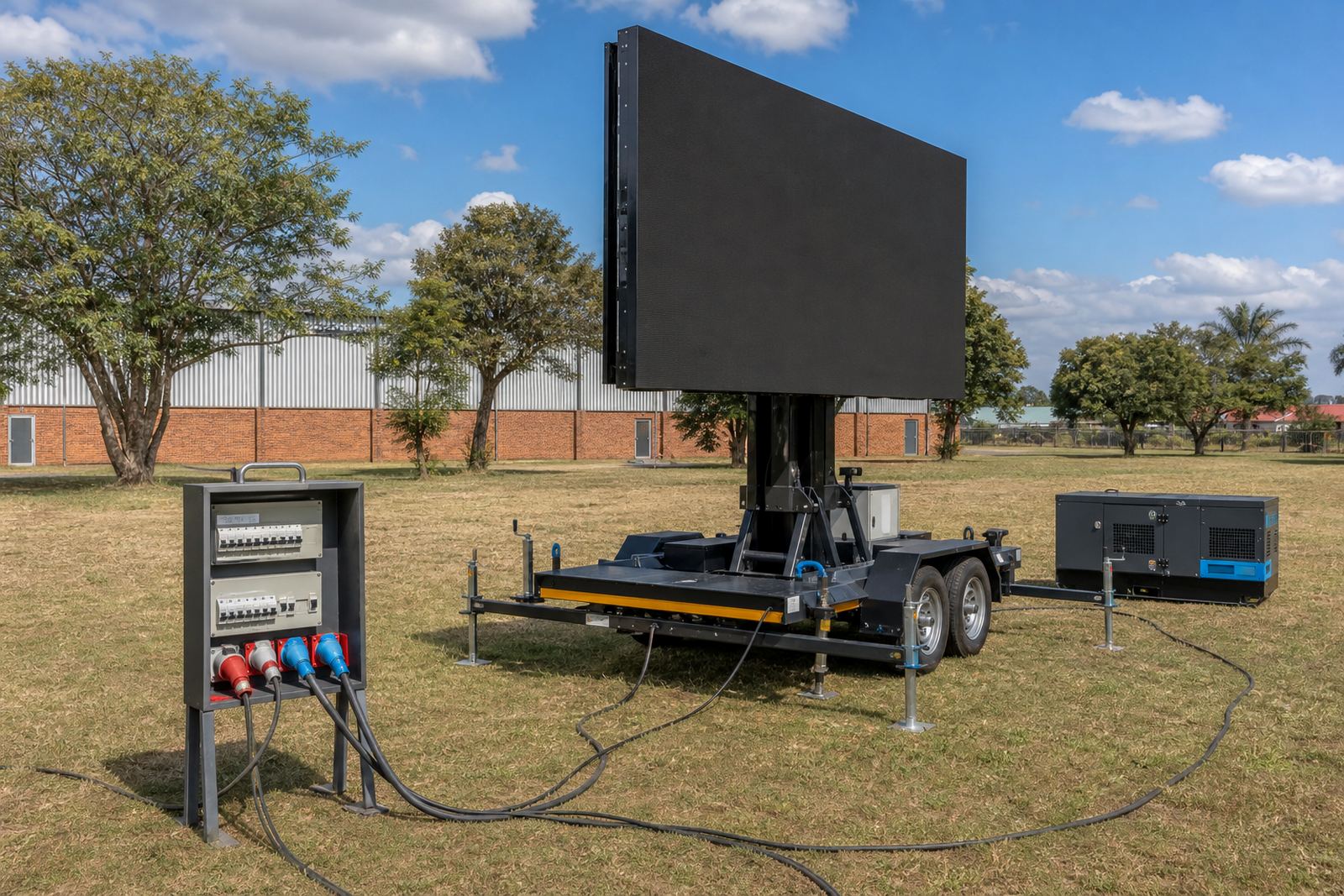
A venue socket alone is not enough. The power path should include the correct distribution, protection and switching equipment for the screen size and the rest of the setup. That means looking at breaker ratings, overload protection and whether the display shares supply with other heavy loads on the site.
For larger screens, especially those with a bright daylight specification and a high pixel count, power draw is not something to guess. The trailer may need a cleaner source feed than the venue first offered, and the technician should check that the distribution point can handle startup conditions as well as steady running. When a screen is fed through the wrong adapter or an improvised extension, the weakest point is usually the first thing to fail.
- Check breaker capacity against the actual load.
- Confirm that protection devices are in place and working.
- Separate the screen feed from catering or sound where possible.
- Inspect plugs, couplers and breakers before switch-on.
How the trailer setup changes the mains plan
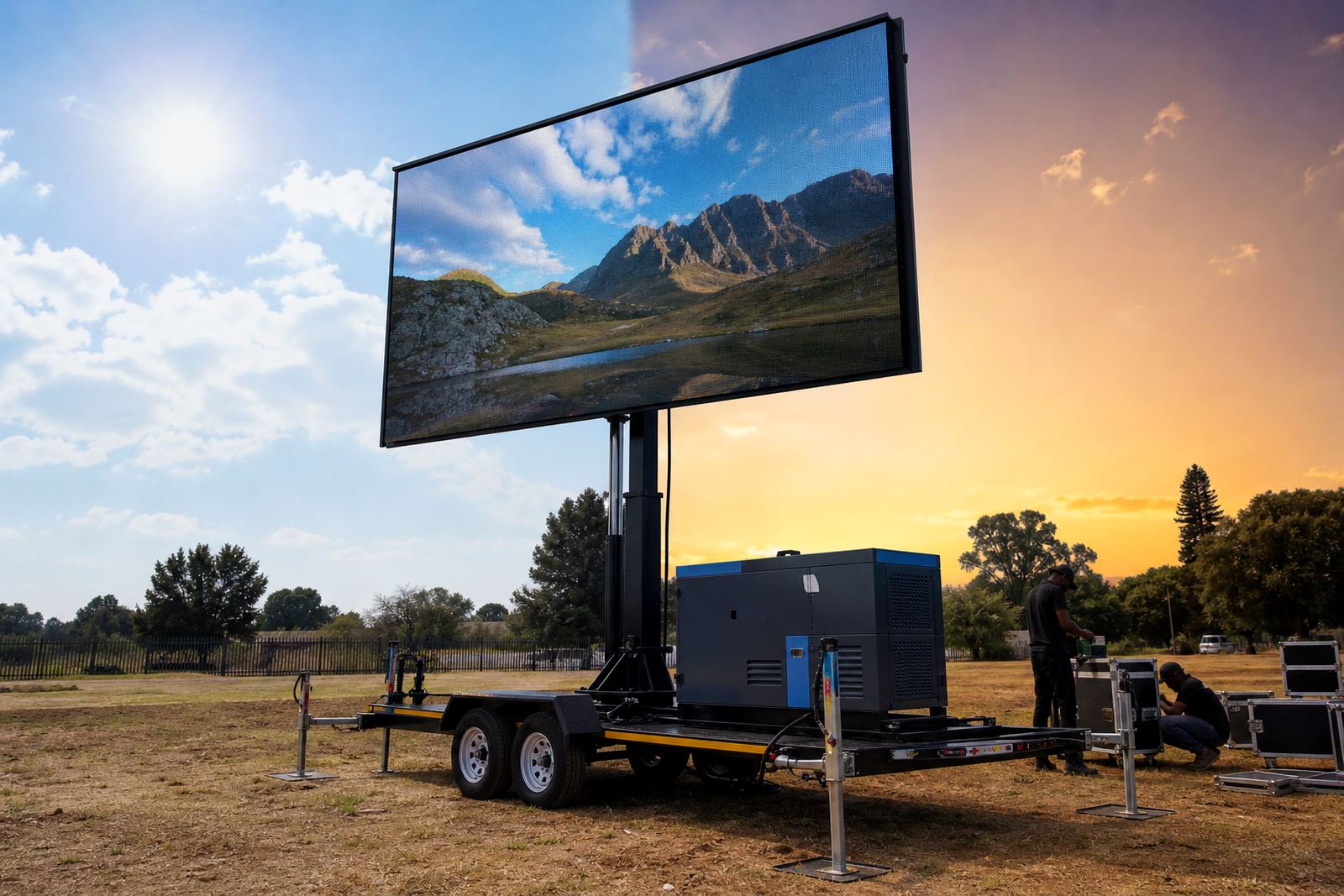
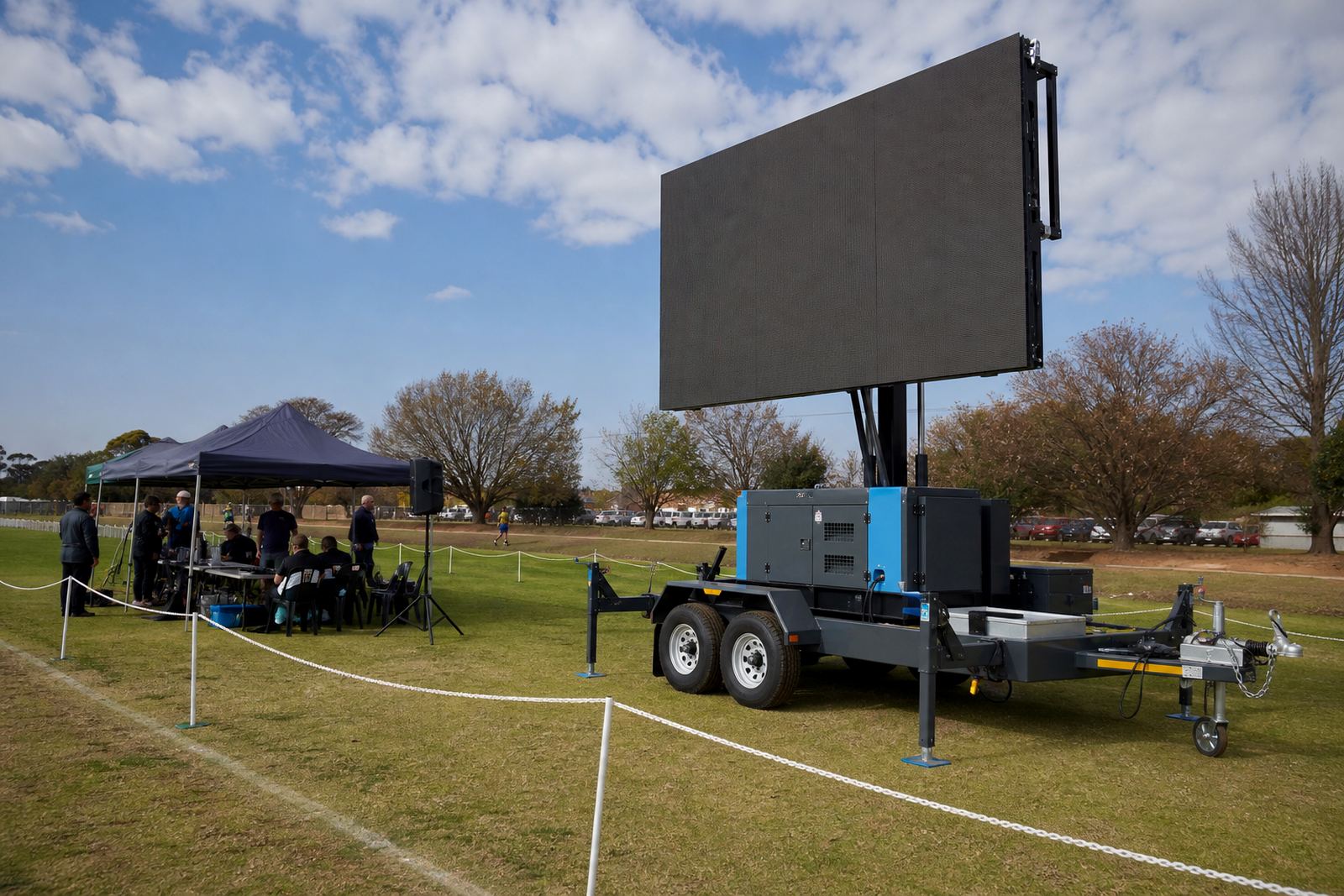
LED screen trailers are not all the same. Some units lift hydraulically into position, then rotate to suit the viewing angle. Others are used as fixed outdoor LED boxes for a tighter footprint. The size of the display, the brightness level for daylight and the mounting height all affect the power approach. A taller build can mean a different cable entry point or a longer protected run to reach the source.
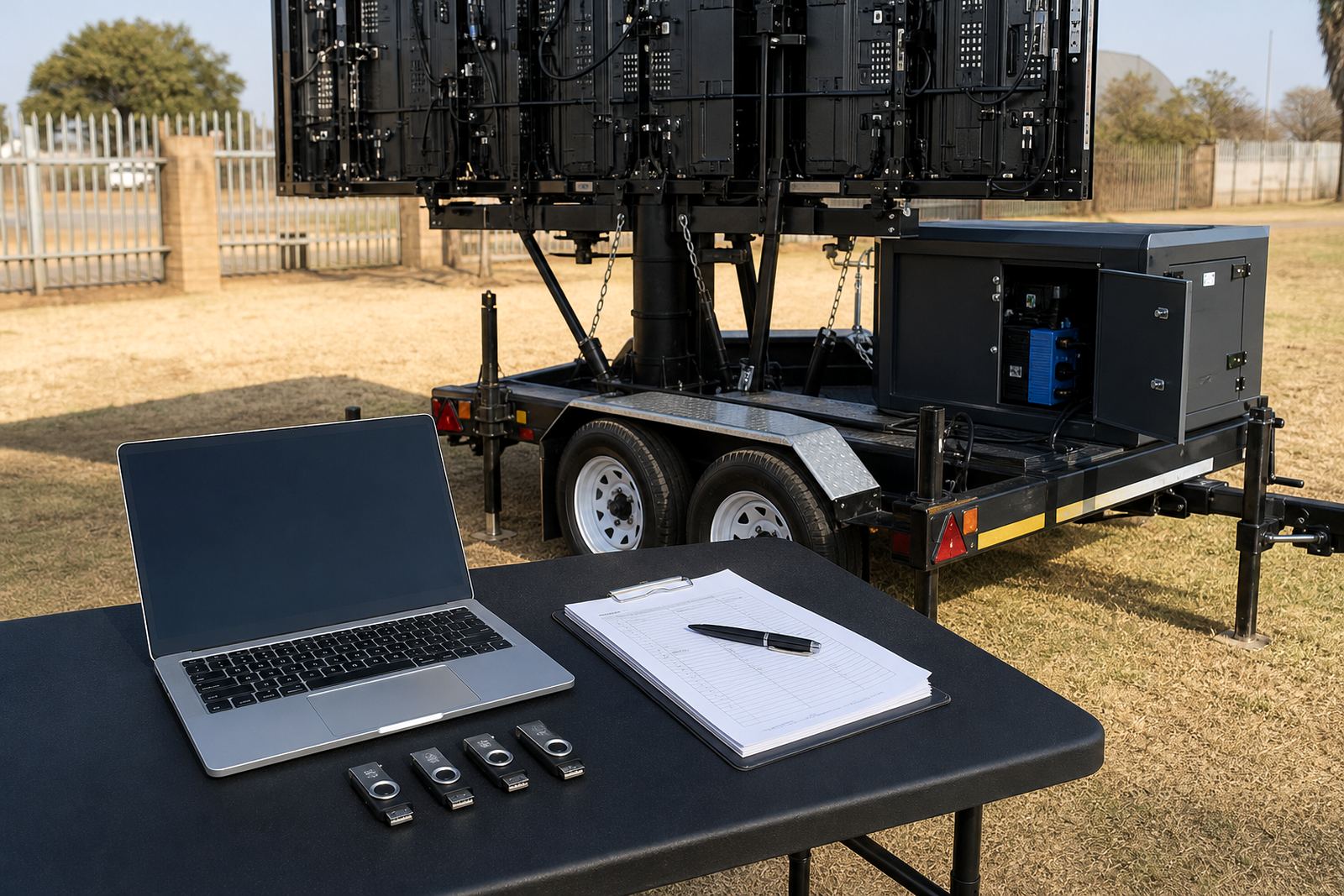
Playback also matters. Content loading, live feed support and any backup media should be checked before the event starts. If the screen is carrying a live sports feed or a timed campaign loop, the technician needs a stable supply so the display and playback system stay in step. Mains power can work well, but only when the setup is matched to the actual job, not just the space on the ground.
Wind, weather and permit notes that affect power planning
Outdoor LED screens sit under weather rules as well as electrical ones. Wind limits are part of the setup decision, because a screen on a trailer cannot be treated like a static wall display. If the weather turns, the on-site technician may need to hold, lower, rotate or secure the structure before anyone considers connecting or keeping mains power live.
Municipal permit rules vary by area and by site type. A roadside activation, public square or open field can need different permission from a private venue. Power planning should sit alongside those checks, because the cable route, generator backup option and access for the trailer all affect what the municipality or venue manager will accept.
- Check wind conditions against the trailer specification.
- Confirm whether the site needs municipal or venue permission.
- Plan a safe position for cable entry, not just screen visibility.
- Keep the technician informed if weather changes during the event.
A practical pre-power checklist for the day of the job
Before mains power becomes the main plan, walk the site with the technician and the person in charge of the venue. The aim is not paperwork for its own sake, it is to prevent avoidable issues when the screen is already on site and people are waiting for content to play. A few minutes spent on the ground is worth far more than guessing later.
Do a final check: the supply point is known, the route is clear, the distribution gear matches the load, the screen position is secure, and there is a backup plan if the venue supply is not suitable. For jobs in Pretoria, Bloemfontein, Polokwane and across Ekurhuleni, that check usually decides whether mains power is the right option or whether a generator or mixed supply makes more sense.
- Supply point identified and accessible.
- Cable path measured and protected.
- Distribution equipment matched to the load.
- Trailer position, lift and rotation confirmed.
- Content playback tested before the crowd arrives.
- Weather and permit conditions reviewed.
When to keep generator backup in the plan
Venue mains is useful, but it should not be treated as the only option if the site is uncertain. Older buildings, temporary event spaces and mixed-use grounds can have supply points that look fine until a heavier load is connected. If the route is long, the access is awkward or the distribution board looks tired, a backup power option is worth keeping in the plan.
LEDBox handles delivery, setup, on-site technicians and power planning across South Africa, including Germiston, Johannesburg, Pretoria, Durban, Bloemfontein and Polokwane. The point is to match the screen to the site, not force the site to carry the screen without proper checks.