
Start with the site, not the screen
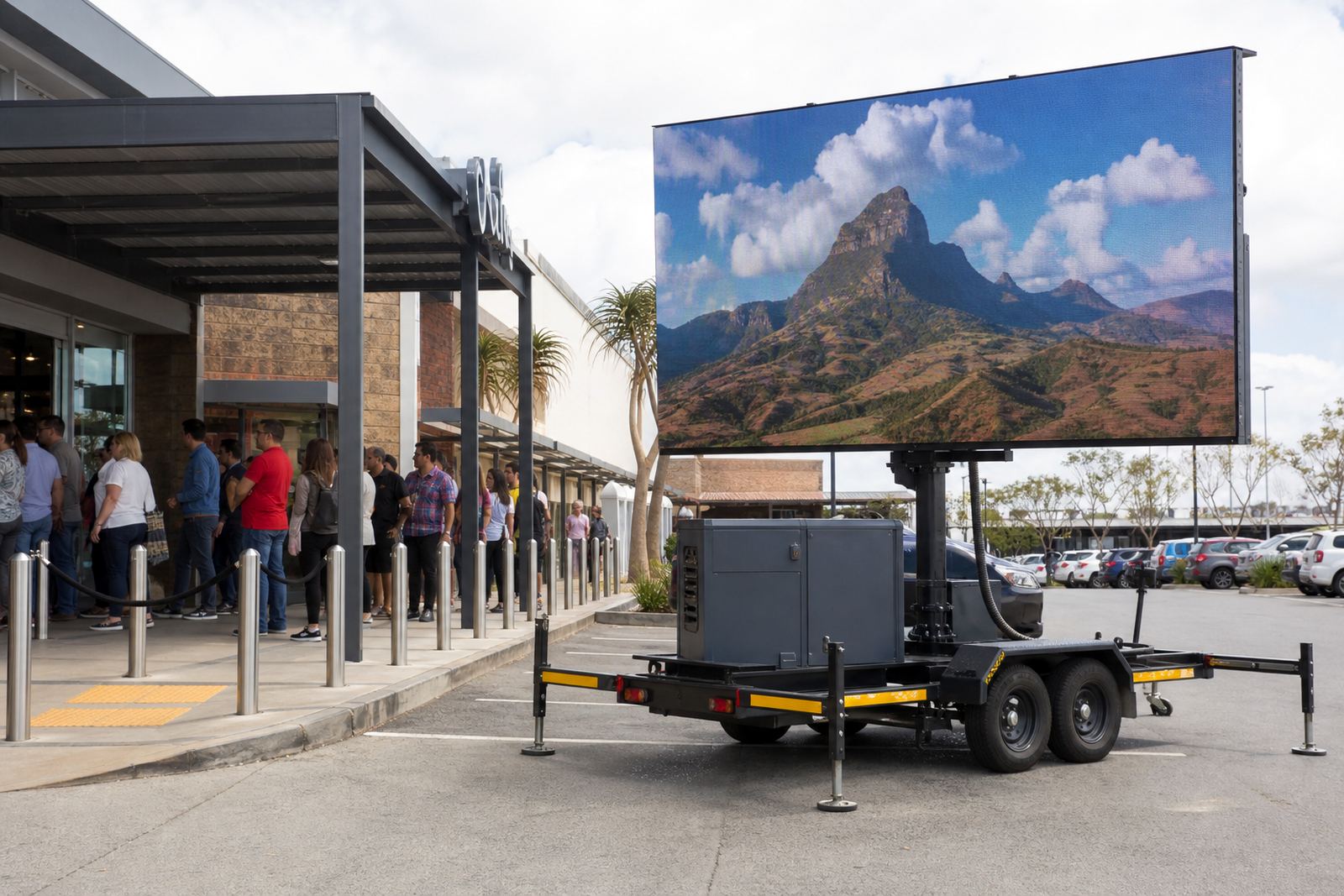
Permit planning starts with where the unit will stand, how it faces the road and what is happening around it. A trailer mounted LED screen that works well in a parking forecourt can run into issues on a pavement edge, near a taxi rank or close to an intersection where sight lines matter.
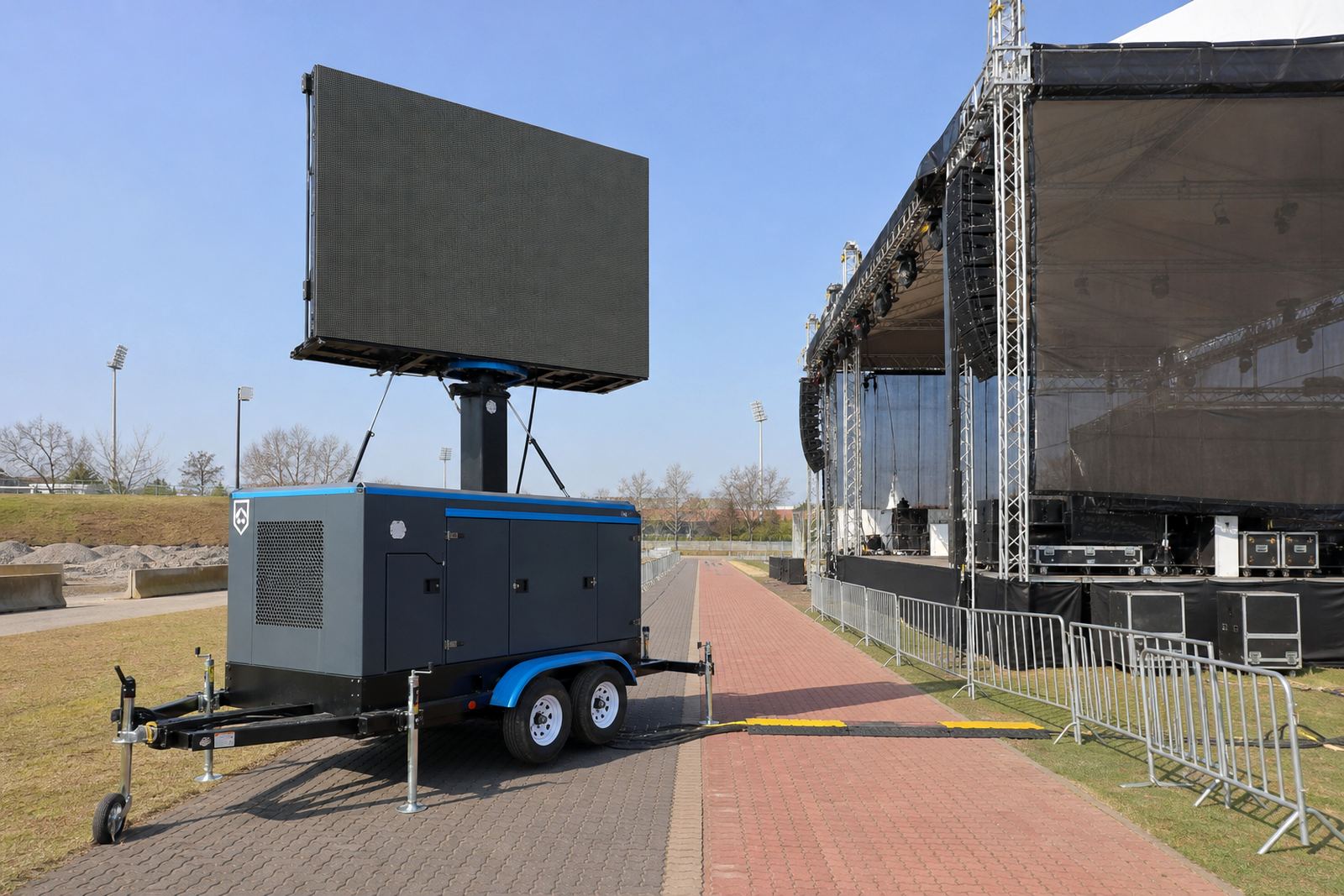
We look at vehicle access, turning space, ground conditions and the space needed for a hydraulic lift and safe rotation if the screen has that feature. Bright daytime content, usually in the 5,000 to 7,500 nit range, still needs the right angle and clear visibility, but the municipality will often care just as much about pedestrian flow, kerb lines and any obstruction to motorists.
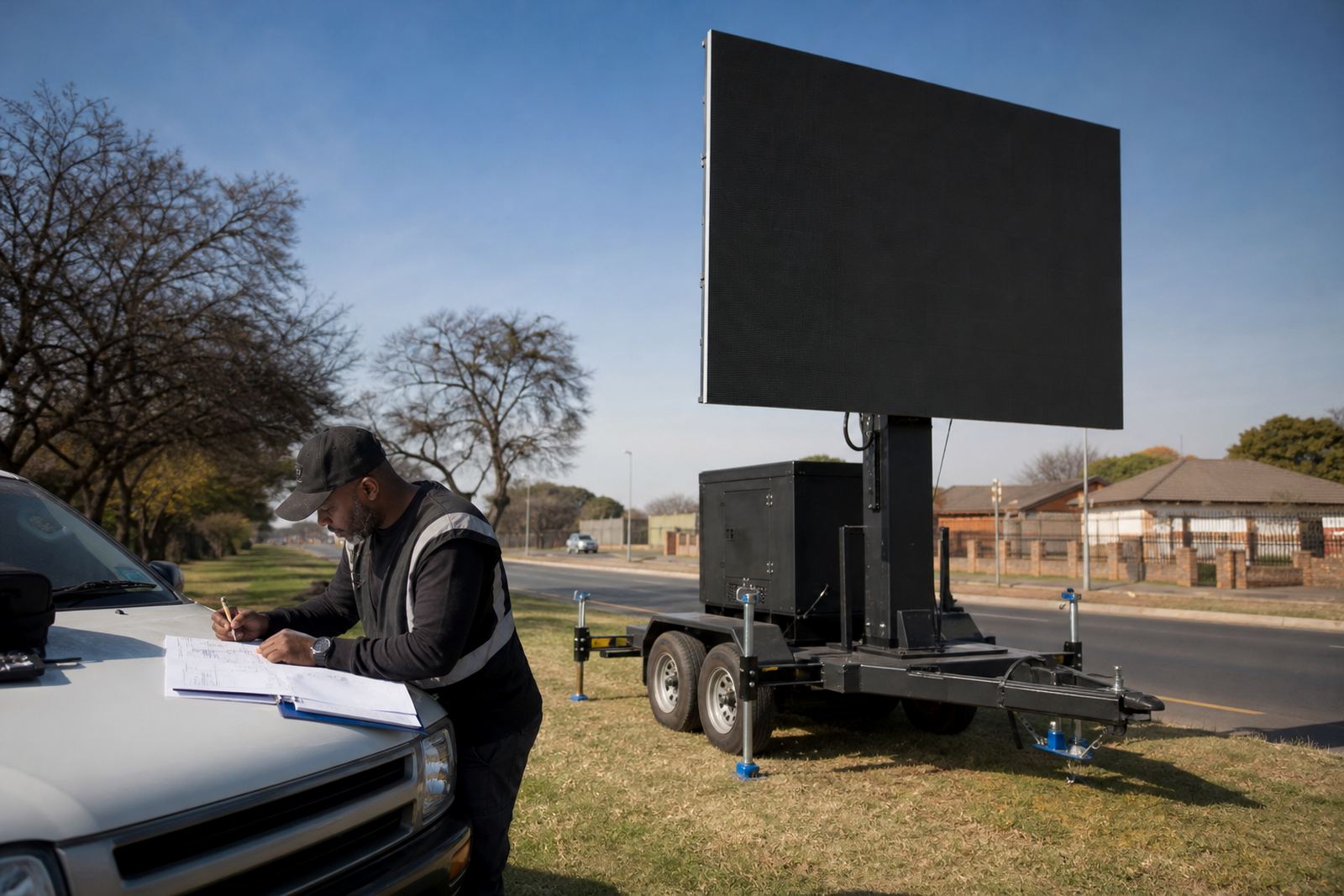
For road-facing work in Germiston, Kempton Park or along busy corridors into Johannesburg, it helps to mark the exact position before the first permit request goes in. A sketch, site photos and a short note on timing can save a lot of back and forth with local officials.
The permit questions officials usually ask
Different municipalities use different forms and departments, yet the same questions come up often. They want to know what the unit is, how long it will stay, whether it sits on private land or public land, and if it affects roads, pavements, power or public safety.
- Exact site address and GPS point where possible
- Type of deployment, such as trailer, box or roadside unit
- Dates and operating hours for the campaign
- Whether the screen faces traffic or a crowd area
- Power source, including generator or mains connection
- Any live feed, audio or playback equipment on site
- Traffic control, barriers or marshal support if needed
If the screen is on public land or close to a roadway, a municipality may ask for traffic management input or written permission from the landowner. In a shopping centre, sports field or private venue, the property manager usually has their own approval steps before the local authority paperwork is even considered.
Documents that make the process easier
A tidy file helps when the site is under pressure and the dates are fixed. Keep the basics together so the municipal office, venue manager or road authority can see the plan without hunting through loose notes.
- Site layout or marked sketch showing screen position and viewing direction
- Proof of permission from the property owner or venue manager
- Company details and responsible contact person
- Screen dimensions, trailer footprint and approximate height when raised
- Power plan, whether generator or mains supply will be used
- Any public liability or safety paperwork requested for the site
For a roadshow moving between Pretoria, Bloemfontein and Polokwane, the same paperwork may need small changes for each stop. The principle stays the same: match the documents to the exact site, not just the campaign name.
Power, playback and the technician on site
Permit planning is not only about the paperwork. It also needs to match how the screen will run on the day. Outdoor LED units may draw from a generator, or from a mains point where the venue and electrician allow it, and the municipal team may ask about cabling, fuel storage or noise if a generator is used.
Our on-site technician manages content loading, playback, live feed support and basic checks on the display. That matters when the permit includes limits on operating hours, audio levels or route changes. If the campaign relies on live sport, a live feed or timed adverts, the signal path and backup source need to be clear before the truck leaves Germiston.
Wind is another point that often gets missed. Trailer screens can be engineered for outdoor use, but safe operating limits still apply. A permit officer, venue manager or site marshal may ask what happens in strong wind, rain or poor ground conditions, so the answer needs to be practical rather than vague.
A working checklist before the first drop
This is the short checklist we use before delivery, setup and activation on a public or roadside site.
- Confirm who owns the land and who signs off the placement
- Check if the screen is facing traffic, pedestrians or both
- Measure access for the trailer, generator and support vehicle
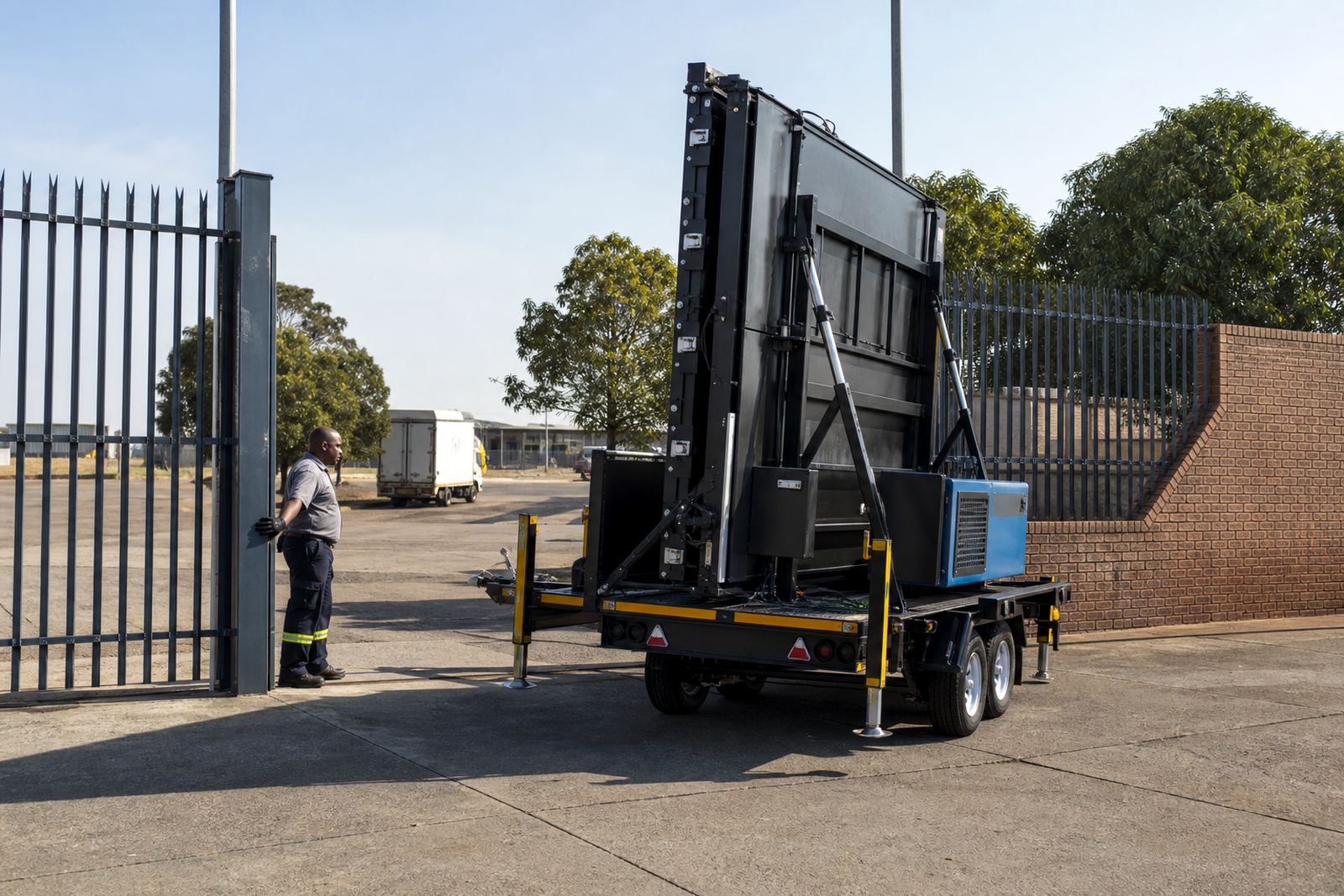
- Confirm the lift height and rotation space if the screen has a hydraulic system
- Agree the operating hours, audio level and content schedule
- Review wind exposure, overhead lines and uneven ground
- Set the permit file aside for the site team, not just the office
When the checklist is done early, the team can focus on setup instead of fixing avoidable site problems after arrival. That is particularly useful on multi-stop work where one late permit can unsettle the rest of the route.
Roadshows and multi-stop campaigns need a different plan
A single day at one venue is one thing. A roadshow through Durban, Johannesburg and other stops is another. Each site can have a different owner, different access times and different municipal requirements, so a one-page approval note is rarely enough.
Multi-stop planning should include loading order, parking restrictions, route timing and who hands over each site. If the trailer will be packed down, moved and relaunched later the same week, the permit notes should travel with the unit. That keeps the operating team aligned when the work changes from a sports day to a roadside promotion or a concert forecourt.
We also check whether the next stop needs fresh approval for branding position, noise, or a change in the content loop. A screen that is legal at one site can still need a separate nod at the next, especially where public viewing areas and road authority boundaries meet.
When the municipality wants more detail
Some sites are straightforward. Others need a little more patience. If a council, traffic office or venue manager asks for extra detail, it usually means they need reassurance about safety, visibility or public movement rather than a full redesign of the campaign.
That can include a clearer site sketch, a note on screen brightness for daylight viewing, the proposed power source, or a short explanation of how the unit will be secured when parked. In a windy coastal town or a tight urban verge, the questions may be more focused on stability and clearance than on the content itself.
Our contact form is the entry point for permit planning, delivery, setup and on-site support from Germiston to the rest of the country. When the site details are clear, the permit conversation is usually clearer too.