Start with the approach road, not the screen
Before anything is booked, look at how the trailer will get onto the property and where it will stand once parked. A wide screen is not the only issue, because the towing vehicle, the trailer drawbar, the turning circle and any slope can make a site awkward even when the open area looks generous.
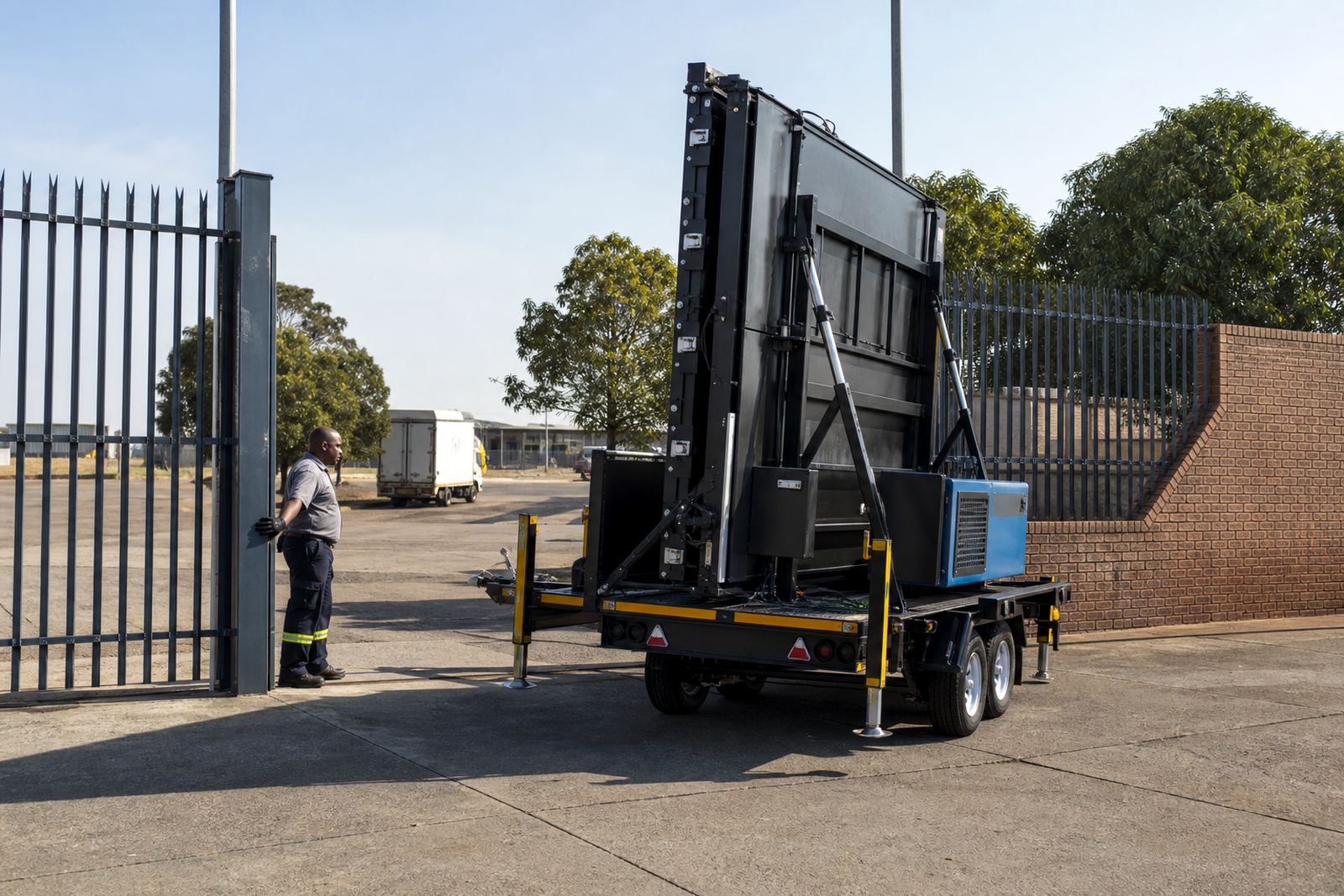
For outdoor LED screen trailers, we check the approach from the main road, the gate opening, and the route from the entrance to the standing point. In Germiston, Kempton Park and other built-up parts of Ekurhuleni, kerbs, security booms and tight internal roads often matter more than the main entrance on paper.
Measure the opening and the bend before the gate
Gate width, height clearance and the angle into the property should be measured before the date is confirmed. A truck or trailer may need more room than expected to line up properly, especially where a gate sits close to a wall, a guardhouse or a drop-off edge.
- Measure the narrowest part of the gate or boom entrance.
- Check the turning space just before the entrance.
- Look for low branches, cables or signage above the route.
- Confirm that the surface at the gate does not soften after rain.
- Note whether the entry is flat, sloped or broken by a kerb.
If the site has a separate delivery lane or service entrance, that route should be checked too. A second access point can save the job if the main entrance is busy or too tight for the trailer to swing in cleanly.
Ground conditions decide how the trailer stands
Getting the trailer in is half of it, and the patch of ground it parks on is the other half. Outdoor LED screen trailers need level ground so the hydraulic lift can raise the screen correctly and the structure can be locked off safely. Gravel, soft grass, fresh fill or a surface with hidden voids can all create problems.
On lawns and sports fields, the ground needs to be firm enough to take the trailer weight without sinking. On paved areas, look for drain covers, loose blocks, oil patches and sharp cambers. A surface that seems fine to walk on can still cause a trailer to lean or settle unevenly under load.
- Confirm whether the site is hard top, compacted gravel or grass.
- Check for slope in both directions.
- Look for soft edges near drains and manholes.
- Ask whether the site needs protection for paving or turf.
Power, playback and the rest of the technical side
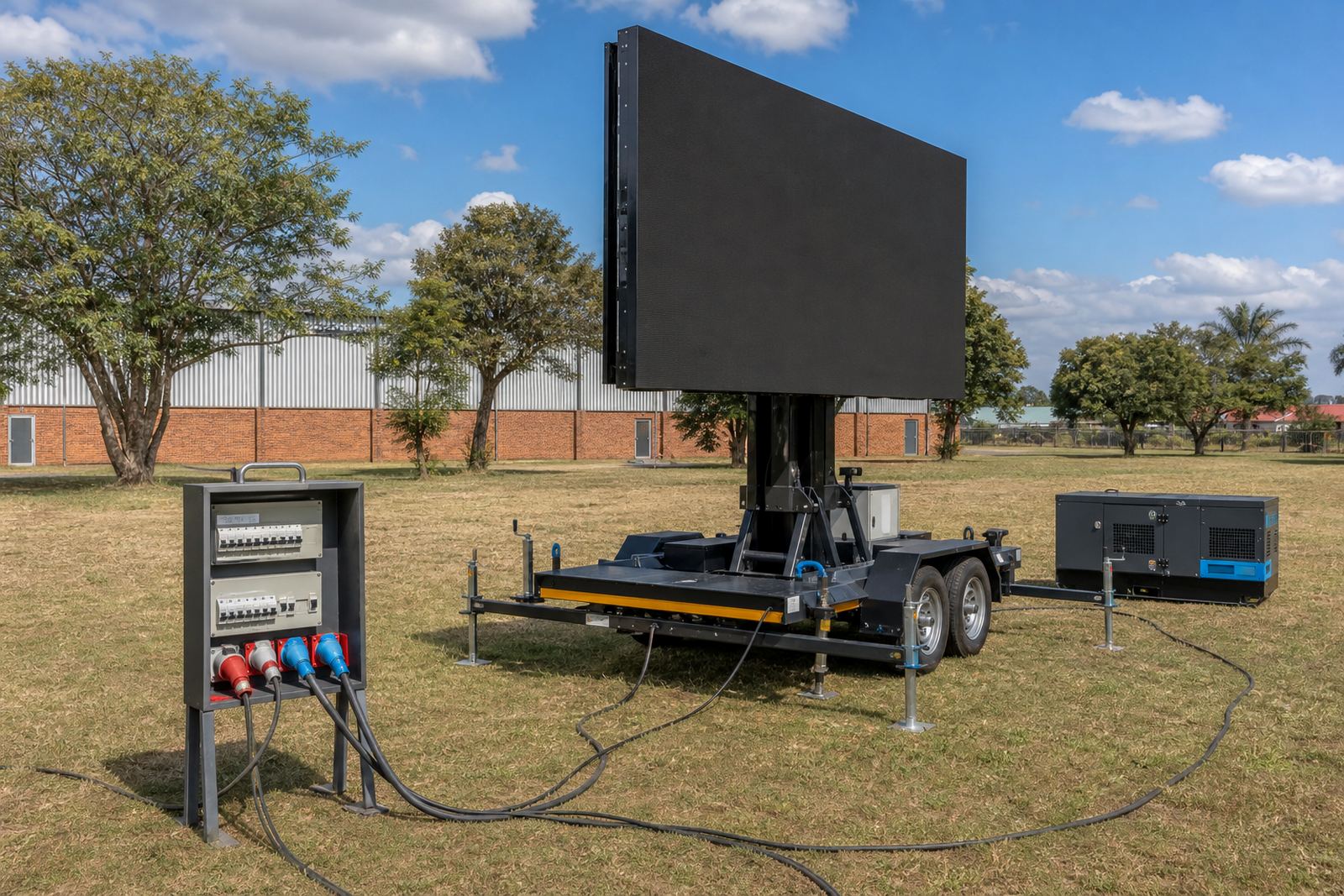
Some trailer screens run from generator power, while others can be connected to mains power where the site has a suitable supply. The choice depends on the location, duration and the electrical points available on site. It also affects cable runs, cable protection and where the power unit can be placed without blocking movement.
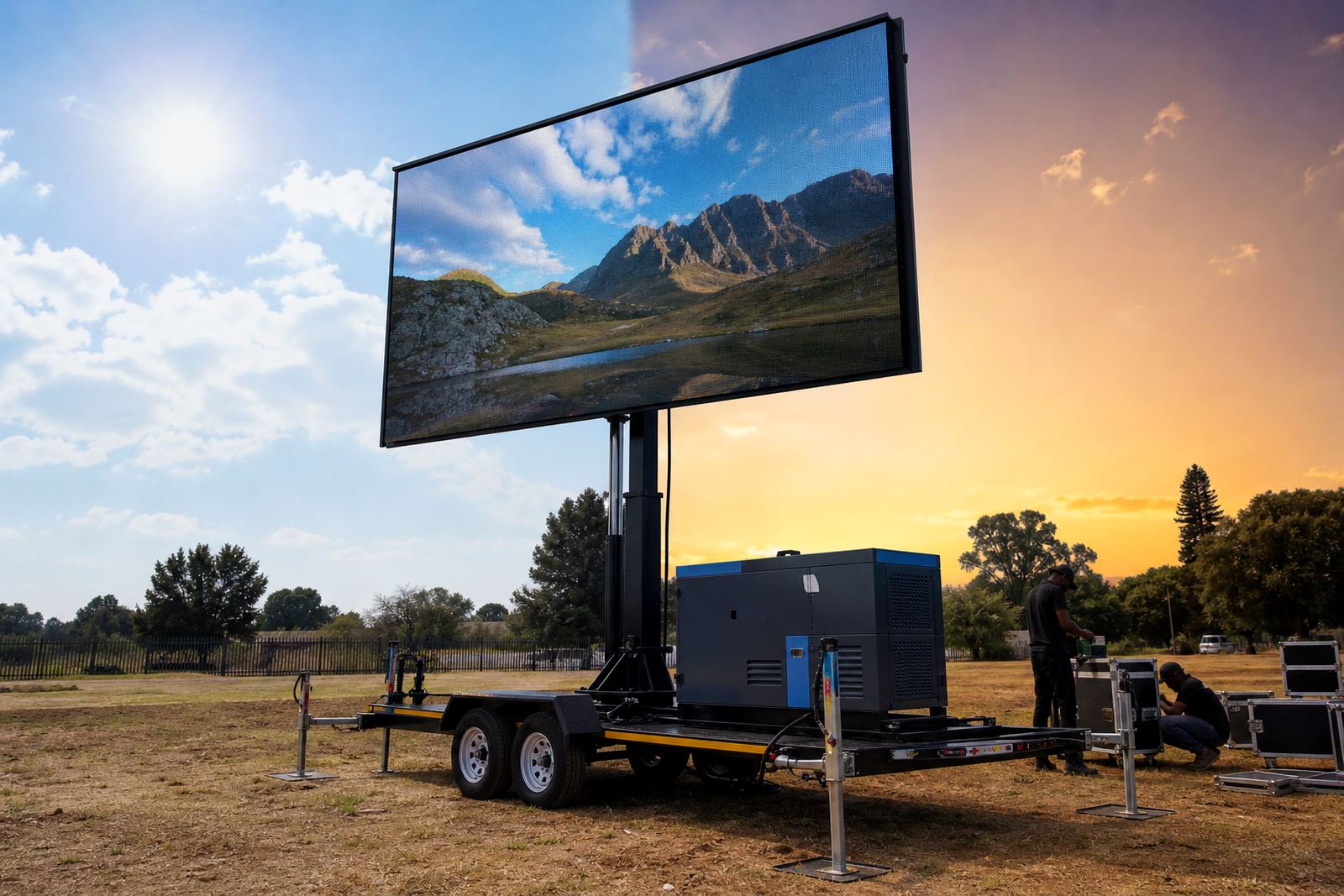
Content playback also needs space and planning. The screen may need a media player, a laptop or a live feed connection, and there should be room for the technician to work without standing in traffic. For daylight use, high brightness panels are preferred so the image stays visible in strong sun, while pixel pitch is chosen according to viewing distance and screen size.
For events in Johannesburg, Pretoria, Durban, Bloemfontein and Polokwane, we also look at wind exposure, the open side of the site and nearby structures that can affect placement. Where required, permit guidance is handled in general terms so the organiser understands what the local authority may ask for before a trailer is positioned in a public or semi-public space.
What the site team checks on arrival
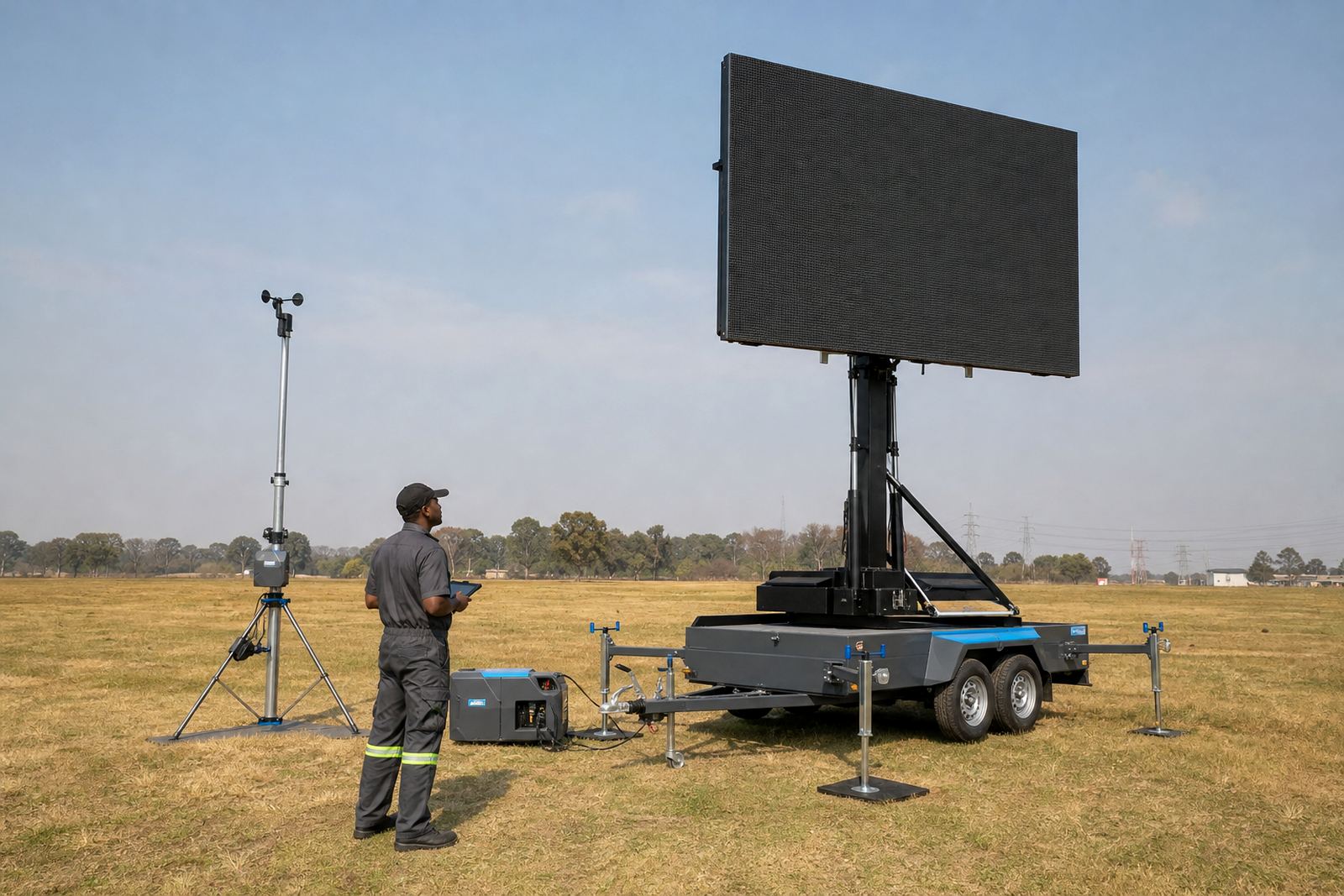
Once the trailer reaches the venue, the technician checks the ground, the angle, the power arrangement and the playback chain before the screen is raised. A clean arrival still needs a proper first look, because a site can change after rain, after crowd barriers are moved or after other vehicles have used the area.
- Trailer position and level.
- Clear space for lifting and rotation.
- Wind conditions and safe working limits.
- Power source and cable route.
- Content file or live feed readiness.
- Pedestrian and vehicle separation around the screen.
That review also helps with pack down later. If the team understands how the trailer was parked, how the cables were routed and where the access points sit, the removal is easier and the surface is less likely to be marked or damaged.
Points to run through before you confirm the booking
Do a final pass before the date is fixed. It helps the organiser avoid the common problems that delay a setup or force a last-minute site change.
- Is the entrance wide enough for the trailer and towing vehicle?
- Can the vehicle turn into the site without reversing across traffic?
- Is the surface firm, level and free of major damage?
- Is there enough height clearance for gates, branches and cables?
- Is the screen visible from the viewing area without blocking exits?
- Is the power plan confirmed, whether generator or mains?
- Has permit guidance been checked where public space is involved?
When the answer is yes to those points, the site is usually ready for the next step. LEDBox works from Germiston, with delivery, setup and on-site technicians across South Africa, and our contact form can be used when a site sketch, photo or access note needs to be sent through.