Start with the movement around the store, not the screen
Before the first file is loaded, the site needs a clean view of how people arrive, pause and leave. At a retail park in Germiston or a busy frontage in Johannesburg, the real question is not only where the screen will fit, but where shoppers naturally slow down. A trailer screen works well where there is room for a clear line of sight, a safe buffer around the unit and a route for delivery vehicles without blocking bays or emergency access.
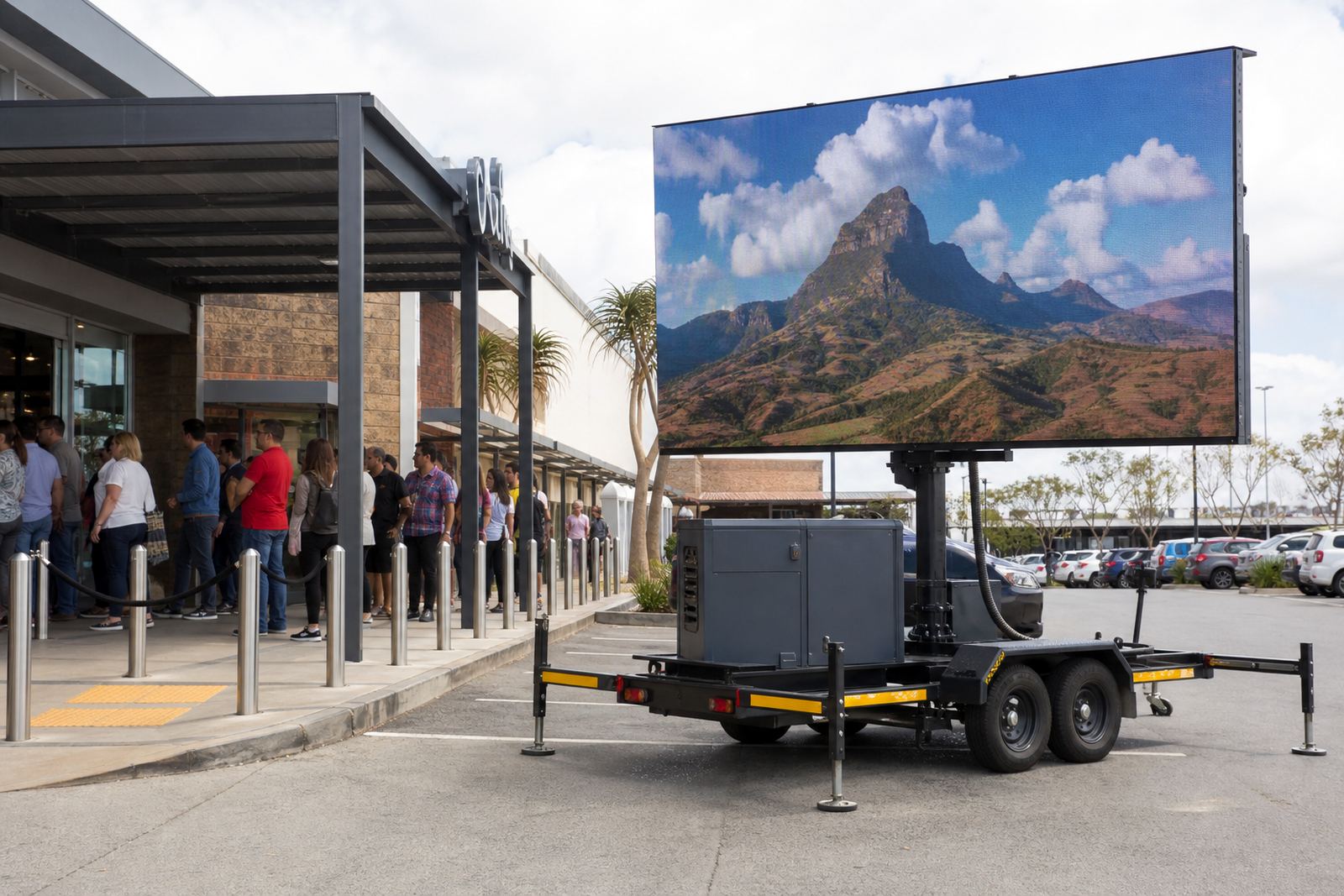
Foot traffic near a store entrance often rises and falls in waves. That is where screen placement matters. If the unit sits too close to the doors, people bunch up and staff lose space. If it sits too far away, the message fades into background noise. The best spots normally sit just off the main approach, where shoppers can see the loop while still moving naturally through the site.
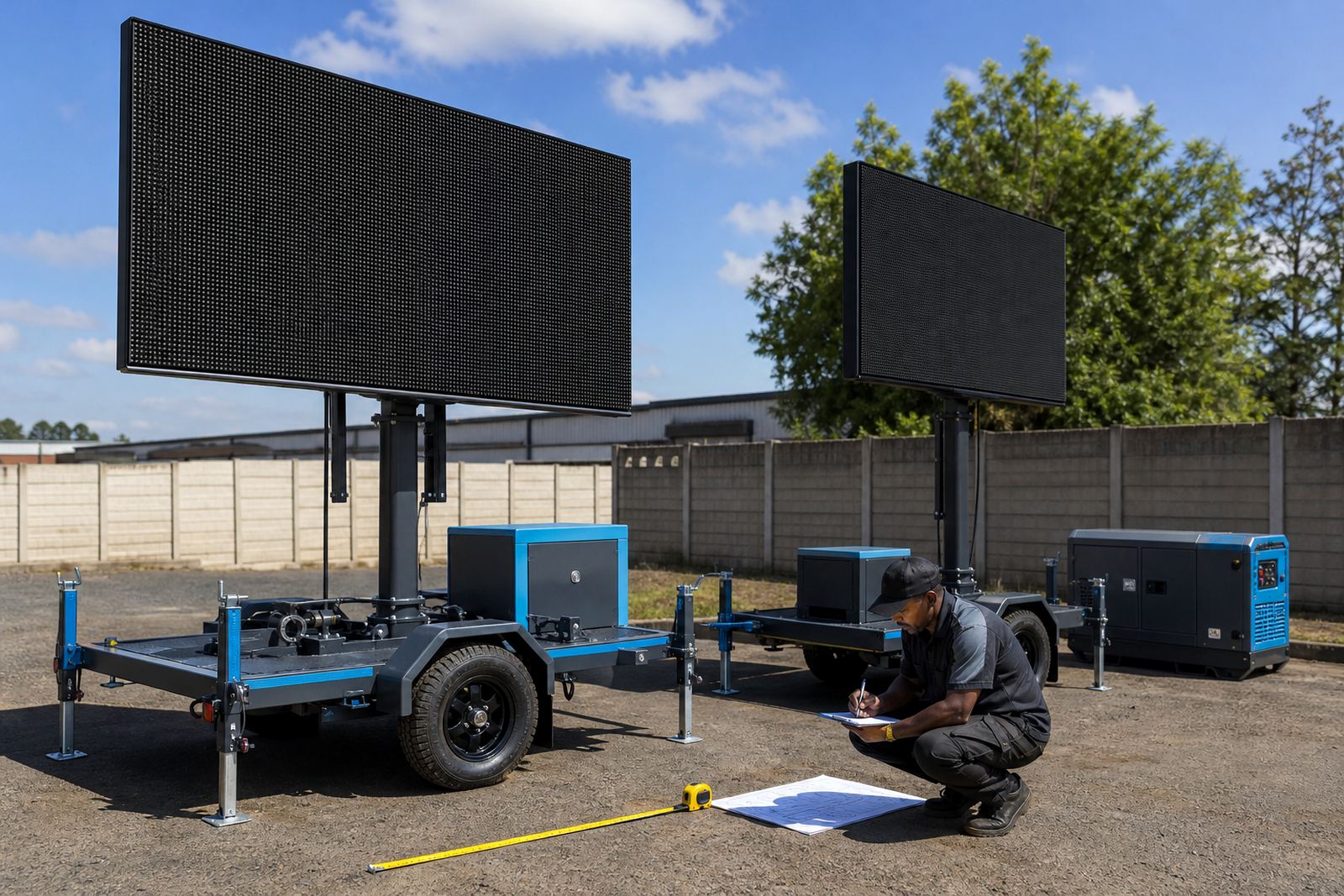
We use site checks to look at ground level, turning space, overhead clearance and any fixed objects that can interrupt sight lines. In retail work, the screen should support the queue and the promotion table, not compete with them.
Match pixel pitch and brightness to daylight viewing
Outdoor LED screen trailers for retail activations need strong brightness so the image holds up in full sun, open forecourts and late afternoon glare. Pixel pitch depends on the viewing distance. A tighter pitch suits viewers who stand closer to the screen, while a broader pitch works where people are further back in the parking area or across an access lane.
For a mall edge in Ekurhuleni or a roadshow stop in Pretoria, the content should be designed around quick recognition. Large type, strong contrast and short messages read better than crowded layouts. A retail crowd is not standing still for long, so each frame must carry one clear action, one offer or one call to move further in.
Motion can help, but too much movement turns messy at street level. A clean cadence usually works better than a fast visual rush. That is especially true where shoppers are already handling bags, trolleys or children and only glance up for a few seconds.
- Use short loops with one message per frame.
- Keep key wording large enough for daylight viewing.
- Leave enough contrast for bright pavement and glass reflections.
- Walk back to where shoppers will stand and watch the clip there before the whole day is loaded.
Build a queue plan that keeps people moving
Retail activations often fail when the screen gets attention but the queue does not make sense. The display can direct people to sampling points, a till queue, sign-up table or promotion shelf, yet the floor plan still has to carry the flow. If the queue crosses the screen sight line, people stop reading and staff lose control of the line.
The better approach is to let the screen point people towards the next step, then place the queue markers so the path stays open. In Durban, where wind and coastal humidity can affect outdoor work, and in Bloemfontein where open spaces can feel exposed, the site layout has to account for both comfort and safety. The technician also checks the angle of the trailer and the distance from public walkways.
For retail centres and street-facing campaigns, permit guidance may be needed through local municipal or centre management rules. That can include placement permissions, trading area limits and safety conditions around public access. The paperwork varies, so the site plan should be kept clear and simple.
- Mark the queue line before the screen starts running.
- Keep entrance, exit and emergency routes clear.
- Place staff where they can guide movement without crowding.
- Check whether the venue has its own outdoor display rules.
Set the playback rhythm around shopping behaviour
Retail screens work best when the playback follows the tempo of the site. A morning rush near a petrol station retail point needs a quicker rhythm than a weekend demo outside a shopping centre. Content loading should cover the day parts that matter, then allow the playback operator to adjust the loop when the crowd changes.
Live feed support can be useful for prize moments, product launches or score-linked promotions. Even then, the live section should sit inside a stable schedule, not replace it. The main loop still carries the sale message, the brand cue and the location details. When the content changes too often, staff spend more time fixing the flow than engaging the public.
On site, the technician manages playback, checks transitions and watches for image drift or audio imbalance where sound is used. If the brief calls for a retail announcement followed by a live draw or sports update, the screen needs a clean handover between files and a steady return to the main loop afterwards.
- Load the day’s content in the order it will run.
- Keep announcements short and easy to read.
- Separate promo loops from live inserts.
- Test every file before opening the site to shoppers.
Power, lifting and wind need proper planning
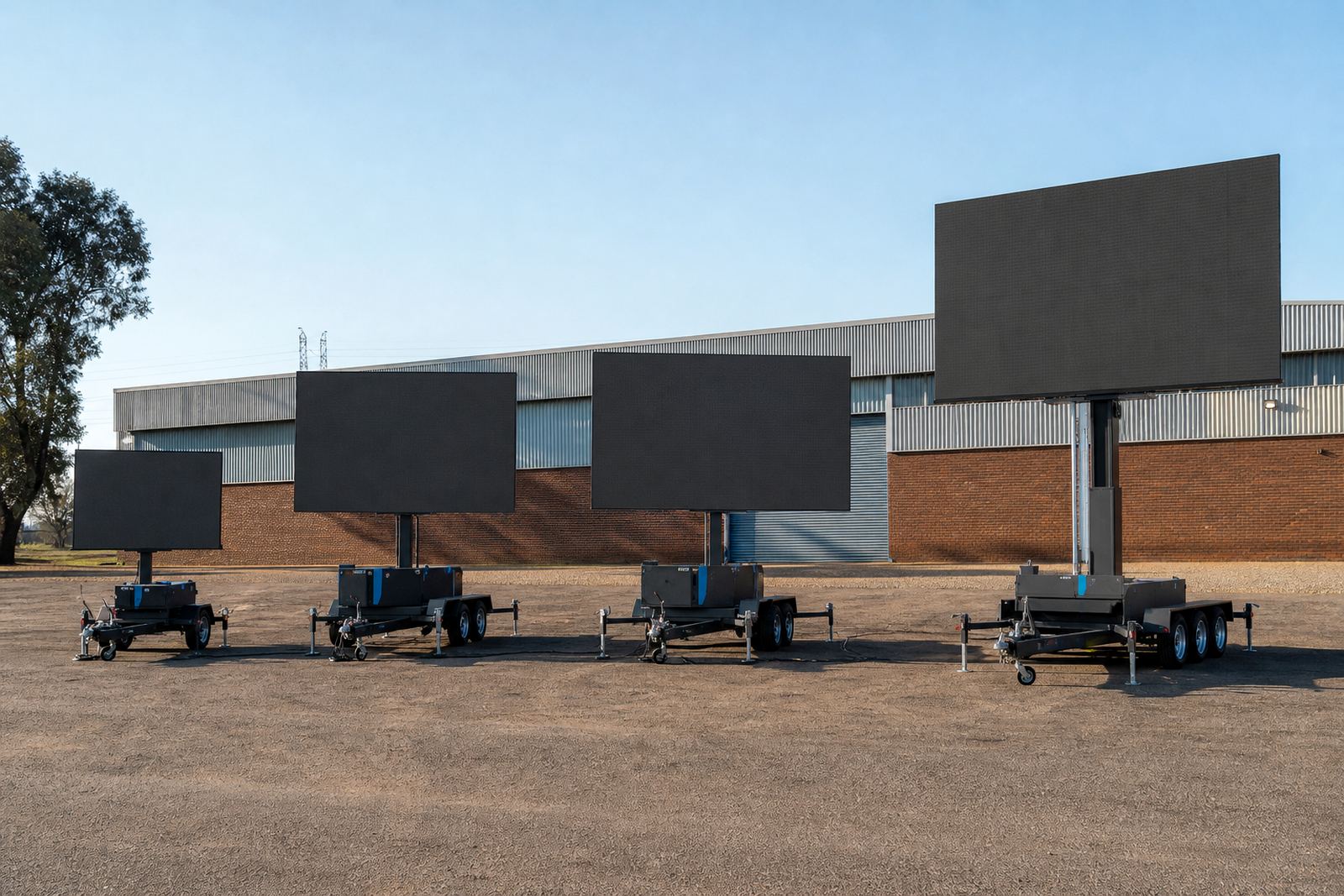
Outdoor LED screen trailers are built for fast setup, but the equipment still needs proper planning. Depending on the site, power may come from a generator or a mains feed, and the choice affects placement, cable routes and operating noise. At some retail sites, mains power is cleaner for a long run. At others, a generator is the more practical option because the screen sits away from fixed supply points.
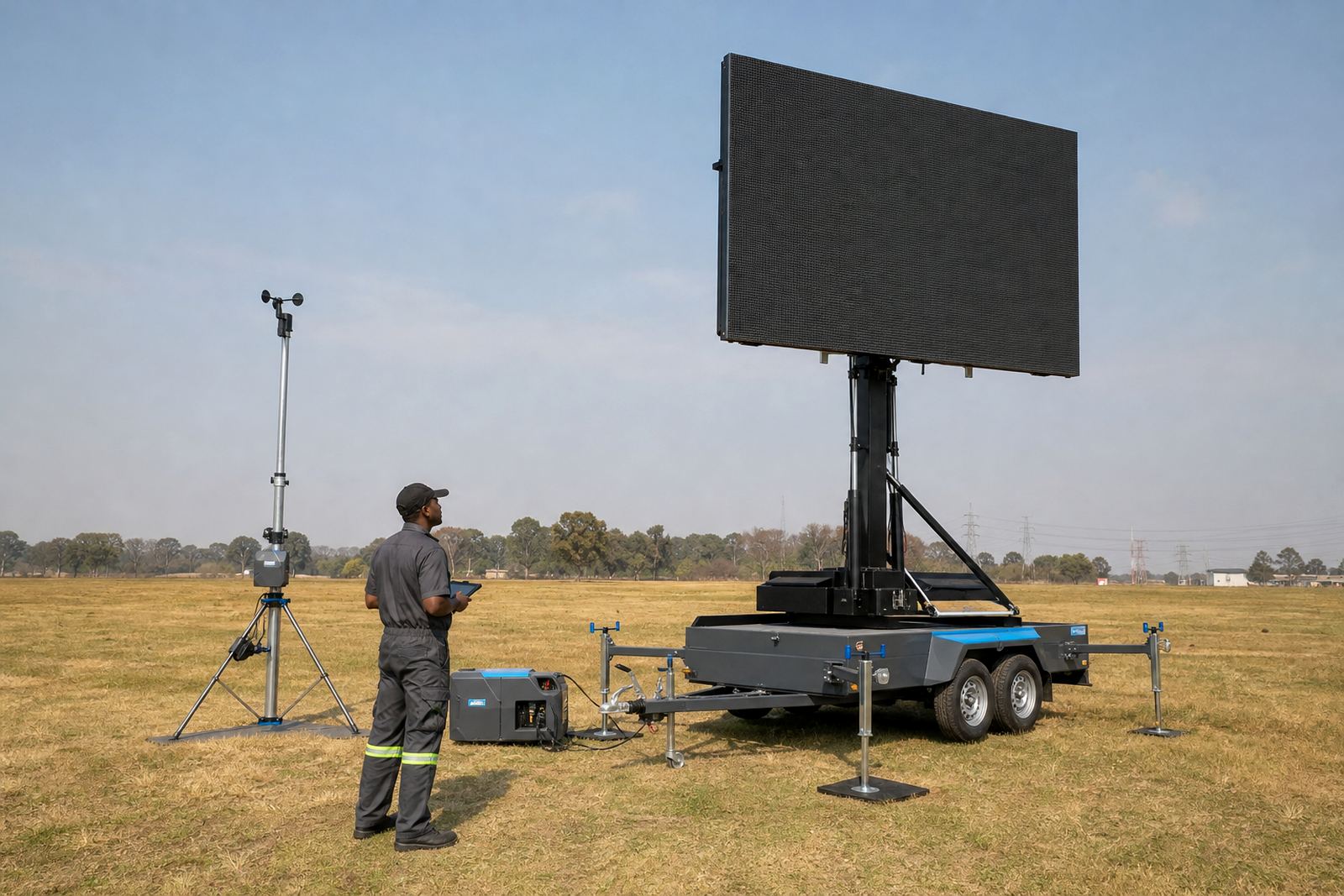
The hydraulic lift raises the screen into position and rotation can help with the viewing angle, especially where the crowd sits off to one side. The technician checks that the trailer is level, locked and positioned for the expected direction of viewing. Wind limits matter too. If conditions change, the screen may need to stay lowered or be paused until it is safe to continue. Every outdoor job gets this.
Pack down is part of the same discipline. The unit must leave the site without damaging paving, kerbs or nearby planting, and without leaving cable clutter behind. In multi-stop retail work across Johannesburg, Kempton Park and Polokwane, that attention to the ground makes the next stop easier to manage.
What to hand over before the trailer arrives
A good retail brief gives the crew enough detail to work cleanly. The delivery team needs the site address, access points, entry times, any height restrictions and the contact person on the ground. The content specialist needs the playback files in the right format, plus the order they must run in. The operations side needs to know whether the activation includes live updates, queue support or multi-stop movement between branches.
When the brief is tidy, the setup is simpler. The trailer arrives, the screen is positioned, the content is checked and the on-site technician stays with the unit through the run. If the campaign spans several locations, the route needs to allow for travel time, equipment checks and the different ground conditions at each stop. That is where multi-stop planning saves wasted movement and keeps the activation steady.
Retail work is at its best when the screen, the staff and the floor layout all point in the same direction. The display carries the message, but the site carries the crowd.
- Site address and access instructions
- Preferred power option, if known
- Content files and playback order
- Permit or venue notes
- Queue plan and public access points
- Multi-stop route details where needed