
Read the foot traffic before the screen position
Audience flow starts with the ground, not the screen. People arrive in clusters, pause at gates, drift toward food points, and cross open patches when they are looking for shade or shade-like cover. If a trailer is planted across that movement, the crowd begins to split around it and the space feels tighter than it should. That affects safety, comfort, and the amount of time people stay in view of the content.
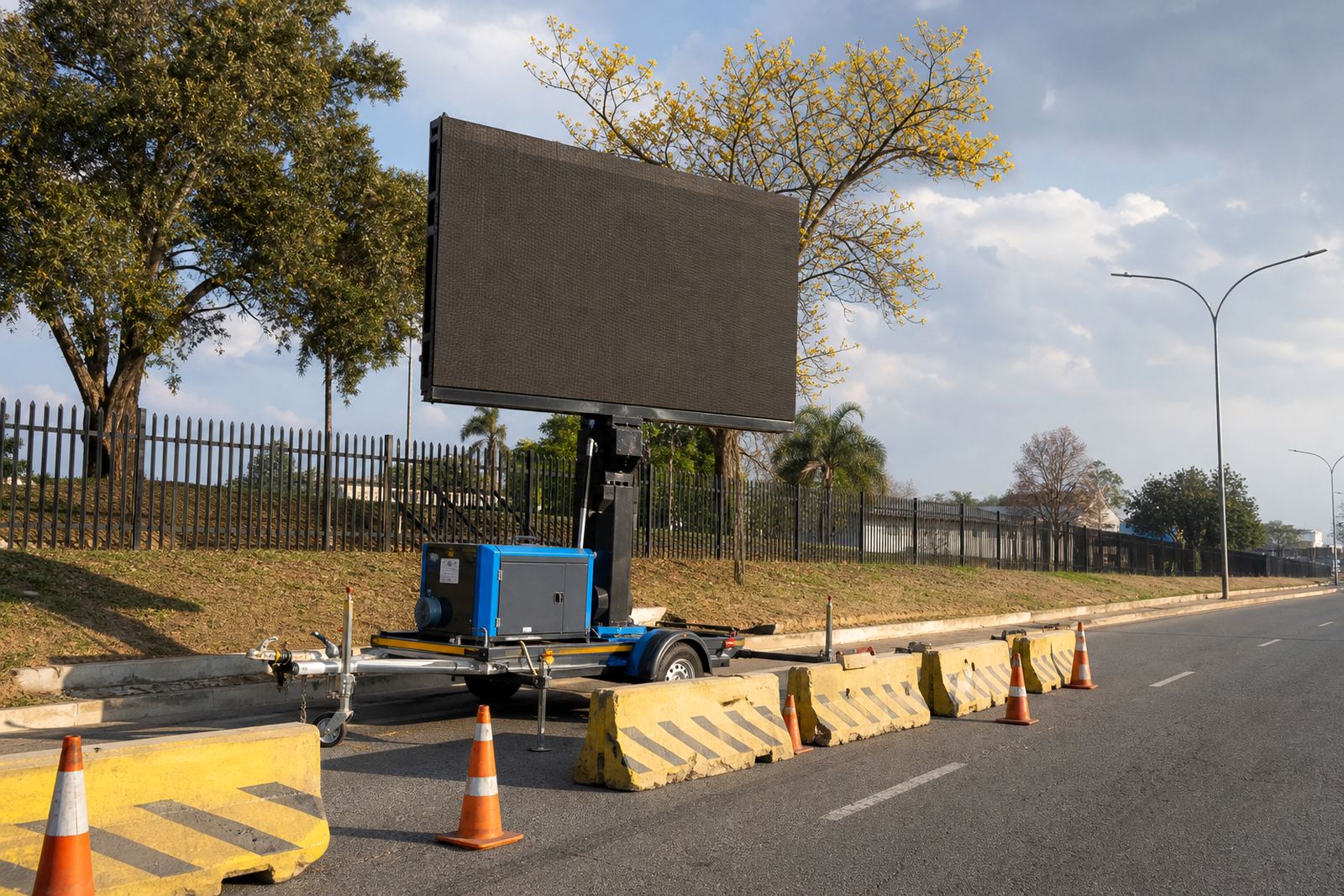
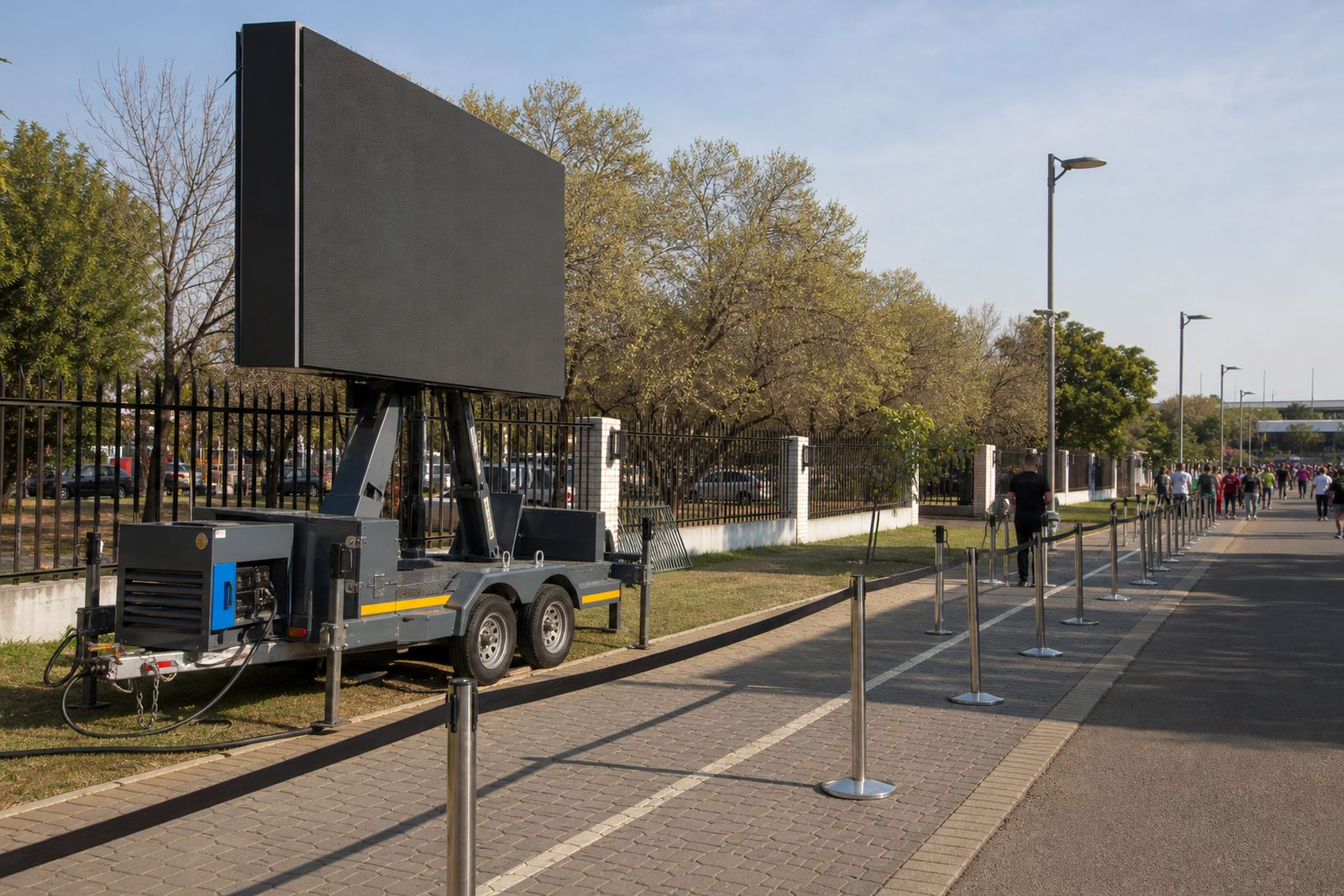
For outdoor LED screen trailers, the first site check should map where vehicles enter, where pedestrians collect, and which routes must stay open for marshals, service staff, and emergency access. In Germiston and the wider Ekurhuleni area, this matters on school sports days, retail activations, roadside campaigns and town-centre events where people do not stand still for long. A screen works better when it sits just off the main path, angled toward the natural pause point rather than straight across a walkway.
At a roadshow stop, the audience may only spend a few minutes in one place. The screen must catch them as they slow down, not force them to move around equipment before they can see the message. That is a layout decision as much as a technical one.
Use the trailer as a sightline marker, not a barrier
A well placed trailer does more than hold a display. It becomes a visual anchor that tells people where to look while still leaving the route under control. The hydraulic lift helps raise the LED box high enough for clear viewing, and the rotation can be set to face the heaviest flow without turning the setup into a roadblock. On larger grounds, that flexibility helps the crew place the trailer beside the movement line instead of in it.
Outdoor panels used on these trailers are built for daylight viewing, with brightness suited to harsh sun and changing cloud cover. Pixel pitch matters too, because the viewing distance changes from the front row to the back edge of the crowd. A tighter pitch suits closer viewing, while a wider pitch can still read cleanly from further back. The right choice depends on where people stop, how far they stand from the screen, and whether the audience is moving in small groups or standing in one dense block.
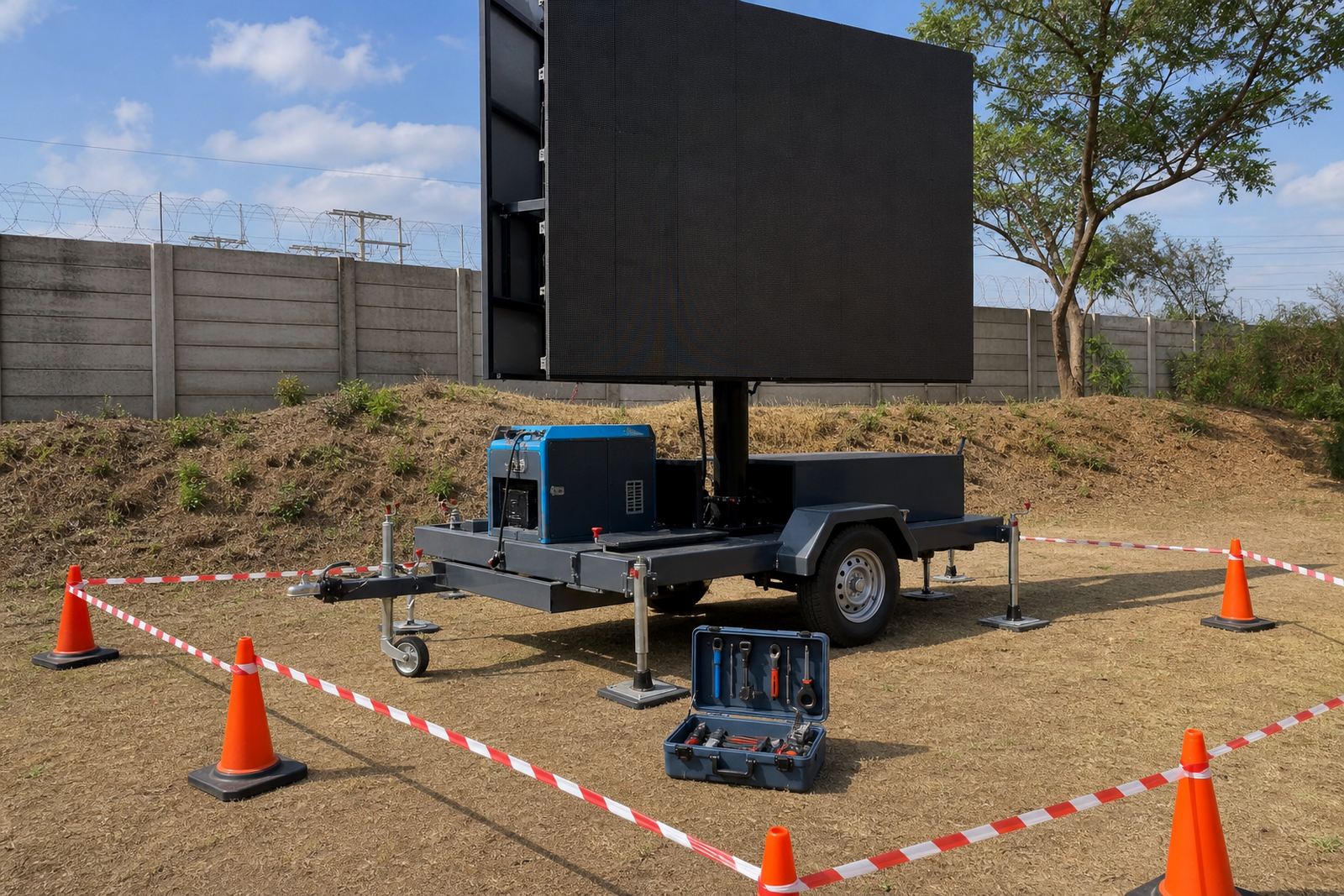
We also need to consider the practical rhythm of the setup. The screen should face the crowd, but the trailer itself must leave enough room for marshals, technical checks and pack down. A display that looks perfect from the front can be awkward to service if there is no working space behind it.
Keep key routes open for people and vehicles
Natural audience movement is easy to disturb. One trailer too far into a driveway can slow deliveries, and one screen too close to a pedestrian path can create bunching. That is why route planning sits alongside content planning. The crew needs to know where the audience is entering, where they are likely to stop, and which access lanes must remain clear throughout the day.
For municipal or private sites, permit guidance often comes down to practical placement. If the screen is near a public road, pavement, school gate, or transport route, the organiser may need permission or site approval before the trailer is positioned. It is also normal to confirm whether a generator is allowed on site, or whether mains power is available and suitable. Where the trailer runs on power from a generator, the generator position should not push fumes, noise or cable runs into the audience path.
- Keep entrances free of the trailer drawbar and tow lane.
- Leave marshals enough space to guide people around the screen area.
- Route cables so they stay clear of main walkways
- Place the screen where people can stop without blocking a gate or passage.
- Check wind limits before final positioning, especially on open fields and coastal sites.
A screen needs content that suits the crowd’s movement
Content playback matters because moving audiences do not read like a seated hall. If people are walking, the message has to be short, legible, and timed for quick recognition. A roadshow loop may need stronger contrast and fewer words than a display used at a sports day where spectators stay in one place for longer. Live feed support can also change the placement plan, because cameras, signal paths and playback control need a clean working position near the trailer.
Content loading should be handled before the crowd reaches its peak where possible, and the playback plan should match the site layout. If the trailer is set slightly off centre to keep a route open, the screen angle may need a small content adjustment so key visuals still land in the right part of the audience area. The technician on site should check that the first frames, logos, sponsor loops and safety notices all read clearly from the natural approach line.
In practice, that means screen placement and screen content work as one job. A beautiful clip can still fail if people only catch it while crossing the site. A plain but well timed loop can do far better when it matches the way the crowd actually moves.
Germiston sites often need room for shifting crowd patterns
In Germiston and across Ekurhuleni, audience movement changes with the venue. A school field fills from one side, a warehouse yard may open from a loading gate, and a roadside activation can pull people from both directions at once. The screen position needs to respect those patterns instead of fighting them. That is where a site check helps, because it shows where people naturally drift and where the truck, trailer or barrier line should not go.
For a local example, picture a community sports day in Germiston with parents arriving on foot, players moving between changing points, and service vehicles still needing access at the edge of the field. If the LED trailer sits on the main walking line, the crowd begins to split around it and the marshalling team works harder than it should. Place it a little off that line, face it toward the standing area, and the same screen becomes easier to view and easier to manage.
That same thinking carries into Johannesburg, Pretoria, Durban, Bloemfontein and Polokwane. Different cities bring different ground layouts, but the principle stays the same: do not make the audience route serve the screen, make the screen serve the route.
On-site technicians keep the layout honest
An LED trailer is not only a visual unit, it is a working piece of event equipment. The technician checks power, picture lock, brightness, content playback, wind conditions and the actual sightline after setup. If the crowd starts entering from a different side than expected, the screen angle or signage plan may need a practical adjustment. That is easier to handle when someone on site understands both the display and the movement of people around it.
Pack down also benefits from a clear audience flow plan. When the crowd has already been guided around a sensible route, the trailer can be closed down without fighting foot traffic, vehicles or a last minute squeeze at the gate. Multi-stop planning matters too on roadshows, because each next site has its own access points, stop lines and crowd pattern. What works at one venue may need a different set-up at the next.
- Use the site shape to place the trailer, not habit.
- Keep the audience path visible from the first arrival point.
- Match screen height and angle to the way people gather.
- Let the technician confirm the final position after setup.
- Plan for wind, power and pack down before opening the space.