
A trailer needs room before it needs attention
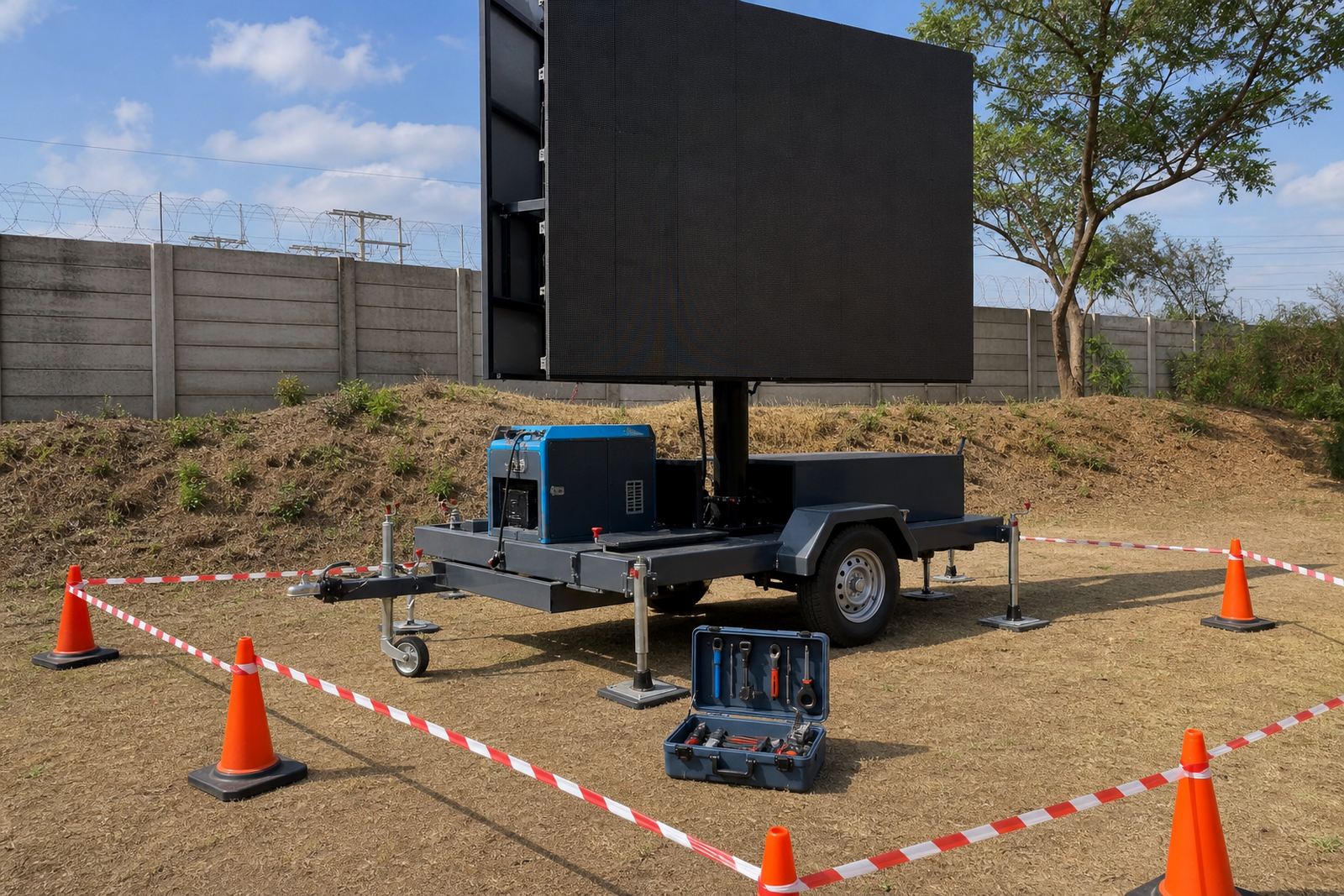
An outdoor LED screen trailer is not only a screen on wheels. It needs enough clear ground for the trailer, the stabilisers, the hydraulic lift and the crew working around it. When that space is tight, mark the setup zone out with cones and tape like any other work area.
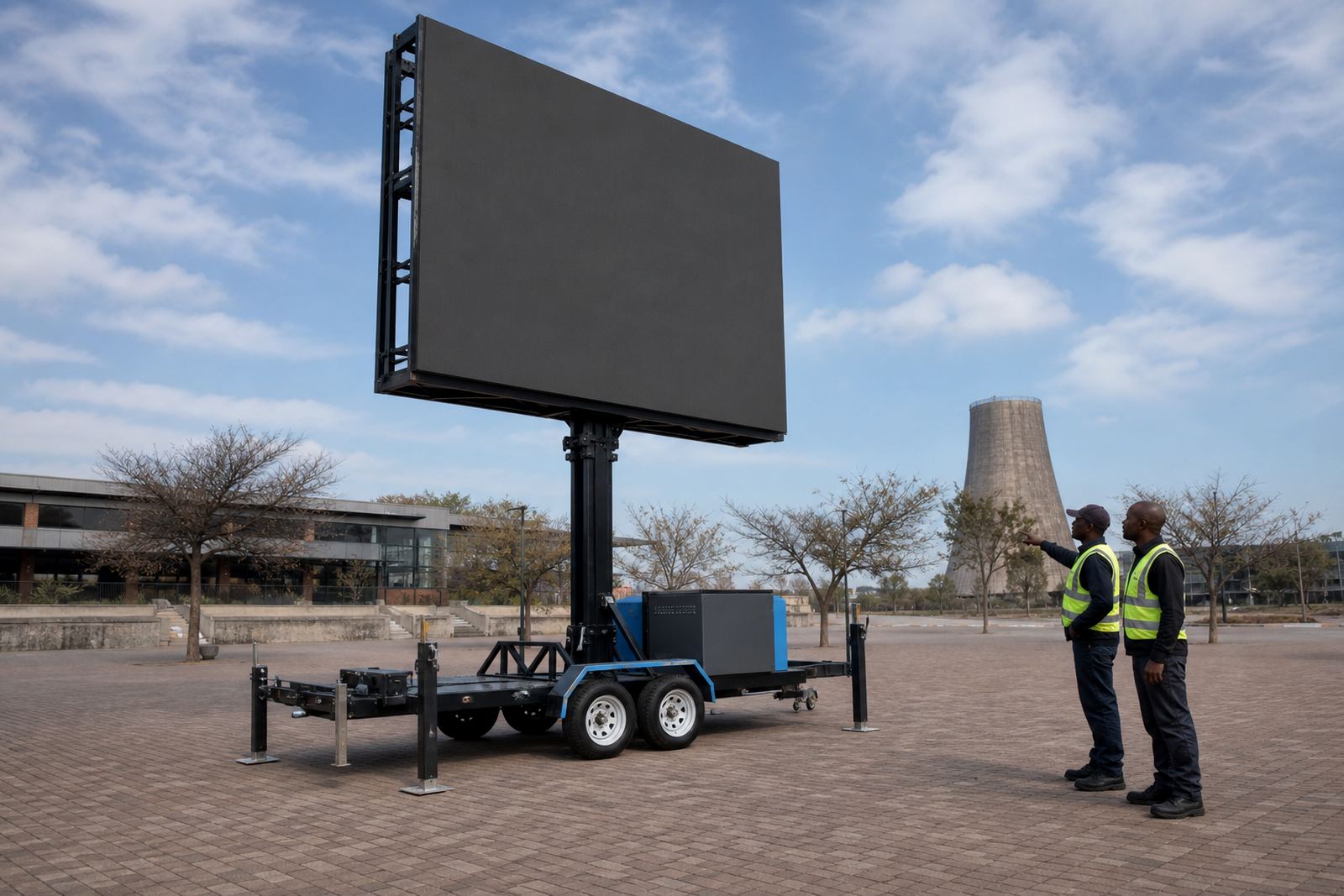
For daylight use, the screen face must be placed where glare is manageable and the audience line is clean. The operator also needs space for the playback unit, signal runs and any power changeover. On a roadshow stop in Germiston or Kempton Park, that often means keeping service access open on one side and pedestrian flow on the other.
- Leave clear access for the tow vehicle and trailer movement
- Mark the lift radius before the screen is raised
- Keep the control point away from public foot traffic
- Allow space for cable runs without crossing walk paths
Set the lifting zone before the crowd arrives
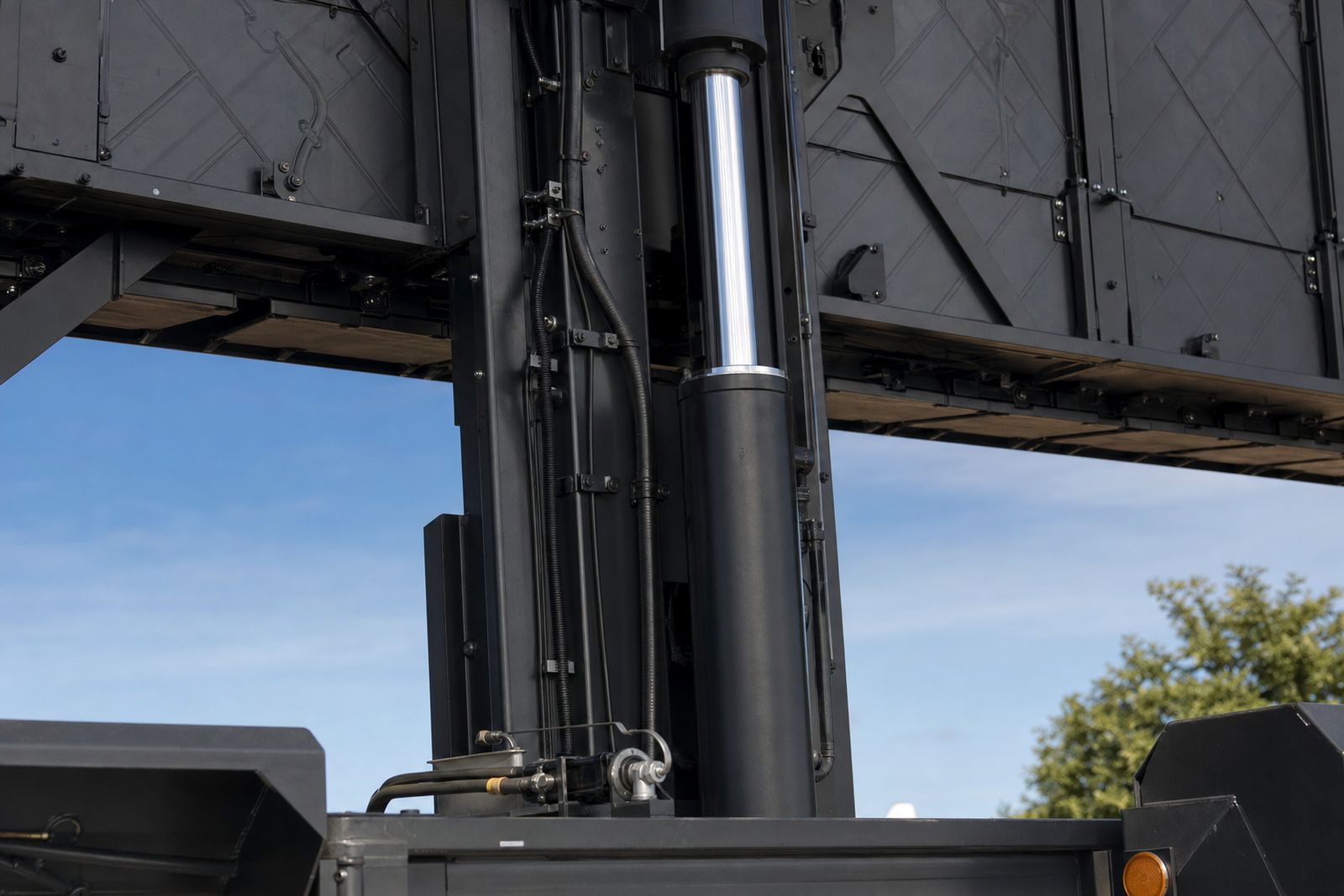
The hydraulic lift raises the LED box into view, and that action needs a controlled footprint. The ground should be level, firm and free of loose gravel, potholes or soft soil that can shift under load. If the screen needs rotation, the swing path must stay clear of fencing, trees, light poles and vehicles.
Wind matters too. Even a well-built trailer should only operate within its rated wind limits, and the crew must keep an eye on changing conditions through the day. In open spaces around Pretoria or Durban, a wind rise can mean pausing a lift, lowering the screen or adjusting the angle before people gather closer.
- Check ground firmness before stabilisers are set
- Keep the rotation arc free of poles and branches
- Watch the wind before and during the event
- Do not let vehicles park inside the working zone
Cables, generators and mains power need their own lane
Fix the power position at the same time as the zone. If the trailer runs from a generator, the set-up needs safe fuel placement, airflow and a position that keeps noise and exhaust away from the audience. If mains power is available, cable runs still need cover or routing that avoids trip points and wheel paths.
Content playback also sits in this area. The technician needs a stable point for the media player, signal checks and any live feed support, with enough shelter to work on the equipment without blocking the public side of the site. For sports days and promotions in Bloemfontein or Polokwane, a neat control strip keeps the job calmer when the crowd starts moving around the screen.
- Keep power cables separate from pedestrian routes
- Allow space for generator ventilation and access
- Place playback gear where it stays dry and reachable
- Use cable covers where people or trolleys cross
Permits, neighbours and municipal details
Temporary LED screen use can touch more than one local rule, especially where public space, road edges or event grounds are involved. Municipal permit guidance usually starts with site location, traffic impact, working hours, noise, access control and whether the screen faces public roads or private property. The exact process varies by town and the kind of venue.
A safe setup zone helps with that paperwork because it shows where the trailer sits, how the public is separated and how service access stays open. If the site is near a school field, shopping precinct or municipal open area, the plan should show who can enter the working side and how barriers are placed. Good notes save arguments on the day.
- Map the trailer position and public boundary
- Show access routes for crew and emergency vehicles
- Note any road edge, pavement or verge use
- Keep barrier placement clear on the site sketch
What a safe public edge looks like in practice
A safe zone is easy to read from the outside. People should know where the viewing area starts and where the working area ends. That means barriers, cones, tape or fencing where needed, plus a crew member watching the edge when the crowd gets curious. At a concert roadshow, the screen may draw people closer than expected, so the boundary has to stay obvious.
Screen brightness for outdoor use also matters here. In bright daylight, the operator may need a high-brightness panel setting so the image stays visible without forcing the audience to crowd forward. Good visibility helps keep viewers in the right place, because they do not drift towards the trailer just to make out the picture.
- Use barriers that create a clear working line
- Keep the audience side visually obvious
- Set the screen angle for viewing, not crowd pressure
- Assign a technician to watch the edge during busy moments
A Germiston roadshow stop done the tidy way
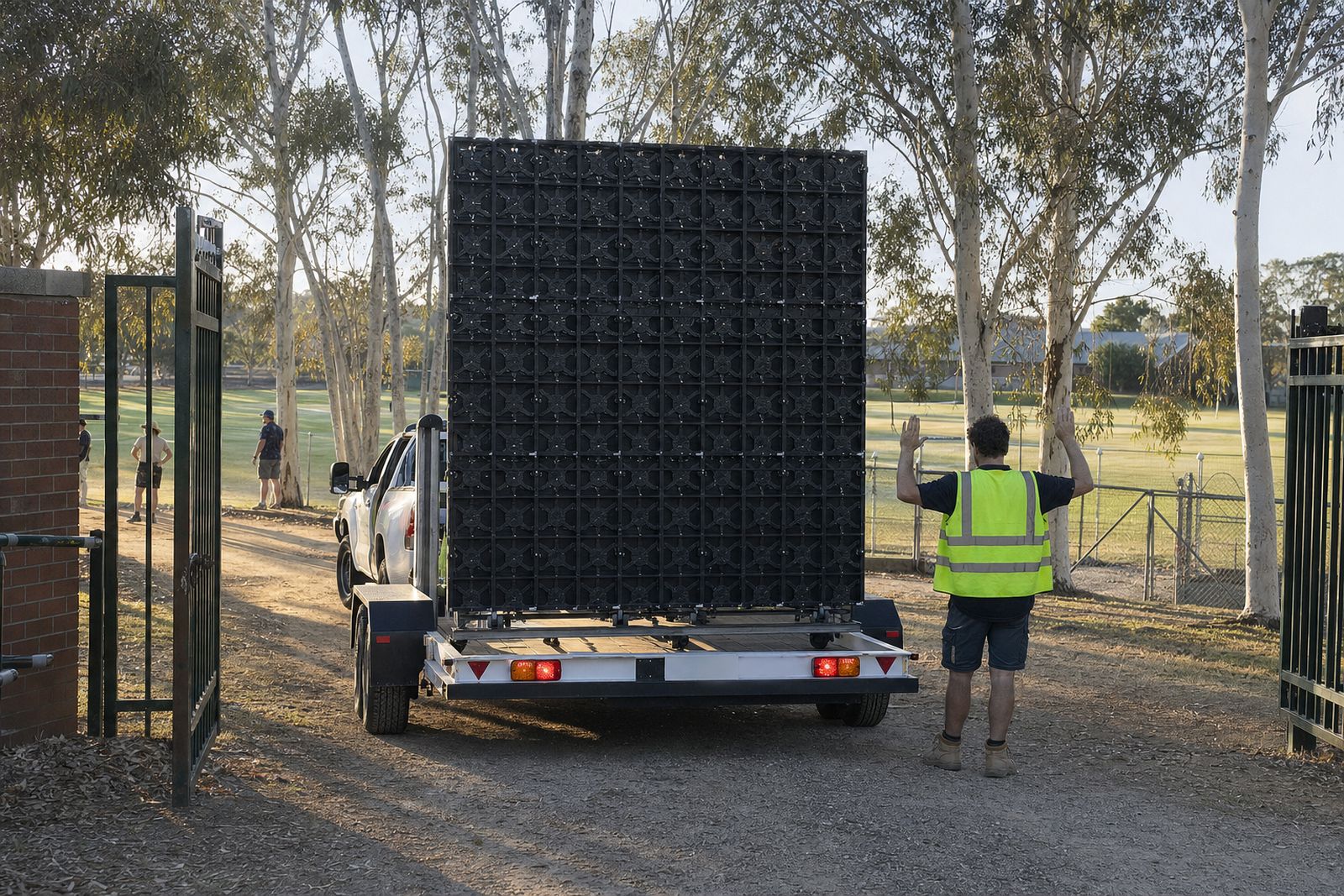
On a roadshow stop in Germiston, the safest setup often starts with a short site check and a measured parking plan. The trailer can be positioned so the screen faces the audience area while the rear keeps access for the technician, the cabling and any generator or mains connection. If the ground slopes or the entrance is narrow, that gets worked out before the lift starts.
That kind of layout also helps with pack down. When the working side stays clear, the trailer can lower, the cable runs can be lifted out cleanly, and the public never has to cross the service path. It is practical work, and it keeps the screen job orderly when the event space is full of movement.
For advertisers, event organisers and roadshow teams, a safe setup zone is not extra decoration. It is the space that lets the screen do its work without turning the rest of the site into a hazard.