The road edge is not a casual parking place
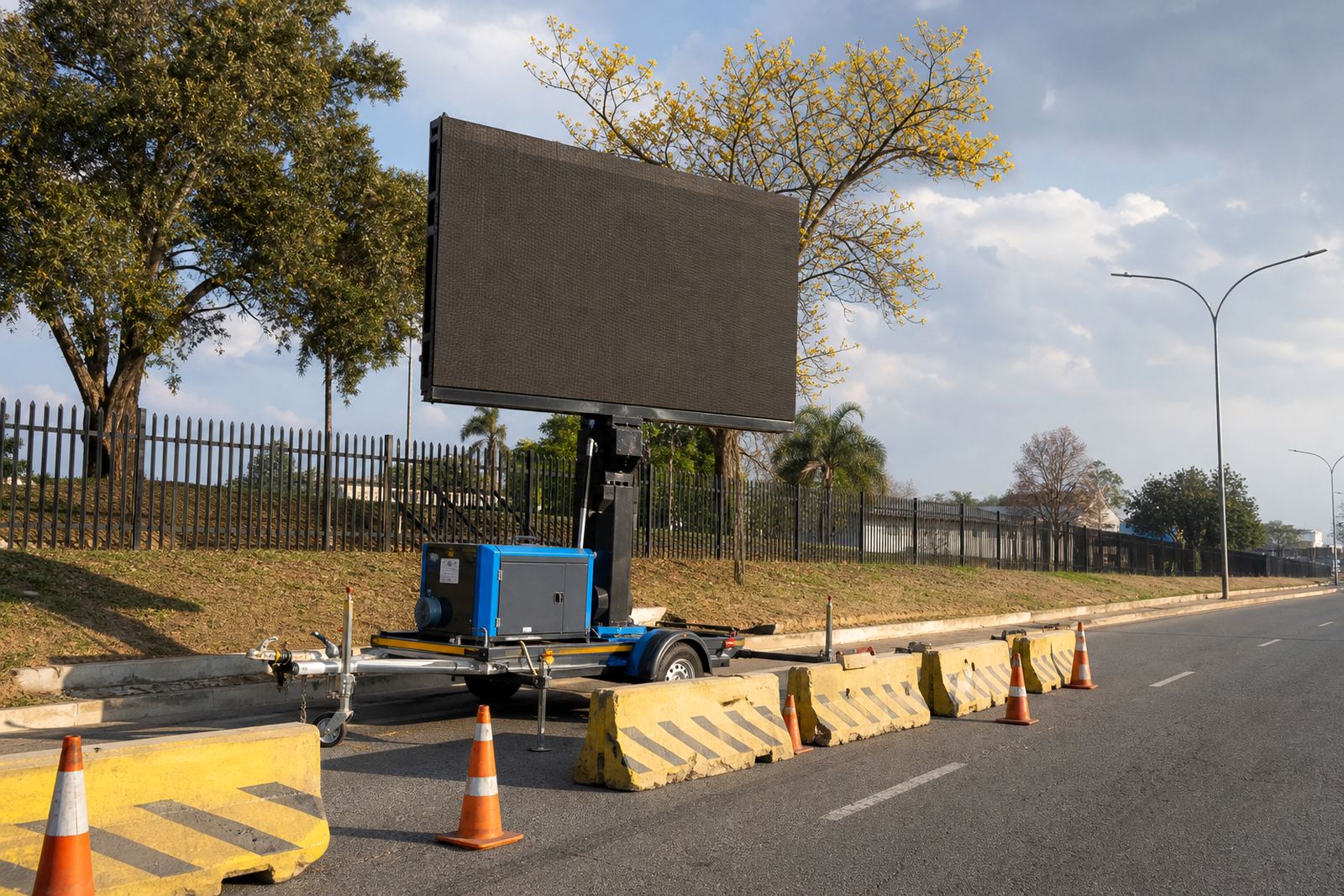
A trailer-mounted LED screen works best when the site is treated like a temporary roadside structure, not just a vehicle parked where there is space. The screen face has to be visible to drivers and pedestrians without pulling attention into a blind turn, a stop street, or a busy entrance where vehicles already brake hard. In Germiston and across Ekurhuleni, that means checking the verge, kerb line, driveway access and the distance to intersections before anything is lifted.
The site also needs enough room for the trailer, the towing vehicle, technicians and any barrier line. A unit that is safe on paper can still be a poor choice if a bus route, informal trader flow or delivery truck pattern makes access difficult. On public roads, the best position is the one that keeps the screen readable and the movement around it controlled.
- Keep the screen clear of traffic signals, signs and overhead obstructions.
- Leave enough setback for opening access panels and working around the trailer.
- Check the ground for slope, soft shoulders and drainage after rain.
- Allow for a safe viewing angle from the intended direction of travel.
Brightness, pitch and the daylight problem
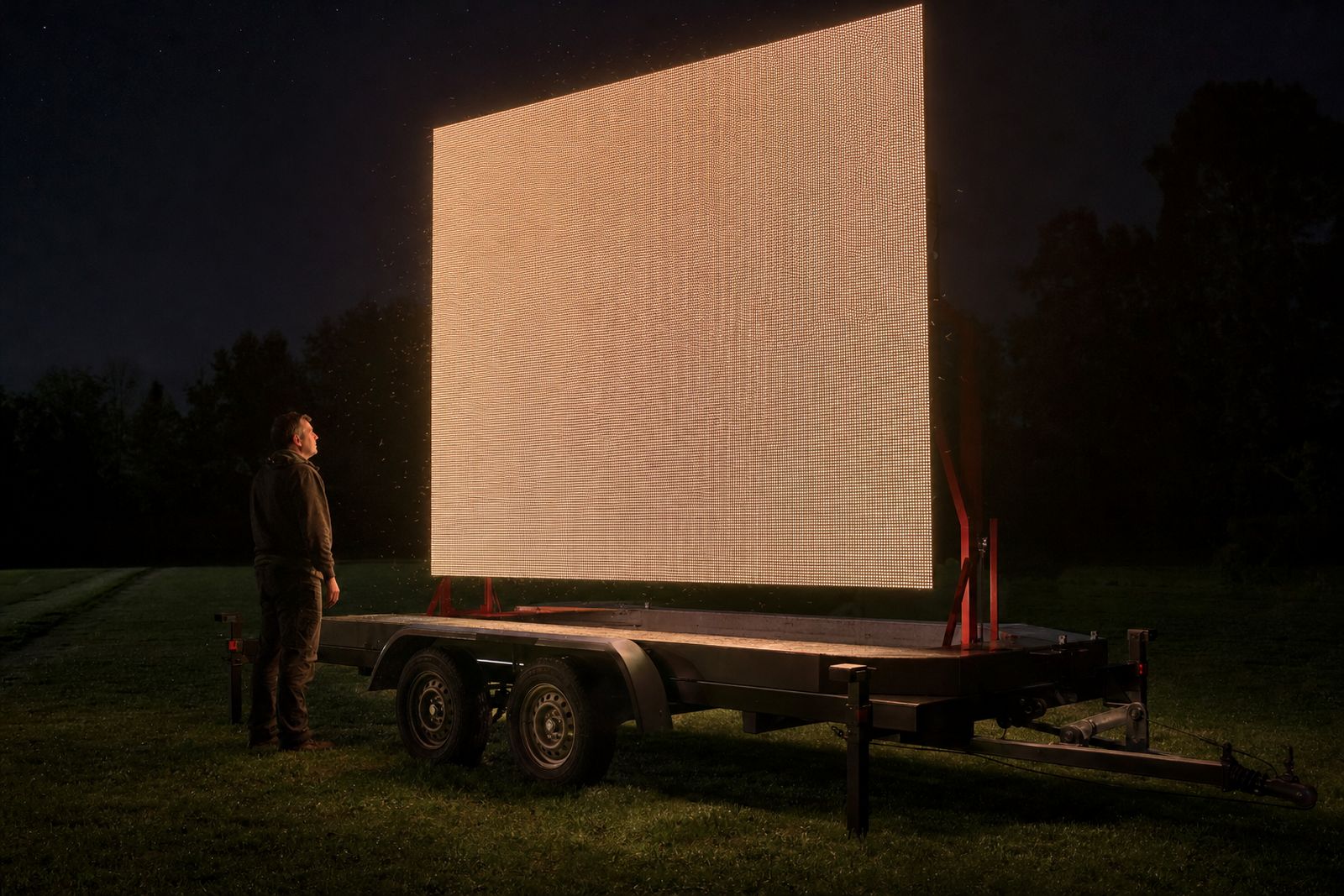
Outdoor LED trailers are usually specified with finer pixel pitches for closer viewing and higher brightness for daylight use. That matters on public roads where the sun, passing traffic and reflective surfaces all compete with the image. A screen that looks sharp in a shaded yard can wash out badly on an open road verge if the brightness level is too low or the content is built with small text.
For roadside use, the content itself must suit the viewing distance. Large lettering, bold contrast and simple motion work better than dense layouts. A driver moving past at normal road speed needs a message that reads in a few seconds, not a long paragraph or a busy slideshow. If the screen is positioned for foot traffic near a mall entrance or a sports ground, the same trailer can carry more detail, but the viewing distance still shapes what should be loaded.
- Match pixel pitch to the expected viewing distance.
- Use daytime brightness strong enough for direct sun.
- Keep text large and spacing generous.
- Avoid tiny logos or crowded artwork on fast roads.
Hydraulic lift, rotation and the real footprint
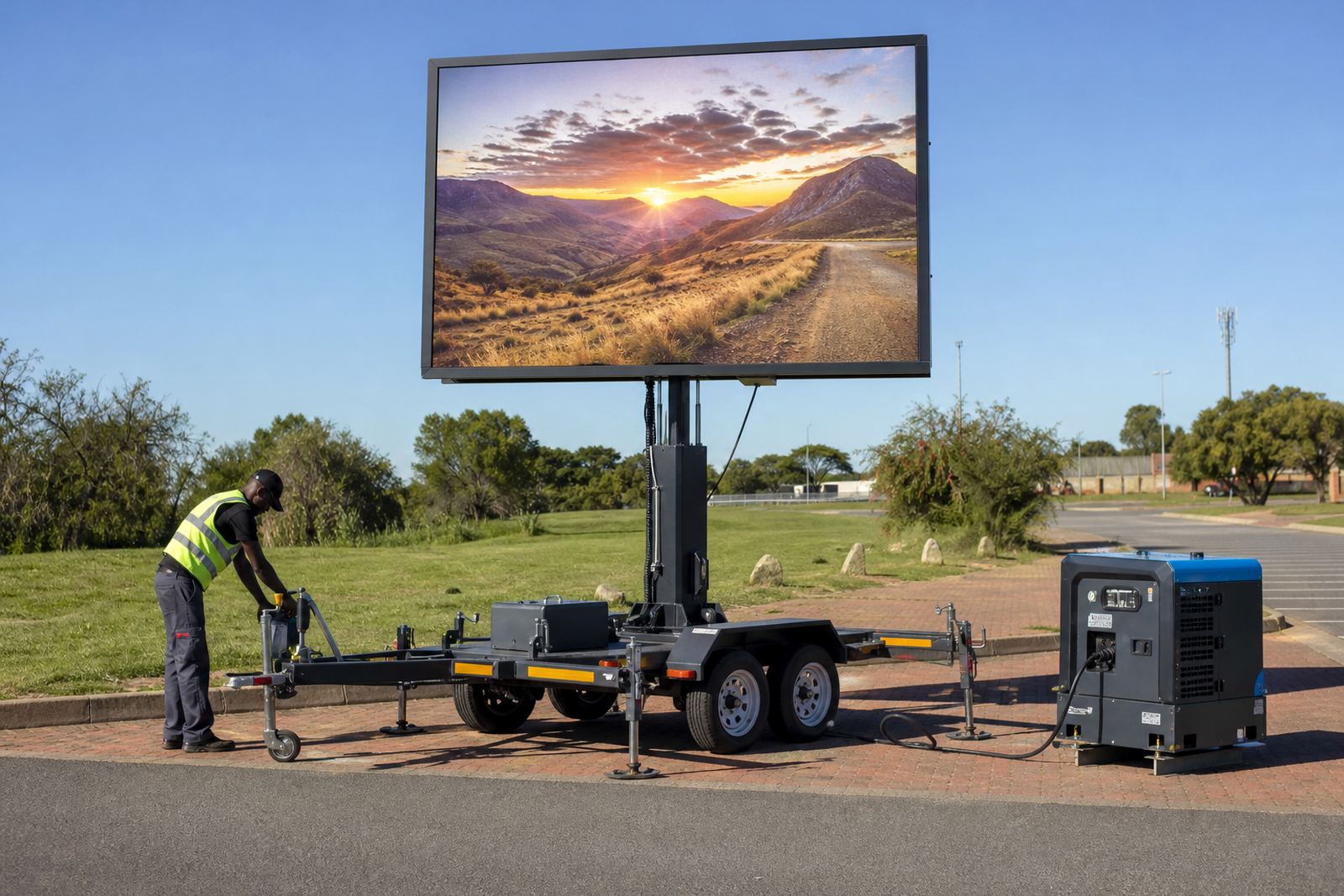
Many outdoor LED trailers use a hydraulic lift so the screen rises above parked vehicles, roadside walls and low obstructions. Some units also rotate, which helps when the viewing direction changes or when the site sits beside a roundabout, access road or parking area. Those moving parts are useful, but they also change the safety plan. The final footprint must be checked with the screen up, not only in towing position.
The technician on site needs room to operate the lift, lock the unit and inspect the stabilisers. If the road edge is narrow, a trailer may need a side street, forecourt or other controlled area rather than a main carriageway verge. That is one reason a site check matters before deployment. It shows whether the screen can face the audience without putting the team or passing traffic in a poor position.
- Confirm the raised height before selecting the site.
- Check rotation clearance against poles, trees and signage.
- Allow access for stabilisers and safe working space.
- Use a level surface where the trailer can sit securely.
Power, playback and what the technician needs on the ground
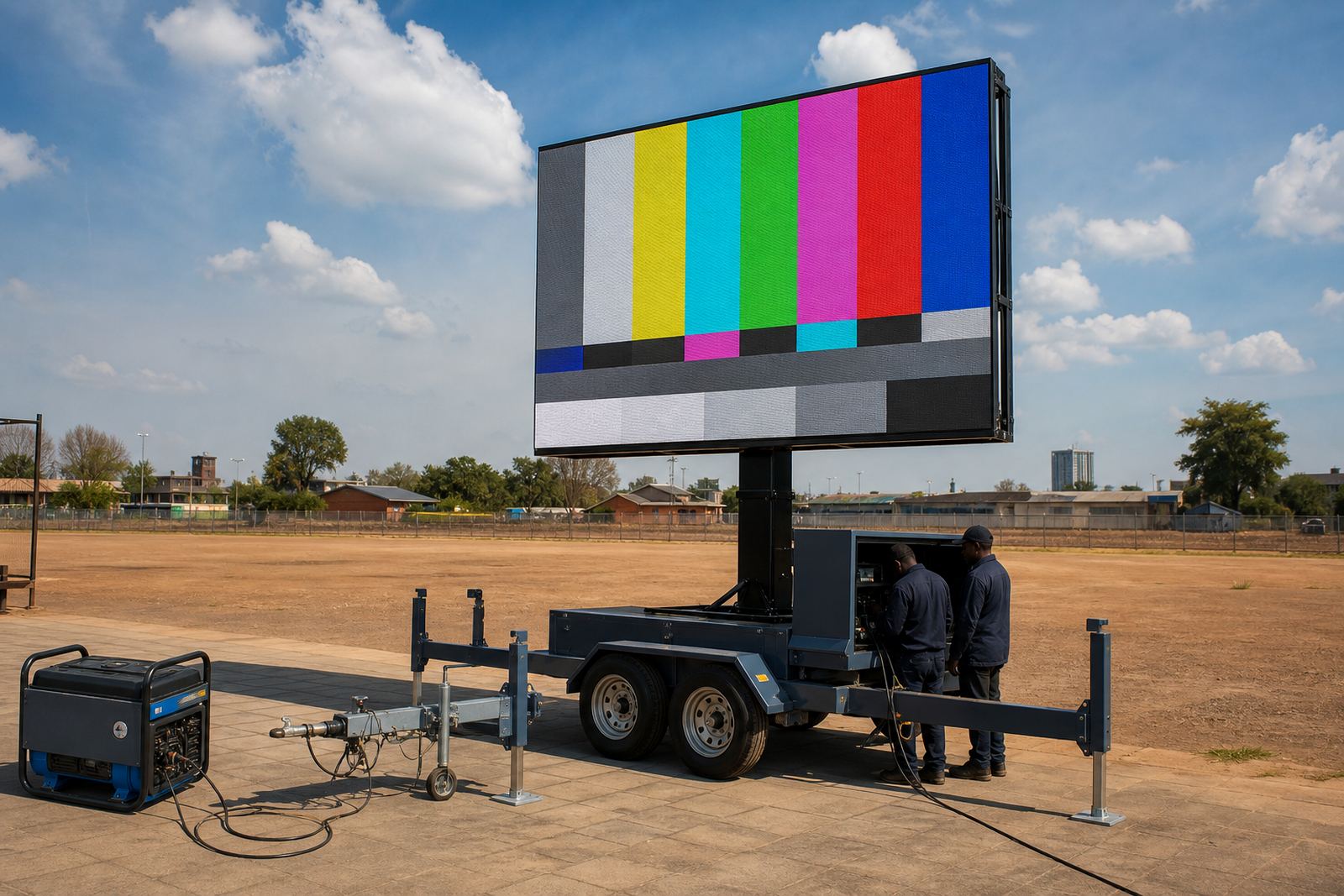
Roadside screens may run from a generator or a mains supply, depending on the site and the length of the campaign. Either way, power planning must be done alongside the viewing position. A screen that is well placed but poorly powered will not hold up through the full run. The same applies to content playback. The signal path, media player and live feed source need a stable, tidy setup so the screen can run without unnecessary interruptions.
Where the job includes live feed support, the team also has to check the source location, cable path and any mobile signal or data constraints. If the site is in Durban near the coast, moisture and salt air add another layer of care for connectors and cable runs. Inland sites such as Bloemfontein or Polokwane bring their own wind and dust considerations, especially on open road edges.
- Decide early whether the screen will use generator or mains power.
- Run the power lead behind the trailer, away from where people walk past.
- Test playback files before the trailer is set in position.
- Keep spare content loaded in case a live source drops out.
Permits, by-laws and the road authority conversation
Public road siting usually sits inside a mix of municipal rules, property permissions and traffic-related approvals. The exact paper trail depends on where the trailer stands, whether it faces a public road, and how close it sits to a boundary, intersection or municipal reserve. In general terms, roadside screens should be planned with the local authority in mind from the start, not as an afterthought once the trailer is already on site.
For work around Johannesburg, Pretoria or Kempton Park, the practical question is often whether the chosen position affects road safety, pedestrian movement or sightlines for motorists. A technician and site coordinator should be looking at the same issues the municipality would care about: visibility, access, safe set-up and whether the unit stays within the agreed placement. Proper planning means we do not need rushed changes on the day.
- Check whether the screen stands on public or private land.
- Confirm if road-facing placement needs municipal guidance.
- Keep clear of intersections, pedestrian crossings and bus stops.
- Record the final position so the same siting can be repeated lawfully.
Ten metres back from the kerb changed everything
On a roadside campaign in Germiston, the strongest result usually comes from a spot that lets the trailer face the target traffic while keeping access simple for the technician and delivery vehicle. An open forecourt near a controlled entrance often works better than a narrow verge beside fast-moving lanes. The screen can still catch passing motorists, but the team has room to manage the lift, load the playback material and keep the area tidy through the run.
A job like that may involve one screen or a multi-stop plan across Ekurhuleni, then on to Johannesburg or Pretoria, depending on the route and audience. The details change from site to site, but the principles stay steady: safe access, clear sightlines, proper power planning and a setup that respects the road. That is the difference between a screen that merely stands there and one that is placed with purpose.