
Midday sun does not soften the message
Outdoor screens have to compete with direct sun, bright reflections from paving and pale building facades, and the angle of the light as the day moves on. In Germiston and across Gauteng, a screen facing north or west can take a hard hit during the brightest hours, so the image needs enough luminance to stay readable from the crowd area.
High brightness matters most when the content carries short messages, live scores, sponsor frames or safety notices. If the screen looks dull, people stop reading it from a distance and the whole installation loses its value. That is why daylight performance starts with the screen spec, not the trailer body or the size alone.
Brightness, pixel pitch and viewing distance work together
Brightness is measured in nits, and outdoor LED panels for daytime use are commonly specified at high output so the image still holds under direct light. Pixel pitch affects how sharp the image looks at different distances. A tighter pitch gives finer detail, while a wider pitch is better suited to longer viewing distances and larger-format content.
The right balance depends on where people stand, how fast they move past the screen, and what will be shown. A sports day with families standing close to the fence needs different planning from a roadshow on a wide roadside verge. Brightness helps the picture survive the sun, while pixel pitch helps the picture keep its shape.
- Short viewing distances need tighter pixel spacing.
- Larger audience areas can work with wider spacing.
- Daylight content should use bold text and clean contrast.
- Fast-moving visuals need careful brightness and colour balance.
Trailer height and rotation help the screen face the light
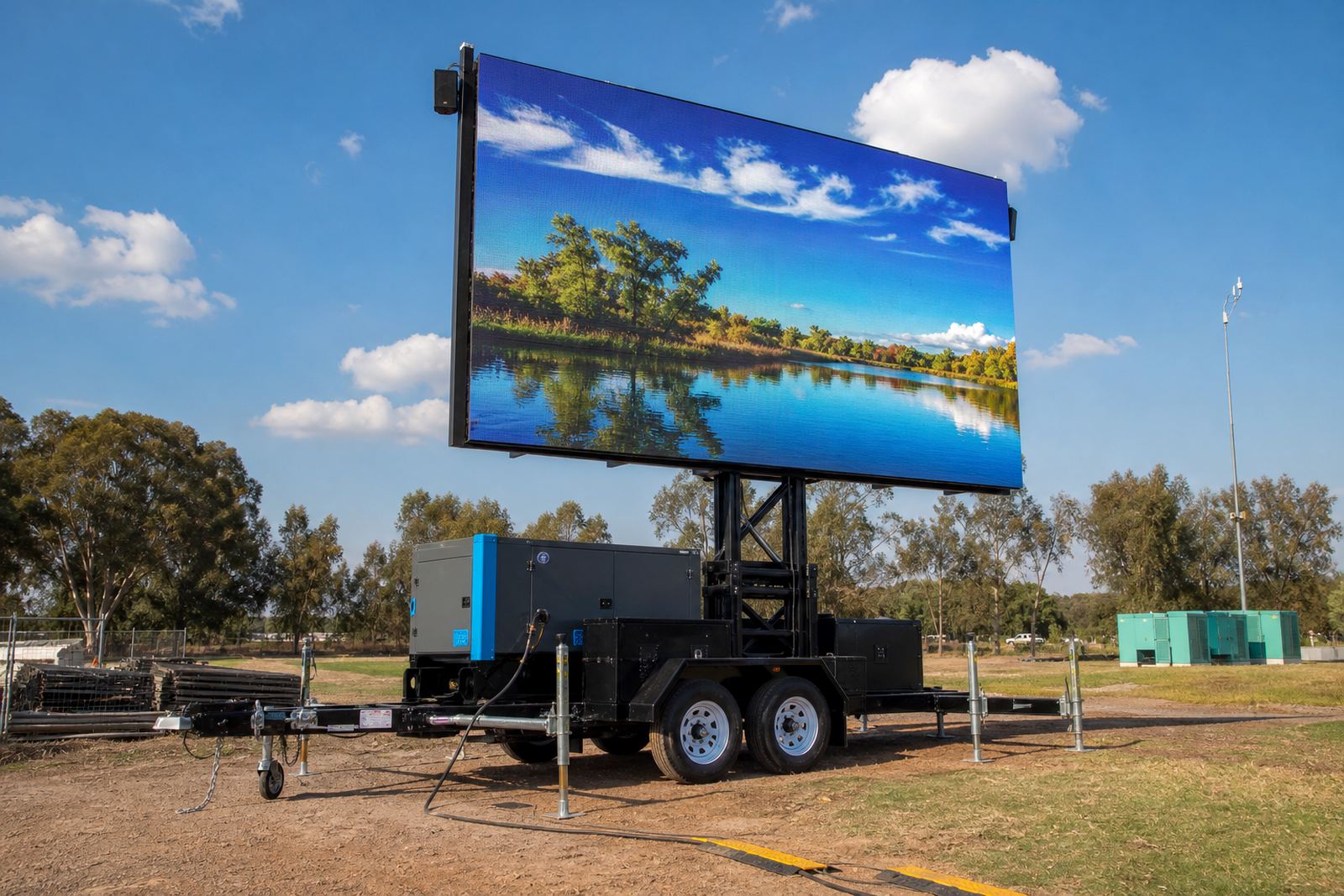
Outdoor LED screen trailers often include a hydraulic lift that raises the display into position, and some units can rotate to suit the site layout. That matters when a screen has to face the audience without catching glare from the wrong side. A higher screen can also clear parked vehicles, barriers, or low structures that would block the line of sight.
On a real site, the technician will look at the sun path, the crowd position and the available set-down space before the trailer is placed. If the screen is too low, people near the back struggle to read it. If it is angled badly, the daylight wins and the picture fades into the background.
Power choice affects how steady the picture stays
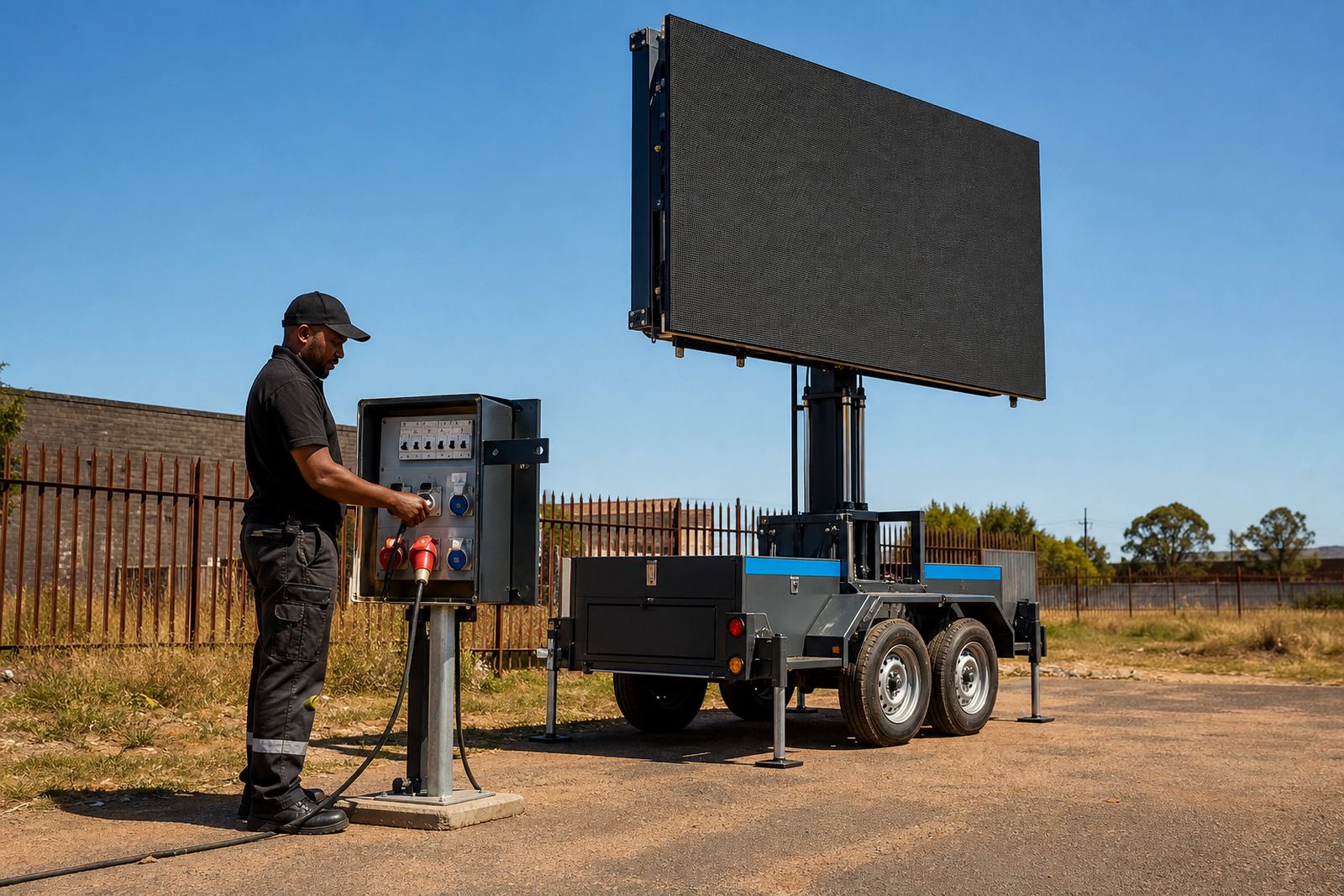
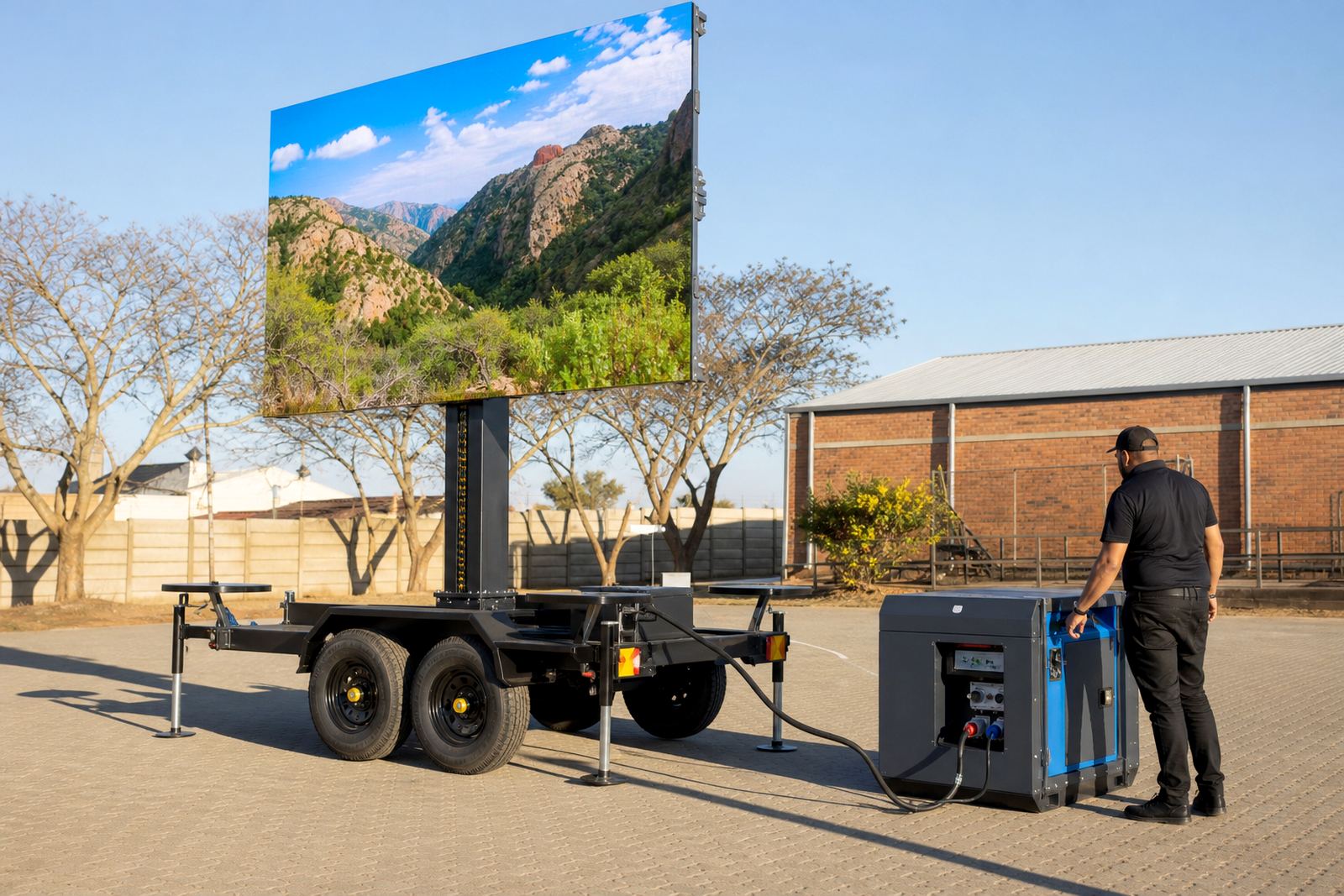
Some outdoor screen trailers run from a generator, while others can connect to mains power where the site allows it. The choice affects cable routing, fuel planning, noise, and the practical limits of the venue. For daylight work, steady power matters because the screen must keep its brightness level stable while the content runs.
At a public event, the team will normally check the site access, the available load point, and the placement for safe cable runs. A screen that is bright on paper but poorly powered on the ground can dip, flicker, or create avoidable interruptions. Good power planning keeps the image clear from the first cue to the last frame.
- Generator use suits open sites and mobile roadshows.
- Mains power can suit venues with approved supply points.
- Cable paths must stay clear of walkways and vehicle movement.
- Power planning should match the duration of the programme.
Wind, permits and site rules still matter in bright weather
Daylight brightness solves one problem, but the installation still has to stand safely on site. Outdoor LED screen trailers are set up with wind limits in mind, and the crew will monitor conditions before and during use. If the weather changes, the screen may need to be lowered or paused to stay within safe operating limits.
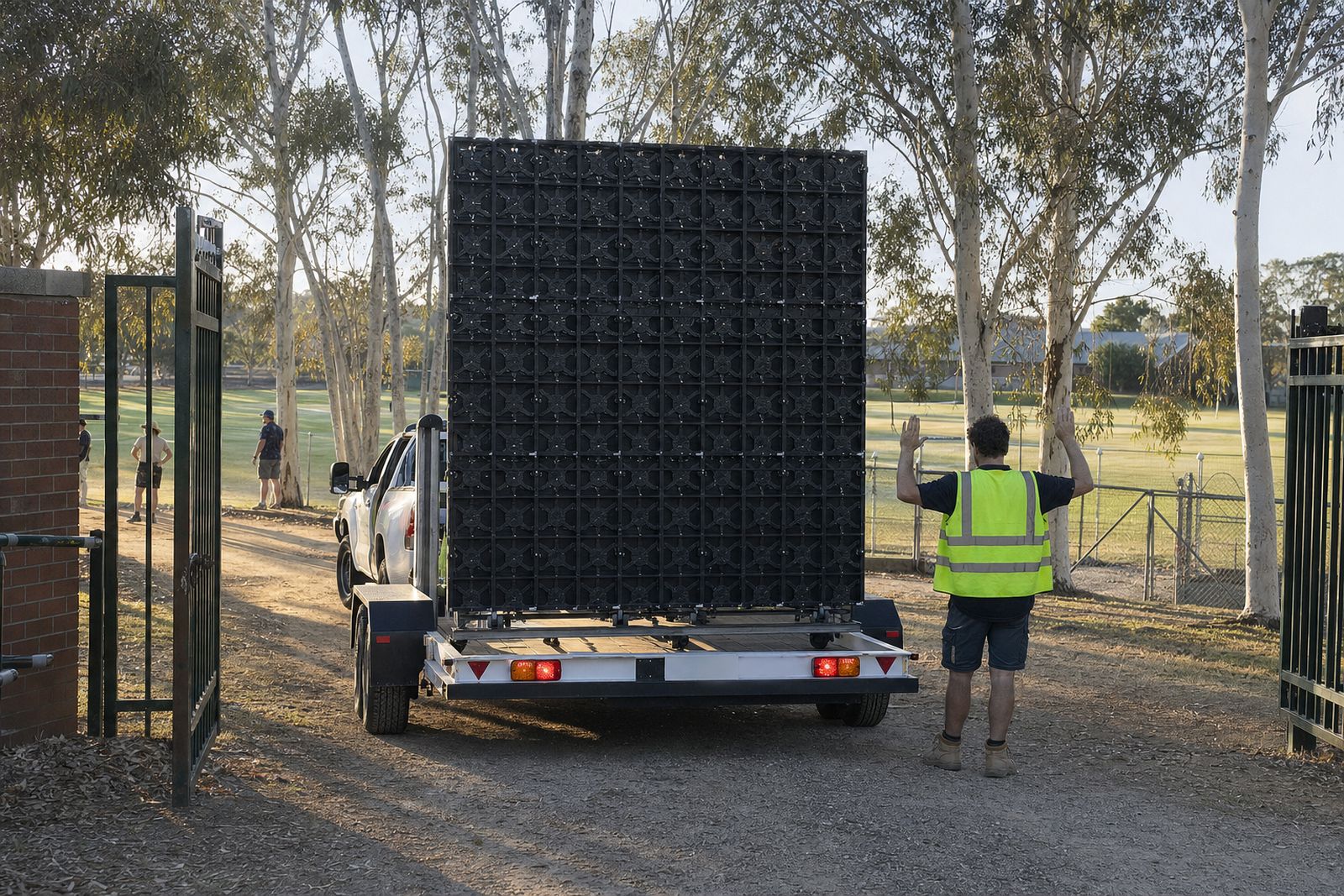
Permit guidance also matters, especially where a trailer sits near a road, pavement, sports field or public space. Municipal rules can affect positioning, parking, noise, and how long the trailer may remain in place. In busy areas around Ekurhuleni or Johannesburg, those details can shape the whole setup more than people expect.
A Germiston roadshow that had to read well at noon
A roadshow in Germiston gives a useful local example. The crowd may arrive early, but the sharpest sunlight often lands right when the programme is busiest. If the screen is set too dim, sponsor slides and live camera shots lose definition, and people at the edge of the viewing area start squinting or moving closer than they should.
For that kind of site, the technician would check the angle of the trailer, load the content in a daylight-safe format, and watch the picture from several points around the stand area. If the screen is carrying live feed support or short campaign clips, the content needs strong contrast and uncomplicated graphics. Brightness is only one part of the job, but it is the part that lets everything else work in real outdoor light.