Morning light can flatten the picture
Early sunlight usually arrives at a low angle, which means glare can sit straight on the screen face if the trailer points east. That is when contrast drops first. Dark backgrounds can wash out, and fine text becomes harder to read from the back of the crowd.
For a sports day in Germiston, an east facing screen may look clean at dawn but struggle once the sun climbs. A slightly turned angle, together with higher brightness and bolder artwork, often gives a better result. The point is not to fight the sun all day, but to place the screen where the worst light lands on the side rather than the front.
- Use stronger contrast for morning content
- Keep logos large and text short
- Check whether trees, buildings or masts cast moving shade
Midday glare asks for extra headroom
At midday, the sun sits high and the screen needs enough brightness to hold its image in full daylight. Outdoor LED trailers are usually specified by pixel pitch and brightness, with tighter pixel pitch giving finer detail and strong brightness helping the screen stay legible under direct sun. The screen still needs sensible content choices, because very light backgrounds can lose depth when the sun is overhead.
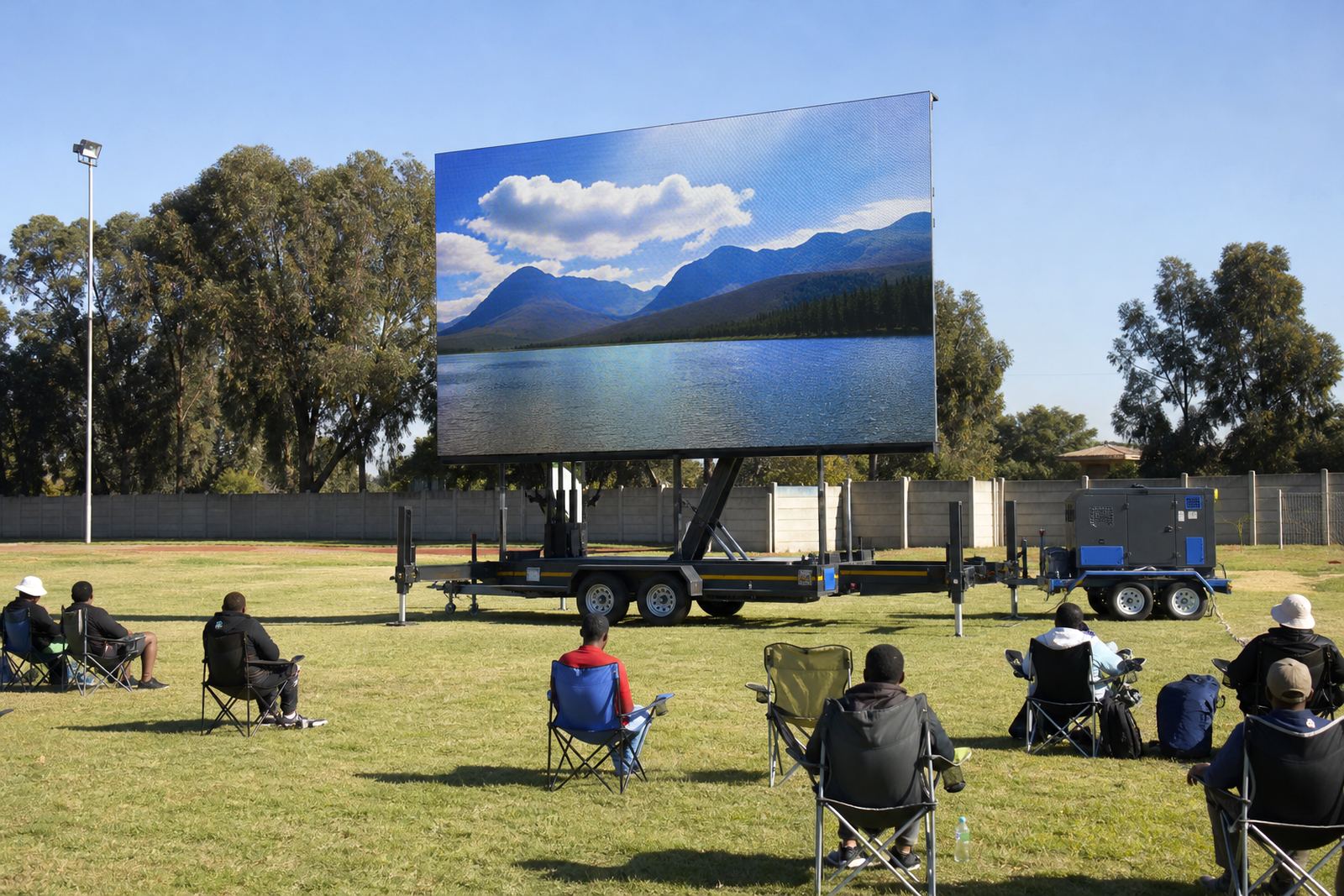
When a crowd is standing close, the viewing angle matters as much as brightness. A trailer set too low can leave the front rows looking up into reflected light, while a screen set too high can strain people at the edges. We plan the height, the trailer rotation and the viewing distance together so the picture stays clear across the site.
- Choose content with bold colours and limited movement
- Keep daylight graphics free of thin fonts
- Allow space for the front row to stand comfortably
West-facing screens feel the late afternoon shift
When the afternoon sun swings west, the screen can change character quickly. A west-facing trailer often looks fine earlier in the day, then loses contrast as the sun moves behind the audience or strikes the side. This is common on roadshows and open grounds where there is no natural shade to soften the light.
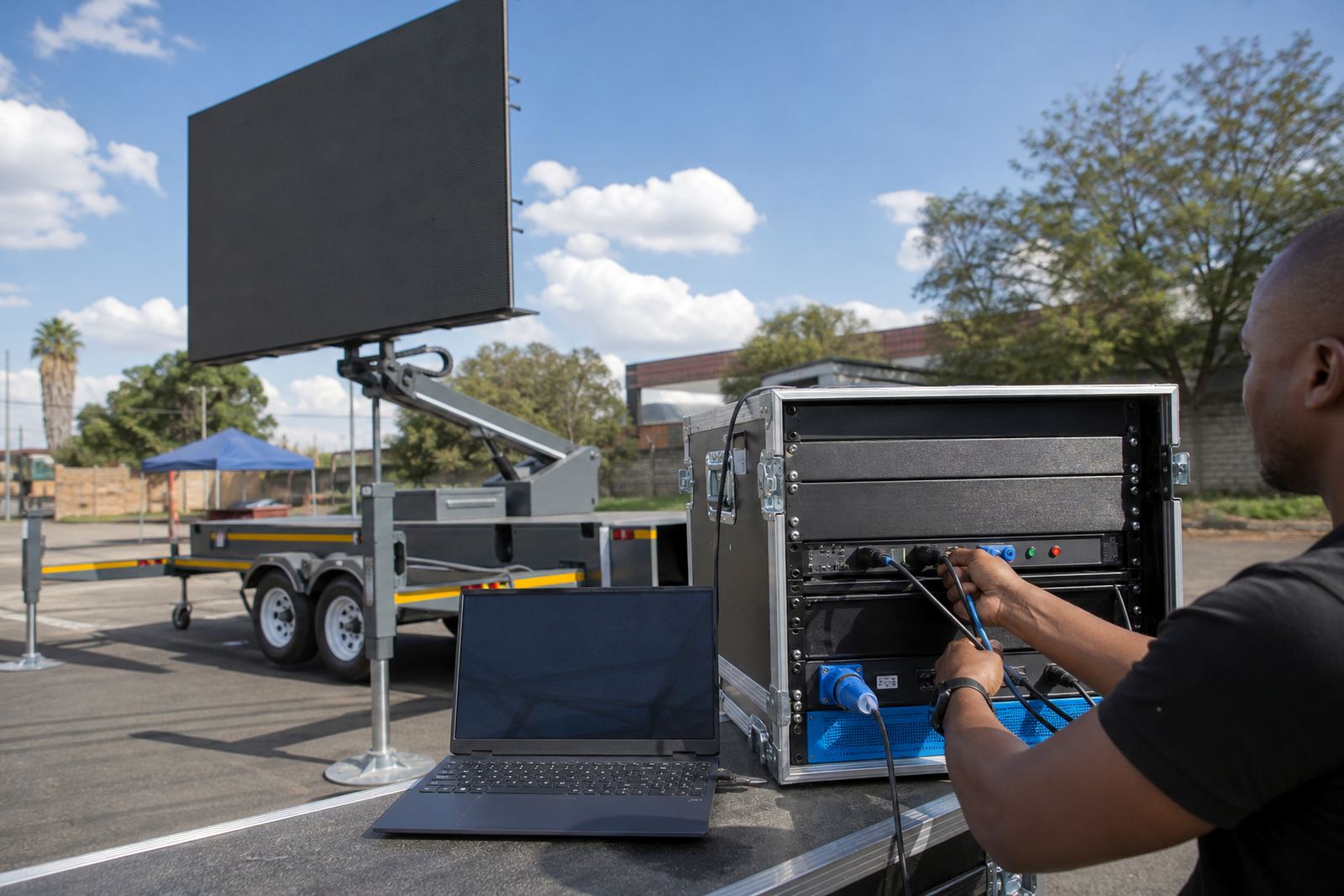
At that point, playback settings also matter. Fast cuts, bright transitions and live feed inserts can hold attention, but only if the feed is clean and the image is not already fighting glare. Our on-site technician will often adjust brightness, test angle, and check whether the trailer can be rotated a few degrees to improve visibility without upsetting the crowd flow.
- Recheck screen angle before the main programme starts
- Use live feed only when the camera image is bright enough
- Watch for spectators with the sun in their eyes
Winter sun and long shadows change the brief
Winter light in South Africa sits lower for longer, so a screen can be affected for more of the day than people expect. In Germiston, Pretoria or Polokwane, the same trailer can feel comfortable at 8 am and washed out by 10 am if the sun is striking the face directly. Long shadows from nearby structures also move across the audience area, which changes where people naturally gather.
That is why a proper site check includes the sun path, not only the ground space. The site may need a trailer moved a few metres, or the event layout may need the screen on the side that gives viewers shade at the busiest time. Small changes here can save a lot of squinting and shifting in the crowd.
- Map the sun path against the programme times
- Look for reflective paving, vehicles or glass nearby
- Leave room for people to move toward shade without blocking exits
Hydraulic lift, rotation and wind limits matter together
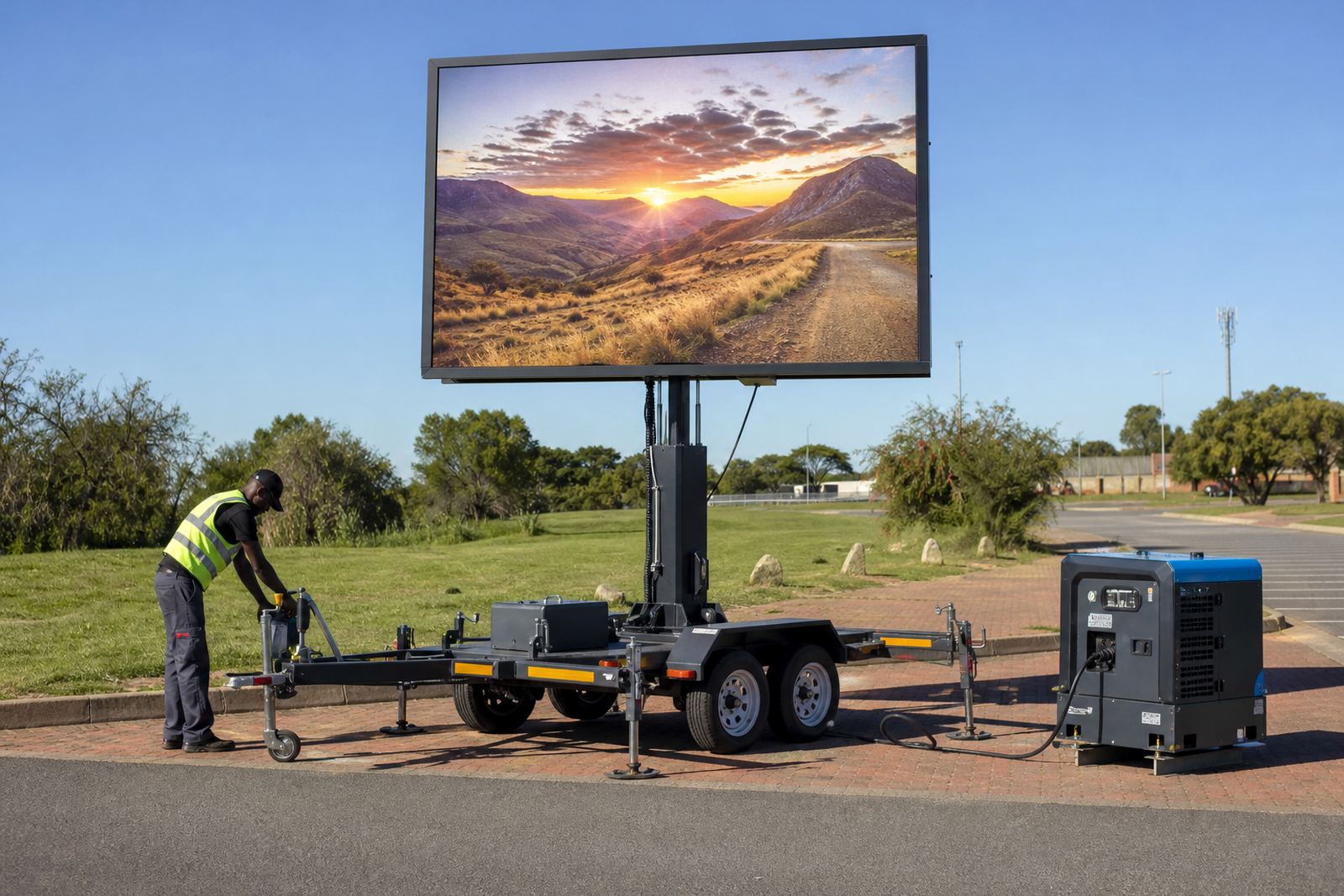
Outdoor LED trailers rely on stable setup as much as on image quality. A hydraulic lift lets the screen reach a useful viewing height, while controlled rotation helps align the face with the audience and reduce direct glare. The trailer also needs to stay within its wind limits, because an elevated screen behaves differently in gusty open areas than it does on a sheltered field.
Wind, sun and footing all connect. If the ground is soft or uneven, the trailer may need extra levelling before the screen is raised. If the permit conditions require the screen to sit within a marked area, that must be built into the placement plan too. The technician keeps an eye on the sky and the wind from setup to pack down.
- Get the bubble centred before the mast goes up
- Respect wind limits on raised structures
- Keep access clear for the technician and pack down team
Local events need the sun factored into the permit and power plan
A municipal permit can shape where the trailer stands, how much space is left around it and whether the site needs traffic control or public safety notes. That matters in busy places like Johannesburg or Durban, where event conditions change from one venue to another. Sun angle should be part of the same planning sheet, because it affects both public comfort and screen visibility.
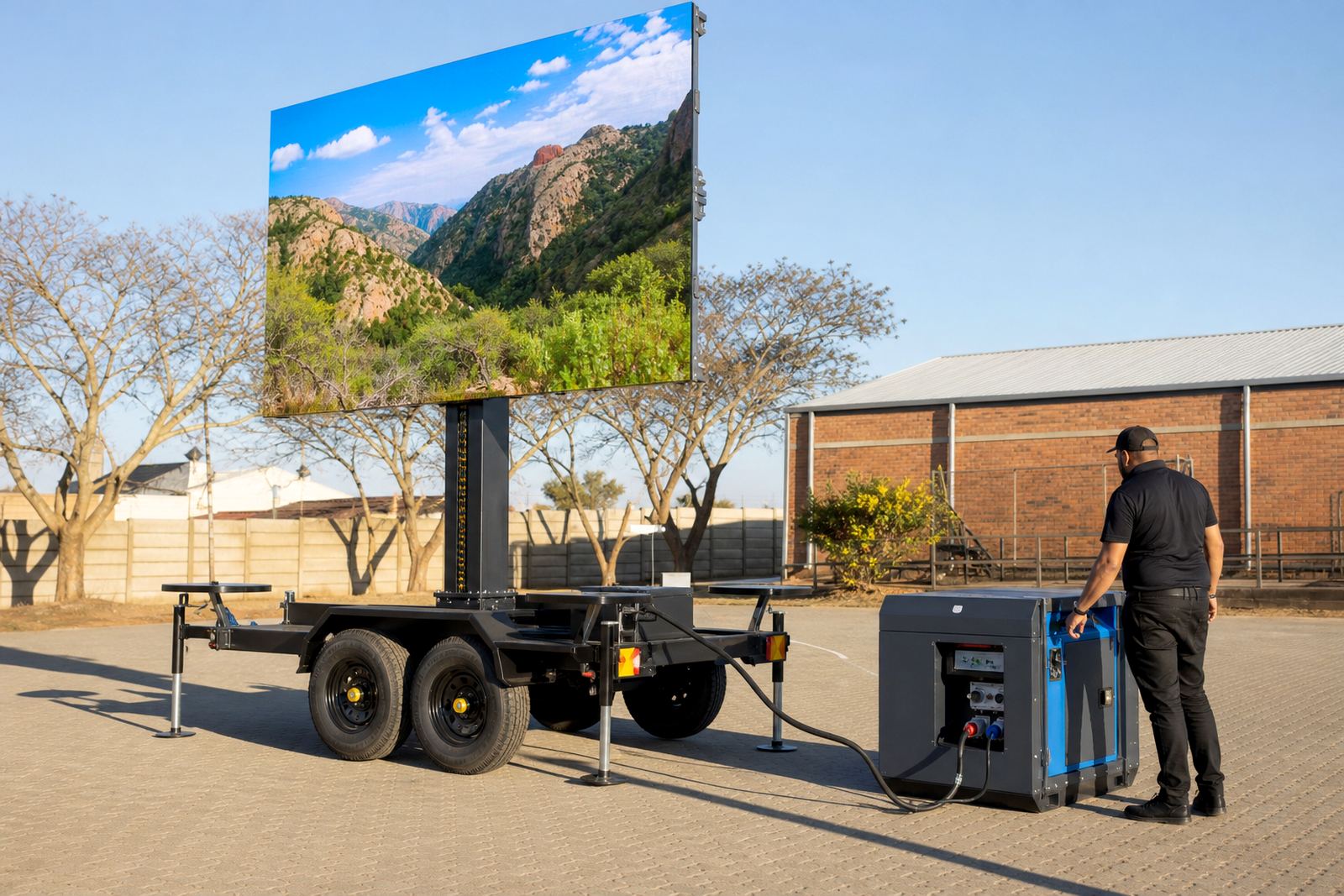
Power planning follows the same logic. Some sites run from mains power, others need a generator. The screen can play content, show live feeds and handle scheduled changes either way, but the setup must suit the venue and the time of day. For a roadshow in Ekurhuleni, for example, a late afternoon stop may need the trailer turned to avoid direct west light, while the next morning stop in another suburb may need a different angle entirely.
In practice, the best result comes from matching the screen to the sun rather than asking the crowd to fight the glare. That is the real value of a proper site check, steady playback support and a technician on site while the event runs.