
A fixed socket is not the whole story
Outdoor LED screens draw power in a way that needs more than a glance at the nearest plug point. The venue may have a socket on paper, yet the line feeding it could already be carrying lighting, catering, sound or other site loads. If that line is stretched too far, voltage drop and nuisance tripping become part of the day, and the screen may not hold stable brightness or playback.
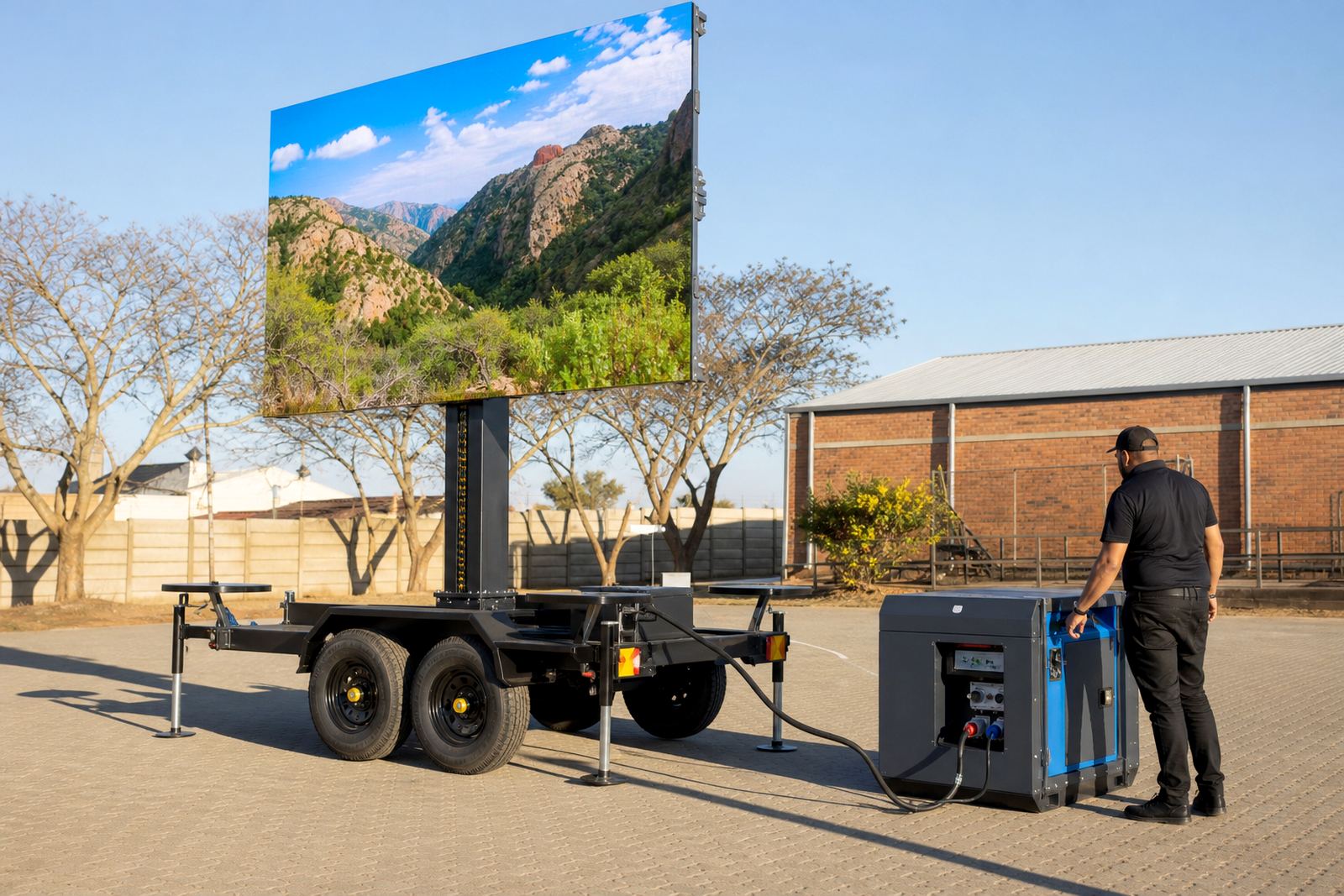
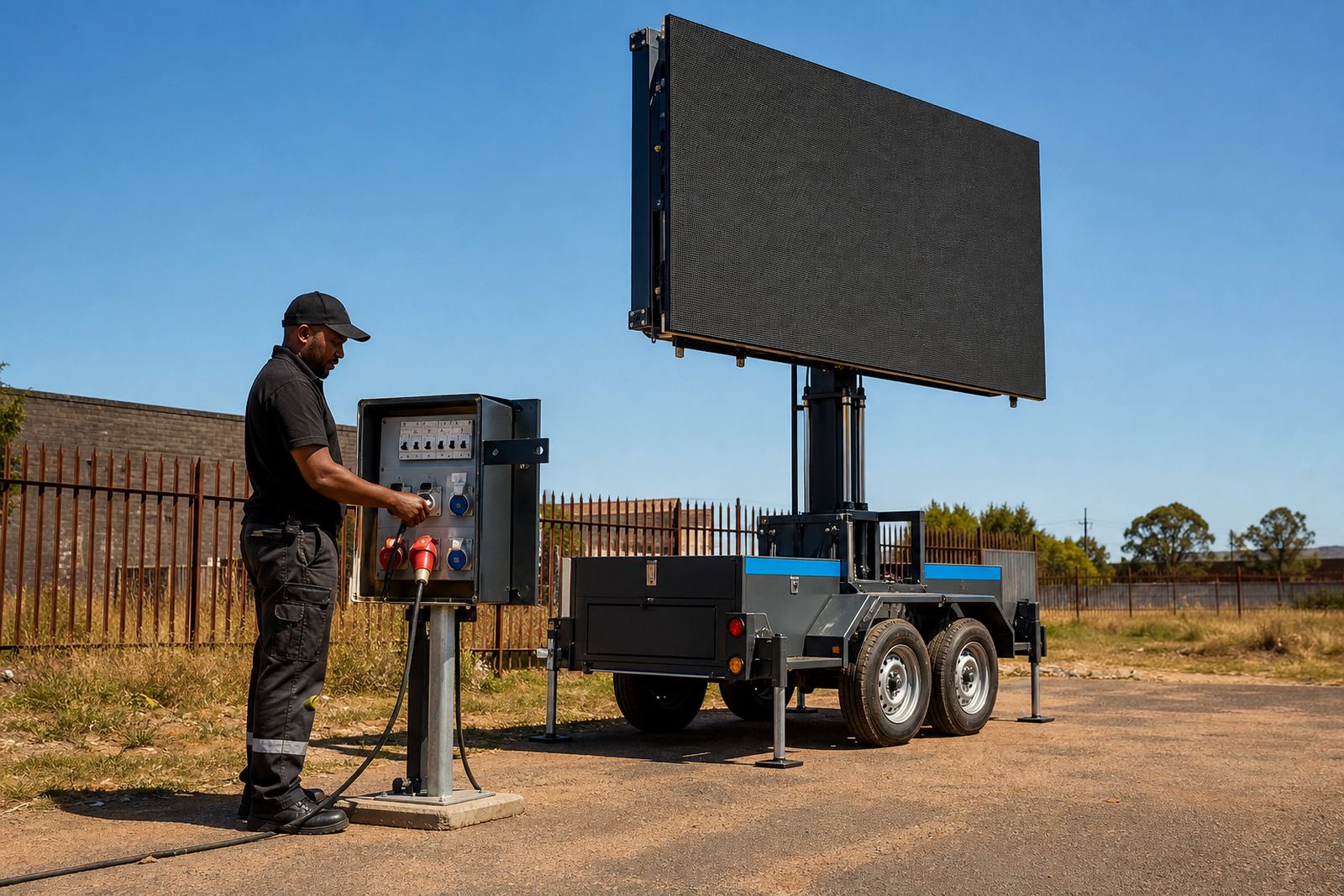
For trailer mounted screens, the mains check starts with the actual distribution point, not the nearest wall. We look at the breaker size, cable condition, phase availability where relevant, and whether the route to the screen can be kept neat and protected. On wet ground or in a windy open area, that matters just as much as the screen itself.
What gets checked before the screen is plugged in
A venue handover works better when the electrical side is tested against the screen plan, not guessed on arrival. For a daytime campaign or sports day, the trailer can run on mains where the supply is steady and correctly protected, but the site still needs a proper assessment before that decision is made.
- Available amperage and breaker rating at the venue point
- Distance from supply to trailer, including cable route and trip hazards
- Earthing and protection for outdoor use
- Space for the trailer, lift, rotation and viewing angle
- Whether nearby equipment shares the same circuit
- Weather exposure around the screen and cable ends
We also check whether the mains supply is suitable for the planned content. Bright full screen graphics, live video and changing outdoor material can place a different demand on the system than a static image. That is where a fixed connection can help, but only when it is sized properly.
Daylight use changes the power conversation
Outdoor LED screens are usually specified with high brightness so the image stays visible in full sun. That brightness is useful at markets, roadshows and civic sites, yet it also means the power supply must be treated carefully. If the venue mains is weak or shared too widely, the screen may still light up but the operating margin becomes too tight for a long run.
For a Germiston setup feeding a roadshow trailer into a shopping centre forecourt, the test is not only whether power is present. It is whether the supply stays consistent when the site fills up, when audio starts and when other vendors switch on. A proper check reduces surprises on the day, and it also helps decide whether mains or a generator is the better fit for that particular venue.
When mains power suits the site, and when it does not
Mains supply works well at venues with controlled access, a known electrical point and enough capacity for the screen and other site loads. It can also be useful where the screen is staying in one position for several hours and the organiser wants less fuel handling on site. That said, not every venue is suitable just because there is a socket nearby.
Some sites have older wiring, long extension runs or limited distribution boards. In those cases, the safest answer may be generator power or a mixed plan with separate circuits for different parts of the event. Wind limits still apply either way. The hydraulic lift and rotation on the trailer must be set up on level ground, with the screen positioned so it stays visible without being exposed to unnecessary strain.
- Fixed mains is better where the supply is known and stable
- Generator use is often safer where site power is uncertain
- Mixed power plans help when the screen shares a venue with other loads
- Outdoor conditions can change the final setup choice on the day
Municipal rules and venue permissions still matter
A good socket on its own does not make a good site. Public events often need venue approval, and some placements also need municipal guidance or permission where the screen is visible from public space or placed near a road. The organiser may need to show where the trailer will stand, how the route for delivery will work, and how the unit will be secured.
We keep the permit conversation practical. If the screen is going into a civic square, a sports ground, a school field or a roadside campaign stop, the planner should know who controls access, what documents are expected, and whether the site has limits on noise, cabling or operating hours. A clear mains check helps because it shows the event team what the venue can safely support.
One venue, shops on one side, offices on the other
In Ekurhuleni, a venue can shift from quiet in the morning to busy by lunch. Think of a roadshow stop in Germiston where the organiser wants an outdoor LED trailer for brand messages, and the site also has a small stage and a food area. The first question is not the screen content, it is whether the venue point can carry the load once the whole site wakes up.
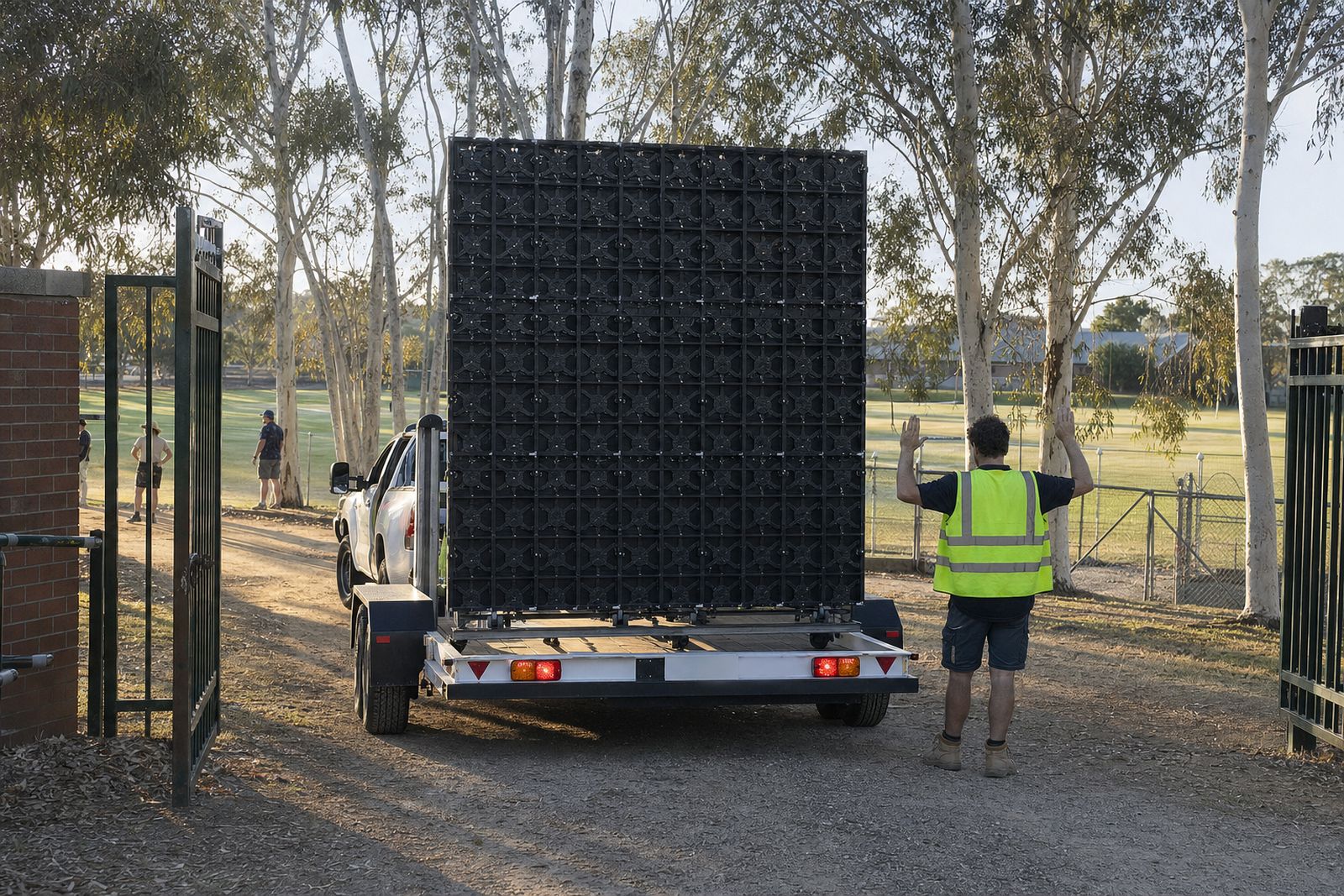
On a job like that, Anika from operations would map the power point, Thabo would check the screen draw against the planned playback, and Noluthando would make sure the trailer route suits the entrance and parking layout. If the mains line looks tight, the team shifts to a different supply plan rather than forcing the issue. That keeps the screen stable and avoids pulling the venue into avoidable electrical trouble.
A tidy mains check saves effort later
Once the screen is on site, the last thing anyone wants is to rework cables because the supply was never assessed properly. A good mains check lets the technician plan the feed, the weather cover, the playback source and the pack down route with fewer interruptions. It also gives the organiser a cleaner handover, especially where the trailer is going to move between stops in Johannesburg, Pretoria, Durban, Bloemfontein or Polokwane.
That is why mains supply checks sit alongside delivery, setup, content loading and on-site technician support. The power point only becomes useful when it has been checked against the screen size, the venue layout and the real load on the day. For a fixed connection to work well, the site must be ready for it, not just willing to provide it.
- Check the venue supply before relying on it
- Match the power plan to the screen and the site load
- Keep cable runs short, protected and visible
- Allow for weather, wind and municipal access requirements