Start with the entrance, not the screen
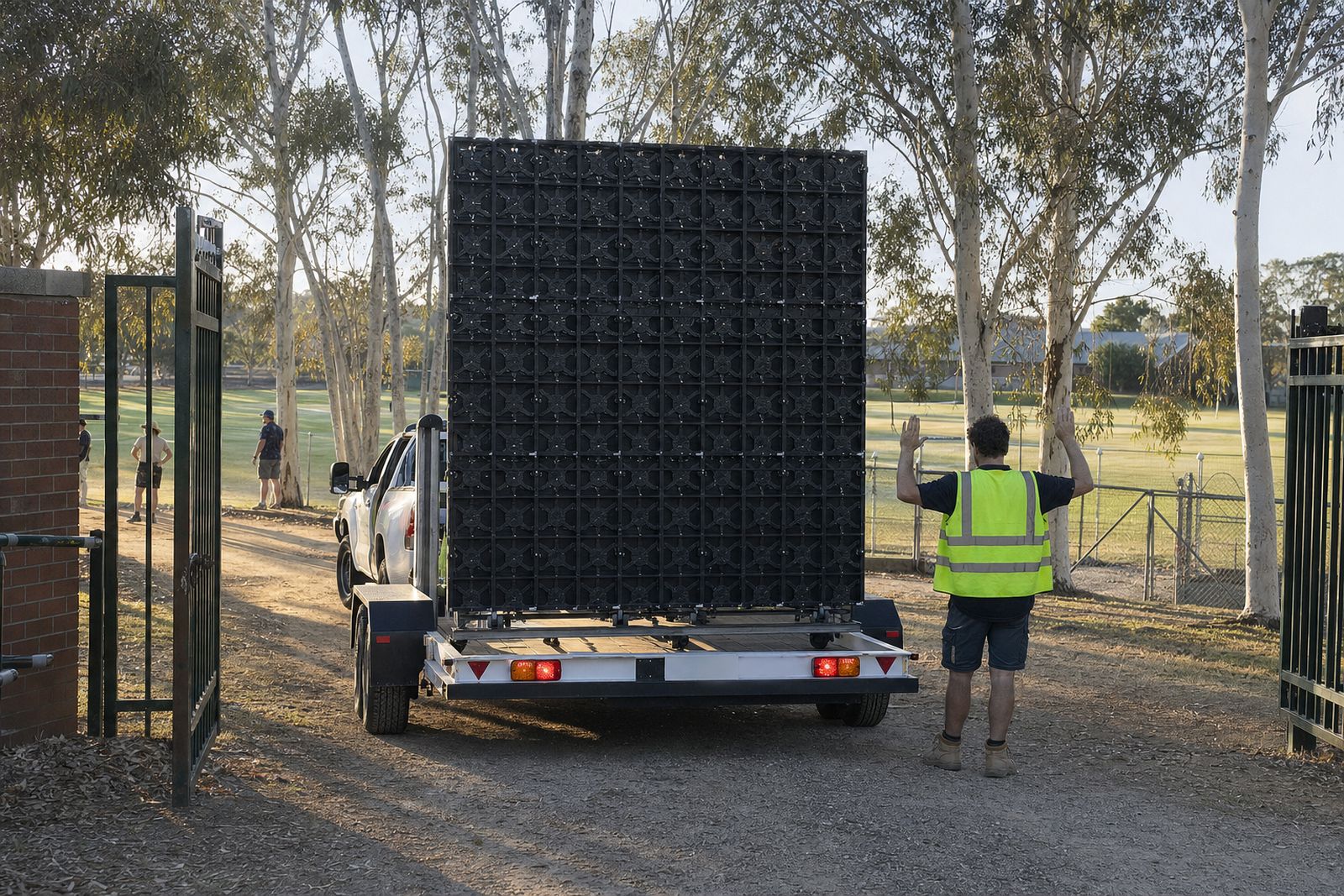
Before an outdoor LED screen trailer is booked into a site, the first question is not where it will stand. It is whether the tow vehicle and trailer can get through the gate, swing into the yard and settle on level ground without clipping walls, poles or planted borders.
A tow access check looks at the full entry path from the road to the final position. That includes lane width, gate opening, turning room, overhead clearance and any soft verge that may not hold weight after rain. In Germiston and other parts of Ekurhuleni, older industrial yards can have narrow corners and heavy vehicle traffic, so the route needs proper attention before delivery day.
Measure the path, not only the parking spot
People often measure the open area where the trailer will stand and leave it there. That is not enough. The screen may fit in the chosen spot, but the access route can still fail if the turn in from the street is too sharp or the gate sits off-centre to the driveway.
For a proper check, measure the site from the boundary to the parking point and note each pinch point. A slight slope near the entrance can matter more than the final display position. If the trailer must pass around parked cars, refuse bins or temporary fencing, measure around those too, because a row of bins narrows the route as much as a wall does.
- Gate width and gate height
- Turning radius at the entrance and inside the yard
- Surface condition on the access track
- Overhead cables, branches and low signs
- Space for safe reversing and positioning
Ground conditions change how the trailer behaves
Outdoor LED screen trailers are heavy enough to expose weak ground quickly. Wet grass, loose gravel, fresh fill and broken paving can all shift under wheel load. In coastal towns such as Durban, moisture can soften ground faster than people expect, while inland sites may have hard dust that hides shallow dips until the trailer is already on the move.
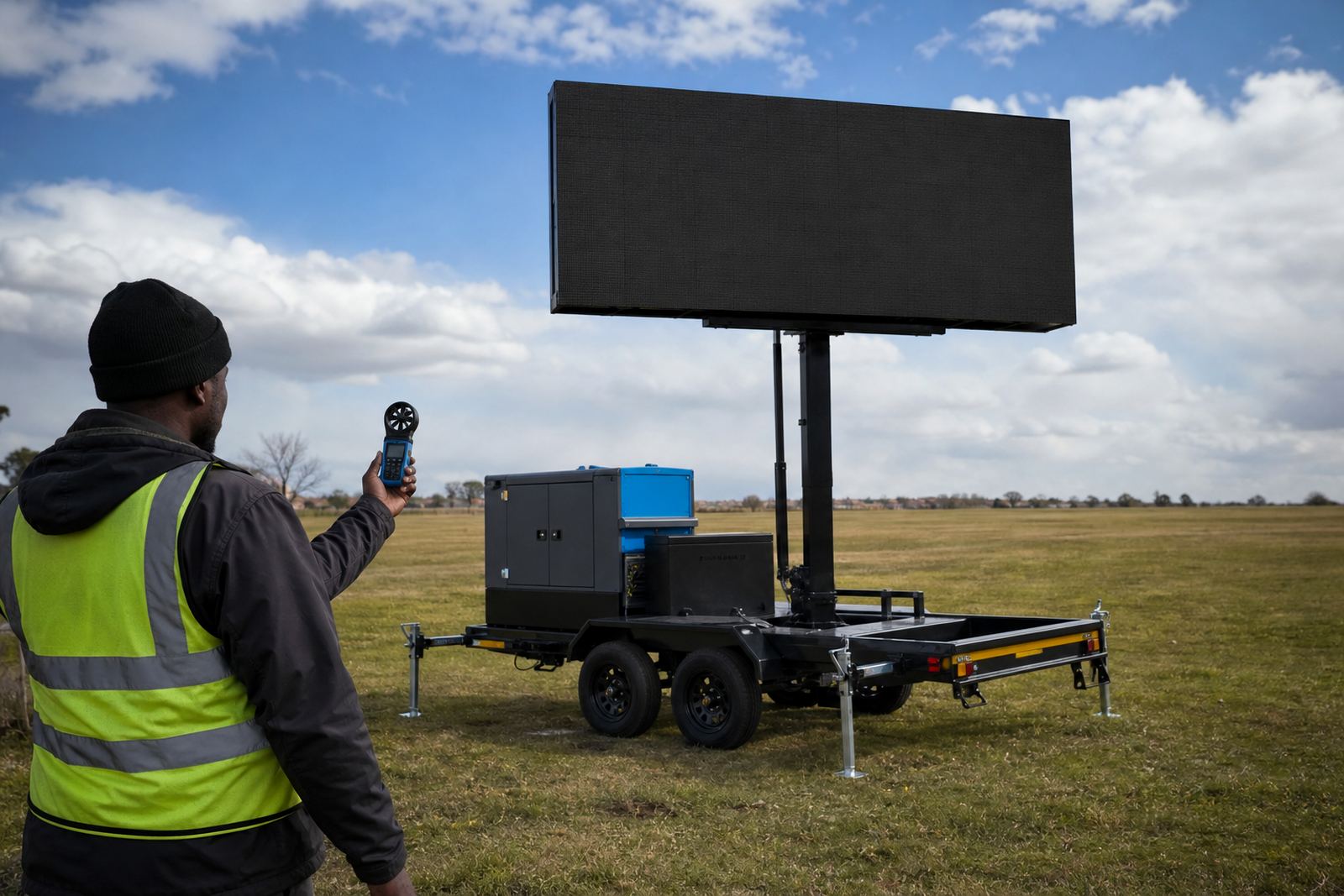
When the setup route crosses uneven ground, the technician also needs to think about levelling once the trailer is in place. A screen tower, hydraulic lift and rotation system must work within safe limits on firm, level support. If the site falls away too sharply, a different position may be safer than trying to force the original plan.
Permits, neighbours and local rules around access
Some sites need more than a clear driveway. Municipal areas, road shoulders, public walkways and shared parking courts may bring permit or access rules that affect where the trailer may enter and where it may stand. If the route crosses a public space, the approval process can involve local traffic or property controls, depending on the site.
Neighbouring businesses can also affect access. A delivery truck parked in the wrong place, a shared boom gate left closed or an event fence pushed too far across the drive can block entry at the worst moment. A good access check includes the human side of the site, not just the measurements.
- Check whether the route crosses public land or a shared driveway
- Confirm who controls the gate or boom at arrival
- Look for delivery vehicles that may narrow the entrance
- Note any permit conditions tied to roadside placement
Power choice and screen use at the final position
Access checks are not only about movement. They also shape how the trailer will be powered and used. If a site has mains power close by, that may suit part of the run, but the route for cabling still needs to be clear and safe. Where the trailer runs on a generator, the delivery point must allow space for refuelling access, ventilation and orderly cable runs.
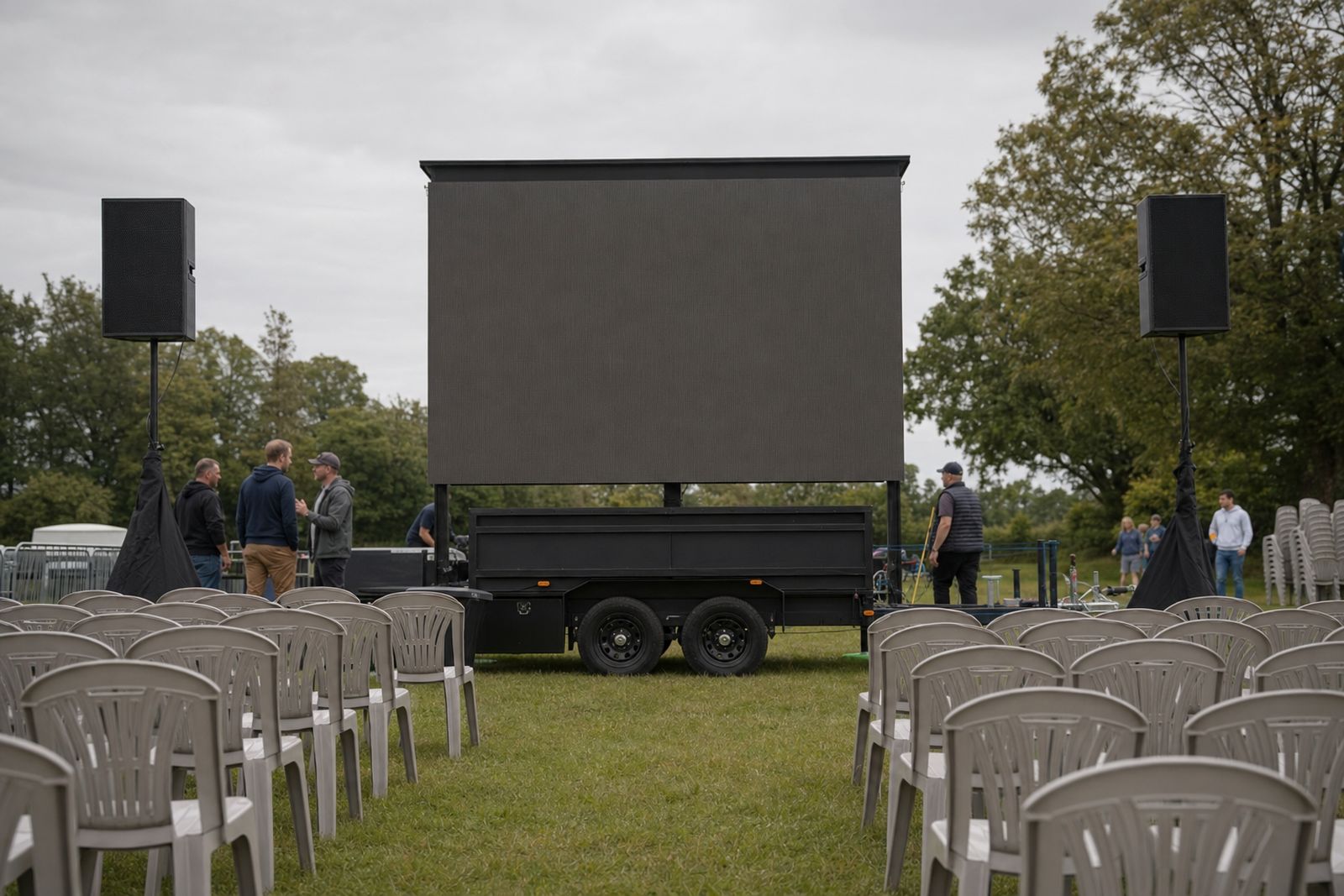
The screen content also needs a practical setup point. Live feed support, content loading and playback management all depend on the technician having time and space to test the screen once it is parked. If the trailer needs to rotate for better viewing angles, the area around it must stay clear of walls, vehicles and hanging branches.
Reversing into a yard with one metre to spare
In a Germiston roadshow setup, the most difficult part is often not the display itself. It is the narrow entrance between boundary walls and the uneven driveway that runs past the loading bay. A trailer can look easy to place from the street, but a shallow curb, a tight left turn and a low overhang can change the approach quickly.
That is where tow access checks earn their place. The delivery plan can include a site check, turn a difficult approach into a workable route and flag whether the screen should enter from a different side of the property. When a technician is on site, the team can also watch wind conditions, confirm the final angle and pack down without rushing through a risky exit.
- Check whether the trailer can enter without reversing into traffic
- Confirm if the driveway apron can take the weight
- Watch for trees, canopies and security beams near the turn
- Decide whether a second access point is safer for departure
What a solid tow access check gives the event team
A proper tow access check keeps the day grounded in facts. It shows whether the trailer can reach the site, whether the screen can be raised safely and whether the content team can run playback without awkward delays at the gate or at the parking point. That saves pressure on organisers, security teams and venue staff alike.
LEDBox works from Germiston, Ekurhuleni and handles delivery, setup and on-site technicians across Johannesburg, Pretoria, Durban, Bloemfontein and Polokwane. For campaigns, sports days, concerts and roadshows, our contact form is the place to send the site details, route notes and access concerns so the move onto site can be planned with the right vehicle, the right people and the right ground under the wheels.
- Route checks for gates, turns and gradients
- Setup planning for firm, level ground
- Permit guidance where public access is involved
- On-site support for playback, power and pack down