
Room to turn, not just room to stop
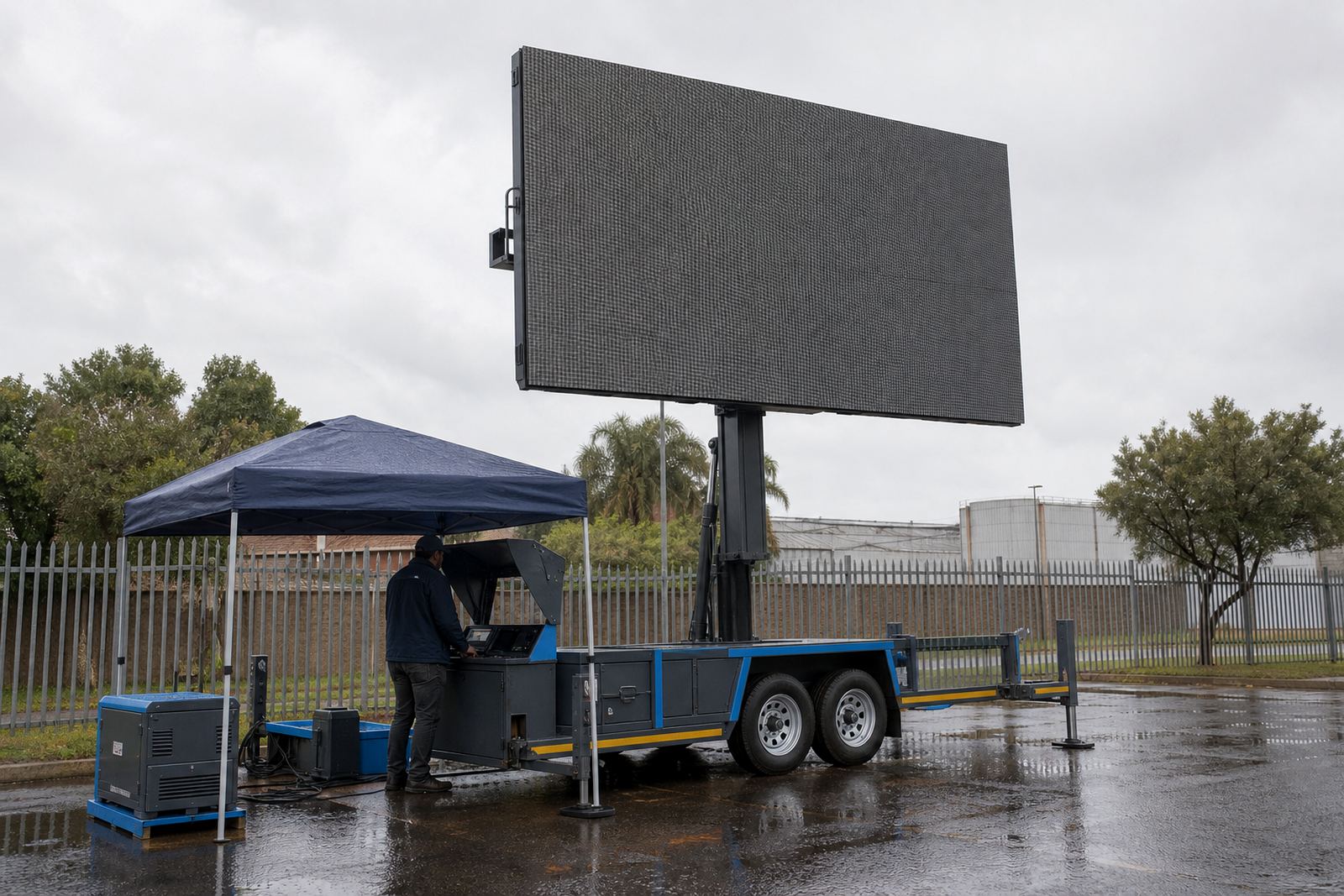
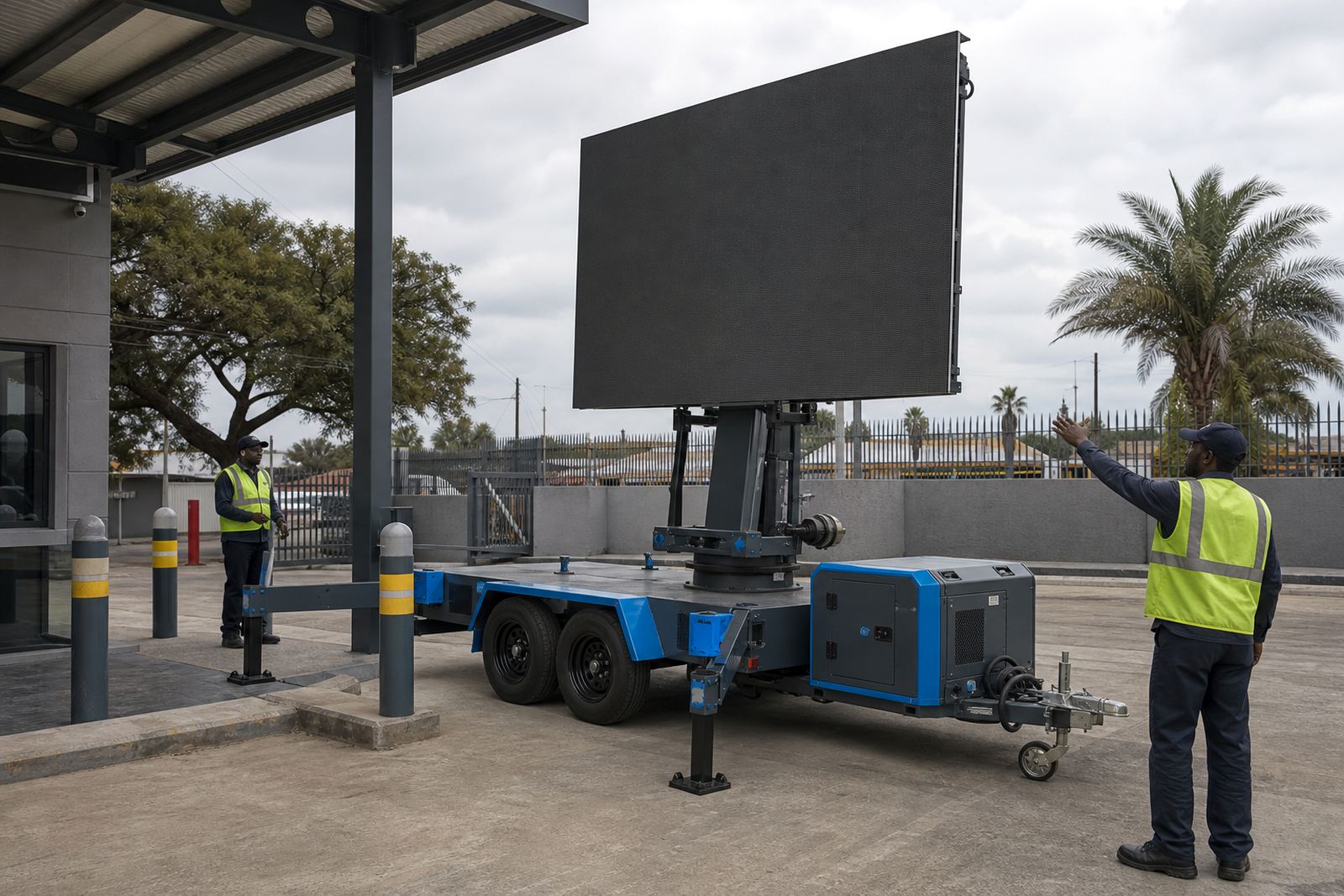
A forecourt can look generous from the gate and still fail once a towing vehicle has to swing in, reverse, uncouple and level the trailer. The turning path matters as much as the final parking spot, especially where a site has islands, tight kerbs, boom gates or angled fuel bays nearby. We look for a clear approach, a sensible exit path and enough width for the trailer to move without clipping paving, signage or canopy columns.
There also needs to be space for the screen to sit straight once it is on site. A unit that is easy to tow can still be awkward if the forecourt leaves no room for stabilisers, cable runs and a safe perimeter around the setup. On busy commercial sites in Germiston or Kempton Park, that small margin often decides whether the installation feels orderly or cramped.
Overhead clearance above the mast and screen face
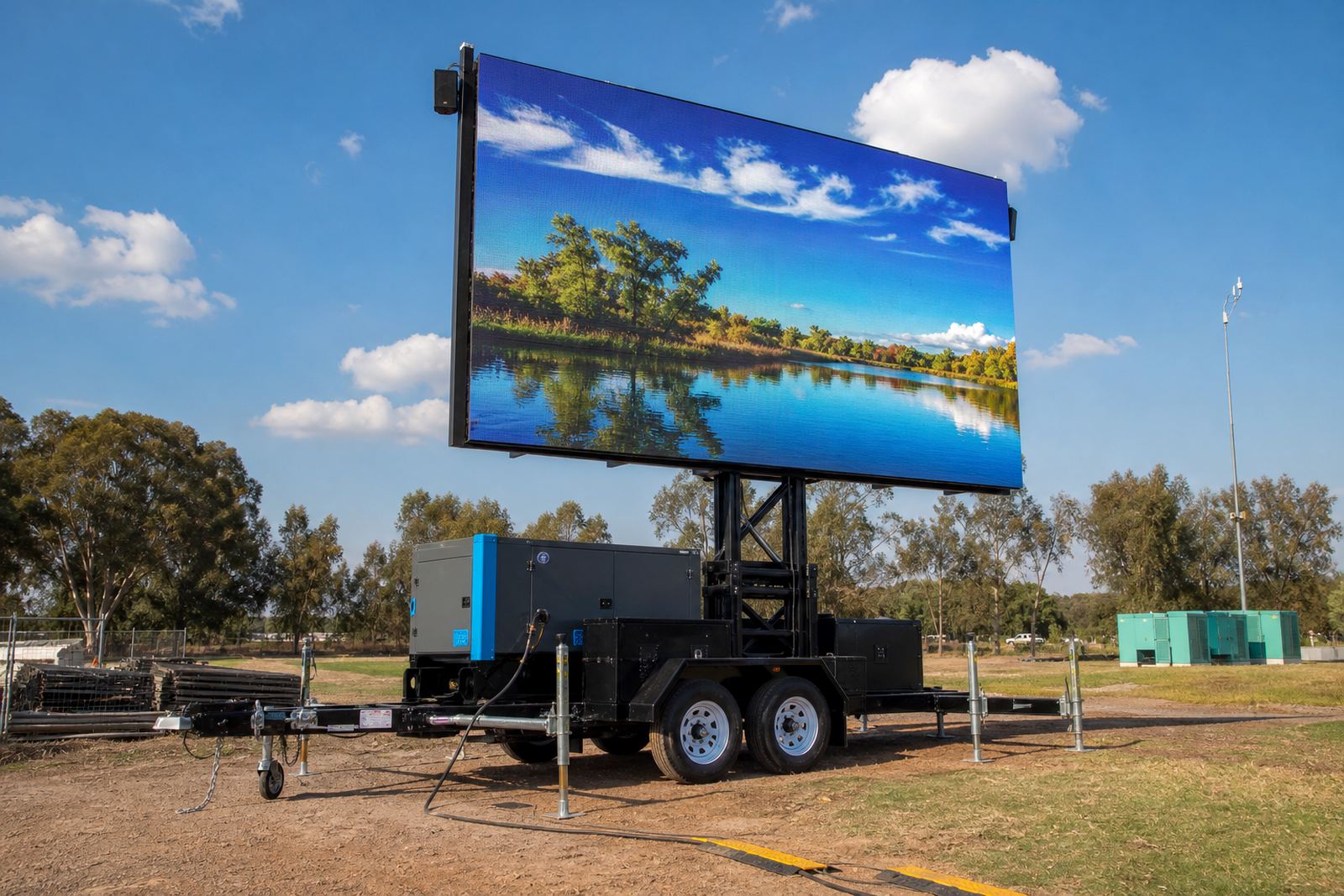
Outdoor LED screen trailers lift high enough to clear nearby vehicles and improve sightlines, so overhead space is a real factor. Low canopies, tree branches, light poles, signs and service lines can interfere with the lift path before the screen even reaches operating height. The setup must also allow the hydraulic system to raise and rotate the display without the top edge passing too close to anything fixed above it.
- Check canopy height and the full lift arc, not only the parked trailer height.
- Look for loose hanging signs, cables, branches and sprinkler arms overhead.
- Leave vertical space for screen rotation if the viewing angle must change on site.
- Allow for safe access if technicians need to inspect the mast, the screen face or the power point.
Keeping viewers apart from vehicles and deliveries
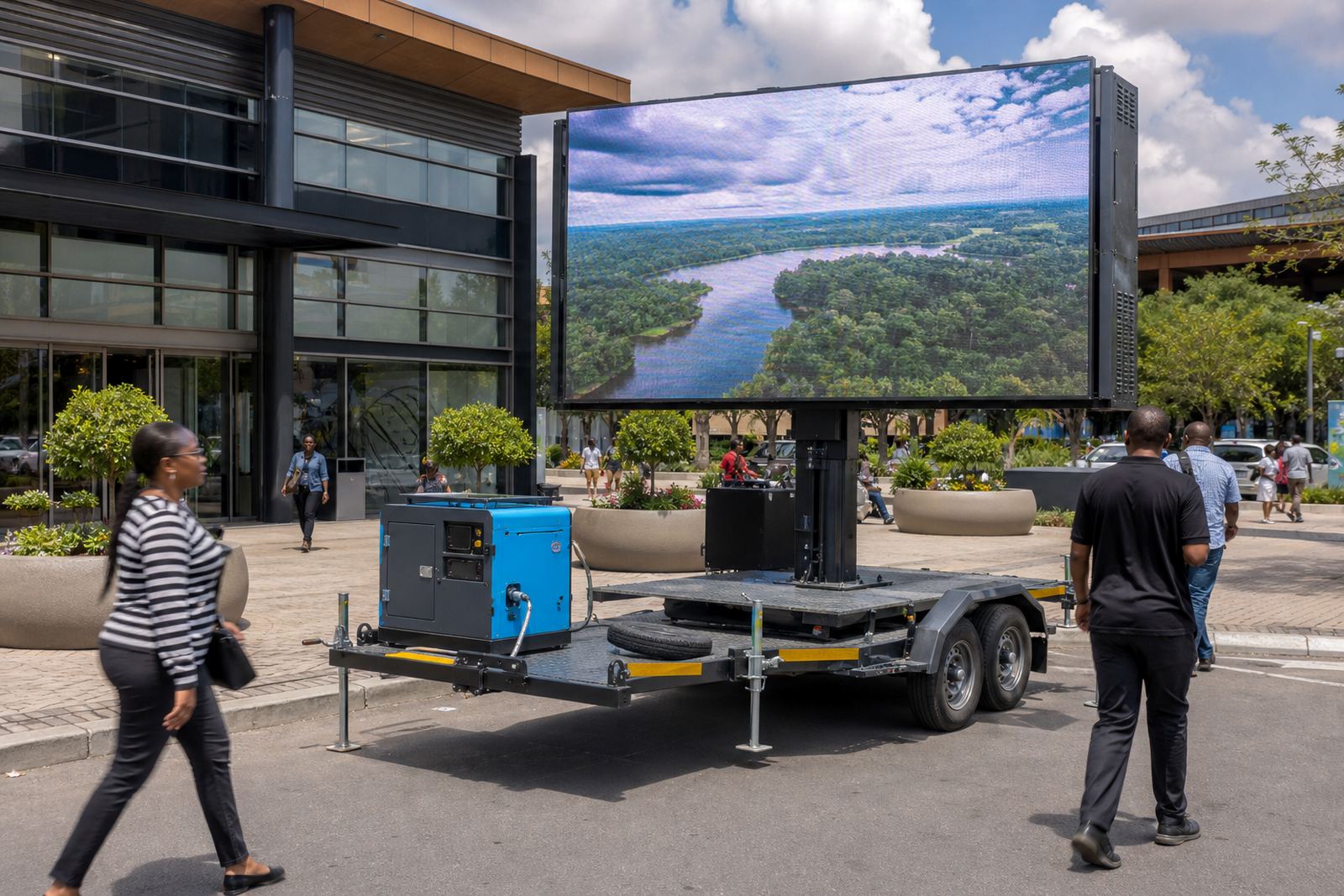
Forecourts often keep moving traffic and pedestrian traffic in the same space, so audience separation becomes part of the job. The screen should draw attention without pulling people into a lane used by cars, trucks or service access. We set a viewing area that stays clear of reversing vehicles and keeps the nearest spectators at a sensible distance from the trailer, the tow vehicle and any cable run.
That separation is not only about comfort, it also helps with movement around the site. A roadshow or campaign on a retail forecourt needs a simple flow, with people able to watch content without blocking pumps, entrances or walkways. Where the audience stands has a direct effect on safety, sightlines and how well the forecourt keeps functioning during the activation.
Power, playback and the working side of the trailer
Many forecourt jobs run with a generator on the trailer, while some sites have mains power available at a suitable point. Either way, the power plan has to suit the load, the cable route and the site rules. The screen itself may be run at high brightness for daylight use, with content prepared in advance and checked on site so the format, aspect ratio and playback sequence all line up properly.
For a live forecourt activation, the content plan matters as much as the screen itself. A technician can manage playback, audio where required, and live feed support when the brief calls for it. Bright daylight, reflective paving and moving vehicles all shape how the display is viewed, so the content must stay readable from the front row to the edge of the audience area.
Wind, weather and what the site allows
Forecourts are exposed spaces, which means weather monitoring is part of the access check. Wind can affect how high the screen may be lifted and whether the trailer remains within safe operating limits. Rain, dust and strong gusts change how the setup is managed, and the site surface needs to remain stable enough for the trailer, stabilisers and technicians to work safely.
- Surface conditions matter if the forecourt has a slope, broken paving or standing water.
- Permits may be needed where traffic control, public gathering or municipal consent is involved.
- Safety markings and barriers help define the viewing zone on active sites.
- Pack-down also needs clear access so the trailer can leave without reversing into a crowd or queue.
A Germiston forecourt with tight angles and moving traffic
A typical local example is a forecourt in Germiston where the approach is wide enough for a truck, but the display space sits between a canopy edge, a curb line and the customer parking row. In that kind of layout, the first check is not the screen size, it is the turning movement and the overhead route into position. Once the trailer is in place, the technician sets the screen at the right height, confirms the viewing angle and manages playback so the message lands cleanly without interrupting site access.
That same logic applies in Johannesburg, Pretoria, Durban, Bloemfontein and Polokwane, where forecourt access can change from one property to the next. Site checks, delivery, setup, on-site technicians and multi-stop planning all depend on the same basics: enough room to move, enough height to lift and enough separation to keep the audience and the traffic apart.