
The power choice starts with the site, not the screen
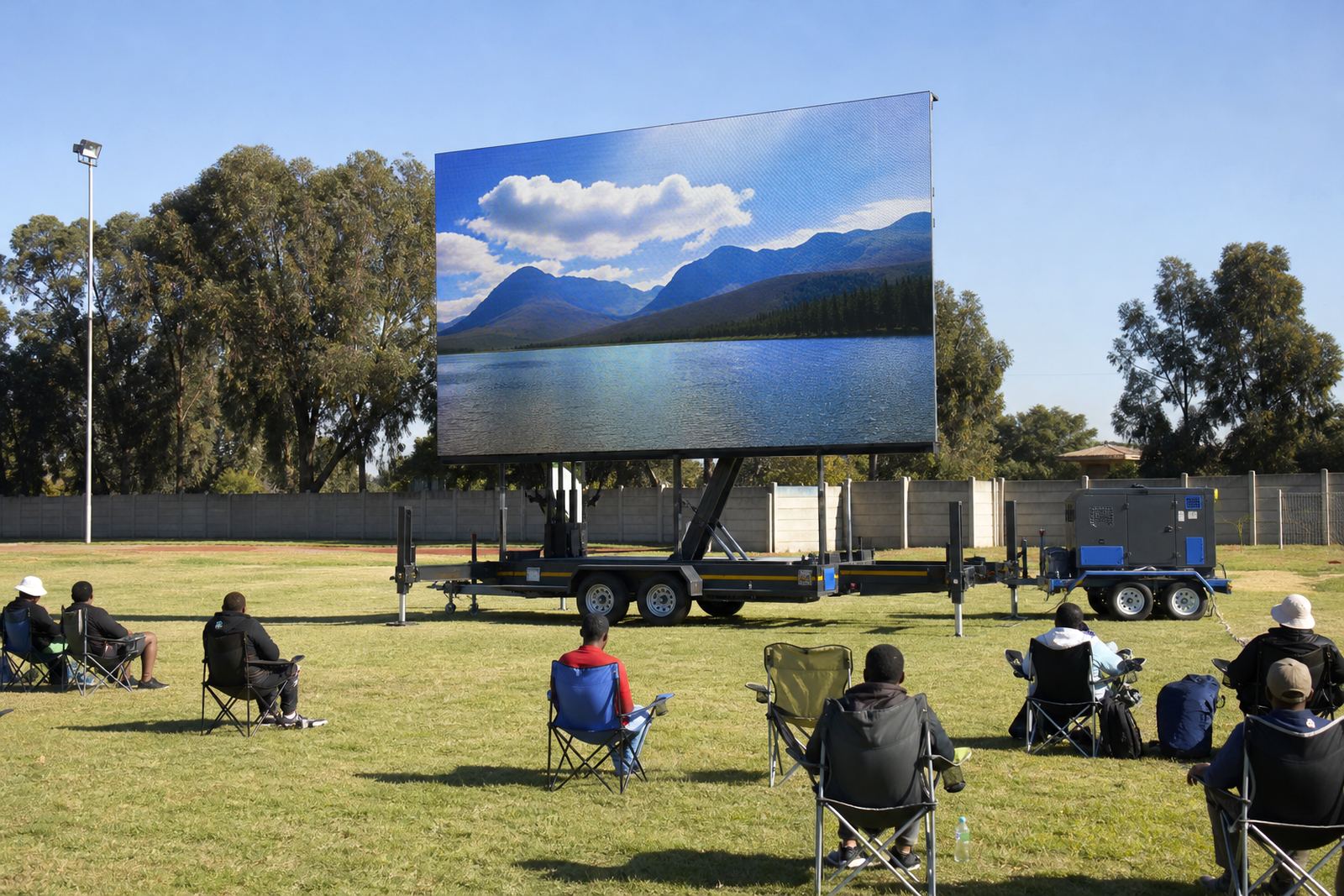
A mobile LED screen can run from a stand-alone generator or from venue mains, but the right answer depends on the site and the event flow. A daylight screen with a fine enough pixel pitch for live footage or brand content still needs a stable supply, clean signal handling and a sensible position where the audience can see it without glare or obstructions.
At a sports day in Kempton Park, the screen may sit close to the field and need power that stays clear of foot traffic. At a roadshow stop in Pretoria or Polokwane, the same trailer may need a shorter set-up footprint because access gates, turning circles and parking space are tighter than expected.
- Generator supply suits open sites, fields and roadshow stops.
- Venue mains suits halls, stadium edges and managed event grounds.
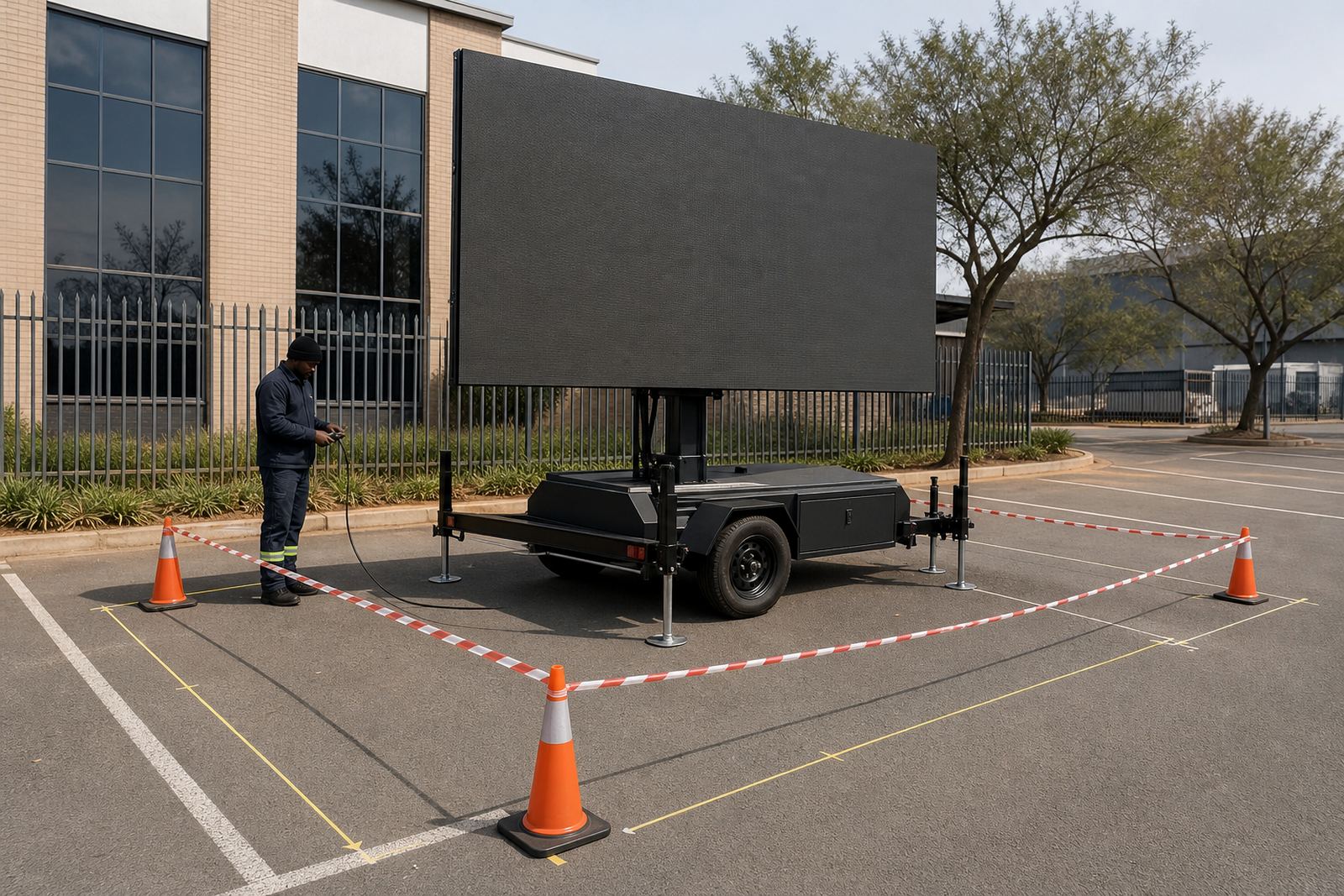
- The trailer still needs level ground, safe access and cable control.
- Brightness for daylight viewing matters whichever source you use.
When generator power makes the most sense
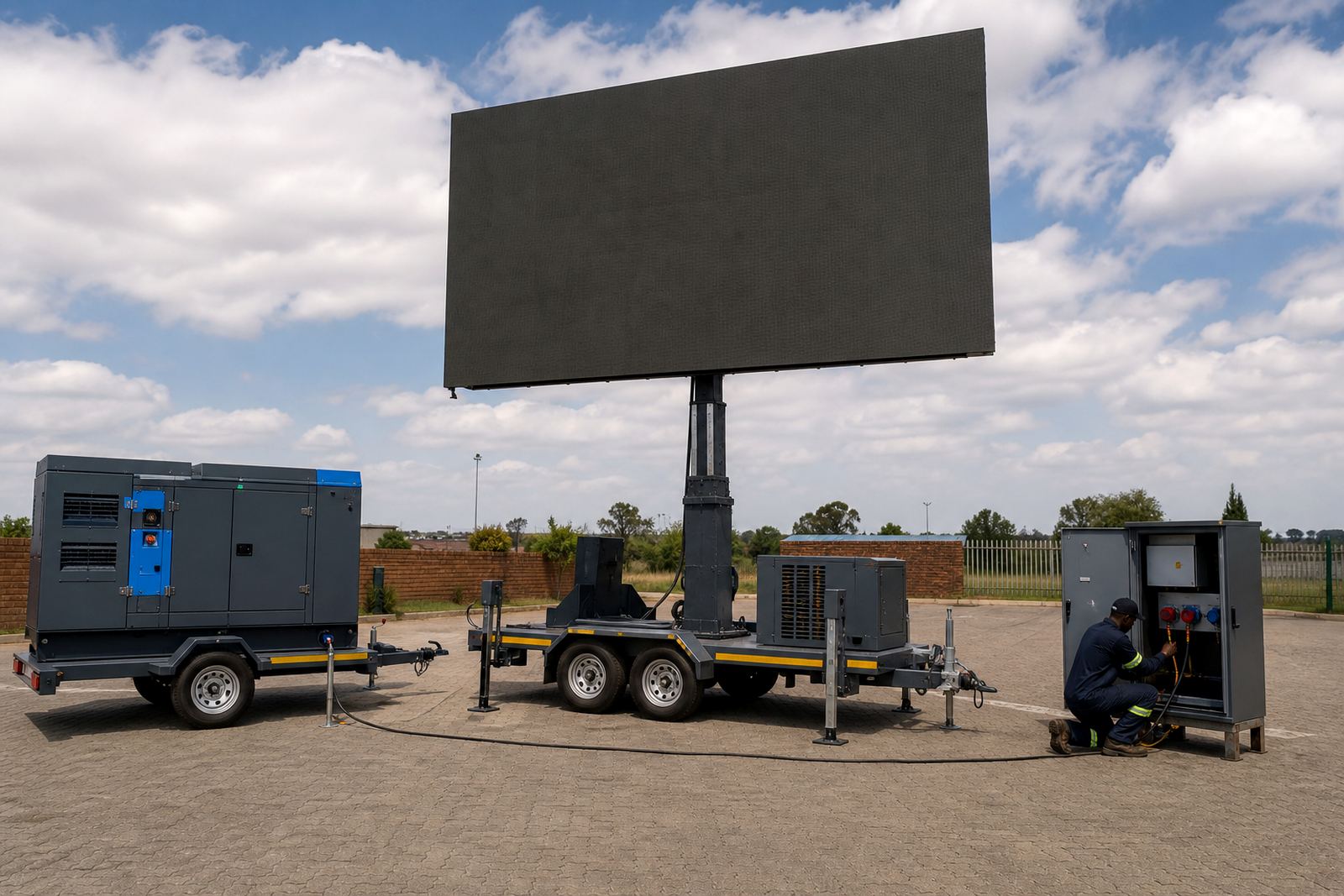
Generator supply is useful where venue power is too far away, too light for the load, or not available in a practical spot. It also helps on temporary builds where the screen trailer must be placed for sightlines rather than for the nearest plug point. For outdoor LED screen trailers, the generator needs to match the screen load, playback gear and any live feed equipment without straining under the peak draw.
Noise, fuel use and refuelling access are part of the plan. In a live crowd, a generator should be positioned so exhaust, vibration and cable routes do not interfere with the audience area or the technician’s access. Where the event runs into the evening, fuel planning matters, especially if the trailer is feeding a bright screen at full daylight output for part of the day and then staying on into darker conditions.
- Good for field events, roadside activations and temporary compounds.
- Useful where the nearest mains point is far from the viewing zone.
- Best when the trailer needs freedom of placement.
- Requires fuel planning and a safe buffer around the set-up.
Where venue mains saves effort and space
Venue mains can be the cleaner option when the event space already has a properly rated power point close to the screen position. It reduces generator noise, removes fuel handling and can simplify the working area. For indoor-outdoor transition spaces, arenas and managed venues, mains power often fits better where the screen is one part of a larger programme and the site already has approved electrical infrastructure.
That said, mains is only practical when the supply is verified against the actual draw. A screen trailer can ask more of a circuit than a venue expects, particularly once playback, signal distribution and any supporting equipment are added. On the coast, where humidity can be heavy, good cable routing and protected connections matter as much as the source itself.
- Better for venues with close, rated electrical supply.
- Reduces fuel handling and generator noise.
- Needs proper load checks before the screen is connected.
- Works well when the event already has managed infrastructure.
What the technician checks before the first frame goes live
An on-site technician does more than press play. The supply choice changes how the trailer is parked, how the hydraulic lift is used, how the screen rotates into view and how the content player is protected. For outdoor LED boxes and trailer-mounted screens, the technician checks power quality, cable lengths, ground conditions and whether the viewing angle matches the audience position.
Wind limits also sit in the same conversation. A raised screen is not only a power issue, it is a safety issue. If the wind picks up, the screen height, trailer stance and rotation position may need adjusting. Municipal rules can also affect where the trailer is placed, especially on public land or near roads, and permit guidance is often part of the planning before delivery.
- Check the screen load against the chosen power source.
- Confirm the trailer can lift and rotate safely on the site.
- Set content playback before the crowd arrives.
- Keep weather monitoring and wind limits in the operating plan.
Two stops, two power answers
Picture a roadshow moving from Germiston into Johannesburg, then on to Pretoria. In Germiston, a depot yard or open forecourt may make generator supply the more practical choice if the screen must sit where the public can see it clearly. In Johannesburg, a venue with tested mains close to the display point may make the job neater and quieter. By the time the same trailer reaches Pretoria, access control, cable runs and municipal placement rules may shift the decision again.
That is why multi-stop planning matters. The screen itself may be the same, but the power answer changes with the ground, the audience pattern and the rules around each stop. A team that handles delivery, setup, playback management and pack down can adjust the supply plan without changing the rest of the campaign.
- One trailer can move between generator and mains setups.
- Each stop needs its own access, power and permit check.
- Playback content should be prepared for changing sites.
- Weather and wind conditions can alter the final position.
How LEDBox handles the power side of a mobile screen job
LEDBox builds and hires outdoor LED screen trailers for advertising campaigns, sports days, concerts and roadshows from Germiston, Ekurhuleni. The work includes site checks, delivery, setup, on-site technicians, content loading, live feed support, permit guidance, weather monitoring and pack down. That mix matters because power is never only a cable issue. It sits with transport, screen angle, content format and the time the trailer is on site.
For clients comparing generator supply with venue mains, the useful question is not which option sounds better in theory. The real question is which option suits the site, the screen size, the crowd position and the permit conditions. If you are planning a mobile screen in Johannesburg, Durban, Bloemfontein or Polokwane, the power choice should be made with the trailer layout, not after it.
If you are unsure which way to go, send the venue and the hours and we will suggest a power source. The rest is about matching the equipment to the ground in front of it.