
The ground plan decides more than the screen width
When an outdoor LED screen trailer is specified, the first question should not be how large the image looks on paper. The better question is where the trailer will stand, how people move around it, and whether the site can take the full footprint without blocking gates, traffic lanes or emergency access.
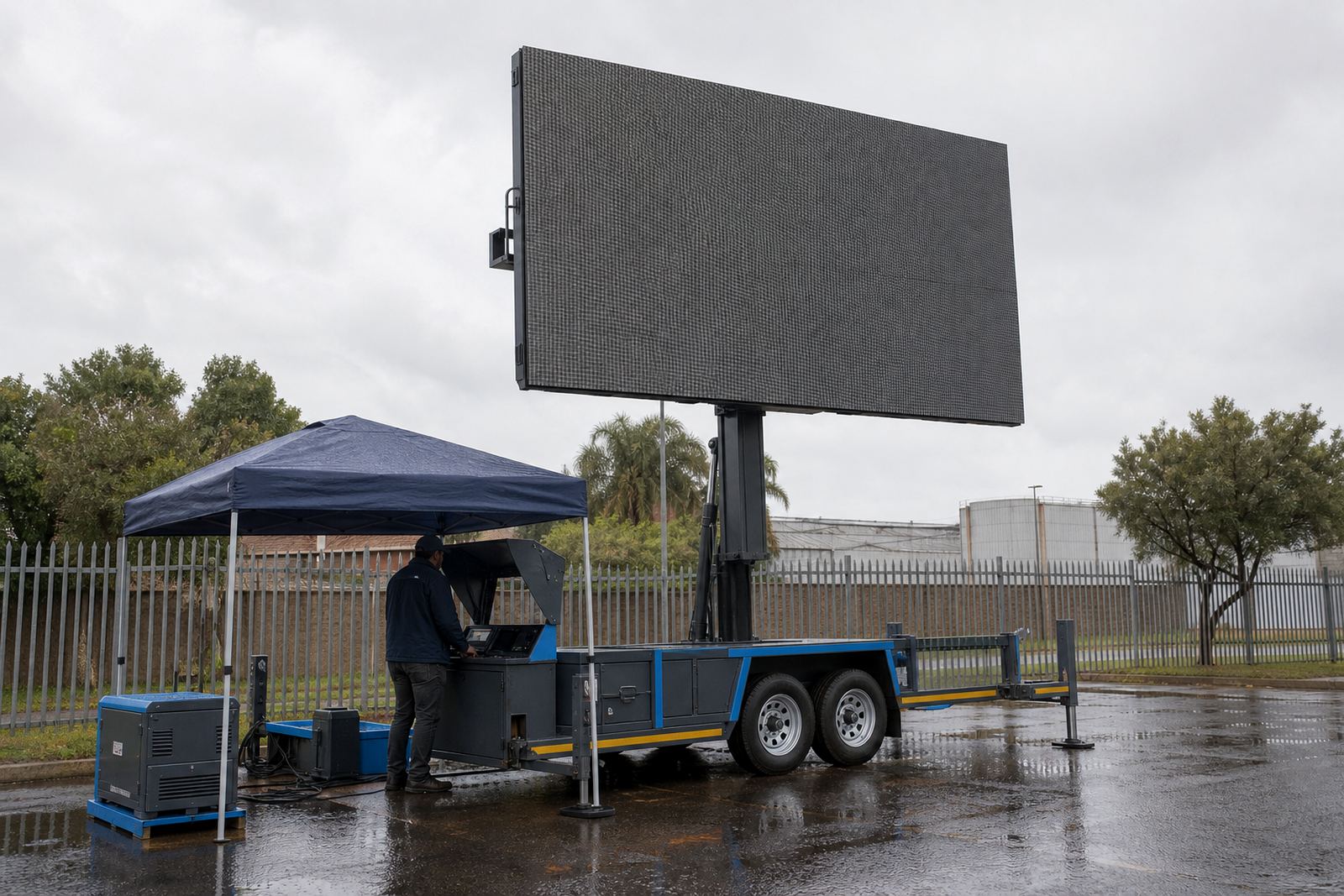
An LED box or trailer needs a level standing area, space for the tow vehicle to move clear, and enough room for the hydraulic lift to raise the screen safely. A compact site in Germiston is handled very differently from a wide sports field in Pretoria or a roadshow stop in Durban. The same screen size can fit well in one place and fail badly in another.
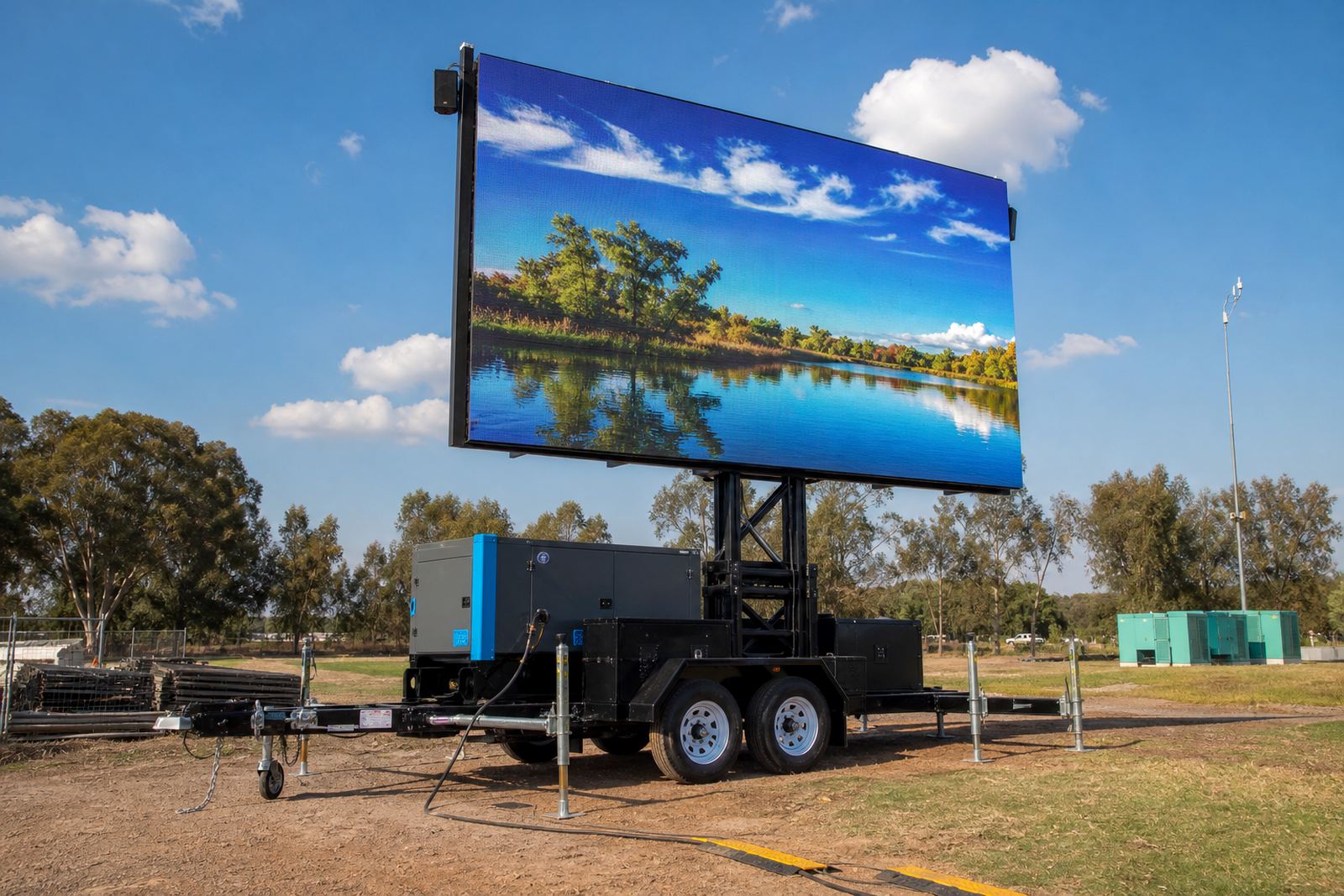
Mark out where people will stand first, then size the cabinet to that patch. A 3 mm or 4 mm pixel pitch can give sharp detail at shorter ranges, while a larger pitch may suit bigger audiences further back. Brightness also matters in daylight, especially on open sites where the sun lands directly on the screen for much of the day.
Measure the trailer, not only the image
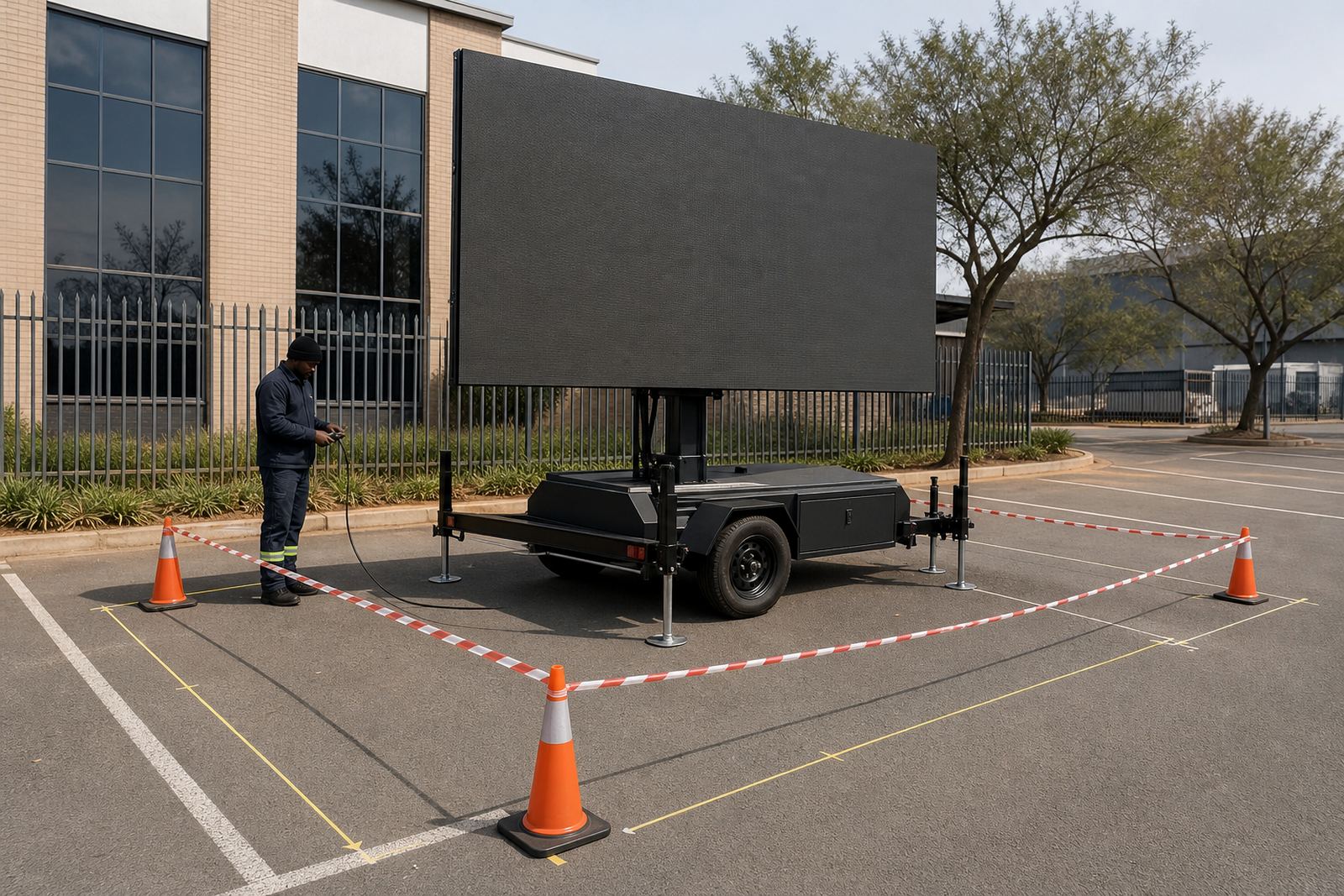
The visible picture can make people think in terms of metres only, but the trailer has more to it than the active display area. You need to allow for the chassis, the stabilising legs, the lift path and the extra clearance around the unit. If the site slopes, has kerbs, or sits close to a boundary wall, the working area gets smaller very quickly.
- Check the access road width for the trailer and delivery vehicle.
- Measure the standing pad length and width, not just the display face.
- Allow space for the screen to rotate or face the audience correctly.
- Keep clear of overhead branches, cables and low signage.
- Leave room for technicians to work around the unit without crowding foot traffic.
In a mall forecourt or municipal square, the final position often depends on more than display size. A smaller trailer with the right pitch and brightness can serve the brief better than a larger unit that cannot open fully or sit square to the crowd.
Brightness and pitch need to match the daylight
Outdoor LED screens are expected to hold their image in strong South African light, from harsh midday sun in Polokwane to coastal glare in Durban. That is where brightness and pixel pitch work together. A brighter screen helps visibility in open conditions, while the pitch affects how crisp text, logos and video look from different distances.
For close viewing, a finer pitch usually gives cleaner detail. For a roadshow viewed from further back, the same fine pitch may be more than the site needs. It is not only about visual quality, but about using the right amount of screen for the distance people will stand from it.
Wind exposure also affects what can be deployed. Open veld sites, stadium edges and raised forecourts may call for tighter wind limits and stricter monitoring. On a breezy day, the right unit and the right setup matter more than squeezing in the largest possible screen.
Power, playback and the working envelope
Some outdoor LED screen trailers run from an onboard generator, while others can take mains power where the venue allows it. Power planning should be handled early, because cable routing, generator placement and access to fuel or site supply all affect the final position. Municipal sites can also have their own rules on noise, access and placement.
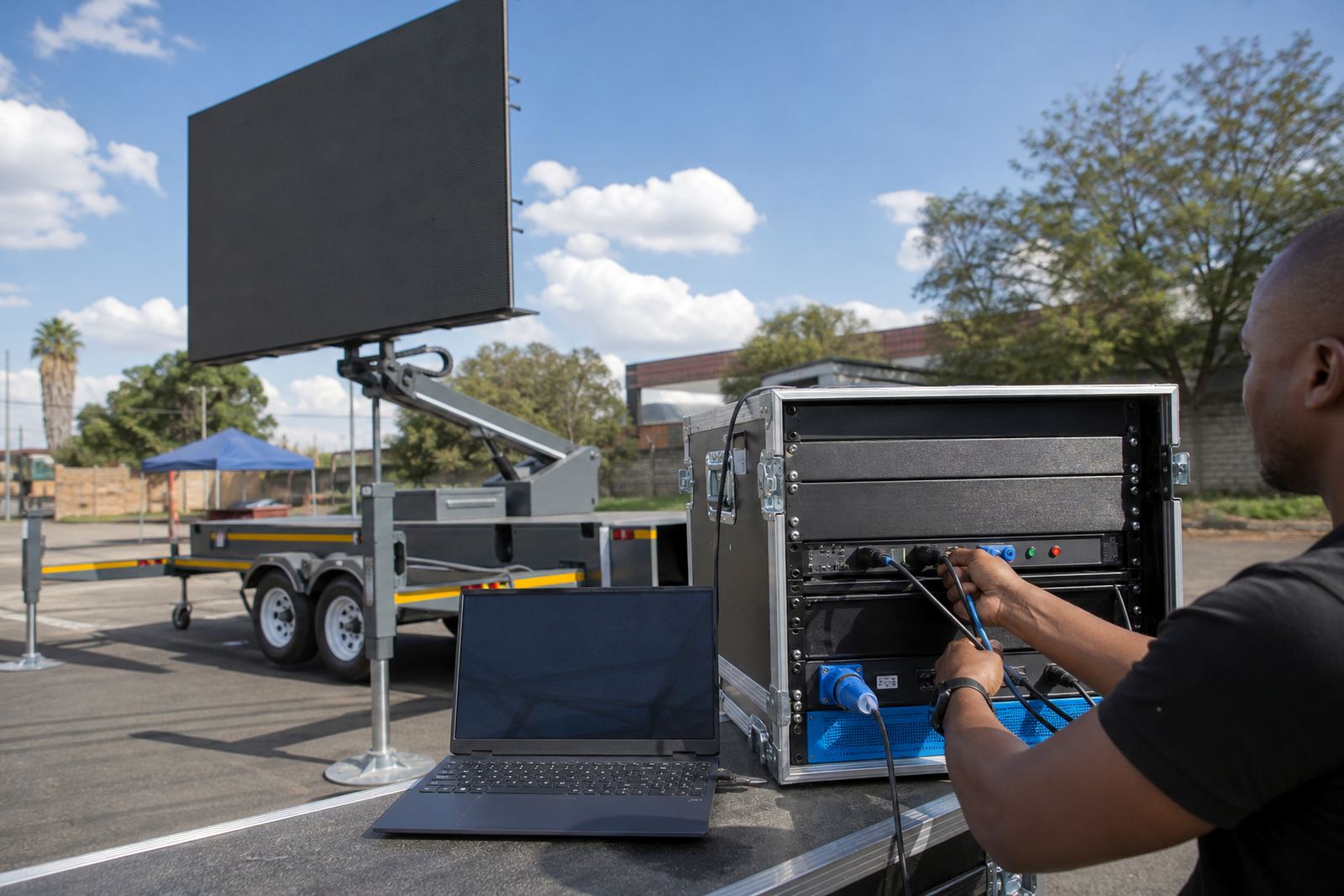
Content playback needs the same level of care. The screen should be loaded with the correct formats, aspect ratio and loop structure before the unit goes live. If there is a live feed, the technician has to manage signal checks, switching and backup playback so that the display does not sit idle while the crowd is already on site.
- Confirm whether the venue permits generator use or mains connection.
- Match the file format to the screen processor and playback setup.
- Plan for live feed support where speeches or sports coverage must run in real time.
- Allow for weather monitoring, because rain and wind can change the deployment plan.
On open sites, a screen that fits physically but strains the power layout is still the wrong fit. The technical side needs to line up with the footprint, not sit apart from it.
Permits, access and the local rules on the day
Permit guidance is often part of the practical planning for a public site. Depending on the location, there may be municipal rules around road reserves, public land, trading areas, noise and crowd movement. A site near a busy intersection in Johannesburg will need a different conversation from a private event field in Ekurhuleni.
Access is another factor people forget until the trailer is already on route. Tight gates, low tree canopies, kerb drops and narrow service roads can all change the route in. That is why site checks matter before delivery, not after. A technician can spot where the trailer will sit, how it will face the audience, and whether the unit needs a different angle to avoid glare or obstructions.
Pack down also needs space. If the trailer is boxed in by parked vehicles or fencing, the unit can be harder to recover safely at the end of the booking. Planning for the exit route is as important as planning the audience view.
A Germiston roadshow site with a tight forecourt
Picture a branded roadshow stop in Germiston near a busy retail stretch. The client wants a strong visual presence, but the forecourt has limited depth and the entrance lane must stay open. In that kind of setting, screen size alone does not solve the brief. The better answer may be a unit with a tighter footprint, a suitable pitch for people standing at medium distance, and enough brightness to stand up to afternoon light.
The trailer may need to face slightly off-centre to clear access, while the content is formatted for a wide loop and simple callouts. If the site is windy, the crew watches the conditions and keeps the deployment within the working limits of the screen. A delivery plan like that is less about spectacle and more about fitting the ground properly.
For advertisers and event teams working across Germiston, Kempton Park, Johannesburg, Pretoria, Durban, Bloemfontein and Polokwane, the same principle holds. The right unit is the one that fits the site, reaches the audience clearly, and can be supported properly on the day.