
Cable runs that do not steal time on site
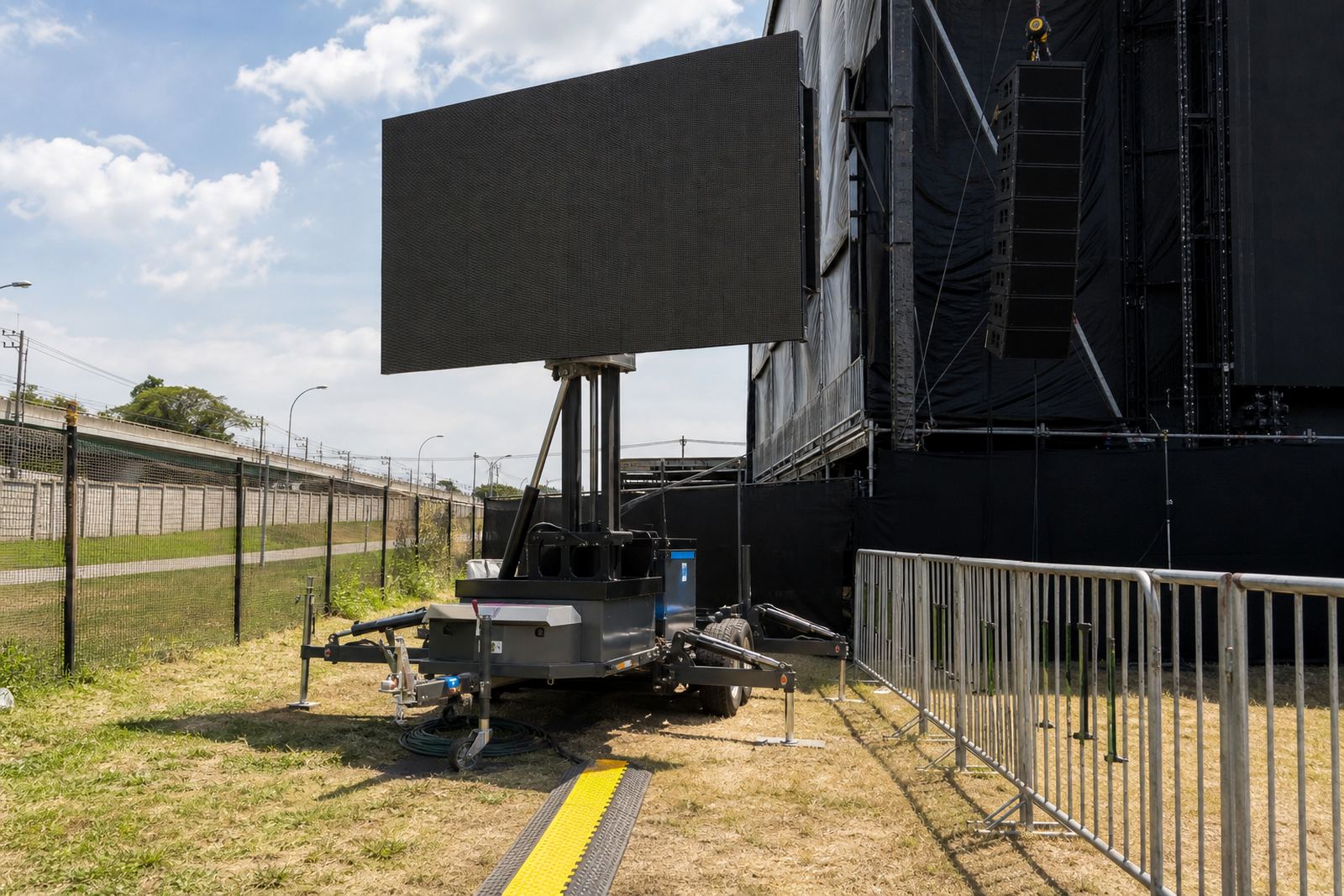
The first thing to settle is where the generator sits in relation to the trailer, the content control point and the available access road. Shorter cable runs usually mean less voltage drop and fewer tripping hazards, but the shortest route is not always the safest if it cuts across walkways or vehicle paths. In Germiston and across Ekurhuleni, cramped parking areas and tight event entrances often force a practical compromise, so the cable path needs to be mapped before the rig arrives.
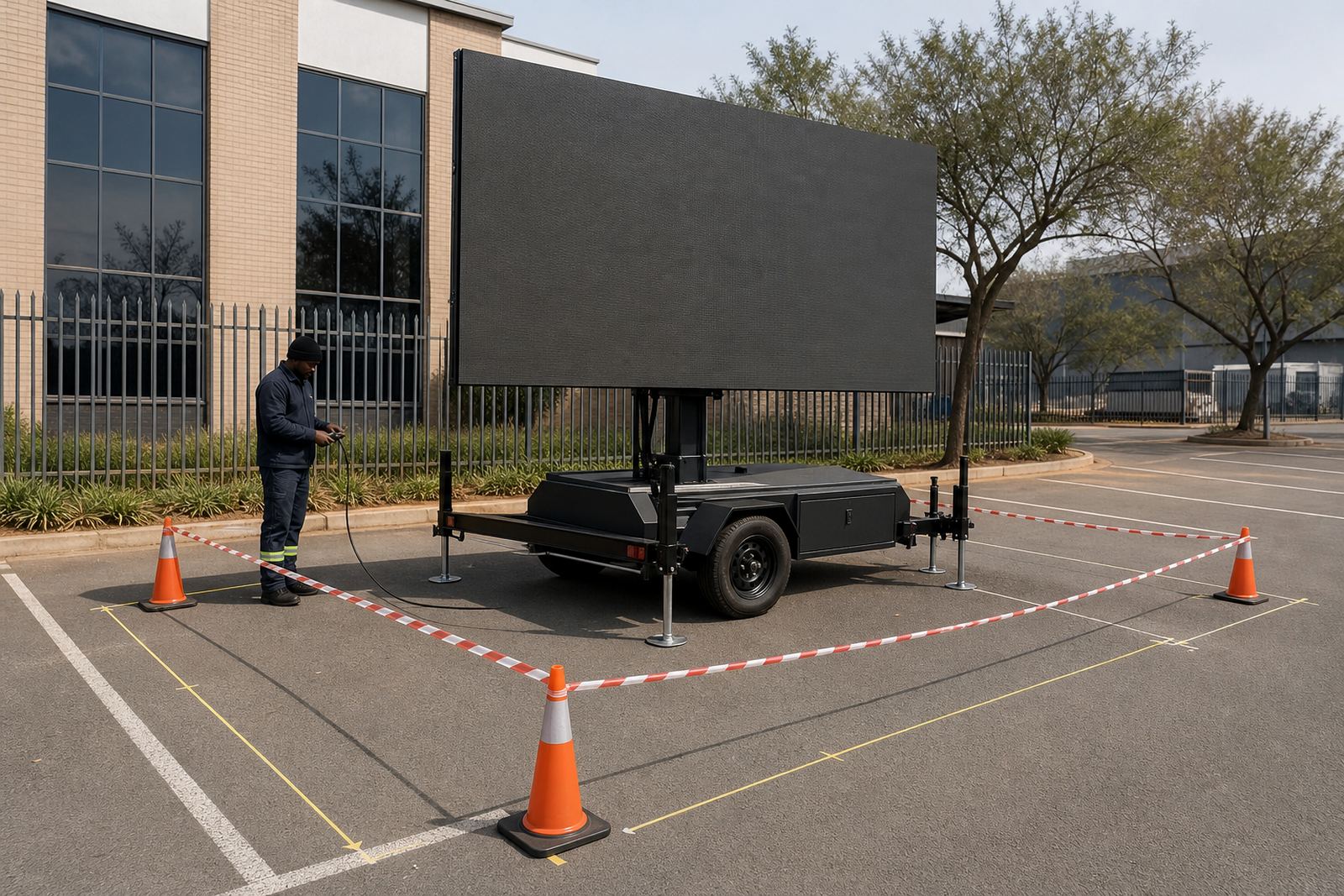
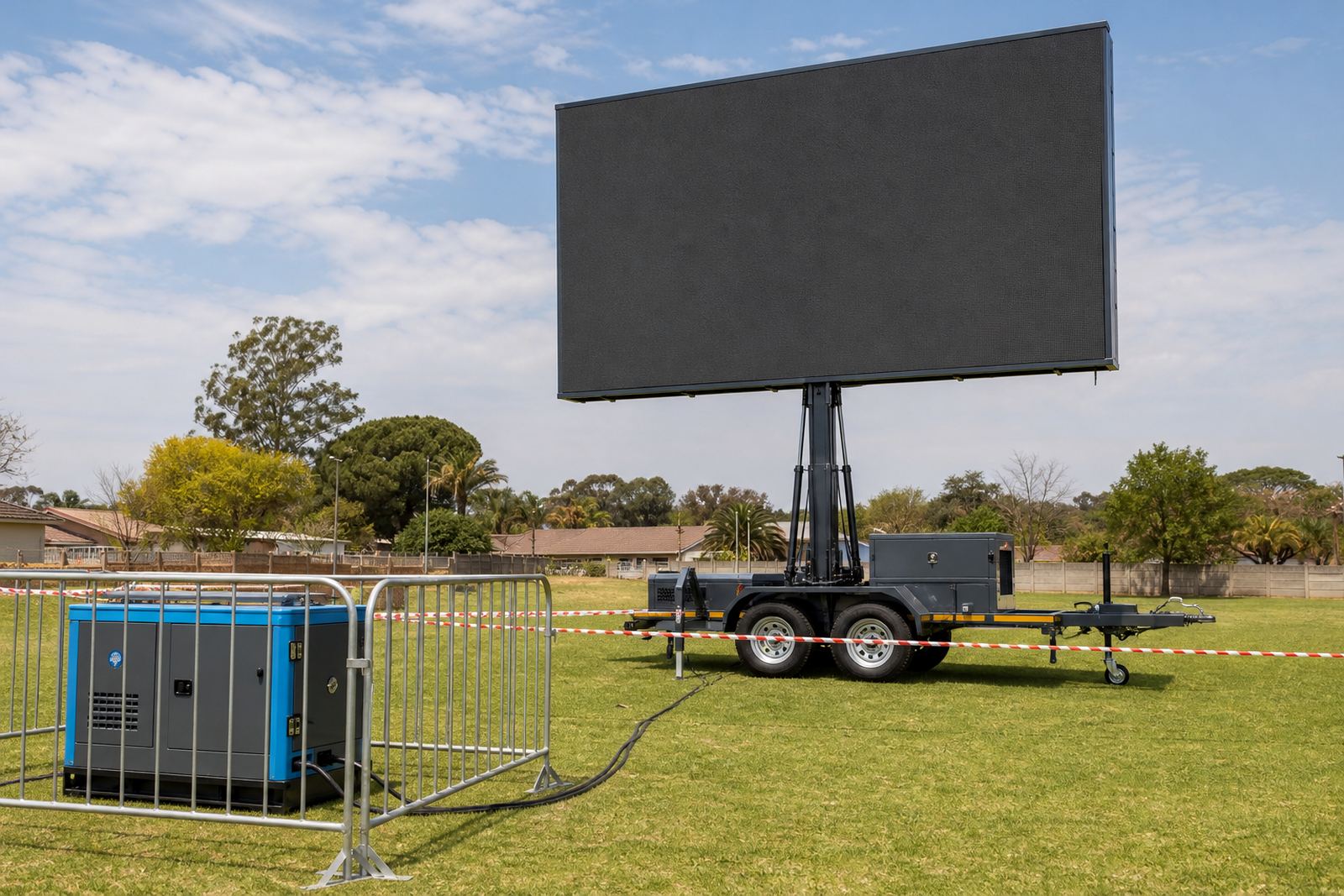
On a proper site check, the technician looks at ground level changes, where the crowd will gather, and whether a barrier line is needed around the generator. If the screen is being used for a roadshow or sports day, the generator may need to sit behind a fence line or in a service bay rather than close to the audience. That keeps the operating side tidy and gives the team room to work.
- Keep the route as direct as site conditions allow.
- Avoid crossing public footpaths unless the cable is protected.
- Leave access for refuelling and inspection.
- Plan for the control position, not only the screen itself.
Airflow, heat and the space around the set
A generator needs room to breathe. If it is pushed into a tight corner, boxed in by decor or pressed against a wall, the unit runs hotter and the risk of trouble rises. Outdoor LED screens already ask for careful positioning because of wind loading and visibility, so the generator should not become a second problem by sitting in a pocket with no ventilation.
For daytime advertising, the screen brightness can be very high, and that means the whole setup is working hard. The generator area should stay clear of loose fabric, stage skirts and stacked boxes. If the event is in a coastal town like Durban, moisture and salt in the air make clean airflow and sheltered placement even more important. A little shade is useful, but a closed-off enclosure is not.
- Leave clear air intake and exhaust space around the unit.
- Keep soft materials and decorations away from hot surfaces.
- Use a position that allows safe inspection without crowd pressure.
- Choose a spot that stays stable on firm ground.
Keeping the crowd apart from the power plant
Audience separation is not only about fences. People drift toward sound, lights and anything that looks active, so the generator position has to be planned with that behaviour in mind. If the public can stand right beside it, children may lean on it, staff may be forced to work in a tight gap, and a quick refuel becomes awkward. Separation also helps reduce noise in the immediate audience area, which matters on long event days.
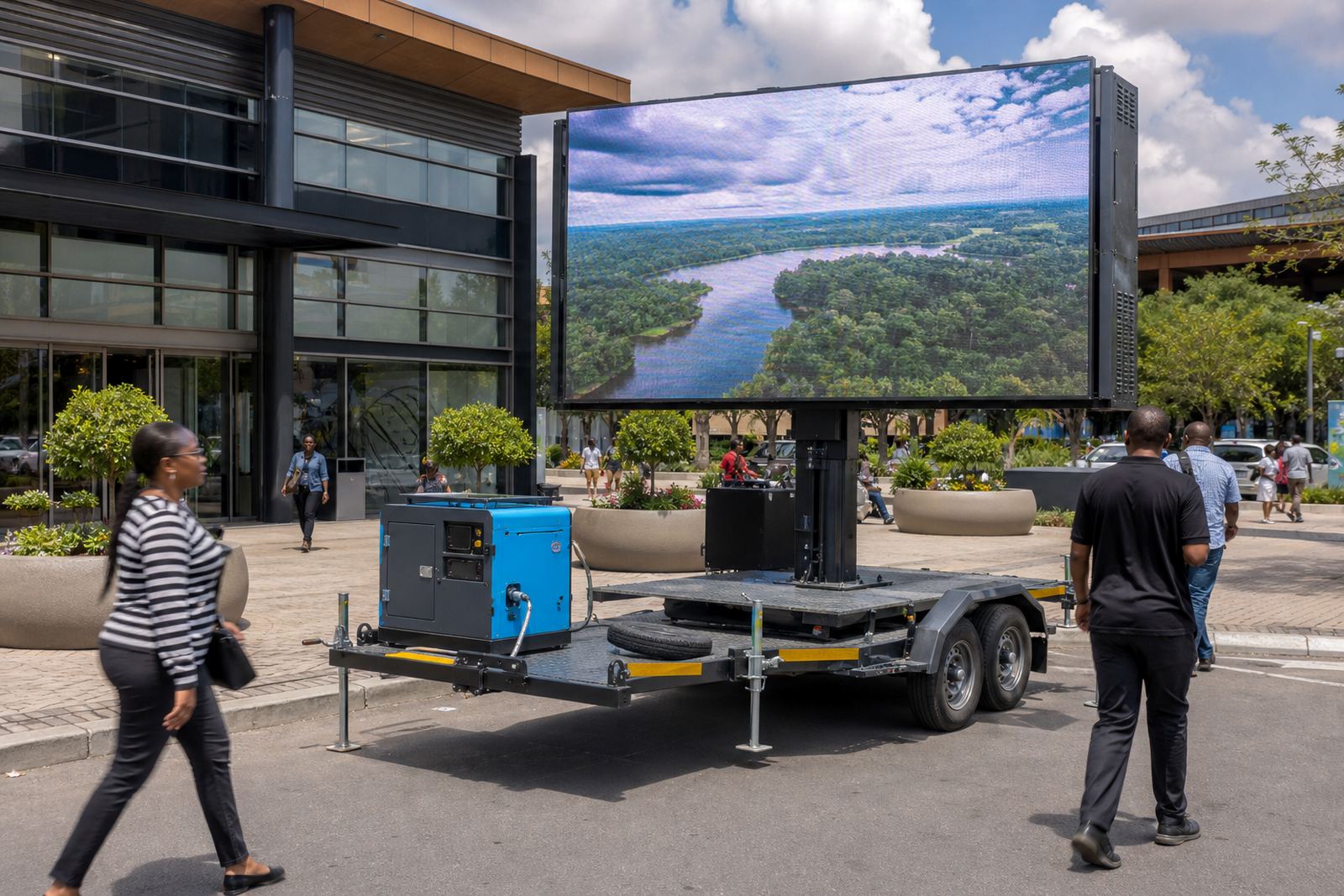
When the trailer is used near a shopping precinct in Johannesburg or at a community field in Polokwane, the generator should sit where cars, pedestrians and crew can be separated cleanly. On busier municipal sites, a permit may also need to account for access lanes, emergency routes and noise controls. The technician on site should be able to reach the switchgear without crossing through the crowd.
- Use barriers or natural site lines to keep people away.
- Place the unit where staff can reach it without mixing with spectators.
- Keep emergency access open at all times.
- Allow for venue rules on noise and public movement.
Matching the generator to mains power, refuelling and set length
Some LED screen trailers run from mains power when the venue provides a suitable supply, while others rely on a generator for the full show. The position changes with that decision. If the generator is the only power source, it needs refuelling access and enough space for checks during the hire period. If mains power is available, the backup arrangement still needs a sensible place, because a loss of supply should not leave the whole event scrambling.
For longer campaigns and multi-stop planning, the team may use the same screen at several sites in one week. In those cases, the generator position has to suit quick pack down and re set, not only the first installation. The location should allow the trailer to be lifted, rotated and aligned, while the generator stays out of the way of moving parts and cables.
- Plan for the power source before the trailer is parked.
- Keep room for refuelling without crossing the audience zone.
- Allow access for checks during long screening periods.
- Make sure the generator does not block trailer movement.
Wind, ground and the trailer's working envelope
Outdoor LED screen trailers are designed for outdoor use, but they still have limits. The screen face catches wind, the hydraulic lift needs stable footing and the generator needs level ground. If the site is exposed, the technician has to judge whether the trailer can stay in place safely, whether the display should be lowered, or whether the event needs a different layout. Watching the weather is how we make that call.
In open spaces around Kempton Park or the wider Ekurhuleni area, hard surfaces are common but they can slope slightly, and that can affect both the trailer and the generator stand. A good position keeps the unit level, avoids loose gravel where tyres may shift, and leaves room for the crew to act if conditions change. If the wind builds, the layout should already make sense for a quick adjustment.
It is also worth remembering that a screen trailer may be aimed for direct viewing, but the generator should never sit where it complicates the screen angle or the safety perimeter. The whole setup works best when each part has its own clear space.
Where the genset went on a three-stop roadshow
Picture a roadshow stop in Germiston with a trailer screen for product advertising and a crowd gathering along the edge of a forecourt. The screen needs to face the audience, but the generator should not sit beside the front row or near the main pedestrian line. In that setting, the team would usually place the unit to the rear or side, where cable length remains practical and the technician can still reach it without crossing through the crowd.
The same site may have a tight entry gate, a tar surface with a slight camber and limited room for vehicles. That is where planning matters. The delivery vehicle should drop the trailer, the screen should be positioned for viewing, and the generator should be left where it can ventilate properly. If a permit is required by the venue or the local authority, the placement has to respect those rules too, especially where public walkways or access roads are involved. A neat layout saves unnecessary movement once the event is underway.
The technician's checklist before the first frame plays
Generator positioning is one of those jobs that looks invisible when it is right. The screen plays, the audience sees the message and nobody thinks about the power source. That only happens when the generator, trailer and cable route were planned as one working unit. On a practical event site, the technician checks the basics before playback begins and keeps an eye on them while the screen is in use.
- Distance from the trailer and control point.
- Ventilation around the generator body.
- Audience separation and barrier placement.
- Access for refuelling and inspection.
- Ground stability and slope.
- Weather, wind and venue limits.
That is the difference between a screen that simply stands there and a screen that is ready for a long outdoor programme in heat, dust and wind. The equipment may be built for tough use, but the site layout still decides how calmly the day runs.