What the hydraulic lift is doing on site
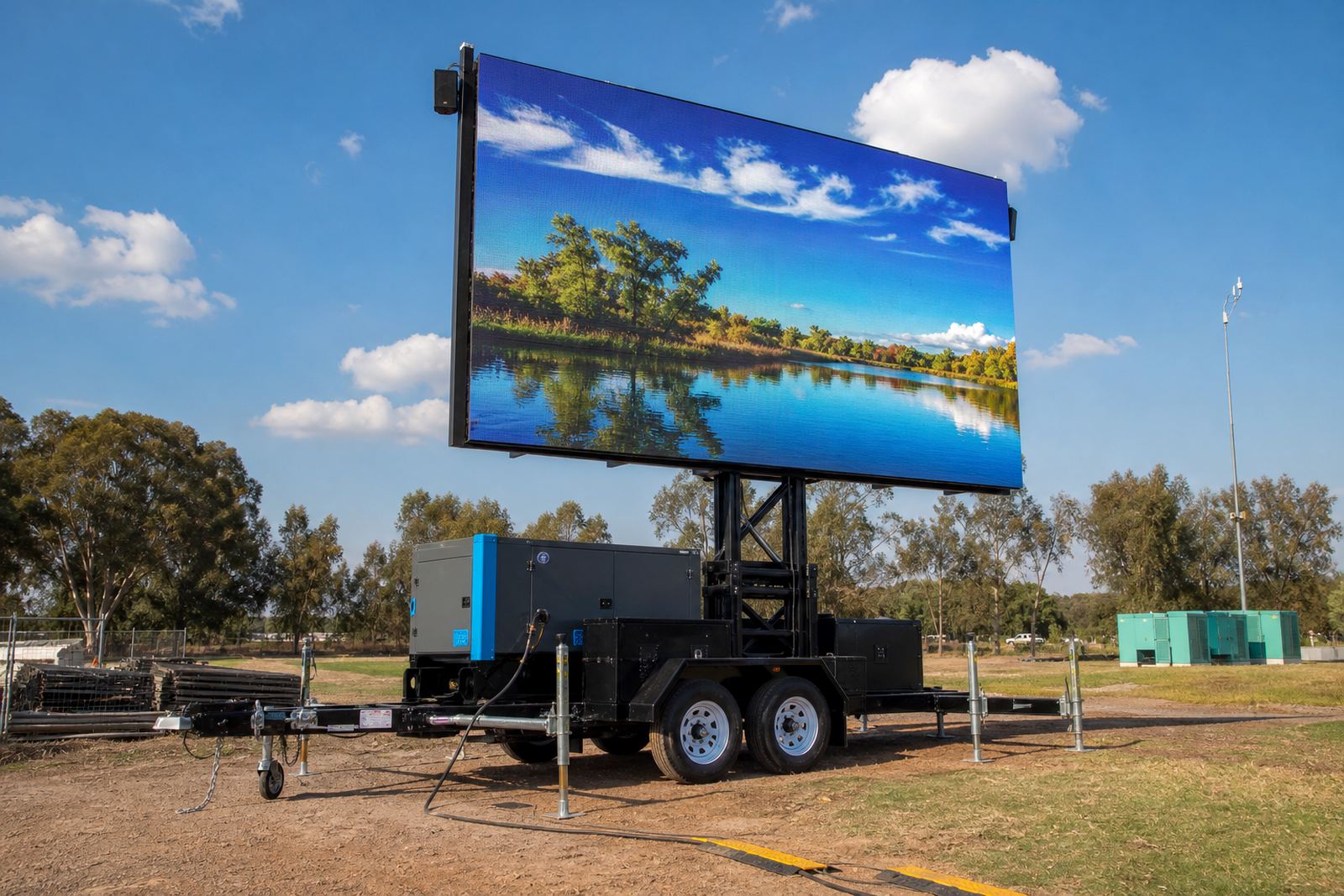
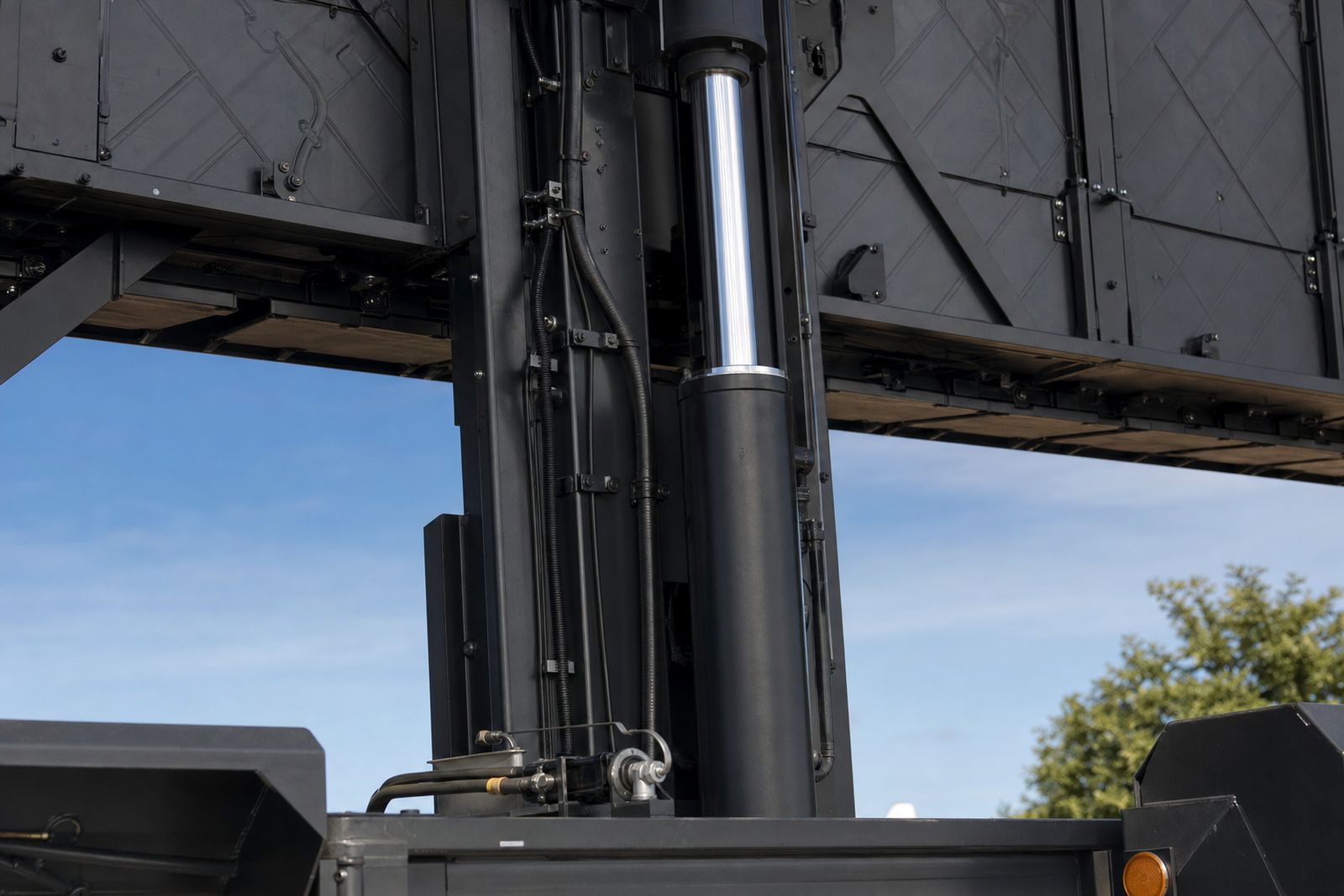
On a mobile LED screen trailer, the hydraulic system raises the screen structure from its travel position to its display height. It usually works with a mast or lifting frame, then a rotation point that lets the screen face the crowd or the road side where visibility matters most.
The main gain is control. A screen that rises under hydraulic pressure can be positioned with far less manual handling, which matters when the surface is level but time is tight and the site has traffic, spectators or other equipment around it. It also keeps the screen movement predictable, which is important when technicians are setting up in windy or crowded areas.
Why level ground matters more than most people expect
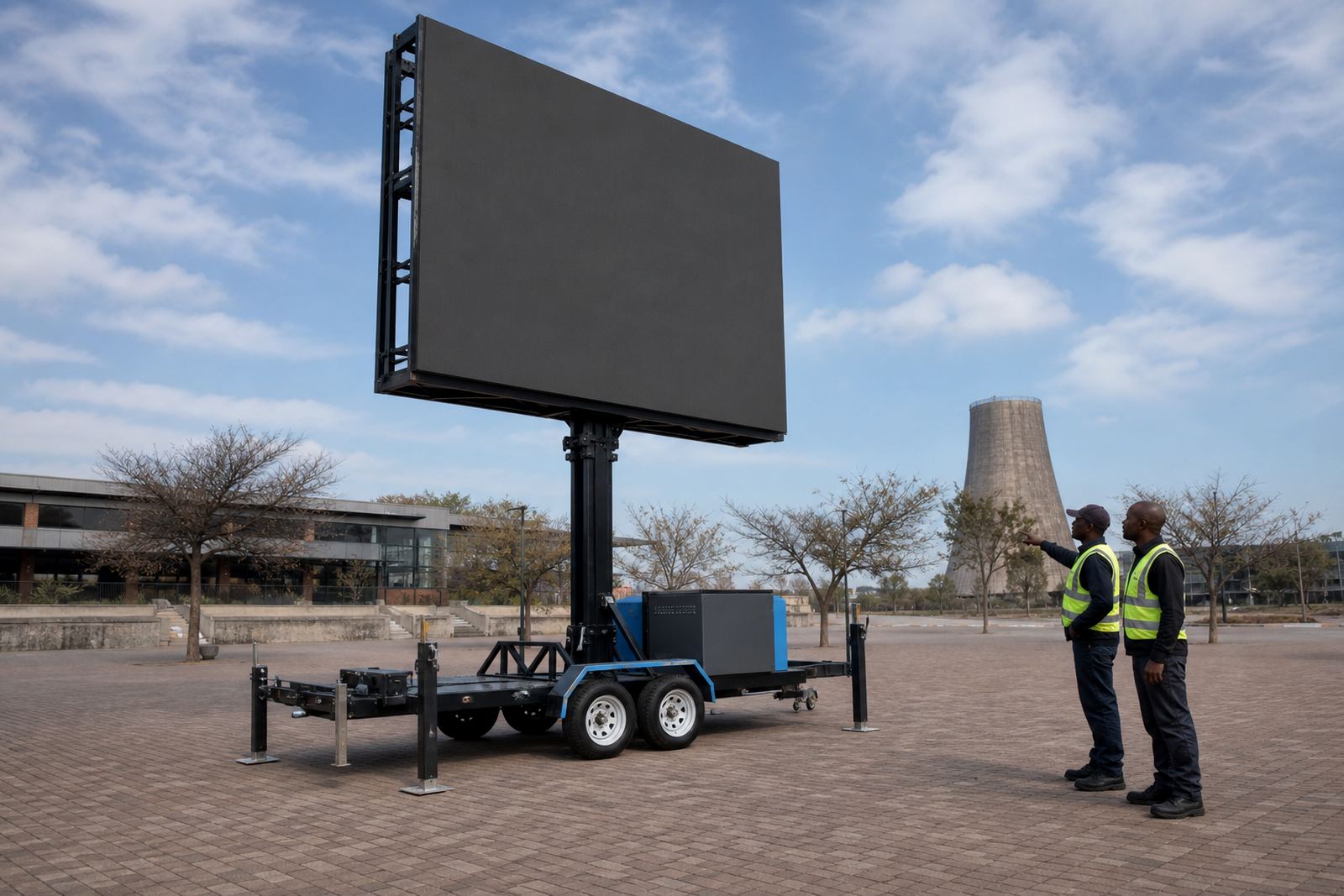
Hydraulic lifting is not a fix for poor siting. The trailer still needs firm, level ground so the chassis stays stable while the mast rises and the screen locks into place. On soft ground or a slope, the load can shift and the system may sit out of level, which affects viewing lines and can put stress on the frame.
In Germiston and other urban sites, this often means checking paved courtyards, stadium parking areas, showgrounds or hard-packed open space before the truck arrives. A good site check looks at access width, turning space, overhead lines, gradients and where the audience will stand, because the lift only works properly when the base is sound.
- Level ground helps the mast rise evenly.
- Hard standing supports the trailer during display.
- Clear overhead space avoids contact with lines or trees.
- Access for the towing vehicle keeps the setup neat.
How the lift supports daylight viewing and screen position
Outdoor LED screens are usually specified with enough brightness to hold their image in daylight, but brightness alone does not solve viewing problems. The hydraulic lift helps place the screen at the right height and angle so the picture sits above heads, barriers and parked vehicles. That makes the content easier to read across a wider viewing zone.
Some screens also rotate after lifting, which lets the technician square the face of the display to the audience area. That matters on roadshows and sports days where the crowd does not gather in a perfect straight line. A small change in angle can improve legibility without changing the content itself.
For daytime work, the screen face must be clean, bright and properly aligned. The hydraulic system is what gets it there with less strain on the team and less disruption around the site.
Power, wind and the practical limits around the lift
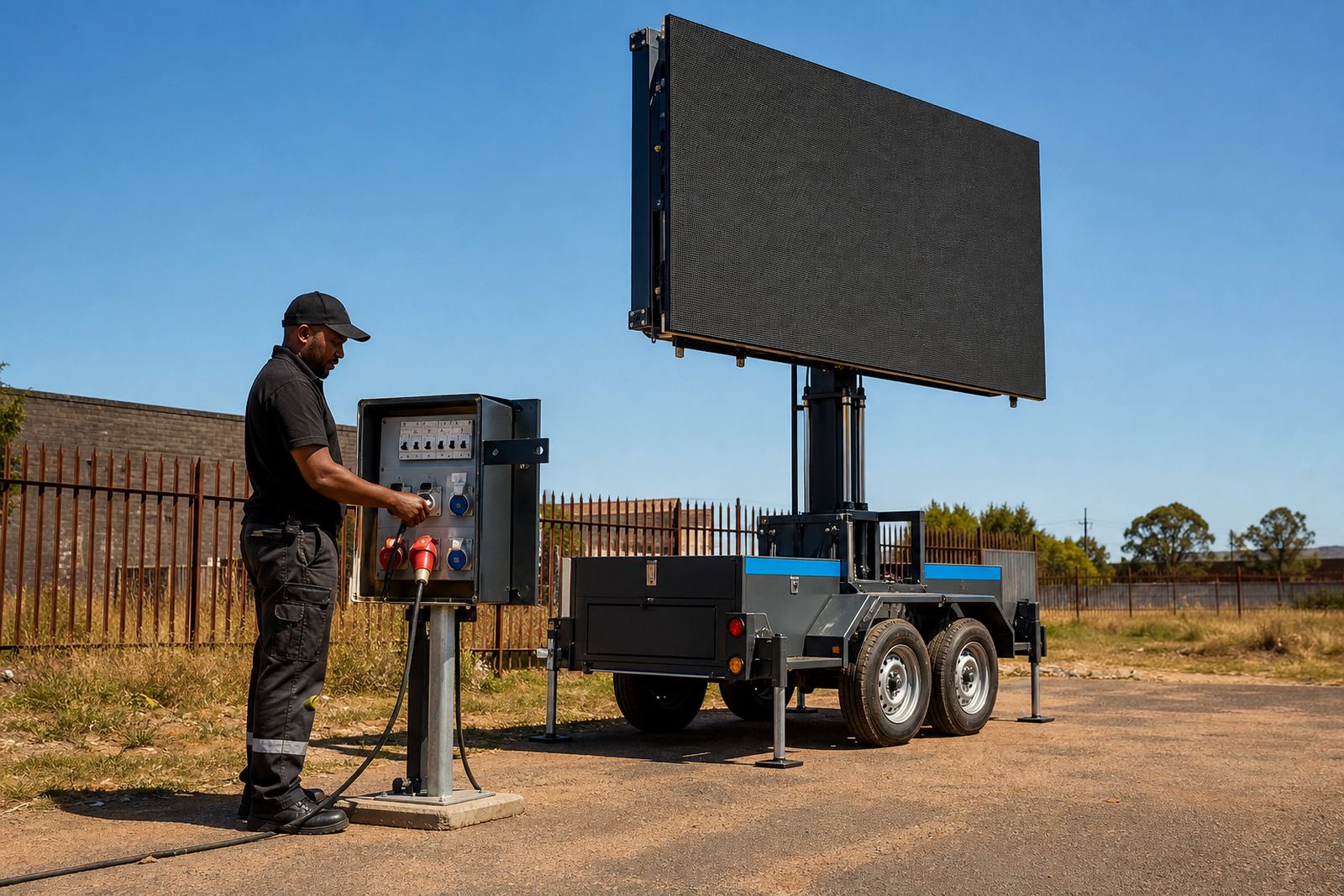
Hydraulic lifting works as part of a wider operating setup. Some trailers run from a generator, while others use mains power where the site allows it and the electrical supply is suitable. The technician checks that the chosen power source can support the screen, control systems and any playback gear before the lift starts.
Wind is another practical factor. The taller the screen sits, the more attention it needs from the crew. Outdoor trailers are normally deployed within stated wind limits set by the equipment maker and the site conditions, and the screen may need to be lowered if conditions change. That is not drama, it is just basic outdoor control.
- Generator or mains power can be used, depending on the site.
- The technician checks cable runs and power load before operation.
- Wind monitoring continues while the screen is raised and in use.
- The display can be lowered if conditions become unsafe.
Content playback once the screen is in position
Once the trailer is lifted and secured, the screen still needs proper content handling. Files should be loaded in a clean format, with the right aspect ratio and resolution for the screen size. If the event includes live feed support, the signal path must be tested before the audience arrives so the image is stable and the timing holds together.
Hydraulic deployment supports this stage because it creates a dependable working height for cabling, playback checks and any live input gear. It gives the on-site technician room to test audio visual integration, confirm signal flow and make practical adjustments without crowd pressure. That is where the lift becomes part of the whole job, not just a mechanical step.
Permits, access and a raised mast on a council field
In South Africa, municipal permissions can differ from one area to another, especially when a trailer is placed near a road, public pavement or a busy event space. Permit guidance usually focuses on location approval, access control and any safety conditions the local authority wants in writing. The hydraulic lift itself is not the permit, but the final deployment height and position can affect what is allowed.
A practical example is a roadshow near a municipal sports ground in Ekurhuleni. The crew arrives with a trailer that is already matched to the site plan, checks the ground, sets the chocks, raises the screen and rotates it toward the audience zone. The technician then confirms playback, watches the wind, and keeps the display working through the event. If the ground is uneven or the access is too tight, the setup changes before the lift starts, because that is easier than correcting a poor position later.
For advertisers and event teams, the hydraulic lift is useful because it turns a heavy screen into a controlled display tool. It helps the trailer deploy efficiently, but only when the site is suitable and the operating checks are done properly.
- Site checks help identify level ground and safe access.
- Permit guidance helps match the setup to local rules.
- On-site technicians keep the screen position and playback under control.