When the trailer angle matters more than the trailer size
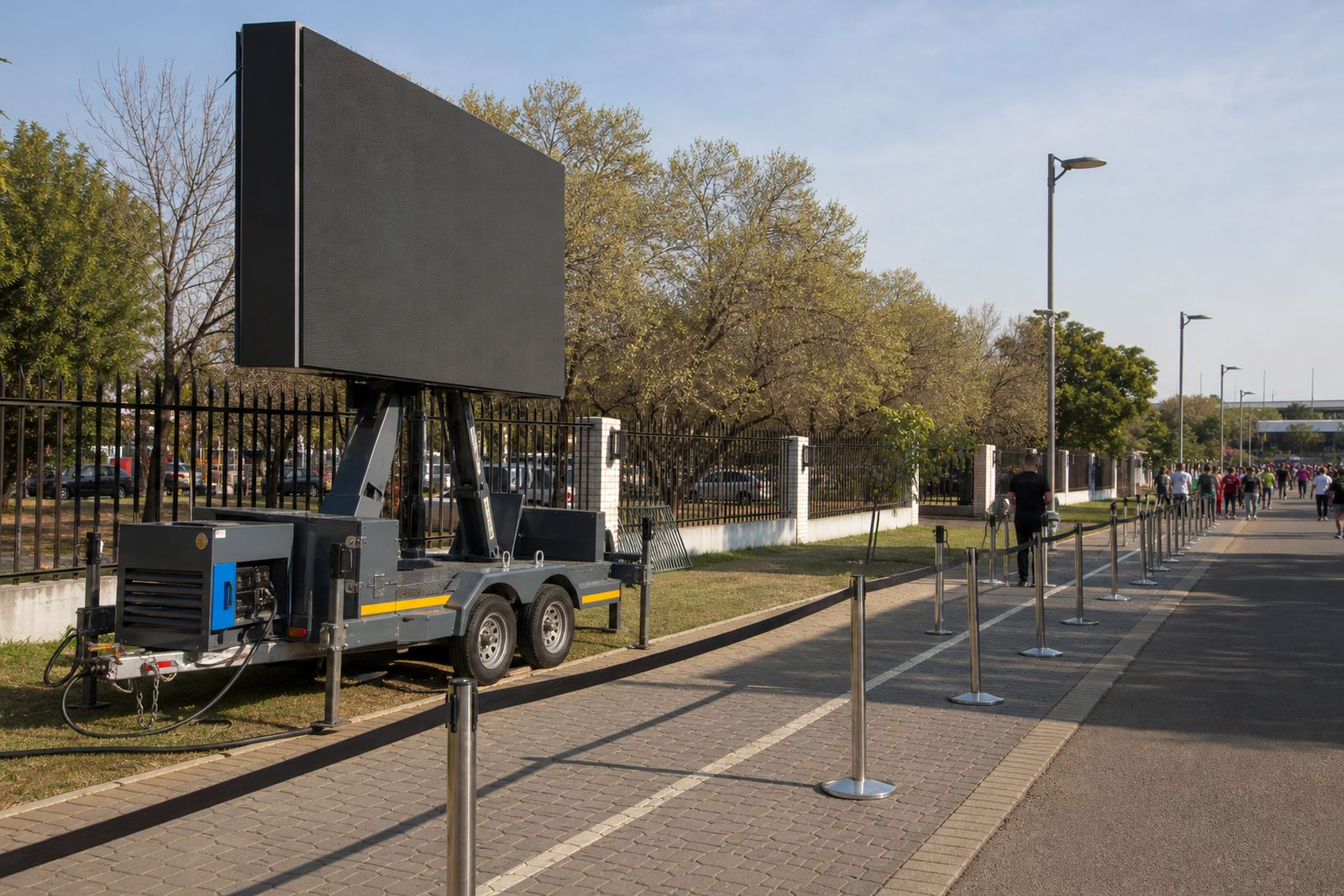
Screen rotation is useful when the audience does not face the display head-on. At sports grounds, roadshows, forecourts and street-facing promotions, the best viewing line is often slightly sideways to the vehicle or trailer body. Rotating the screen lets the face of the display point into that viewing line instead of forcing people to read across a bad angle.
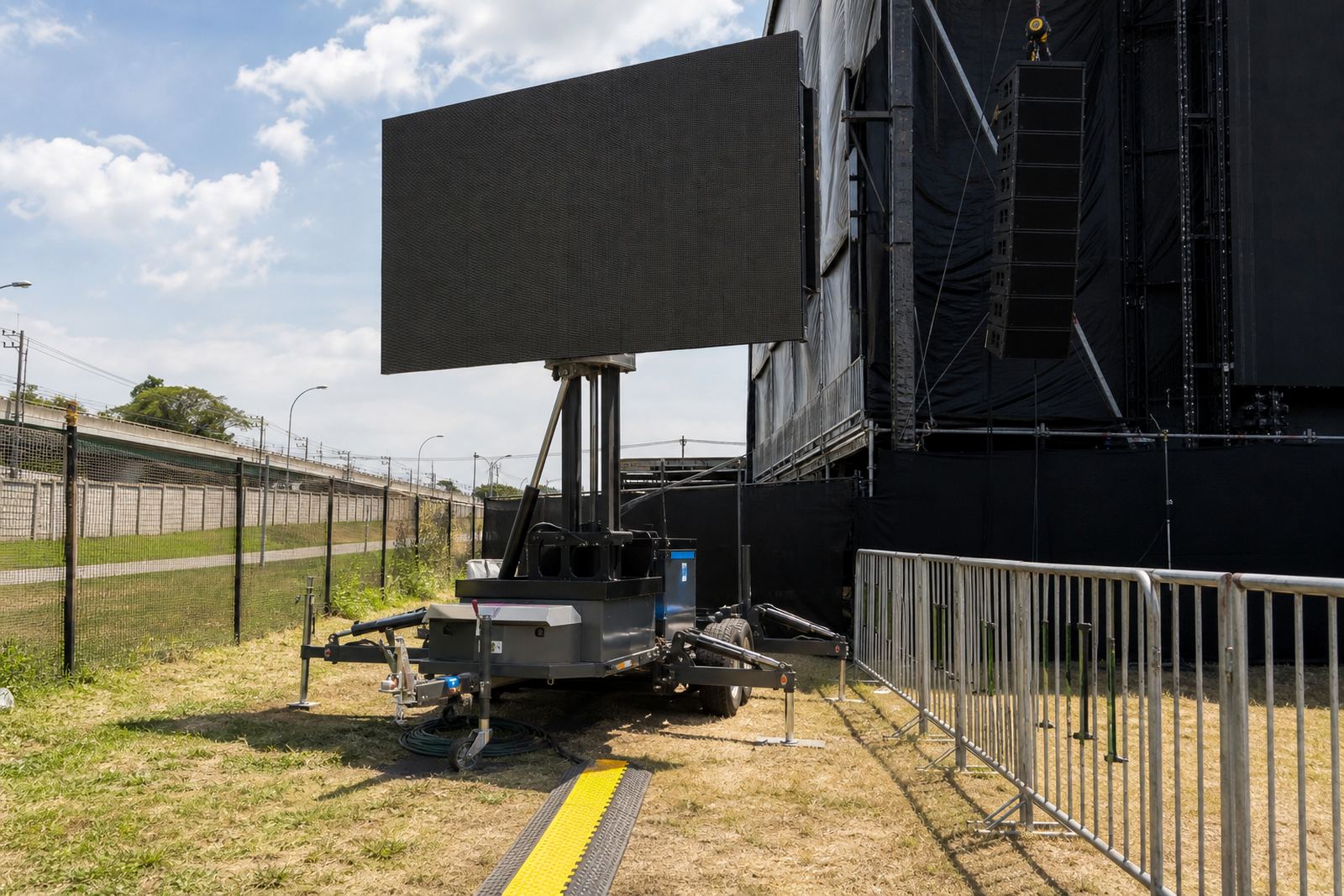
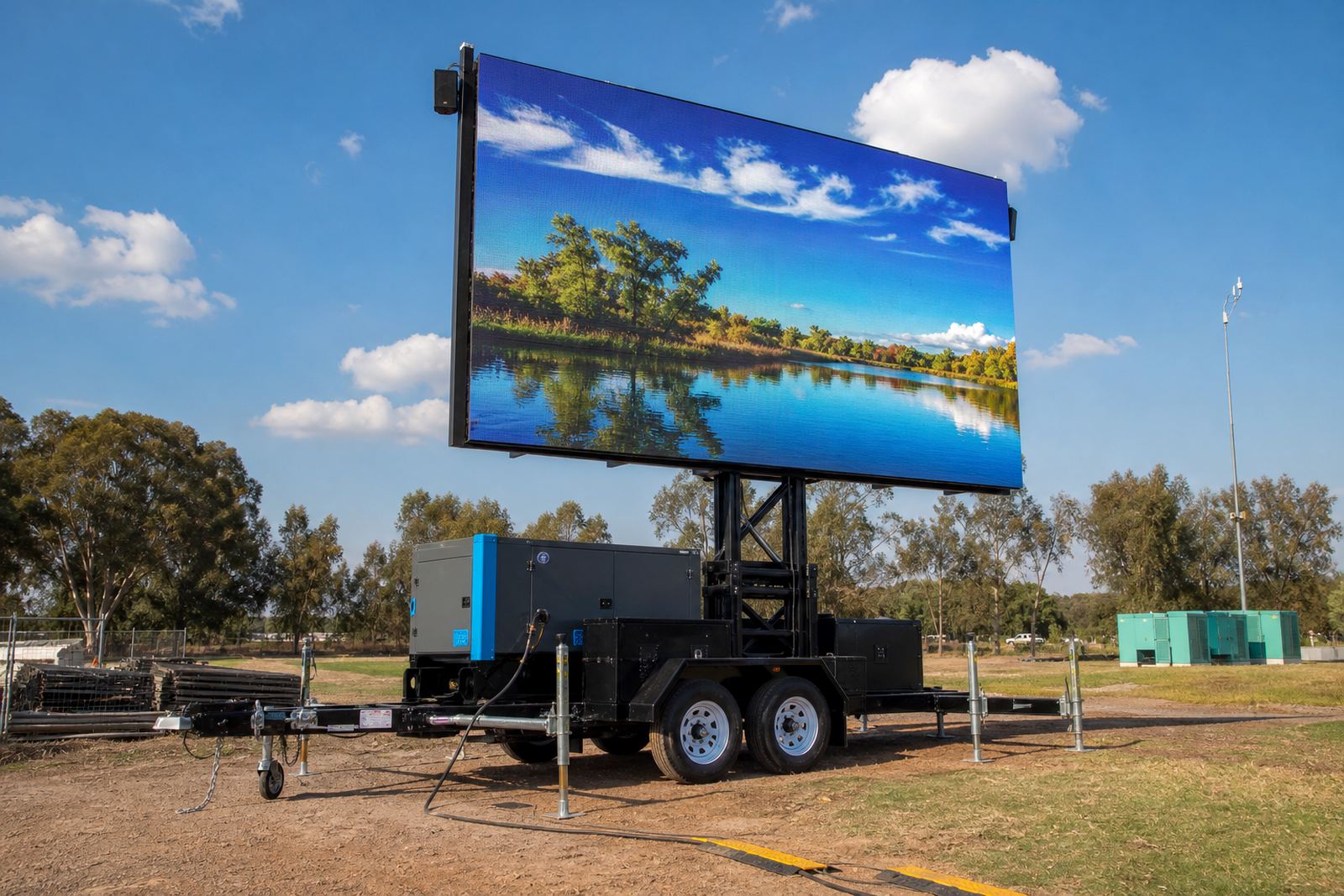
On larger outdoor LED screen trailers, the screen face may rotate to suit the crowd position after the unit has been parked and levelled. That can make a clear difference when vehicles, fencing, vendor tents or a stage edge would otherwise cut off part of the audience view. It also helps when the display has to work in a narrow site where the trailer cannot sit squarely in the middle of the action.
How rotation changes the reading of the picture
A screen that turns to the right angle is easier to read in daylight, especially when the display uses a fine enough pixel pitch for the viewing distance. For outdoor work, brightness needs to stay high enough for sunlit conditions, and the content still has to be set out with large type, strong contrast and simple motion. Rotation does not fix weak creative, but it does help the picture land where people are actually standing.
It also matters for camera feeds and live event graphics. A rotated screen can line up with the natural line of sight from the main audience block, so scoreboards, sponsor loops and lower-third text read more cleanly. That is useful at school sports days, concert spill areas and public viewing spaces where people move around instead of sitting in one fixed row.
- Best used when the crowd stands off-centre from the trailer.
- Helps align the screen with foot traffic or seating rows.
- Makes live feeds and text panels easier to follow from a distance.
- Useful where a vehicle bay, fence line or road edge limits placement.
The mechanics behind a safe turn
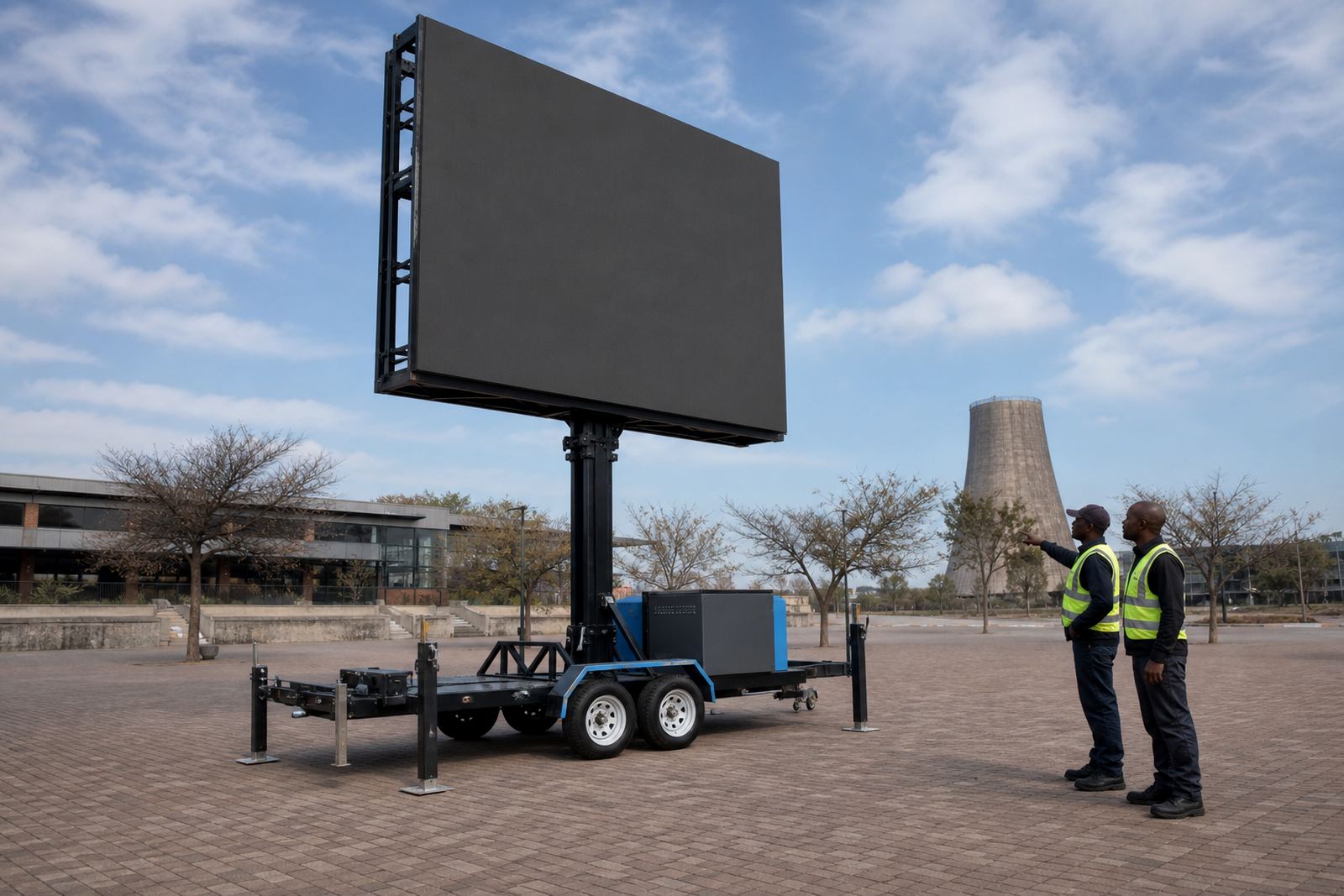
Most rotating outdoor LED screen trailers rely on a hydraulic lift or a controlled mounting structure that lets the screen rise and then turn into position. The technician checks level ground, clears the working zone and confirms that the trailer sits stable before the panel is rotated. If the unit is powered by a generator or mains supply, cable routing and power planning need to be in place before the screen goes live.
Wind matters too. A turned screen presents a different surface to gusts, so the team has to work within the unit's wind limits and the local weather picture. On open Ekurhuleni sites and exposed roadshow stops, a technician may hold the unit at a safer angle or pause rotation if conditions shift. That practical caution keeps the display and the people near it in a better position.
- Check that the trailer is level before rotation begins.
- Keep the immediate area clear of pedestrians and vehicles.
- Match power, playback and signal checks before the audience arrives.
- Watch wind conditions, especially on open sites and roadside setups.
Where rotation helps in South African venues
In Germiston and the wider Ekurhuleni area, many activation points sit beside access roads, retail forecourts or open event fields. A screen that can rotate gives more flexibility when the crowd gathers along one edge rather than in front of the trailer. The same is true in Johannesburg, where traffic flow, barriers and venue corners often shape where people stand.
For Durban events, the layout can be shaped by coastal wind, limited hardstanding and audience movement around food and merchandising zones. In Pretoria, the display may need to point across a campus court or open municipal space. Bloemfontein and Polokwane roadshows often call for straightforward sightline planning, with the screen turned to suit the main audience path instead of the parked position of the trailer.
A local example is a shopping-centre roadshow where the trailer is parked parallel to the building, but the crowd faces in from the access walkways. Rotating the screen lets the message face the people who are already moving through the site. That saves awkward head turns and keeps the playback readable from the first glance.
Permits, neighbours and the ground under the wheels
Rotation is not only a technical choice, it also sits inside the practical side of site control. Municipal rules may affect where a trailer can stand, how close it may sit to a road edge, and whether a public space or private property needs written approval. A permit discussion often includes the display position, viewing direction and whether the screen will point toward traffic, footpaths or adjoining land.
Neighbours and nearby traders matter as well. A rotated screen may change where light spill, sound spill or pedestrian attention falls, so the setup needs to respect the site around it. The on-site technician can work through content loading, playback management, live feed support and weather monitoring while the rest of the team handles delivery, setup, pack down and multi-stop planning across South Africa.
For campaigns that move between Kempton Park, Pretoria and Durban, rotation can be part of a wider route plan. It helps one trailer do more than one job without forcing each stop into the same facing direction. That flexibility is useful when the audience line changes from venue to venue, and the site itself keeps shifting with it.
What to send through for a rotation-focused brief
If a screen has to turn, the important details are usually the ones linked to space and viewing angles. A good brief helps the team set the trailer correctly, load the right material and plan the technician's role on site. It also cuts down on the guesswork around power, movement and the place where the crowd will actually stand.
- Site location and town, plus the rough layout of the space.
- Audience position, seating blocks or standing areas.
- Whether the trailer faces a road, field, forecourt or stage.
- Power source on site, or whether generator support is needed.
- Any permit or site approval notes that affect placement.
- Screen content format, including live feed, ads or scheduled playback.
For a rotation-led setup, our contact form is the best place to send the venue notes, and the team can work from there with the same practical detail used on a live install. The main point is not just getting the screen there, but turning it so the right people can actually read it.