
The signal has to travel cleanly before the crowd sees anything
Live feed work starts with the source. A camera feed, decoder, laptop output or vision mixer output has to reach the screen processor without drop-outs, odd scaling or colour shift. For outdoor trailers, the signal path is usually set up with a short, direct run and a clear handover point between the live production crew and the screen technician.
Outdoor LED panels handle bright daylight well when the screen is specified correctly, but brightness alone does not fix a poor feed. The resolution of the output, the aspect ratio and the refresh settings all need to line up with the LED wall size and pixel pitch. If those numbers do not match, text can look cramped and moving pictures can feel soft at the edges.
Test time matters more than most people expect
Live feed support needs a proper rehearsal window. That is the time to check the source device, the backup source, the signal converter, the audio path if audio is part of the setup, and the switch from standby content to live content. A test also shows whether the screen is sitting at the right height and angle after hydraulic lift and rotation have been set.
- Confirm the source output format before load-in.
- Check whether the live feed will stay on mains power or generator power.
- Set the backup content so it can take over without confusion.
- Walk the viewing zone and check for glare, distance and sightline problems.
On a roadshow in Kempton Park, for example, the feed may move from a morning product reveal to an afternoon prize draw. The crew needs a clean handover each time, with the playback specialist watching for freezes, blank frames or the wrong input being selected while the event is live.
Outdoor conditions change the way the feed behaves
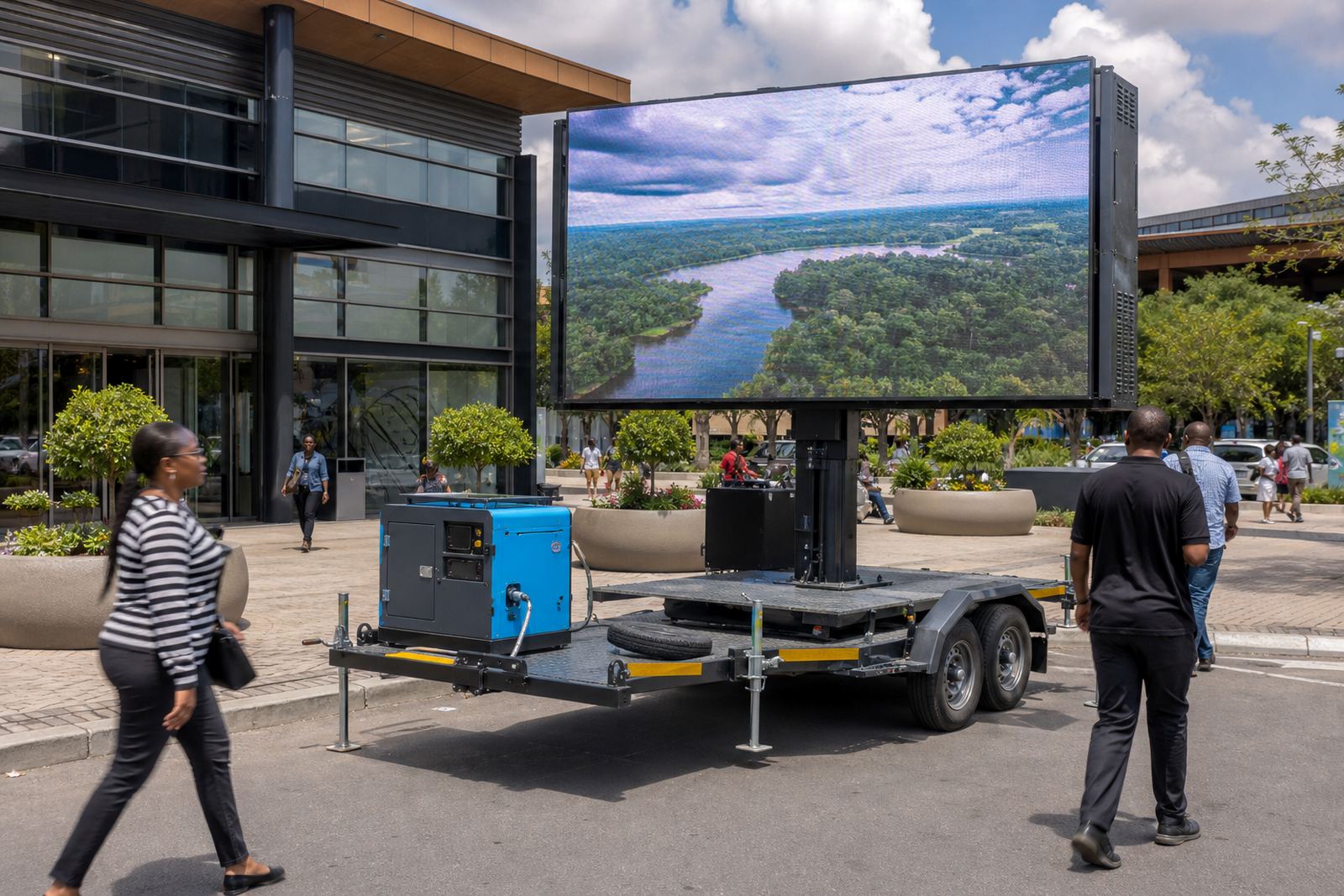
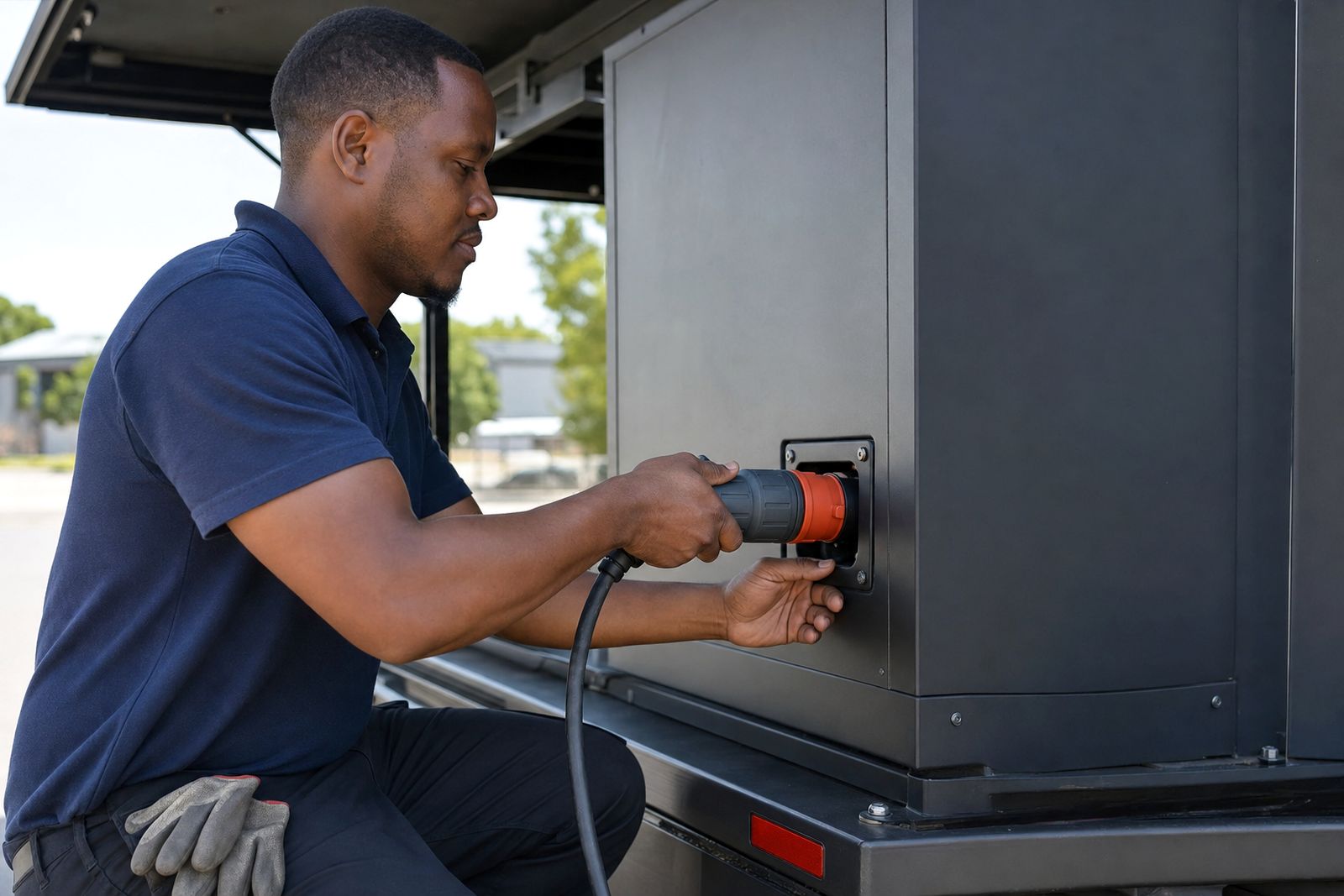
Wind, dust and heat all affect an outdoor screen trailer. The trailer has to sit within safe operating limits, and the screen face must be positioned with weather in mind. A live feed can fail for reasons that have nothing to do with the camera, such as a cable strain issue after a gust or a connector that was not seated properly during setup.
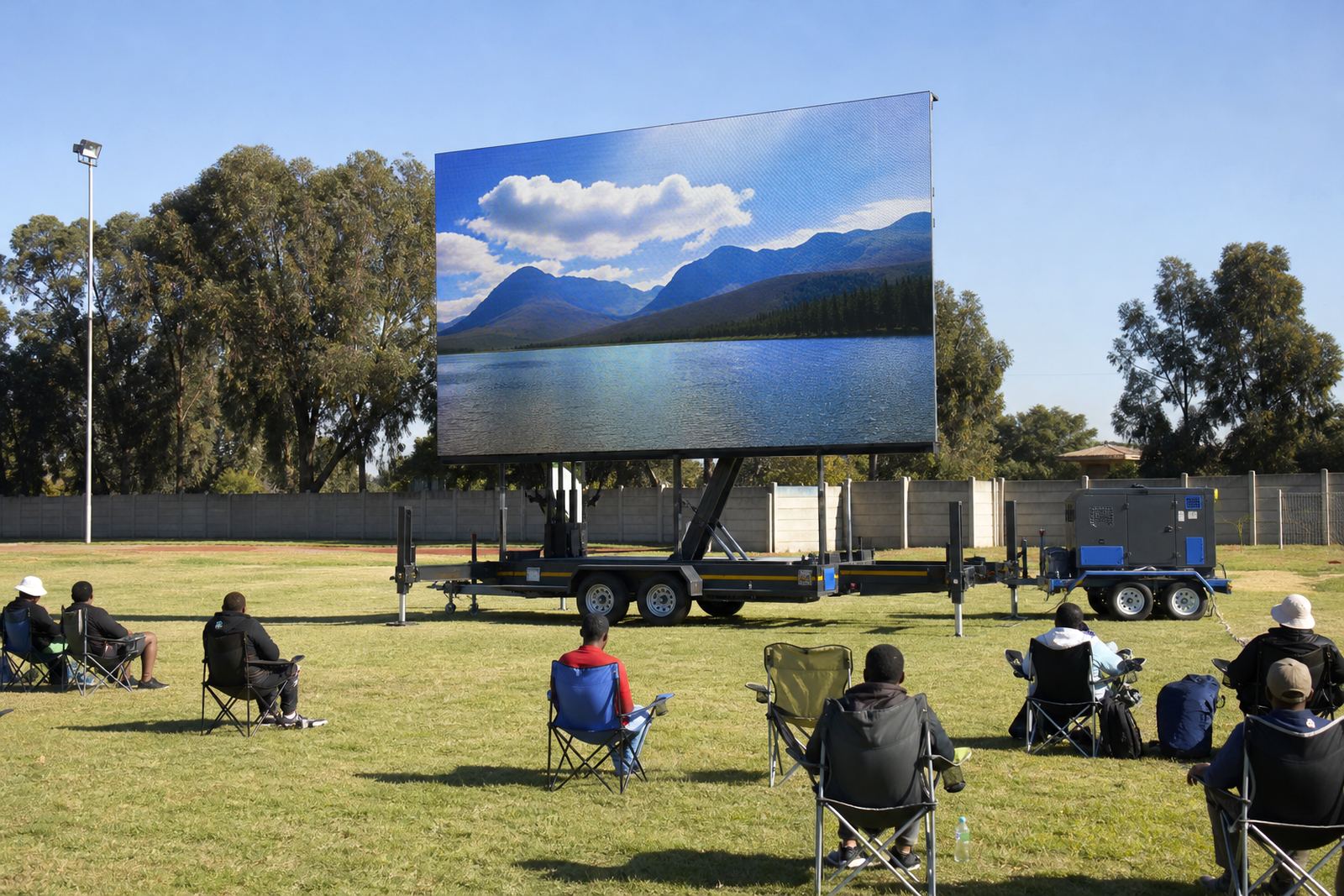
At a sports day or concert field, the technician keeps an eye on the screen angle, the cable routes and the trailer stance. If the screen is rotated toward a different crowd zone, the feed still has to stay readable from that new direction. That is where proper content scaling and a strong pixel layout help, especially on text-heavy sponsor messages or score updates.
Power planning stays part of the live feed conversation
Live feed work is not only about data. The screen, processor, playback gear and support equipment all need a steady power plan. Some installs run from a generator, others from mains power if the site allows it. The load on the display must be matched to the supply, and the technician has to check that the feed gear stays protected if the source power changes during the event.
- Use a power source that suits the site rules and the screen load.
- Keep a backup source ready for the playback chain.
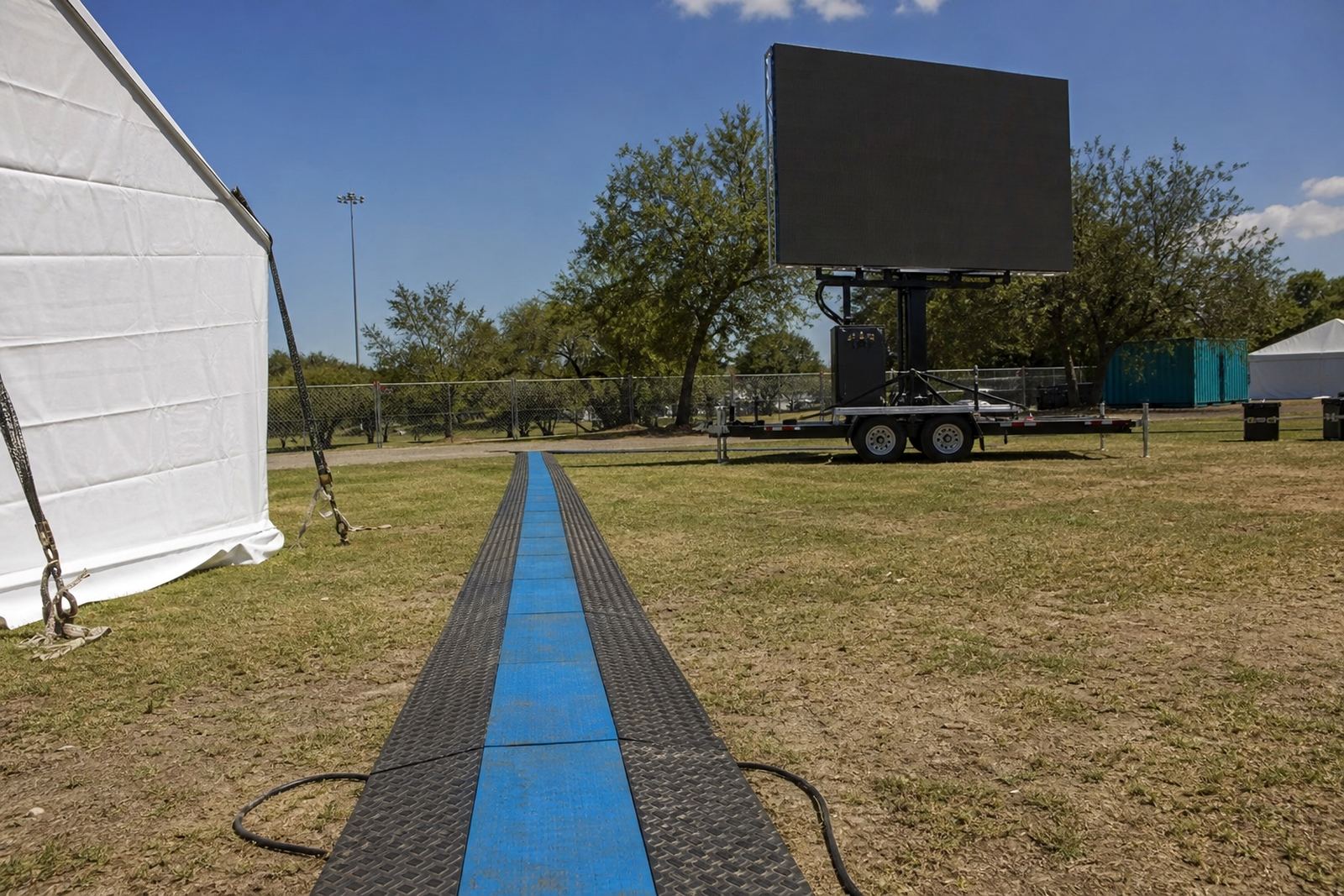
- Separate the live feed wiring from other event cabling where practical.
- Check grounding and cable protection before the crowd arrives.
In Durban, coastal humidity can complicate the day if connectors are left open or cables are laid badly. Good prep means less fiddling later, and it helps the live feed stay stable while the programme moves from one segment to the next.
Permits and municipal rules can affect where the trailer sits
When an outdoor LED screen trailer is used in public areas or close to busy roads, municipal permission may be part of the plan. The exact requirement depends on the site, the duration and how the trailer affects access, sightlines or pedestrian movement. For roadshows, that paperwork and site approval need to sit alongside the technical plan, not after it.
A site check helps with this because the team can see where the trailer can stand, how much space is needed for setup and pack down, and whether the feed position works for the audience. In Johannesburg or Pretoria, a tight forecourt may need a different layout from an open event field in Bloemfontein, and the live feed plan has to suit that space.
What a good live feed handover looks like on the day
The cleanest live feed jobs are usually the ones where everybody knows their role. The content team knows what format is going in, the technician knows which input to use, and the event lead knows when the switch to live will happen. That way the trailer can move from preloaded content to a live camera feed without confusion or awkward silence on screen.
Our team in Germiston handles delivery, setup, on-site technicians, content loading and playback management for outdoor LED screen trailers and LED boxes. For a live feed brief, the useful details are the venue, the viewing distance, the source device, whether audio is included, and whether the screen must share the day with a roadshow stop, a sports programme or a concert changeover.
- Send the venue name and the approximate screen position.
- State the live source type and who is running it.
- Note whether the feed needs overlays, score lines or speaker names.
- List any access limits, permit notes or time windows that affect setup.
Handled well, live feed support becomes a practical part of the event rather than a worry point. The screen stays readable, the crew stays coordinated and the audience gets the same picture the production team intended.