
What the technician is watching before the screen lifts
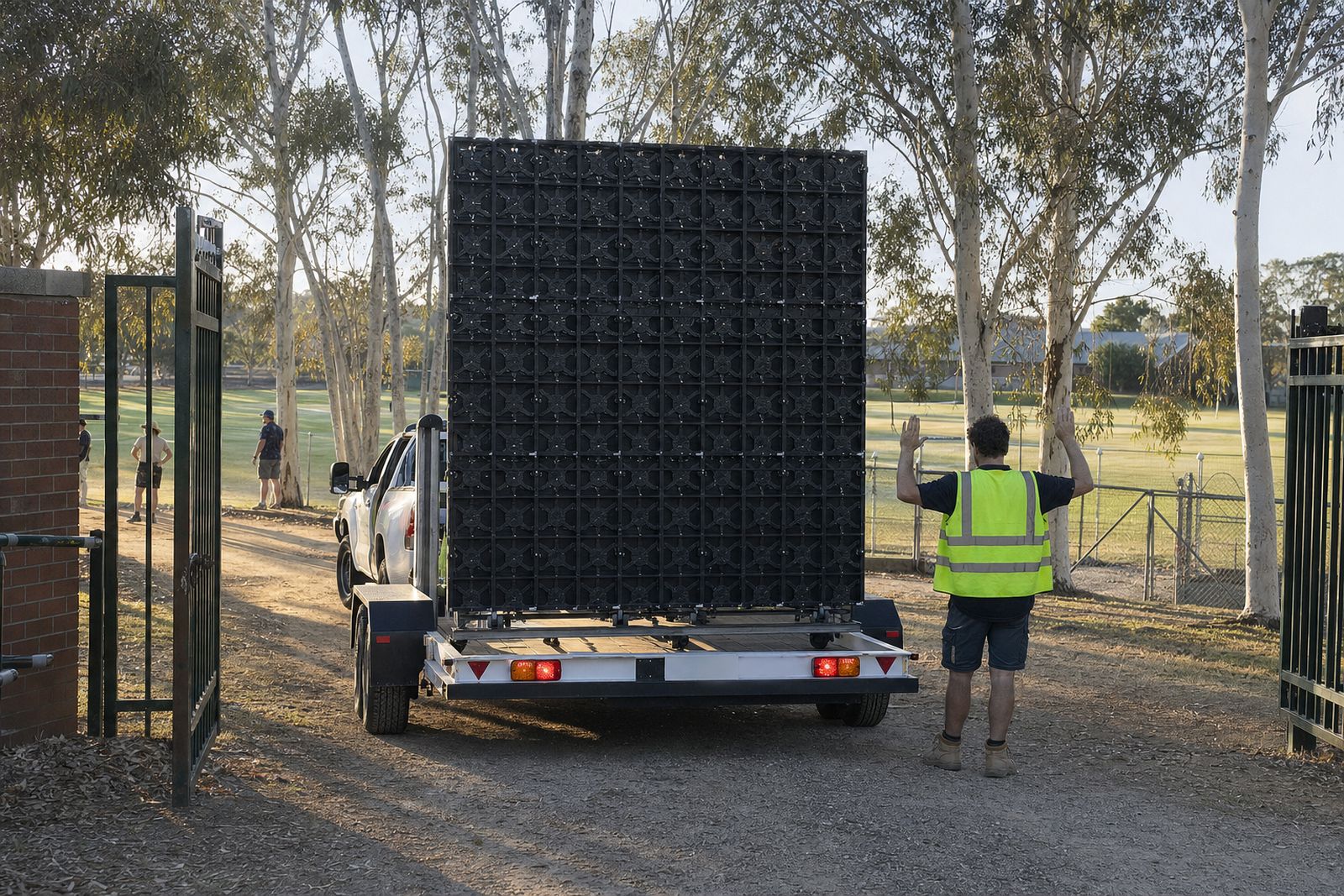
Before a trailer screen goes up, the technician looks at the ground, access route, wind exposure and the space available for the truck or trailer to settle. That first walk-around matters because a screen that looks fine on paper can be awkward in a tight parking area, a school field or a municipal event ground with soft edges after rain.
The technician also checks the display plan against the site conditions. Outdoor LED screens for daytime use need strong brightness, usually with enough output to stay visible under harsh sun, while the pixel pitch must suit the viewing distance. A tighter pitch works better when the audience stands closer, and a wider pitch suits larger viewing areas where people are further off. On a real site in Germiston or Kempton Park, that detail changes how the picture reads once the sun is up and the crowd starts moving.
Hydraulic lift, rotation and the set-up sequence
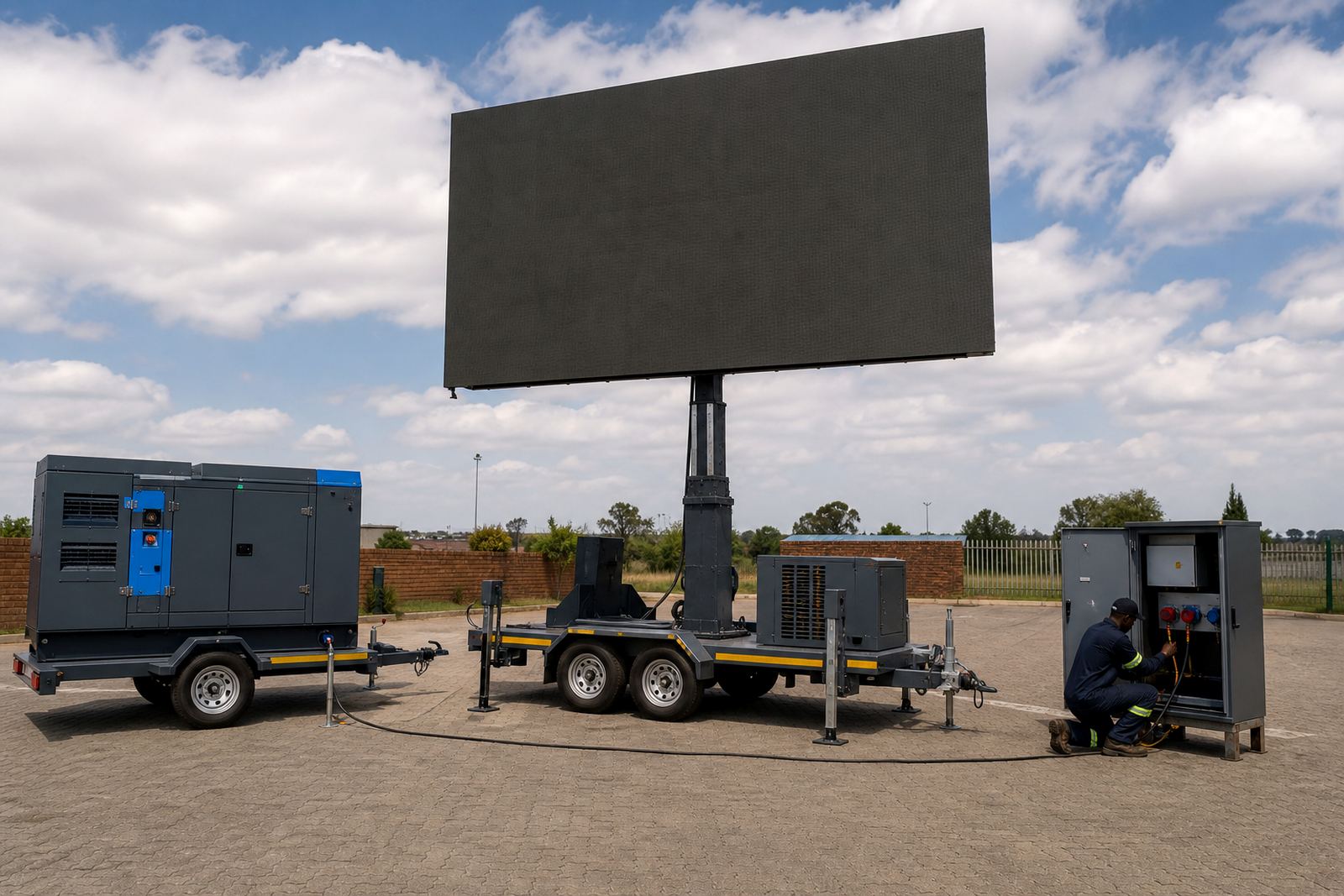
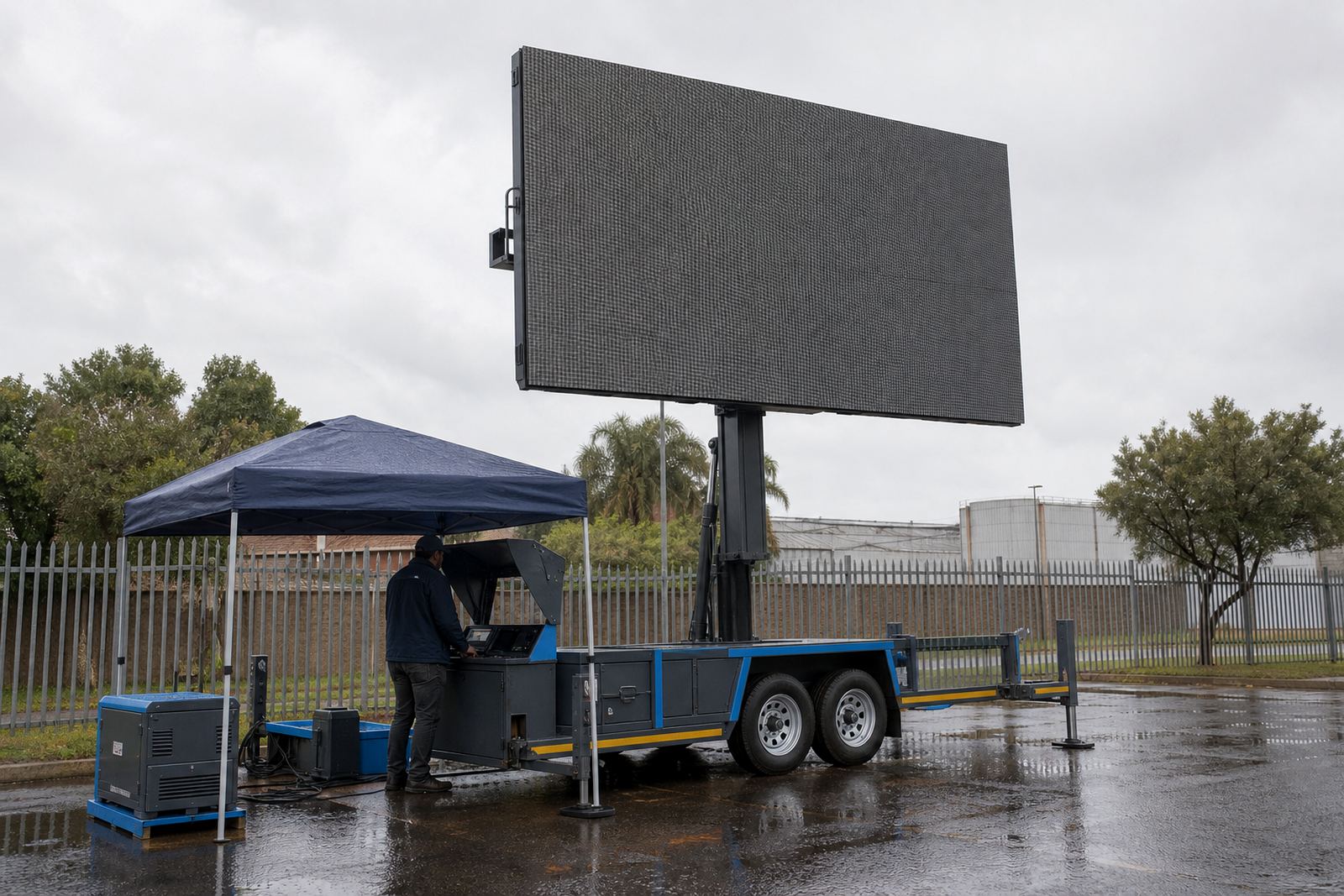
Trailer-mounted screens use a hydraulic lift to raise the display into position, and many units also allow rotation so the face can be aimed toward the crowd line. The technician controls that sequence, checks the locking points and makes sure the screen sits level before any content starts to play. If the angle is off, the picture can feel harsh at one side and weak at the other, especially on wide viewing areas.
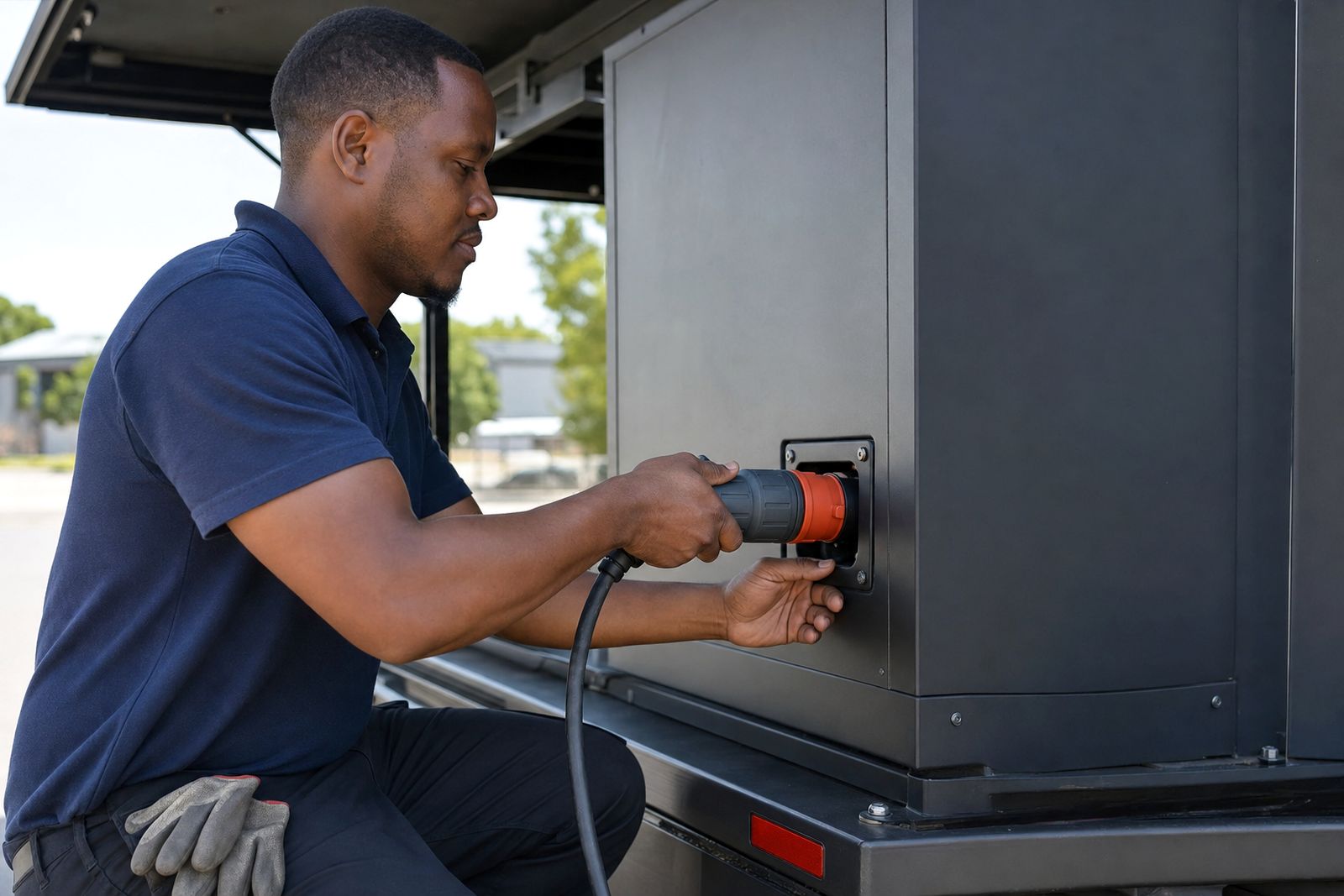
Power planning sits inside the same routine. Some sites run from generator power, while others use mains supply where the venue allows it and the load plan is practical. The technician keeps the changeover clean, checks cable runs and watches the system while the first content loop plays. When a roadshow stops in Johannesburg CBD or near a municipal venue in Pretoria, this part needs calm handling because access, parking and public movement can affect the whole setup.
- Confirm the screen angle before playback begins
- Check cable protection where people or vehicles pass
- Keep the hydraulic system and locking pins under watch
- Match the power source to the site plan
Playback checks that stop small faults from becoming visible faults
The technician is also the person who notices when a media file is not behaving as expected. A screen can be bright and properly lifted, but still fail the brief if the wrong aspect ratio is loaded or if the content loops with a visible break. On outdoor LED work, playback needs a tidy hand, because even a small glitch shows clearly once a crowd settles and starts looking up.
At LEDBox, playback support covers file loading, content order, live feed support and basic signal checks. That can include checking the source device, testing the input path and watching for audio sync where a screen carries both picture and sound. For a sports day in Bloemfontein or a concert in Durban, the technician keeps the image steady while the programme changes around them, which is where experience matters more than guesswork.
- Check file format and resolution before show time
- Confirm the loop ends cleanly and restarts without a pause
- Test live inputs where the programme includes a live camera feed
- Watch for brightness shifts as the light changes through the day
Wind limits, weather calls and municipal ground rules
Outdoor LED screens are built for exterior use, but they still have limits. Wind speed, surface condition and weather all affect whether the screen can stay up, and the technician is the one keeping an eye on those limits while the event unfolds. If the weather turns, the screen may need to be lowered or secured according to the site plan, especially where the trailer stands on open ground with little shelter.
Municipal permits and venue permission also sit in the technician’s world, though the paperwork itself may be handled by the wider team. The on-site person needs to know the placement rules, access restrictions and any local conditions that affect public space use. In Ekurhuleni, for example, a busy roadside promotion may need a different approach from a school field or private estate. That is why weather monitoring and permit guidance belong in the same conversation as screen setup.
- Monitor wind, rain and ground conditions through the event
- Keep the screen within the working limits of the trailer system
- Work with the site plan where municipal rules affect placement
- Adjust the position if the audience flow changes during the day
Pack-down without the after-show mess
When the programme ends, the technician does not just switch the screen off and drive away. Pack-down starts with saving content notes, clearing playback gear and lowering the screen in the correct order. Cables are coiled properly, the trailer is checked and the site is left ready for handover. On a multi-stop roadshow, that process has to be neat because the next venue may start with a tight access window and very little room for delay.
The same discipline helps with local jobs in Polokwane, Pretoria and Johannesburg where a busy venue can turn over fast. A good technician keeps the equipment safe, the site clear and the record of what was loaded, what was shown and what needs to be repeated on the next stop. That practical trail is useful for campaign teams, event organisers and advertising crews who want the next set-up to match the first one closely.
A technician's day on a roadshow, hour by hour
Imagine a brand roadshow starting from Germiston and moving through Ekurhuleni with a stop near a busy retail site. The trailer arrives, the technician checks the ground, raises the screen, confirms the viewing angle and loads the content loop. A second pass is made on brightness because the afternoon light is hard and the audience will be standing at distance. Once the programme starts, the technician stays close enough to monitor sound, image and any change in weather.
That same role carries through to close-down. The screen lowers, the trailer is secured and the content notes are handed over to the next stop on the route. It sounds straightforward, but on outdoor LED work the person on site is the difference between a screen that merely stands there and one that keeps the message clear from first light to pack-down.