
Start with the stop, not the screen
Loop planning begins with dwell time. A shopper waiting at a taxi rank, motorists at a roadside signal and parents at a sports day all give you different windows for attention. If the audience is moving fast, the loop must land the key message early. If people are standing longer, you can afford more detail, but the opening seconds still carry the most weight.
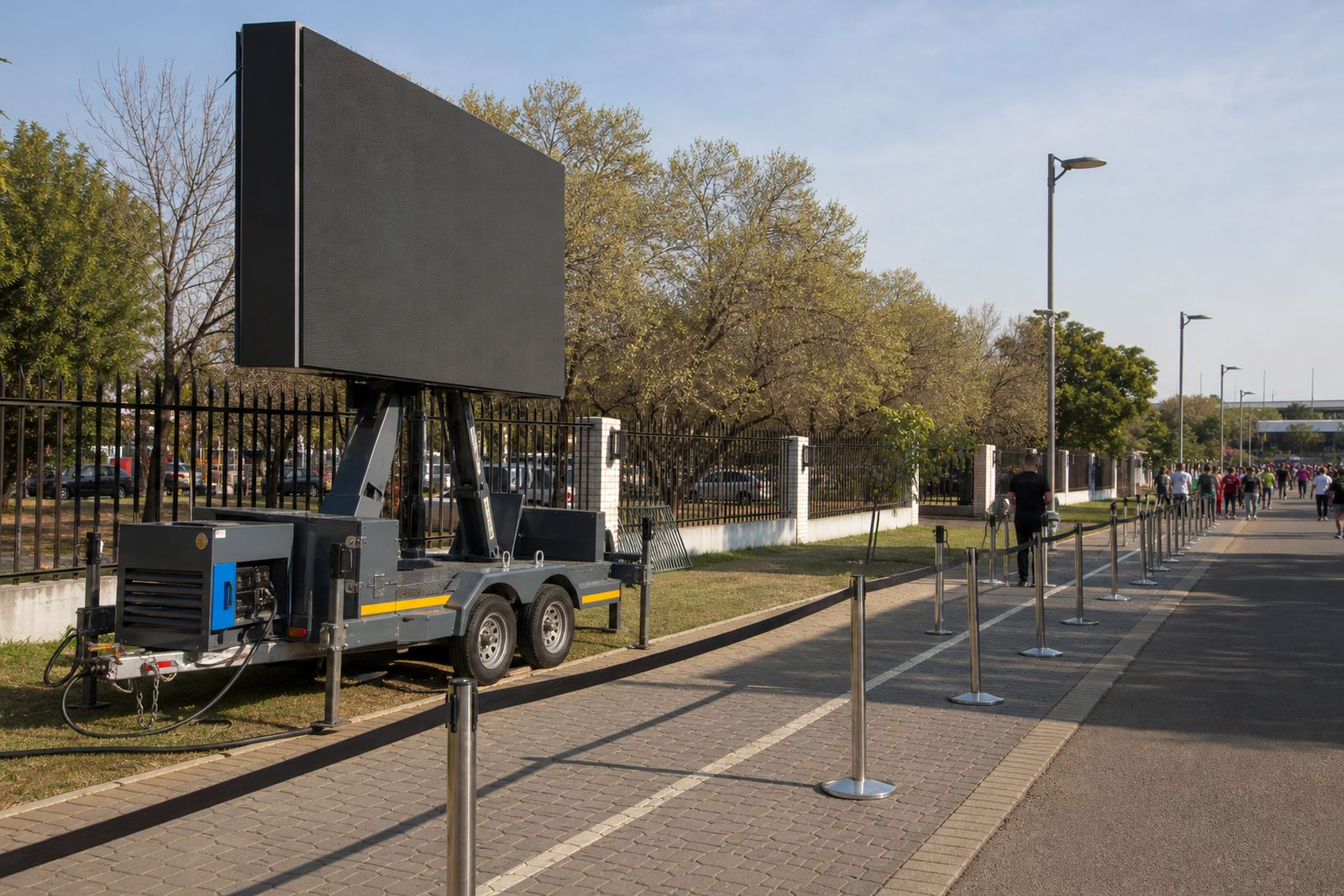
For outdoor LED screen trailers and fixed LED boxes, the screen size, pixel pitch and brightness matter, but the loop structure carries the message. A fine-pitch display can hold sharper text and cleaner graphics, while a daylight-bright panel keeps the content visible in sun and glare. Even so, the viewer only gives you a short look unless the setting naturally slows them down.
- Fast traffic needs one main point and one call to action.
- Short dwell zones suit bolder motion and fewer words.
- Longer pauses allow pricing, schedules or event details.
- Content should still read clearly at a glance from the roadside.
Match message priority to the first thirty seconds
The first part of a loop should carry the highest-priority material. If the campaign is about a launch, venue direction, urgent notice or sponsor name, that information should appear before the loop settles into supporting detail. People who only glance once should still leave with the main point.
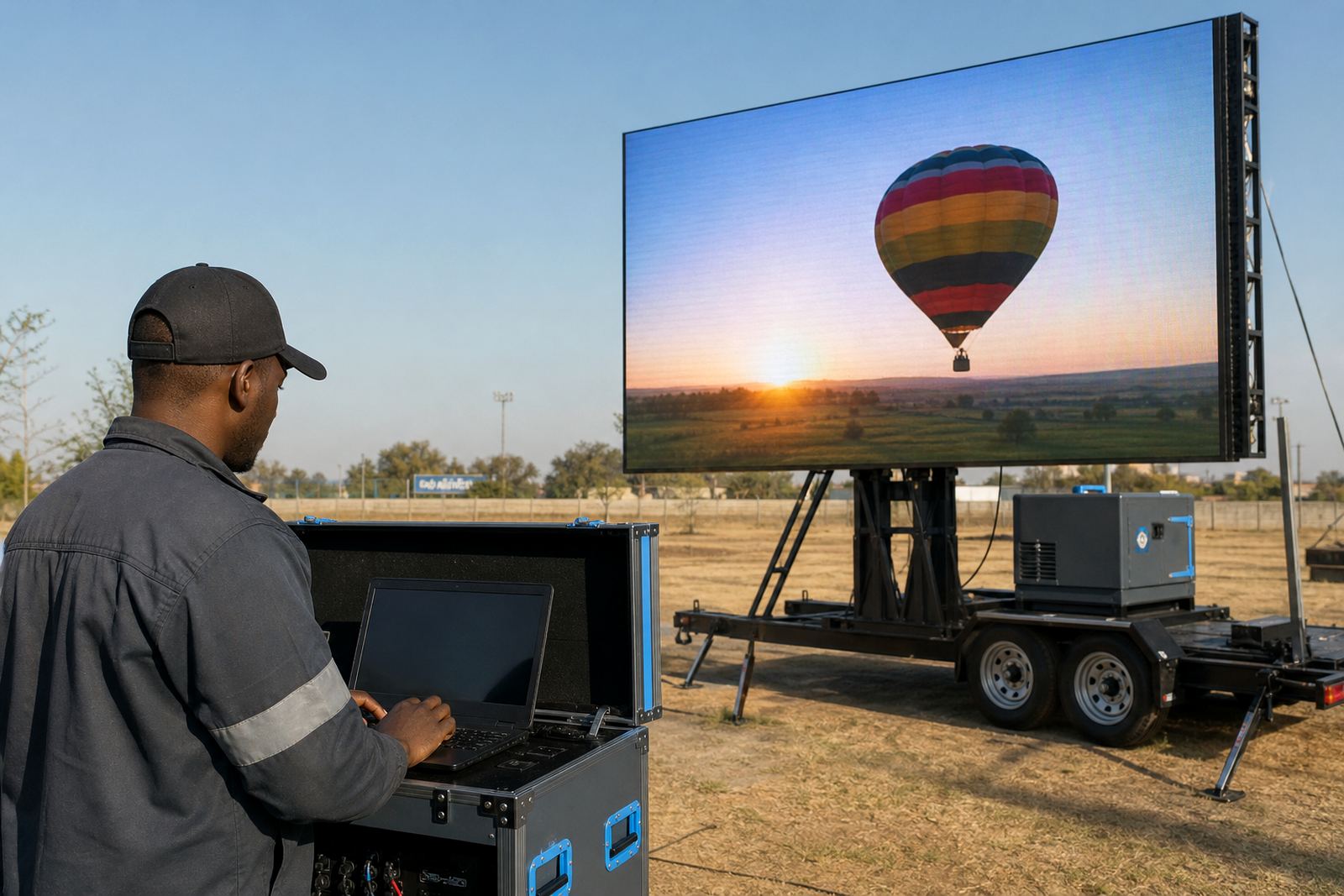
That is where playback management matters. A technician can sequence the clips so the loop opens with the strongest frame, follows with proof points, then closes with a repeat of the core line. On a live roadshow in Germiston, for example, the opening segment might promote the headline offer, while the later clips list the route, date range and supporting visuals. The same trailer can also carry live feed support when the programme changes during the day.
- Lead with the campaign headline.
- Place time-sensitive details near the front.
- Keep sponsor logos visible more than once.
- Repeat navigation or venue wording at the end.
Audience turnover changes the length of the loop
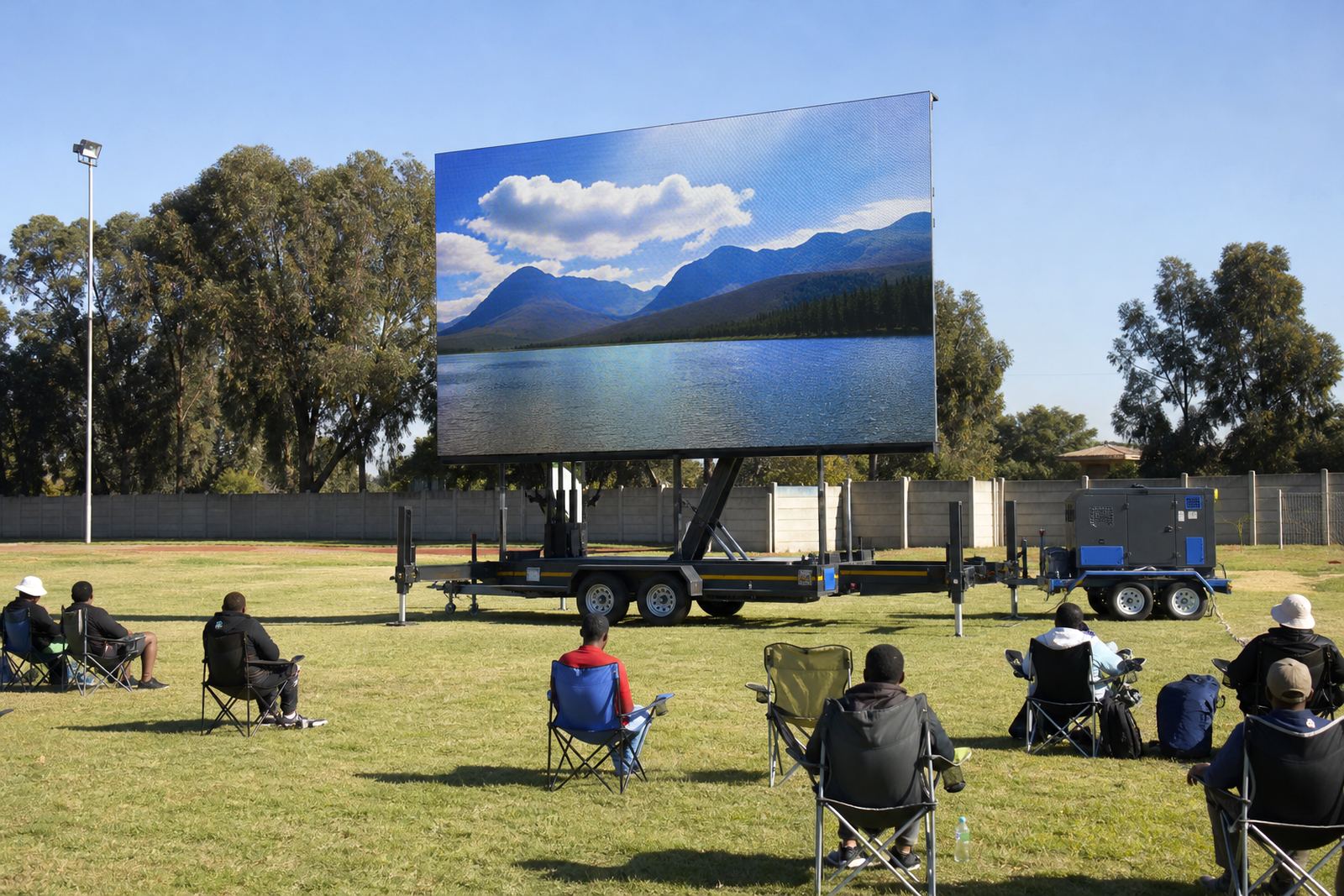
Turnover is the pace at which one group leaves and another arrives. A school sports day has a steady changeover, with parents, staff and learners cycling past the screen at different moments. A highway site in Ekurhuleni works differently, because the same drivers may see the trailer only once before traffic moves on. A loop that feels generous in one setting can feel too long in another.
For that reason, loop length should not be copied from one event to the next. It should reflect how often a new viewer is likely to appear. A busy intersection near Kempton Park may need a shorter, punchier sequence. A park activation or concert entrance in Durban can carry more frames because people linger while they queue, talk and wait for access.
- High-turnover sites favour shorter loops.
- Queue areas can hold more supporting copy.
- Return viewing allows repeated brand moments.
- Roadside placements need faster recognition.
Weather, power and motion shape the edit
Outdoor screens do not run in a neat indoor bubble. Wind, sun, rain and power choice all affect how the content should be paced. On a trailer with hydraulic lift and rotation, the screen can be positioned for better visibility, but the content still needs to hold attention in changing light. Bright daytime footage, strong contrast and larger text all help when the sky is harsh and the site is open.
Where generator power is used, the playback plan should stay stable and simple. A clean loop with moderate file sizes is easier to manage on site, especially when the technician is handling setup, content loading and monitoring. Municipal permit guidance also matters for placements on public ground, while weather monitoring helps the team judge when to pause, re-angle or pack down if conditions become unsafe.
- Use high-contrast graphics for full sun.
- Keep text blocks short and legible.
- Avoid overloading the loop with many file changes.
- Plan for wind limits and secure positioning.
A practical loop for a Germiston roadshow
Picture a roadshow moving through Germiston, then on to Johannesburg and Pretoria. The screen trailer is visible before the team arrives, the on-site technician handles the setup, and the crowd forms at different distances through the morning. In that setting, a loop of medium length works well if it is built in layers. The first clip carries the headline, the second adds product detail or event information, and the third repeats the key visual with a clear ending frame.
If the same campaign later runs at a sports day in Bloemfontein, the loop may need a little more breathing room because the audience stays longer at the fences and refreshments area. In Polokwane, a roadside or mall activation may call for tighter pacing again. The point is not to fix one number and use it everywhere. A queue at a taxi rank and a seated school crowd need different loop lengths.
- Roadshows need a loop that can travel between stops.
- Event entrances suit repeated headline exposure.
- Town and city placements may need different pacing.
- Content should be easy to update before the next stop.
What the playback team watches on site
A good loop is not just written once and left alone. The playback specialist checks file order, image clarity and whether the sequence still reads well from the viewing distance. If the audience is not staying long enough, the loop may need trimming. If a message is being missed, the opening card may need to move earlier or stay on screen a little longer.
On the ground, the team also watches how the site behaves through the day. Sun angle, road movement, crowd density and surrounding noise all influence what people notice. So content loading and playback are included in every hire. The trailer or box can be technically sound, but the loop still needs to fit the live setting.
- Check whether the opening frame lands fast enough.
- Watch for clips that feel long in real viewing.
- Keep the core message visible more than once.
- Adjust for crowd flow, light and route changes.
Length is a planning choice, not a guess
The best loop length comes from asking how long people stay, what they need first and how the site moves. That is why site checks, power planning, weather monitoring and permit guidance all belong in the same conversation. A screen trailer in Ekurhuleni is not only about brightness and size. It is also about how a message travels through a public space without getting lost.
For advertisers, event organisers and roadshow teams, the useful question is not whether the loop is long or short. It is whether the loop matches the audience in front of it. When the timing fits the site, the screen feels clearer and the message works harder.