After sunset, brightness needs a new setting
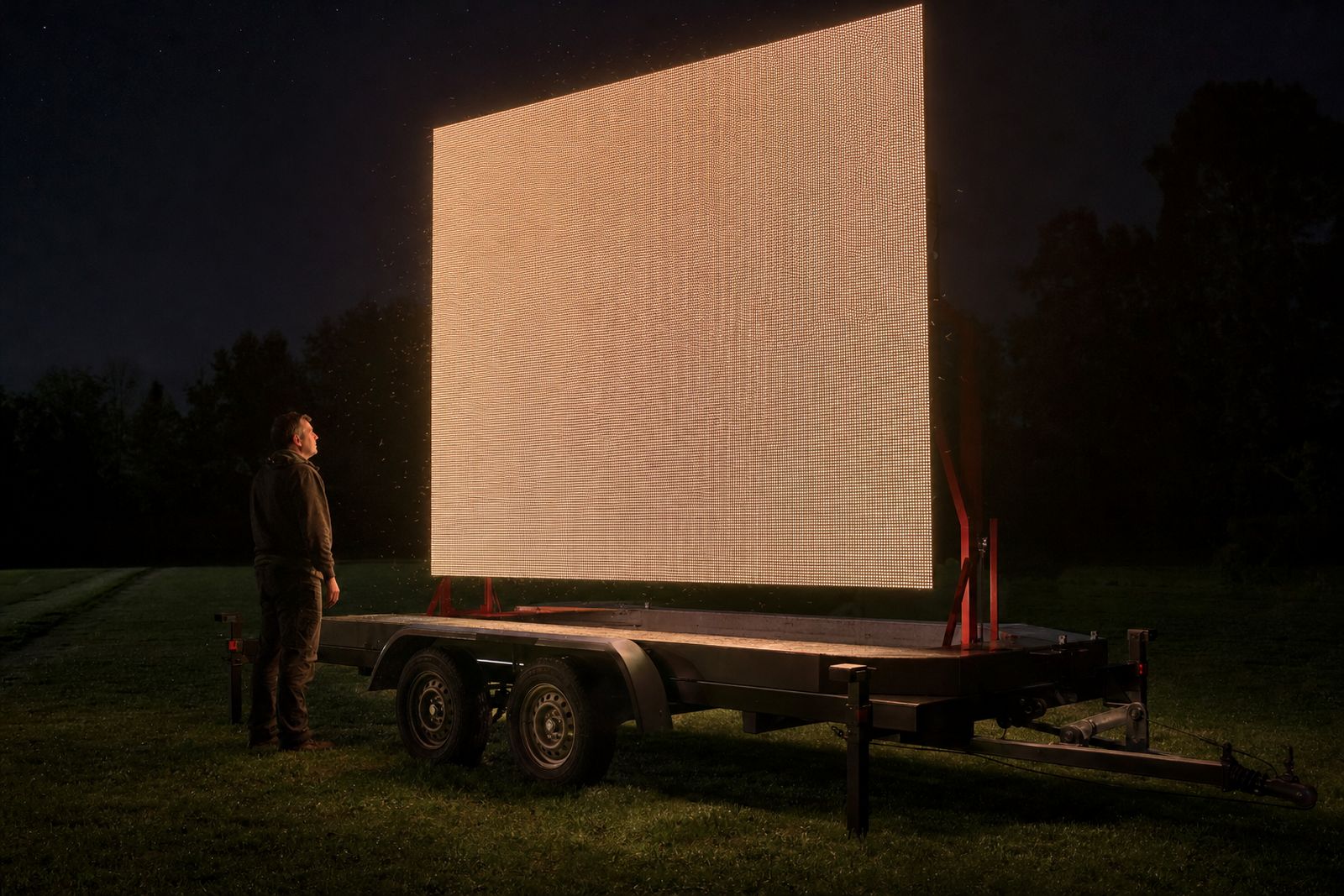
Outdoor LED screens that look perfect at midday can feel harsh after dark. A screen set for daylight may throw too much light into the audience area, flatten skin tones and make text tiring to read. For night work, the aim is clear pictures with softer output, not a washed look and not a glare problem.
Most outdoor panels are built for high brightness, often around 5,000 to 7,000 nits or more for daytime use. That figure helps in sun and reflection, but it is not the setting to leave in place through the evening. A good night profile usually drops brightness, adjusts contrast and keeps colour balanced so whites do not flare and dark scenes keep their detail.
The viewing distance decides how the picture should feel
Pixel pitch matters because it affects how close the image can be before the dots become visible. A tighter pitch gives finer detail, while a wider pitch suits larger viewing distances and quicker-moving crowds. For roadshows and sports days, the distance between the front row and the trailer should guide the content style as much as the screen size does.
- Text should stay large enough for people standing back from the crowd line.
- High-contrast graphics work better than pale lettering on dark backgrounds.
- Fast flashes and thin fonts are harder to read in low light.
- Live feeds need stable framing so presenters do not look cramped on screen.
When the audience is spread across a field or parking area, a slightly calmer picture often works better than a bright, busy one. That is especially true in Germiston and the wider Ekurhuleni area where evening traffic, street lighting and nearby buildings can compete with the screen.
Hydraulic lift, rotation and wind checks before the first clip plays
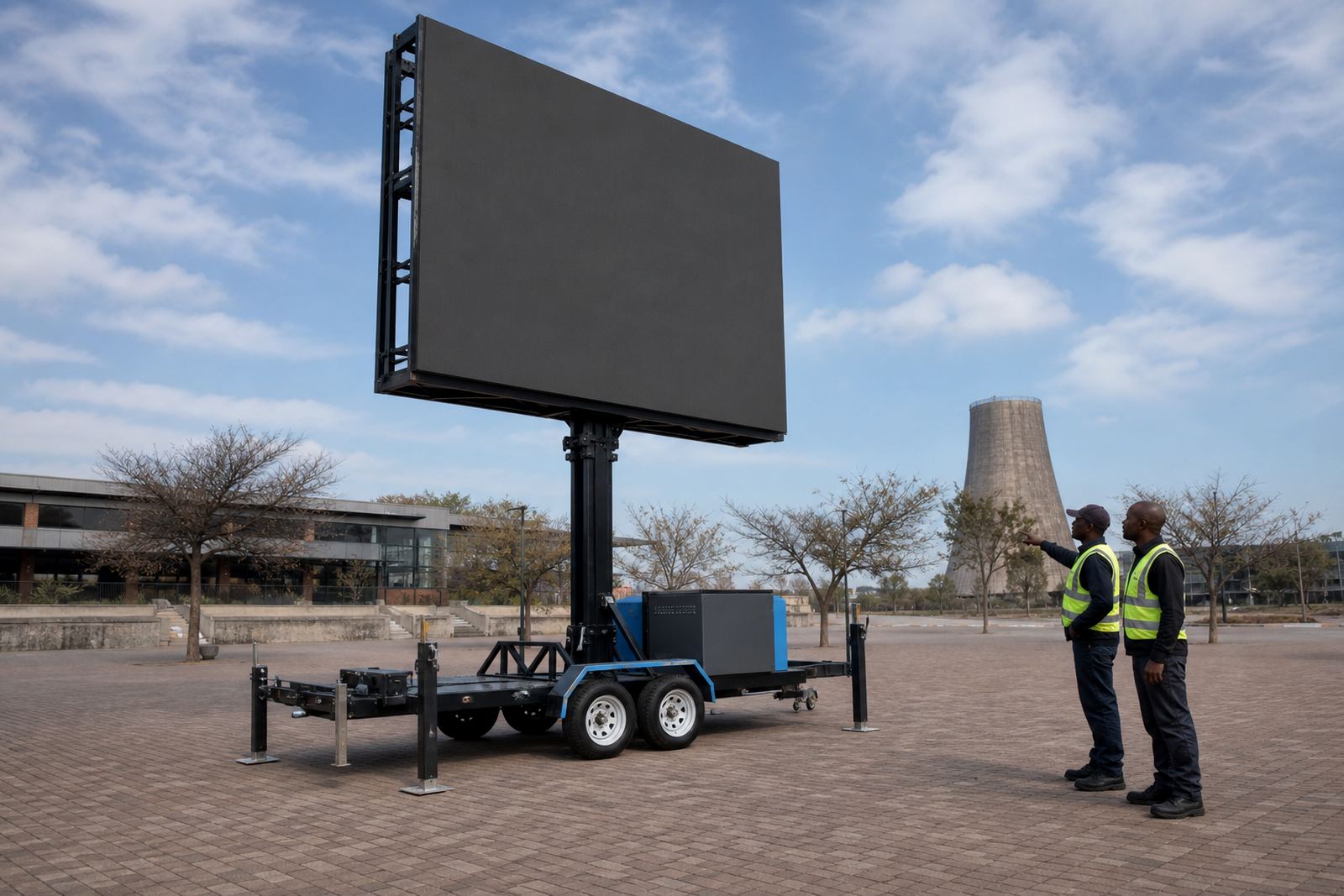
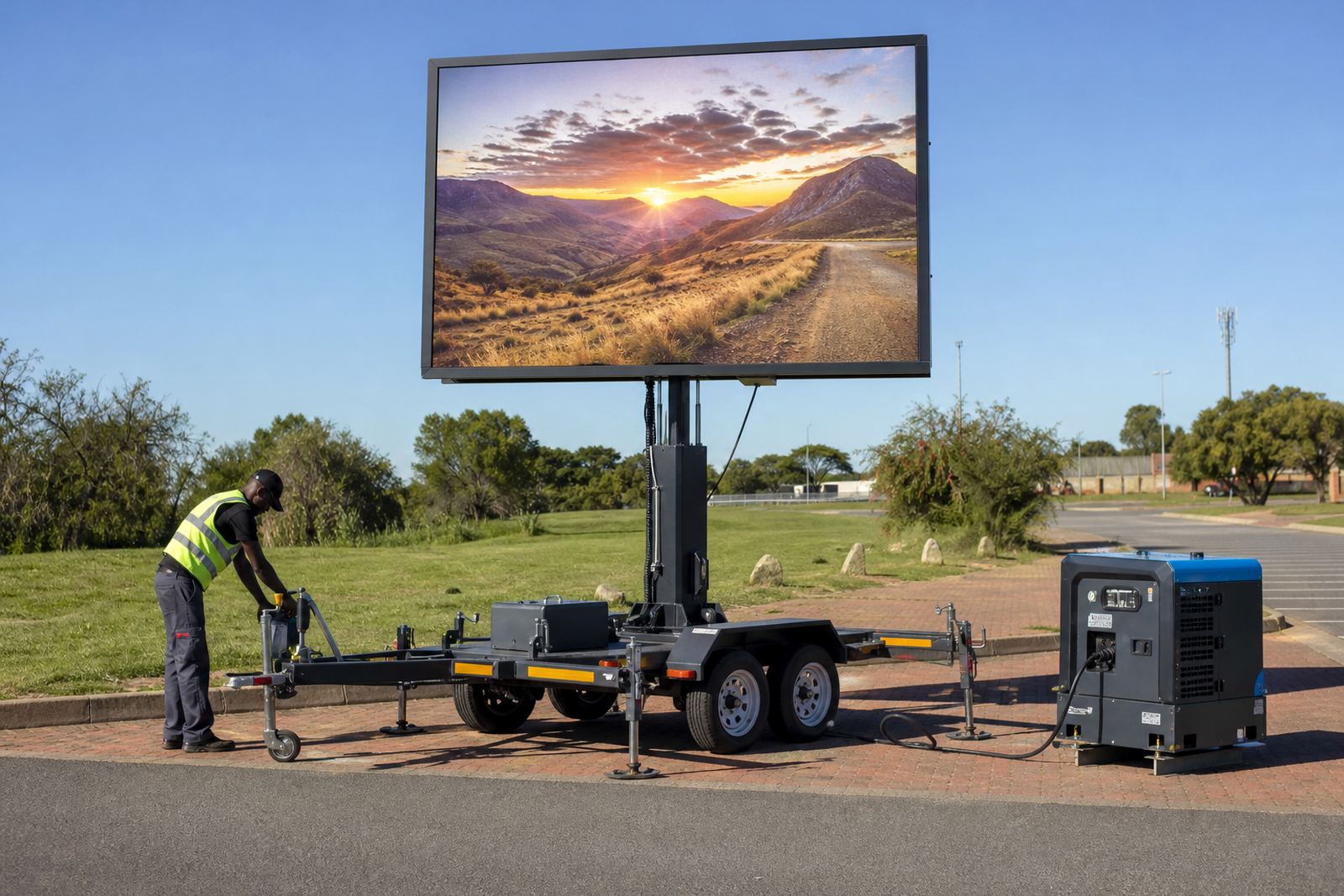
Outdoor LED screen trailers are designed to rise on a hydraulic lift and, on some units, rotate into position for better sightlines. That set-up is useful when the audience sits on one side of a venue, or when the screen needs to face a long row of spectators at a stadium edge or a roadside activation. Before night use, the trailer has to stand level, locked and checked for movement.
Weather still matters after dark. Wind speed limits are part of safe operation, and the screen should not run once gusts reach the level that makes the trailer unstable. The technician on site watches the rigging, anchor points and the ground under the wheels. A wet surface, soft verge or sloping driveway changes how the trailer sits and how safe it is to keep the screen raised.
Power, playback and live feed at evening events
Some jobs run from a generator, others from mains power, and the site plan has to match the venue. Evening events can draw extra load from sound gear, lights and cameras, so the screen feed should be planned with enough margin for steady operation. Cable runs need to stay tidy and protected, especially where guests walk near the trailer.
- Content should be loaded in the correct resolution for the screen panel.
- Video files need tested audio levels before gates open.
- Live feeds should be checked for signal drop and delayed sound.
- Backup files help if a presentation file is corrupt or poorly formatted.
At sports days, concerts and roadshows, the playback specialist usually keeps the evening sequence short, clear and easy to follow. Long transitions, overly dark clips and thin captions are all harder to follow after sunset.
Permit guidance and the local set-up picture
Municipal rules differ from place to place, especially where a trailer sits near a road, a public pavement or a busy entrance. Permit guidance is not only about paperwork, it also affects where the trailer can park, how far it must sit from traffic and whether the screen angle stays within the venue plan. For public sites in Johannesburg, Pretoria, Durban, Bloemfontein and Polokwane, it pays to confirm the local process before the unit arrives.
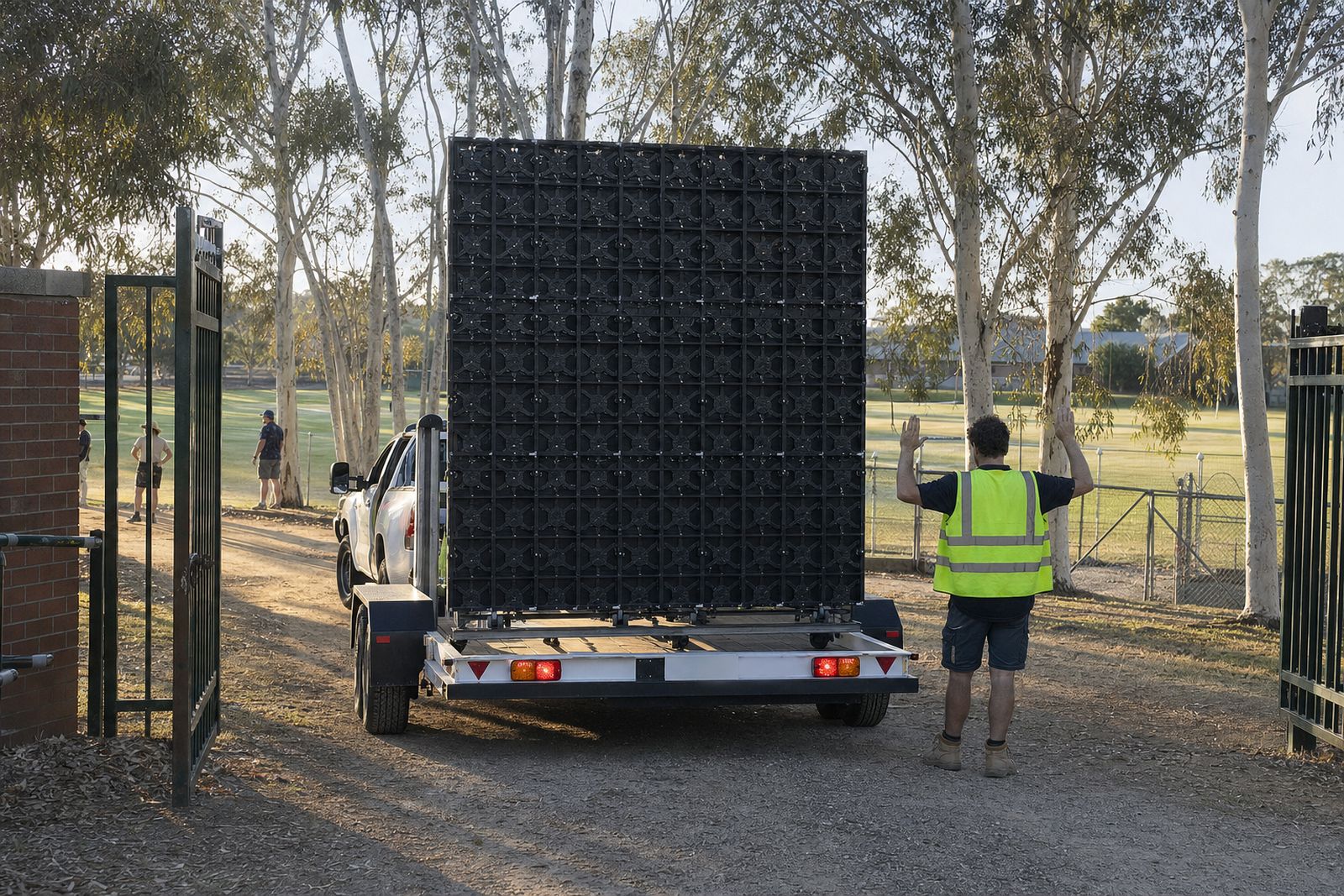
In Germiston and Kempton Park, a night event may need extra attention where access roads are narrow or delivery times fall around venue changeover. The logistics coordinator has to think through access gates, turning space and where the technician can park the support vehicle without blocking the crowd path.
A practical evening set-up for a roadshow in Ekurhuleni
A common night pattern starts with a site check, then delivery, trailer placement, power planning and a full content test before the audience arrives. For a roadshow in Ekurhuleni, the screen might face a parking lot, a school field or a shopping centre forecourt. Each space changes the brightness setting, the height of the lift and the way people see the content from the edge of the crowd.
On a real evening job, the technician may lower the brightness once the venue lights are on, then fine-tune colour if the video looks too warm or too cold. If a live host steps in front of the screen, the picture may need a short black hold to avoid showing movement behind them. That sort of adjustment keeps the screen useful without drawing attention to the hardware itself.
What the on-site team watches once the show is live
Night screen work is easiest when one person is watching the picture while another keeps an eye on the trailer and power feed. The content specialist checks that slides advance properly, the screen format stays correct and any live camera feed remains stable. The screen technician tracks brightness, signal quality and any changes in wind or weather.
- Brightness should suit the venue lights and the crowd distance.
- Colour should stay even across the full display area.
- Playback should avoid unreadable text and dark scene loss.
- The trailer should remain secure while guests move around it.
LEDBox works from Germiston in Ekurhuleni and supports outdoor screen hire across South Africa, with on-site technicians for evening events that need careful viewing conditions. If you are planning a night screening, send the venue details, timing and the kind of content you want shown through our contact form.