
When a public site turns into a permit job
Not every display needs the same paperwork, but once a screen sits in a public place the rules usually change. A trailer parked at a stadium entrance, beside a municipal road, outside a shopping centre or near a public square can trigger local permission requirements because the unit affects access, sight lines, noise, crowd movement and sometimes traffic control.
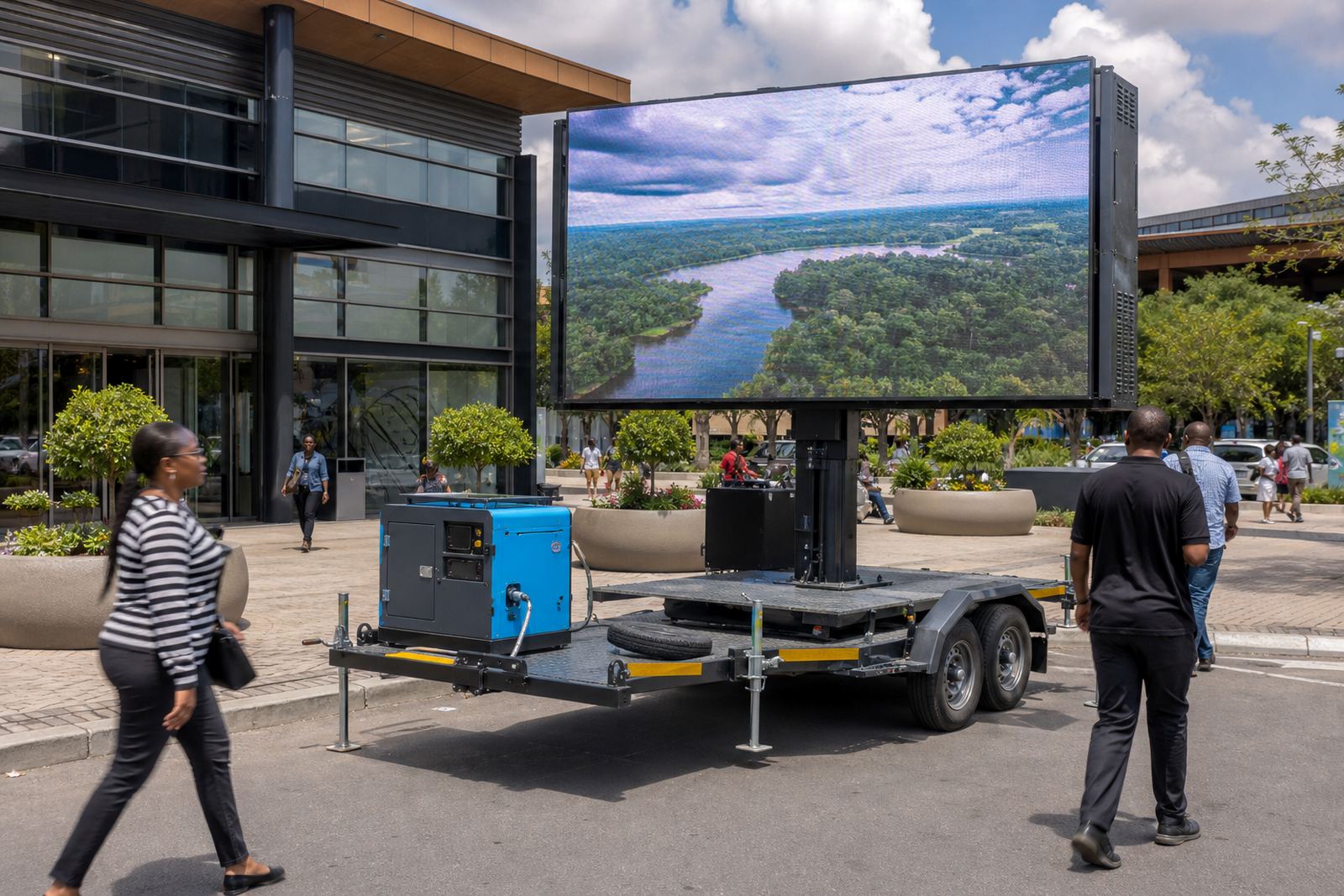
For outdoor LED screen trailers, the decision often starts with where the screen stands and how people reach it. If the unit faces a road, sits on council land, blocks a pavement, or forms part of a campaign that draws a crowd, the local authority may want notice, layout details and proof that the site is managed properly. In Ekurhuleni and across Gauteng, that usually means checking the exact stand position before the trailer arrives, not after it is already on the kerb.
- Public land usually needs more checking than private land.
- Traffic-facing sites can bring road or safety conditions.
- Busy pedestrian areas need crowd spacing and access routes.
- Event use may need both venue permission and municipal approval.
The details councils usually care about
Municipal officers are rarely interested in the advertising message itself. They want practical facts: where the trailer stands, how high the screen lifts, whether the mast rotates, what the footprint looks like, and how the setup stays stable in wind. A screen with a hydraulic lift has a different profile from a fixed box, so the position and working height matter.
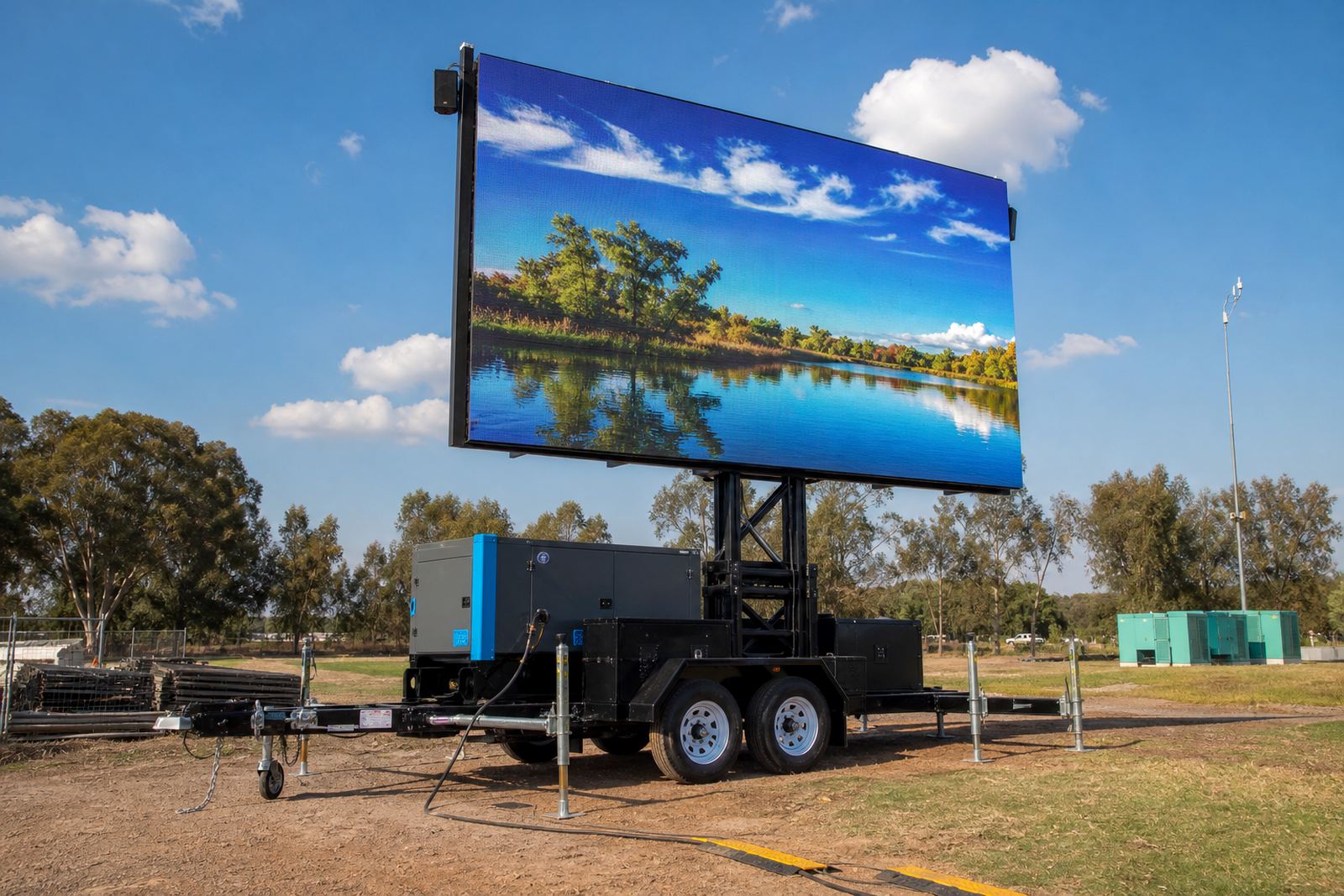
Pixel pitch and brightness are not permit items in the same way, yet they still matter because they tell the authority and the site manager what the screen can do in daylight. A fine pixel pitch gives sharper images at shorter viewing distances, while high brightness helps the picture hold up in full sun. For a roadshow parked in open light, that makes the screen easier to see without pushing the unit into awkward positions near walkways.
- Site sketch with the trailer position marked clearly.
- Approximate screen size and lifting height.
- Power source plan, generator or mains supply.
- Proof of control over the venue or parking area.
Wind, weather and the small print on safety
Outdoor LED trailers are built for real weather, but they still need limits. Wind speed matters because a raised screen works like a sail. Rain, loose ground and uneven paving can also affect whether the trailer should stay up, rotate or fold down for safety. So the permit plan includes what happens when the weather turns.
On coastal routes, damp air and salt can add strain to hardware and cabling. In Durban, for example, a screen near the beach front may need more conservative timing and a cleaner pack down than a sheltered inland site. Municipal permission may not mention humidity directly, yet the site plan should show that the crew has thought through weather exposure and emergency lowering of the mast.
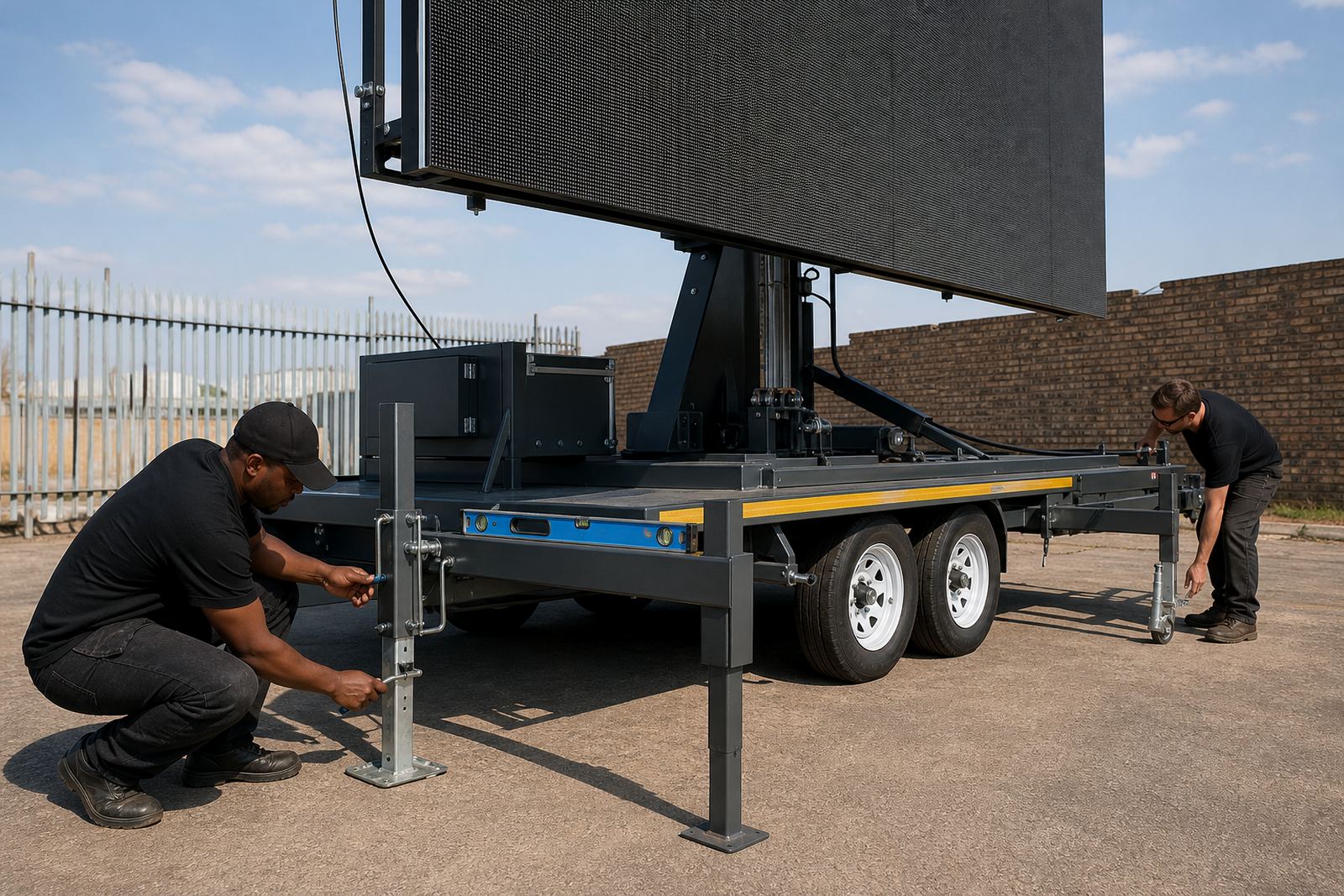
Good planning also looks at the unit itself. A stable chassis, level ground, correct ballast where required and a clear exclusion zone around the trailer all help a public-site deployment feel orderly. If the site is tight, the safe option is often a different position, not a rushed setup.
Power, playback and what the technician needs on site
Some deployments run from mains power and some from a generator mounted with the trailer or supplied separately. Either way the power plan needs to match the screen load, the playback kit and the venue conditions. If the site uses municipal mains, the cable route, isolation points and access to the supply point should be settled before the trailer arrives.
The on-site technician is there for more than switching the screen on. Content loading, playlist checks, live feed support and playback management all sit inside a proper deployment. If the screen is part of a launch or roadshow, the technician also watches signal input, aspect ratio, brightness settings and any audio-linked timing that has to match the programme.
- Confirm the content format before the vehicle leaves Germiston.
- Keep backup files on a separate drive if the site allows it.
- Check whether the venue needs silence, controlled volume or no audio.
- Make sure the control point stays accessible during the event.
Waiting on the council stamp before a roadshow
Picture a product roadshow moving through Kempton Park, then a public stop in Johannesburg and a sports day near Pretoria. The trailer may be the same unit at each site, but the permission steps can change from stop to stop. One venue may only need a booking note and a site plan, while another may need municipal sign-off because the screen faces a public verge or sits close to a taxi route.
In practice, the lead team will map the full route, not only the first stop. Logistics, delivery windows, pack down points and parking for the tow vehicle all matter because a trailer that blocks a driveway or bus lane can create problems before the event even starts. That is where permit guidance and multi-stop planning overlap. The paperwork is easier when the movement plan is clear and the site itself is measured, not guessed.
For public-site work in South Africa, local knowledge helps with the ordinary things that cause delays: narrow access roads, odd parking rules, venue security requirements and the need to keep pedestrians moving. A clean permit pack does not replace common sense, it supports it.
What to keep ready before the trailer rolls in
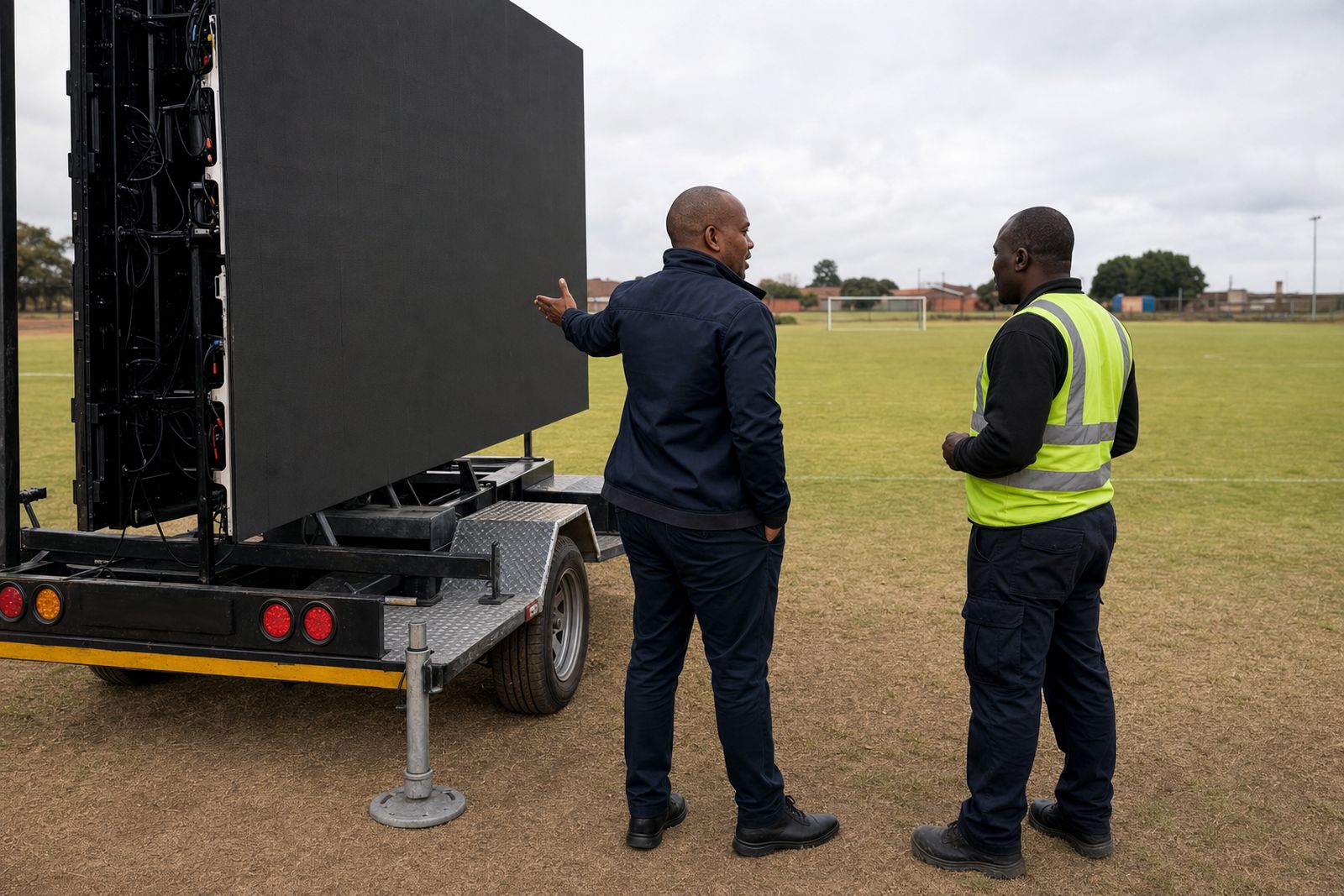
A good permit pack is practical, not heavy. It should help the municipality, the venue and the crew understand the job without a long back-and-forth of missing details. If the screen is for a concert foyer, a sports day field, a roadshow forecourt or a roadside campaign, the same basic items tend to matter.
- Street address and a short note on where the trailer will stand
- Trailer footprint, screen size and lift height.
- Power source plan and cable route.
- Weather or wind conditions that may change the setup.
- Contact details for the person controlling the site access.
- Any traffic, crowd or access restrictions already in place.
Public permission is easier to manage when the deployment is measured before the truck leaves the base in Germiston. That keeps the setup tidy, the technician prepared and the event site easier to manage for everyone on the ground.