
A trailer reads the ground before it reads the crowd
An outdoor LED screen trailer looks simple from a distance, but it depends on a solid footprint. When the ground is uneven, soft or badly sloped, the trailer frame works harder to stay level and the screen face can shift out of true. That matters for image quality, safety and the time spent adjusting the unit on site.
Level ground also helps the hydraulic lift do its job cleanly. These systems raise the screen into position, then lock it for display. If one wheel sits lower than the others or the trailer stands on loose gravel, the load changes across the frame and the technician has more to correct before playback can start.
At roadshows and promotions in Germiston and Kempton Park, we often see sites where the space is usable but the ground needs a quick check first. A paved apron, hard-packed yard or level event surface usually works far better than a patch of soft grass after rain.
What level ground protects during setup
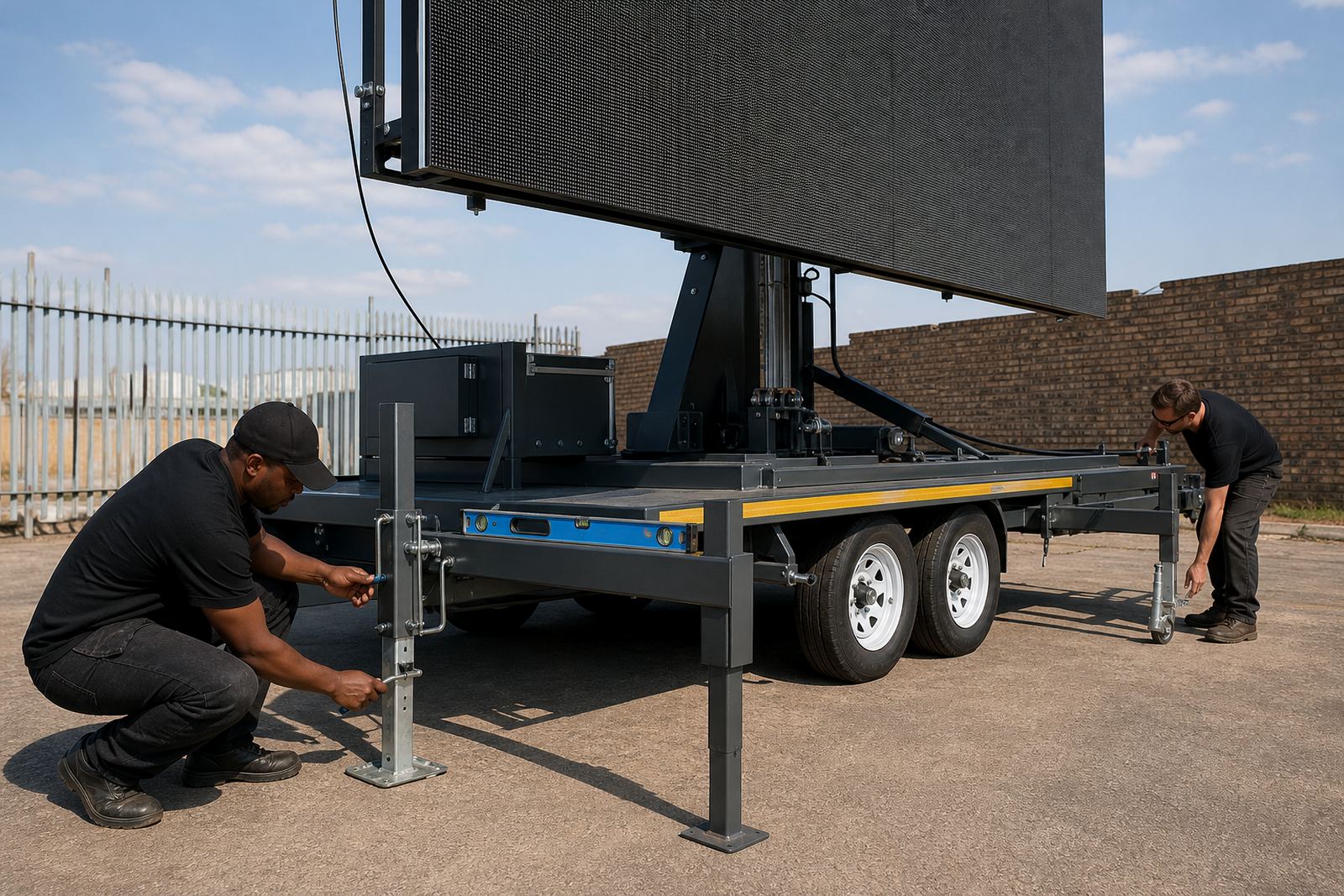
When the base is sound, setup becomes more controlled. The stabilisers spread the load properly, the mast lifts more evenly and the screen stays easier to square for viewing. That helps with outdoor LED boxes as well, especially where cabinets or stacked sections need a clean line across the display.
- Stabilisers bite into firm ground instead of sinking into soft patches.
- Hydraulic lift movement stays more predictable during raising and lowering.
- The screen face sits flatter, which supports clearer content playback.
- Technicians can work with fewer adjustments around the trailer frame.
It also reduces strain when the screen is packed down after the event. A unit that has stood level through the day is usually simpler to fold, lock and move out without extra corrections to the chassis or support legs.
The surfaces that help and the ones that fight back
Different venues give different results. Asphalt, concrete and properly compacted hardstands are usually straightforward. They let the trailer settle evenly and make it easier to align the display for a crowd standing at a distance.
Soft grass, wet soil and sloped parking bays need more care. In coastal air or after summer rain, a patch that looked firm in the morning can turn uneven by afternoon. That is where the crew checks for sinking points, wheel slip and drainage before the screen goes up.
For municipal events, a level site also supports permit conversations. Councils want to know where the unit will stand, how it will be accessed and whether it can be placed without blocking traffic, walkways or emergency routes. The cleaner the site layout, the easier those discussions become.
- Concrete forecourts suit most trailer installs.
- Compacted event ground works if it is dry and stable.
- Sloped verges can force extra packing and adjustment.
- Wet turf needs close checks, especially near drains.
Brightness, wind and viewing all depend on a steady base
Outdoor LED screens are built for daylight viewing, often with high brightness so images remain visible under Gauteng sun or coastal glare. Even so, brightness alone cannot hide a trailer that is sitting skew. If the base is not level, the screen may look slightly off to one side and the viewing angle suffers.
Wind matters too. A raised screen presents a large surface, so the trailer must stay within its operating limits and be positioned with the weather in mind. On level ground, the wind load is easier to manage because the support legs and frame share the force more evenly. On a tilted or soft site, that balance becomes less reliable.
Content playback also benefits. Video, live feeds and lower-third graphics look cleaner when the display plane is true. It is a small thing to the crowd, but the technician notices it straight away when the frame has been set on a proper surface.
A Germiston roadshow lesson that saves time
At a Germiston activation with a trailer parked beside a busy access road, the first site check showed a slight slope towards a stormwater channel. The ground was firm enough to use, but the trailer had to be placed with care and packed to level before the lift was raised. That extra attention stopped the screen from leaning toward the roadside and kept the display easier to read for people passing on foot and in vehicles.
Later in the day, the same venue saw a second screen box positioned on a flatter section near the crowd line. The difference was obvious. Fewer adjustments were needed, the playback area stayed neater and the technician could focus on content loading and live feed support instead of chasing a shifting base.
This is why site checks matter. A good event surface is not just about looks, it changes the whole job from the first wheel down to final pack down.
What our crew checks before the screen goes up
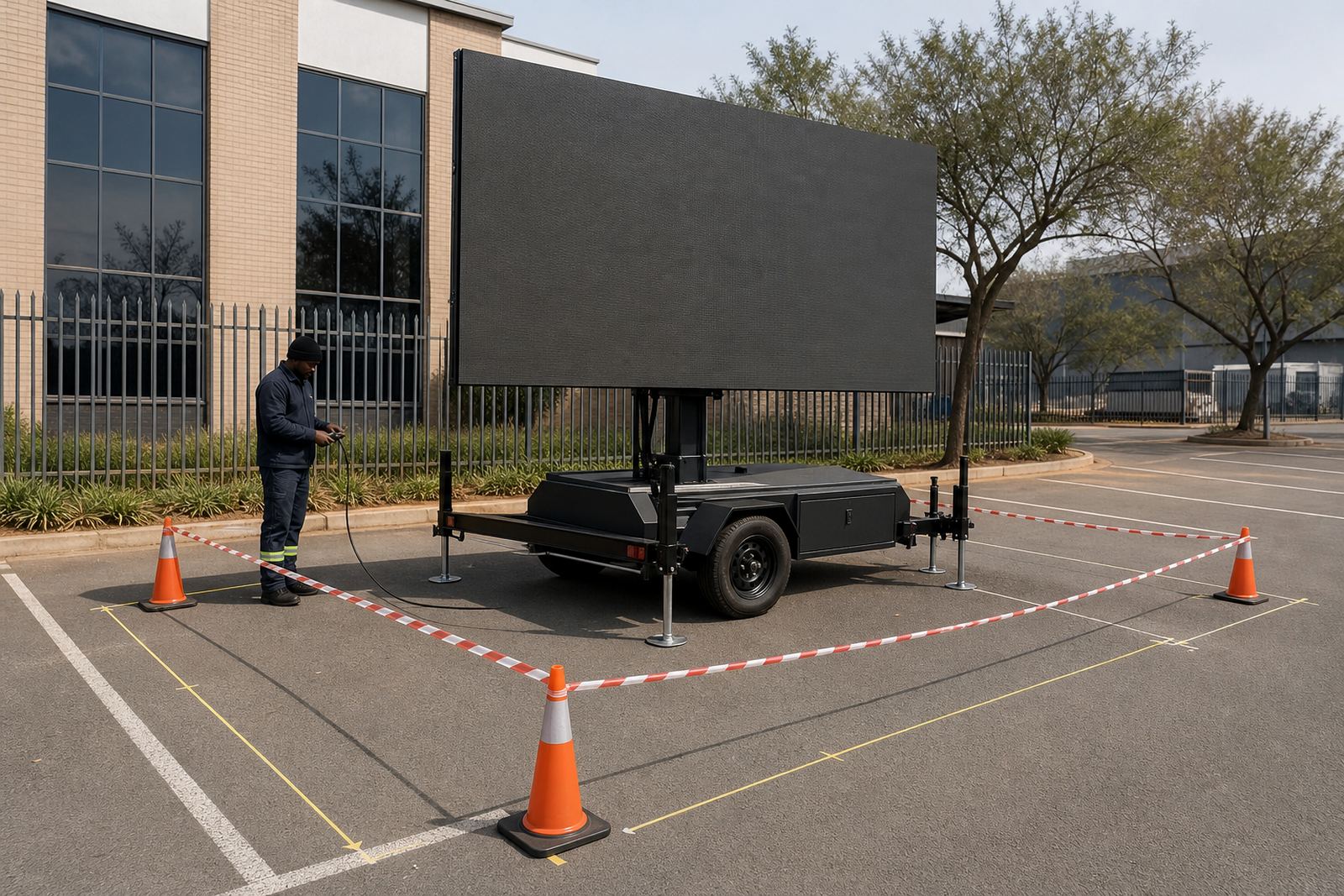
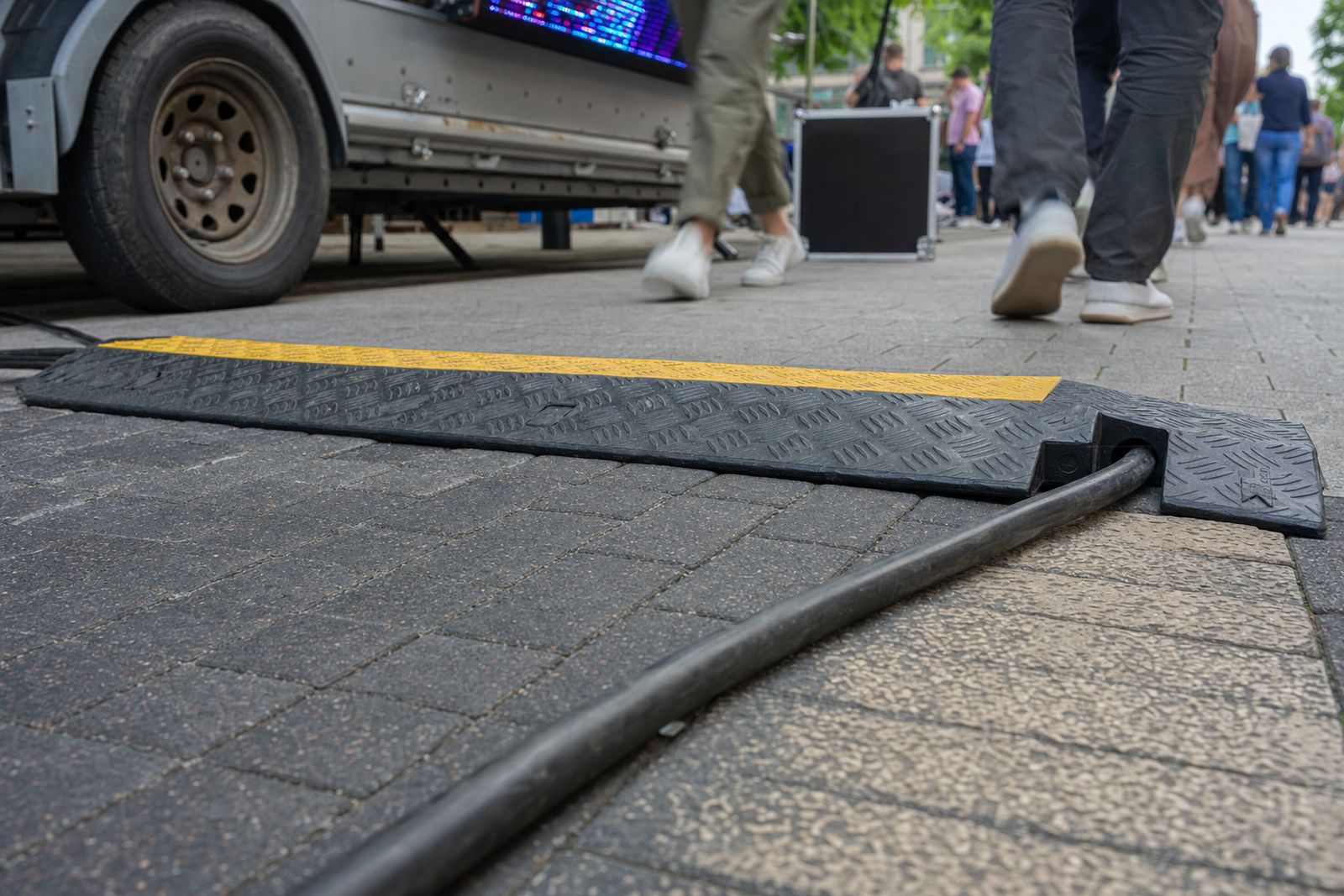
Our team looks at the ground before the trailer is unfolded, not after. That includes the slope, the firmness of the surface, access for the tow vehicle and the space needed for stabilisers, cables and viewing distance. If a site needs a different position or a cleaner approach line, it is better to sort that out early.
- Surface firmness and any soft patches under the wheels.
- Drainage, puddling and mud after rain.
- Clearance for the lift, rotation and support legs.
- Access for delivery, pack down and multi-stop planning.
- Nearby poles, trees, roofs or signs that affect sight lines.
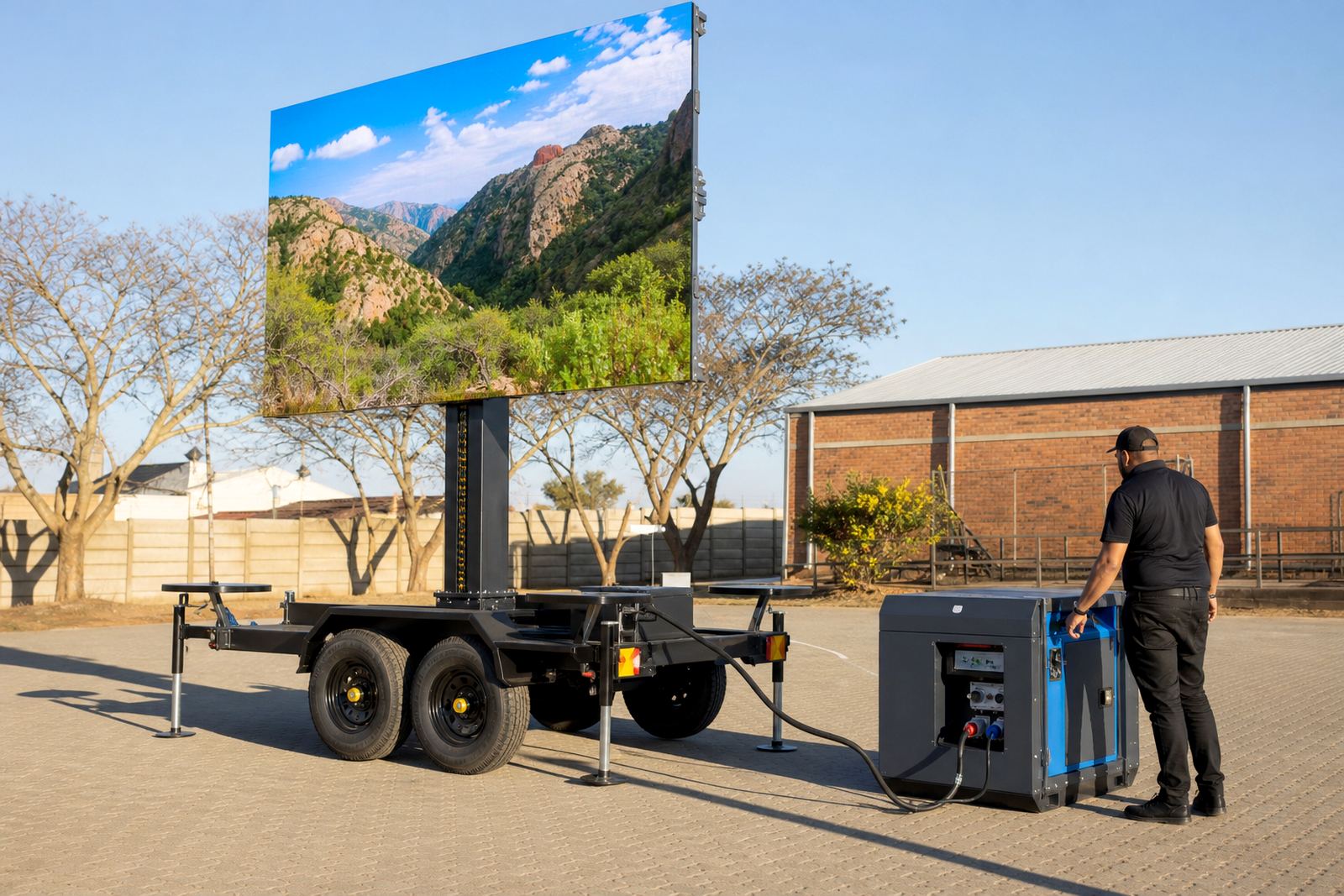
That kind of check helps us handle delivery, setup, power planning and weather monitoring without surprises. For events in Johannesburg, Pretoria, Durban, Bloemfontein and Polokwane, the ground conditions change a lot, but the same rule stays true: a level base makes the rest of the job cleaner.