Why pixel pitch matters when people stand near the trailer
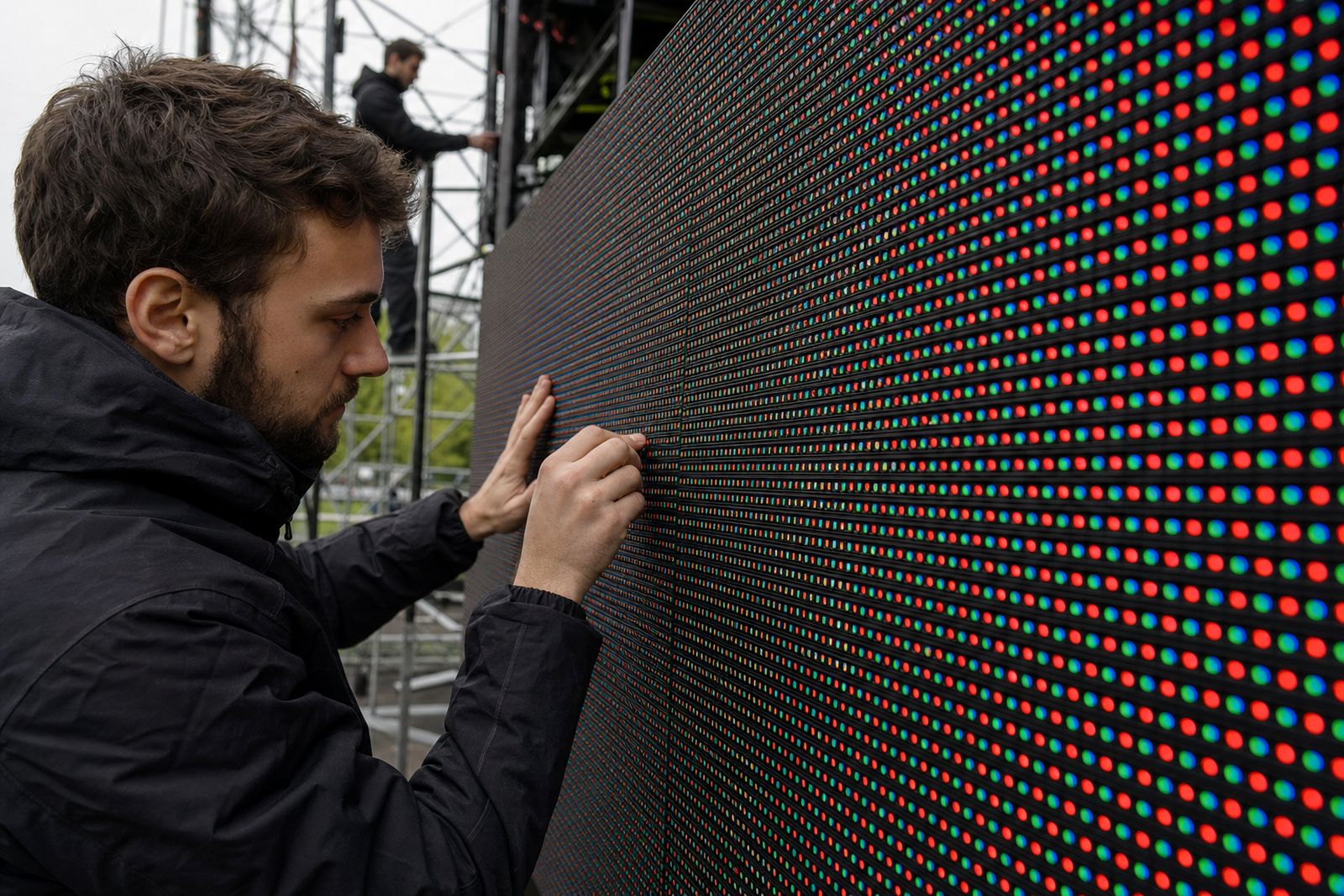
Outdoors, pixel pitch is usually measured in millimetres. A smaller number means the LEDs sit closer together, so the image looks finer when viewers stand near the screen. A larger number gives a coarser image, which can still work very well when the crowd is farther away or the message is bold and moving. For roadside advertising in Germiston or a brand activation at a sports field, that distance is the first thing to think about.
The real question is not only what the screen can show, but how people actually see it. A trailer parked beside a queue at a mall entrance needs a tighter pitch than a screen facing a big open field. If the content carries small text, compact artwork or sponsor logos, the viewing distance matters even more, because those details need enough pixels to read cleanly.
- Closer viewing usually calls for a finer pixel pitch.
- Longer viewing distances can use a coarser pitch safely.
- Motion, colour and contrast still matter in bright sun.
- Short text needs more care than a full screen video.
How daylight changes what looks sharp on an LED box
Outdoor screens work in sunlight, but daylight changes how the eye reads colour and contrast. A screen with strong brightness helps the picture hold its shape through glare, especially at midday or on a white concrete forecourt. That does not change pixel pitch, but it changes how the same pitch performs in real conditions.
In bright weather, a screen with the right pitch and proper brightness can still show crisp motion graphics, readable captions and live video. If the pitch is too coarse, the image can look blocky once the sun climbs higher. That is why a technical conversation should include both pitch and brightness, not one or the other.
- Bright daylight can wash out weak contrast fast.
- Dark backgrounds often read better in direct sun.
- Large type works better than tight paragraph copy.
- Fast-moving visuals should stay simple and bold.
Let the reading distance choose the pitch
People often ask for the best screen size, but size on its own can mislead you. A smaller trailer screen with a finer pitch may work better at close range than a larger screen with a coarse pitch. The useful test is to picture the nearest viewer, then the furthest one who still needs to catch the message.
For roadshows, that viewing band can change every day. A launch at a shopping centre entrance might have people five to ten metres away, while a roadside brand message may be seen from much farther back. If the content is mixed with video, live scores or short sponsor lines, the screen should suit the closest practical viewing distance first.
- Close crowds need finer detail for text and logos.
- Open sites can use a wider pitch more easily.
- Video behaves better than dense writing outdoors.
- The best pitch depends on the narrowest viewing gap.
What an LED trailer brings to a South African site
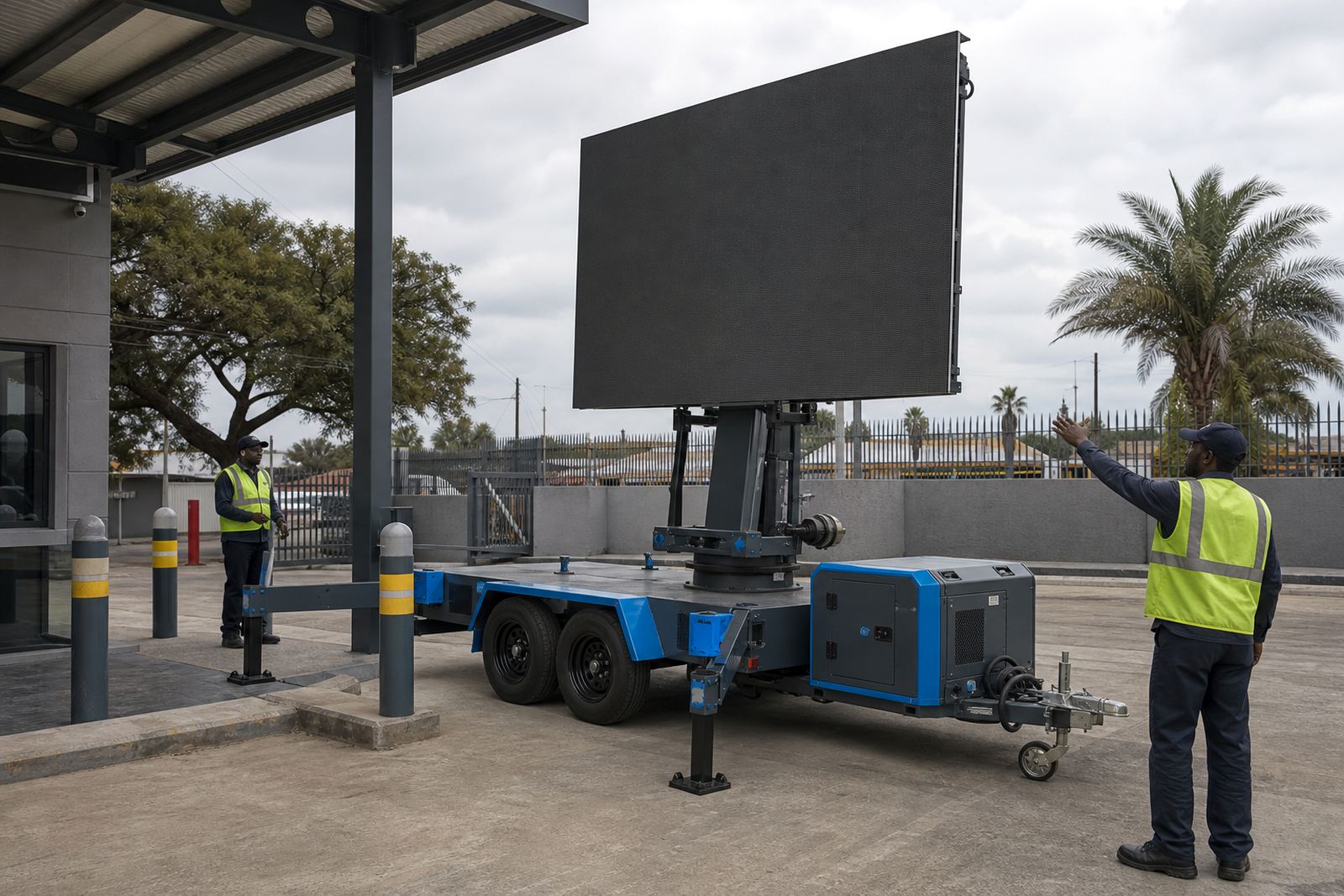
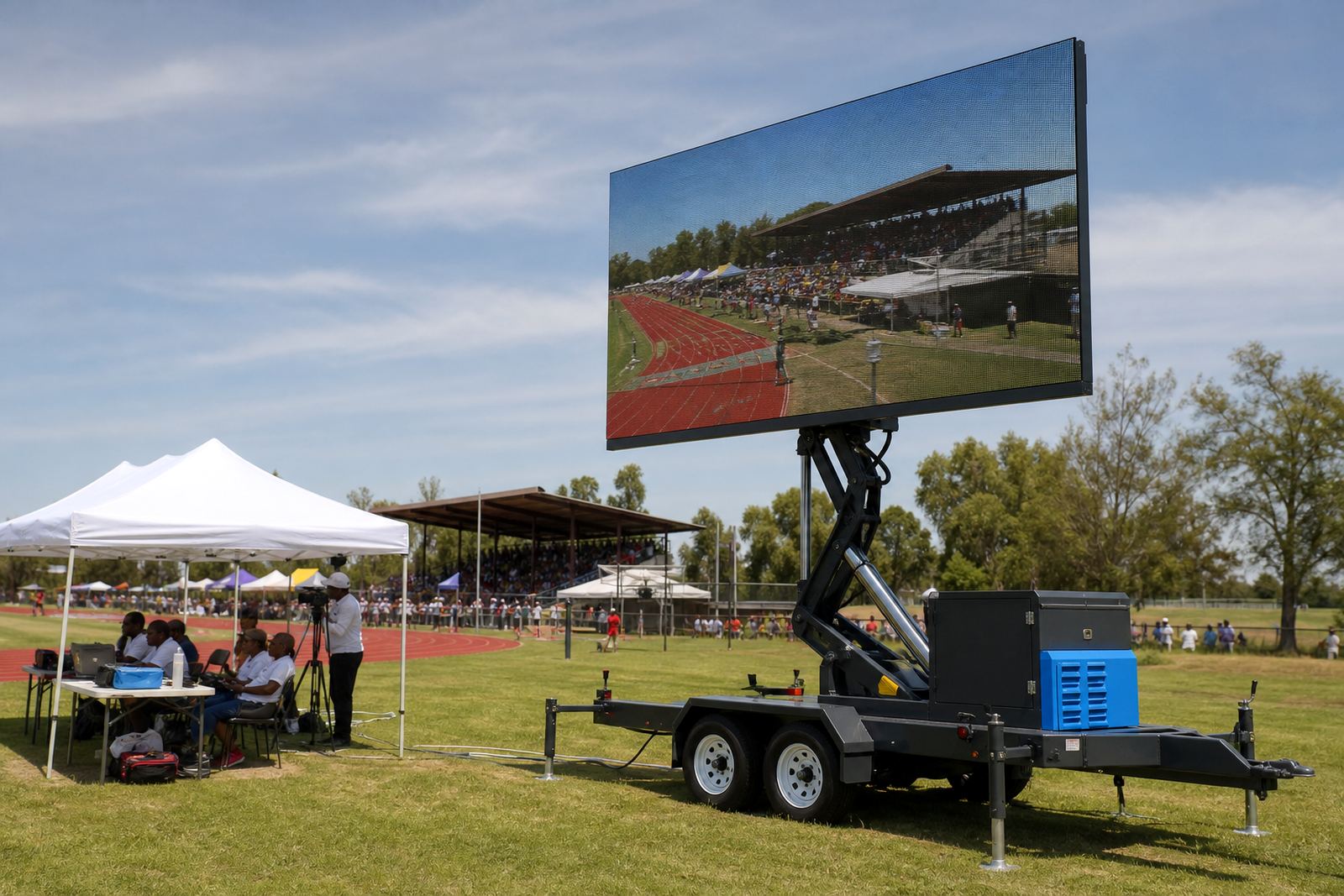
An outdoor LED screen trailer is built for movement, quick positioning and on-site operation. The screen is lifted hydraulically into place, then rotated or angled to face the audience. Depending on the site, power can come from a generator or mains supply, and the playback system can carry video files, live camera feeds or timed campaigns. For a busy Ekurhuleni roadside site, that flexibility matters.
Local conditions also play a part. Wind limits must be respected, because a raised screen has a large surface area and needs safe operating margins. Municipal rules can also affect placement, parking, permissions and whether the display needs formal approval for a public-facing site. A proper site check helps to sort those details before the trailer rolls in.
- Hydraulic lift systems save time on setup.
- Rotation helps angle the screen toward the audience.
- Playback needs organised files and correct formats.
- Wind, access and parking all affect the final position.
When drivers could not read the roadside screen
Picture a campaign near a Germiston traffic route where cars pass close, but pedestrians also stop near the fence line. The nearest viewers may be only a few metres from the screen, while passing drivers read from much farther away. In that situation, a finer pixel pitch protects the close-up image without ruining the longer-view message.
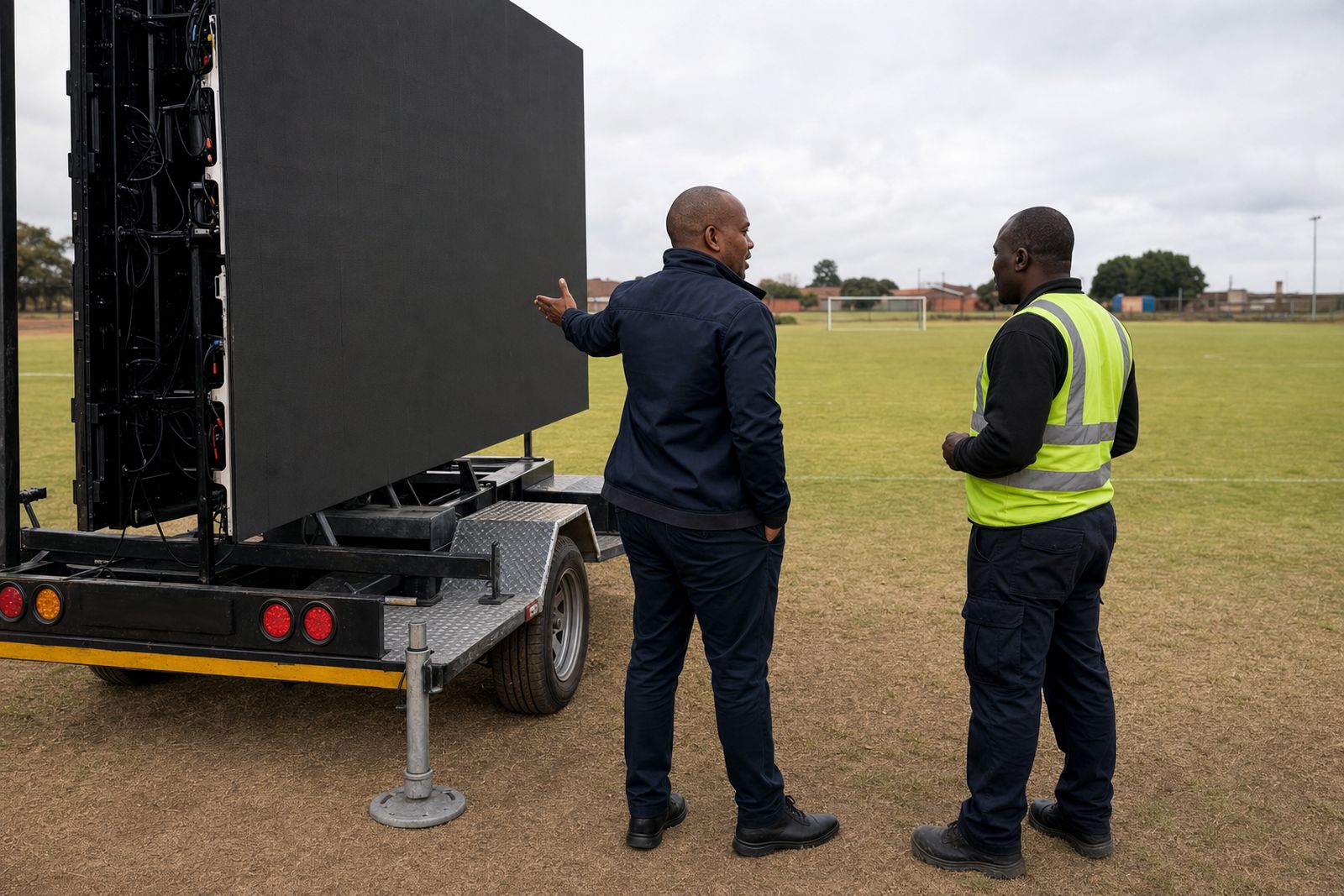
If the same trailer moved to a football day in Pretoria, the crowd spacing would change the choice again. The screen could still carry the same creative, but text may need to be larger and the visual pacing slower. That is the practical side of pixel pitch: it is never only a technical figure, it is tied to where people stand and how they move.
- Traffic sites need readable motion and simple text.
- Field events need bigger type and stronger contrast.
- Close viewers notice pixel structure sooner.
- Far viewers care more about bold shape than fine detail.
The content file should suit the screen, not fight it
Good screen choice is only half the job. The file loaded into the trailer should match the viewing distance, brightness and aspect ratio planned for the site. Tiny fonts, crowded slides and weak contrast can undo a well chosen pitch. When the creative is built for outdoor reading, the message lands cleaner and the playback looks steadier.
That is where on-site technician support helps. The technician can handle content loading, playback checks, live feed setup and the final orientation before the display goes live. If the screen is parked in Durban sea air or on a dry Bloemfontein edge road, the content still needs to stay legible, steady and correctly framed. Small details make the whole display feel less fiddly, and more controlled.
- Build artwork for outdoor distance, not indoor viewing.
- Keep fonts large enough for the closest audience.
- Use contrast that survives daylight glare.
- Test the final file before the crowd arrives.