
Where the cable path begins at the trailer
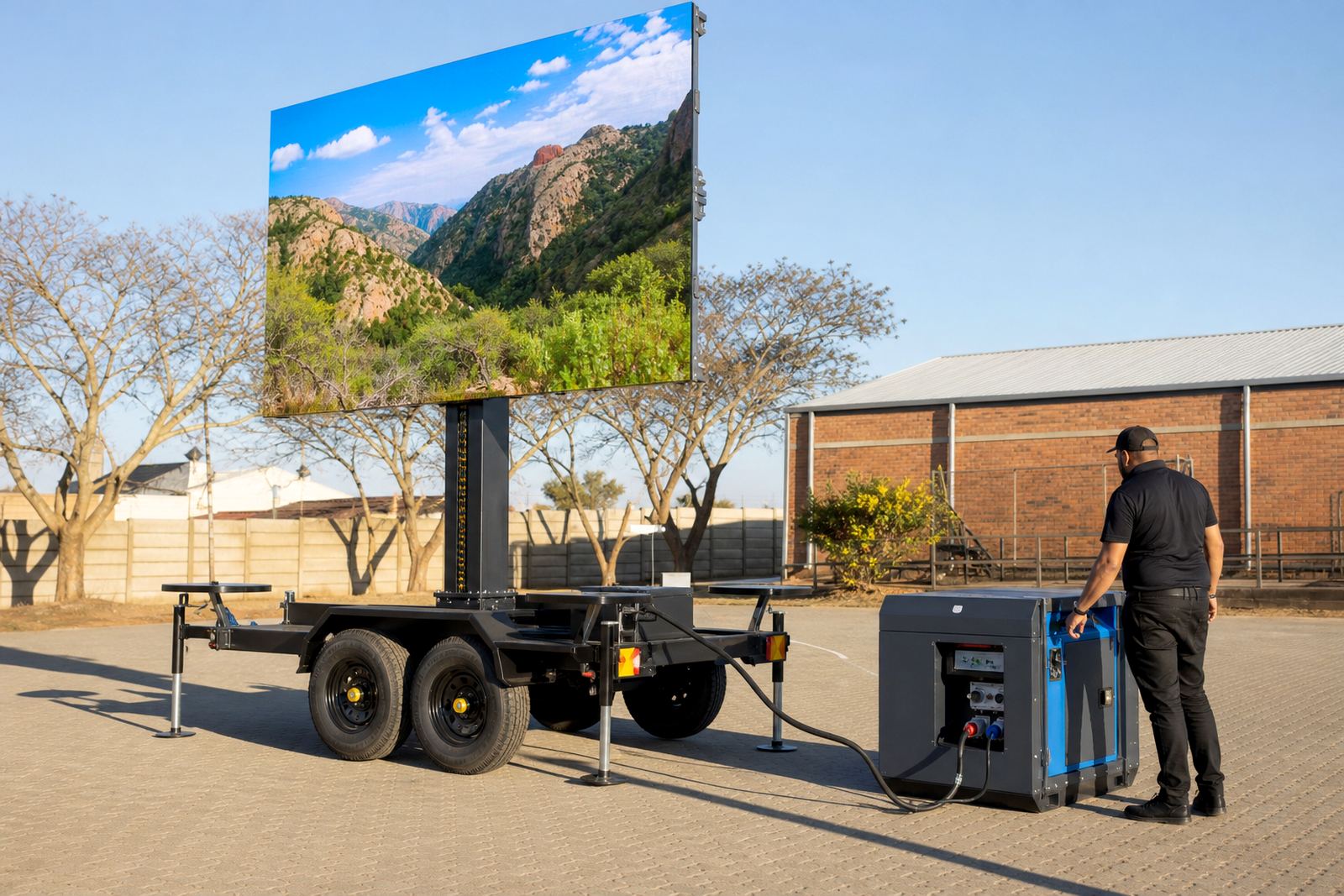
Every clean route starts at the power source and the controller point, then works outward in a straight, sensible line. On an LED screen trailer, that usually means planning the cable drop before the unit is lifted, so the lead does not hang across a wheel track or sit where staff will step over it all day.
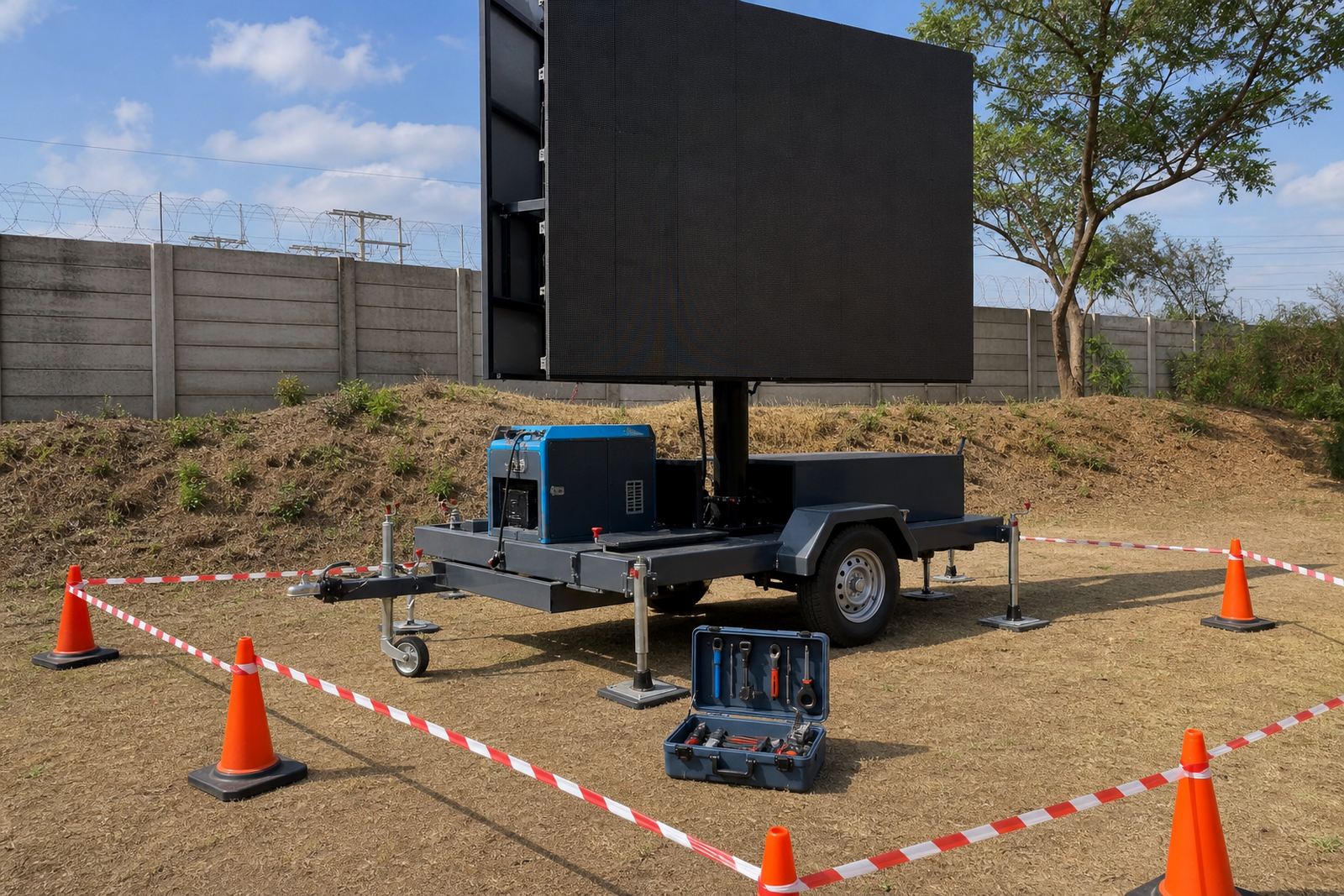
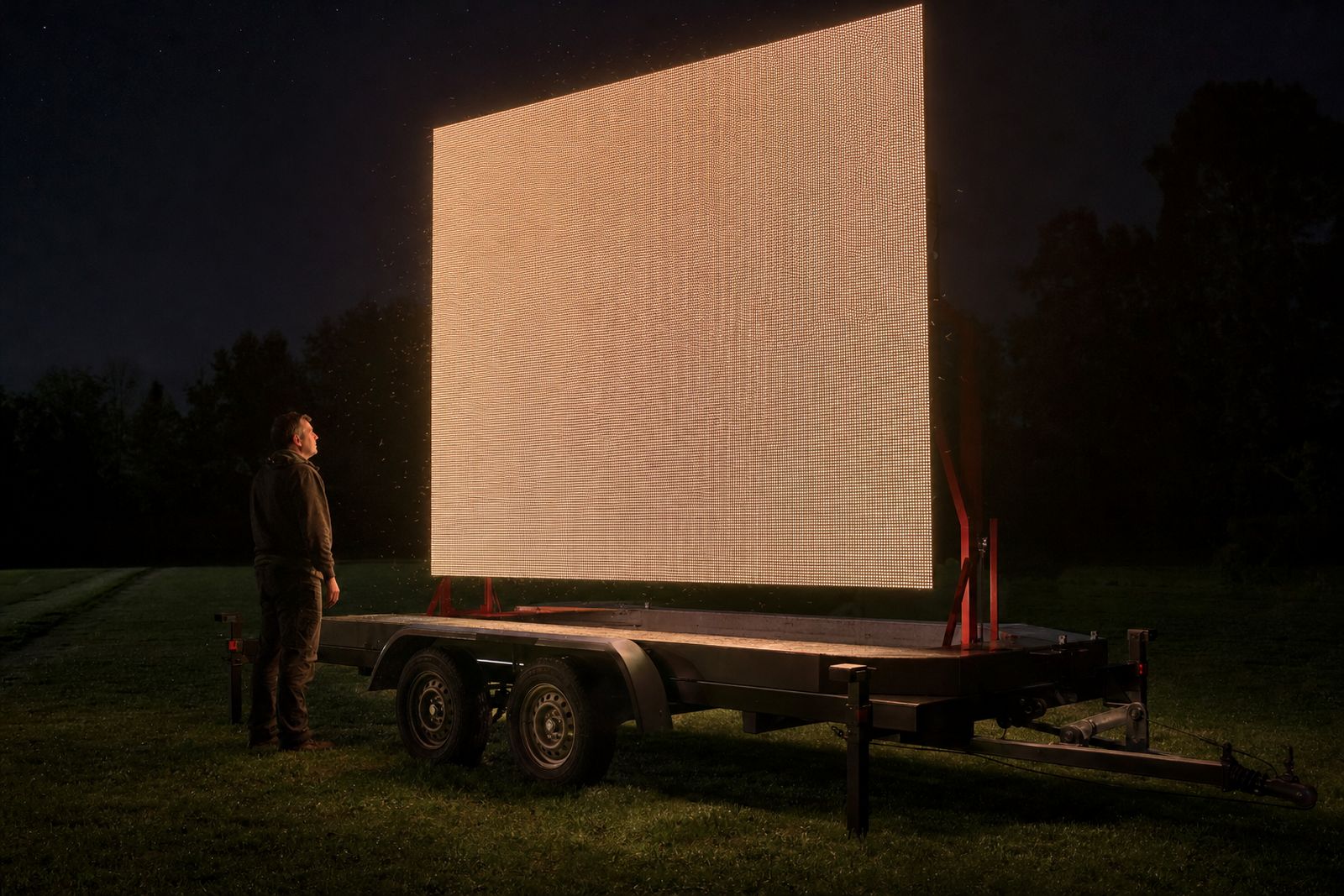
For daylight advertising and event work, the trailer can sit near a verge, parking edge or open field. The path should still be short enough to limit wear, but long enough to allow proper placement of the generator, mains feed or distribution point. A cable that has to be stretched tight is a warning sign, not a tidy finish.
Our crew in Germiston looks at slope, ground texture and vehicle movement before the first cable is laid. That matters around the Ekurhuleni side of the work where delivery trucks, promoters and spectators can all move through the same space, sometimes in a hurry.
Keeping walkways open at sports days and concerts
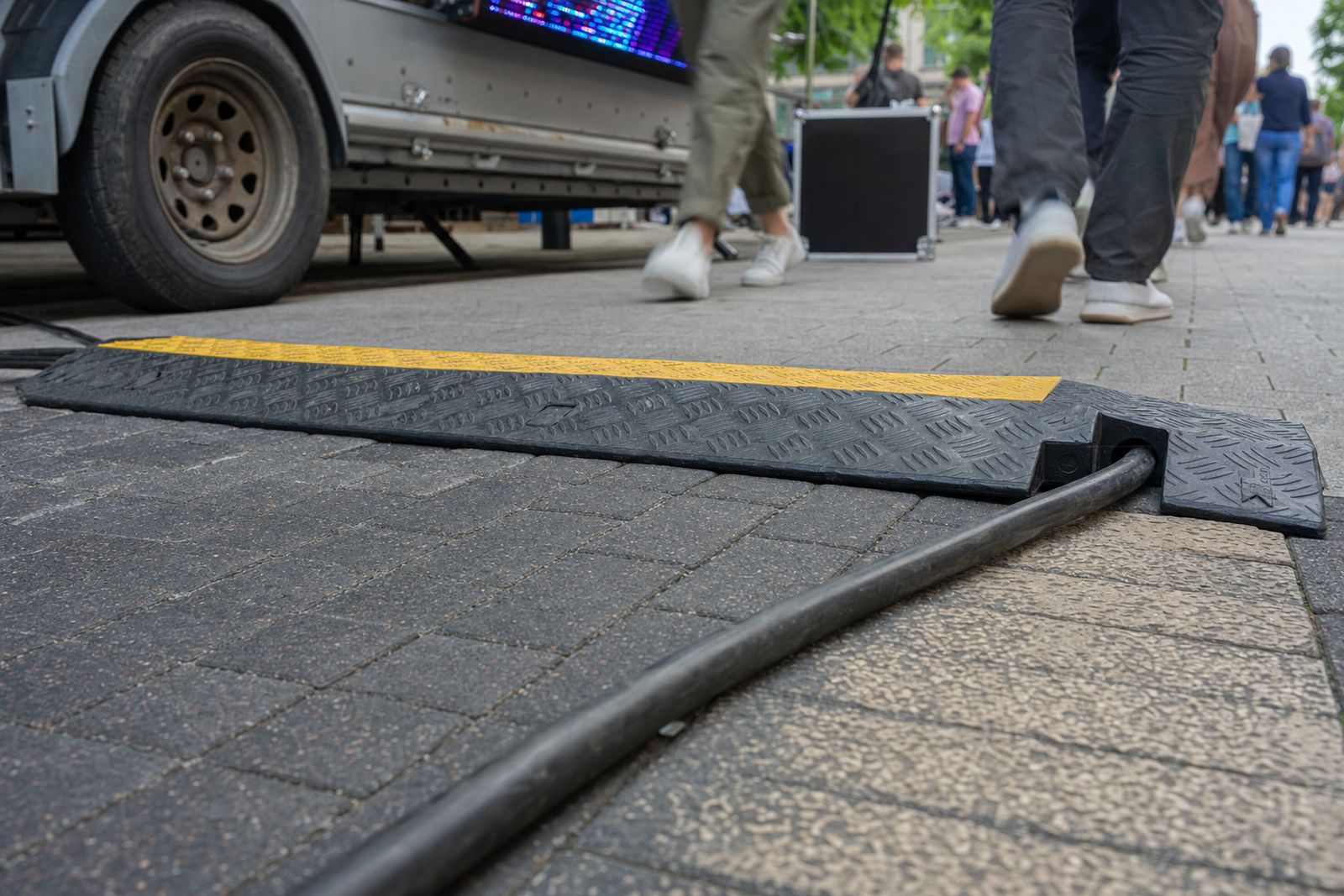
Outdoor events can turn into cable trouble quickly. A lead across a footpath becomes a trip risk, and a cable across a vehicle route gets crushed before anyone notices. Good routing keeps the service side tucked away while leaving spectators, crew and emergency access routes open.
At sports days, the screen may sit close to a field boundary or timing tent. At concerts, the service side often sits behind the audience line or along a stage flank. In both cases, cables should be fixed so they do not wander as the ground settles. Loose slack can move with wind, people or even a sudden shift in traffic, and that is enough to create a mess.
- Run power and signal lines on the service side, not across open walkways.
- Use cable covers where people or vehicles must cross.
- Separate power cables from signal cables where the run is long.
- Check that rope barriers, stands and fencing do not pinch the route.
Generator, mains feed and the choice of cable length
Power planning changes the whole route. A generator sitting close to the trailer needs a different layout from a mains feed arriving from a building or temporary distribution board. The cable length, thickness and lay point all have to match the load, the distance and the conditions underfoot.
When the screen runs on generator power, the route should keep fumes, vibration and refuelling access in mind. With mains power, the cable often has to pass through controlled points and may need municipal or venue approval depending on the site. The route should never block access to exits, fire points or public ways, and in some areas the permit office will expect a clear site plan showing where cables run.
Longer runs need more care because voltage drop and physical wear become more noticeable. A route that works at a small Germiston launch may not suit a wider park setup in Pretoria or a roadside campaign in Durban. So the cable plan is drawn on the day, on the actual ground.
Weather, moisture and the ground under the cables
South African outdoor work has to cope with dust, rain, coastal moisture and hard sun. Cable routes that look fine on a dry morning can shift once the ground softens or the wind picks up. A good route keeps the lead off standing water, off sharp stones and away from puddles that soak connectors.
Humid places like Durban need moisture control more than many people expect. Connectors should sit above the wettest part of the site, and any junctions need to be protected from splash and foot traffic. On dusty inland sites, the issue is often abrasion. Sand and grit work into the outer jacket when the route rubs against concrete, gravel or metal edges.
Weather monitoring is not only about the screen surface. If the cable path begins to move, flap or collect water, the service side starts to look untidy and the risk climbs. A well set route stays calm under normal wind limits and does not interfere with hydraulic lift or rotation on the trailer.
How playback and live feed lines stay organised
Power forms only one part of the cable route. LED screens also need signal paths for content playback, and sometimes live feed support for sports, stage visuals or sponsor messaging. Those lines should be kept distinct from power cables, so the technician can trace a fault without pulling apart the whole service area.
Content loading usually happens from a control point close to the trailer or box. The safest layout gives that point a stable position, a short neat cable run and room for the technician to work without crossing the public side. If a live camera feed is involved, the route should be planned early so that the signal path does not fight the power path or end up draped over barriers.
At LEDBox, Thabo Bhengu and Karabo Abrahams handle a lot of this on site, because playback and cable management affect one another. A screen can be technically ready yet still look untidy if the service leads are slung across the wrong side of the unit, and that is the sort of detail people notice first.
A Germiston roadside setup that stayed readable
A practical example helps. For a roadside campaign in the Germiston and Kempton Park area, the trailer was placed where passing traffic could see the screen from two directions. The first layout looked tidy on paper, but the cable would have crossed a pedestrian path and sat too close to a vehicle turning point. That would have made the service side awkward and the route harder to inspect.
The revised plan shifted the generator point, shortened the exposed run and moved the control position behind the trailer. The result was not flashy, just calmer. Staff could move without stepping over leads, the permit sketch matched the site more closely and the setup had room for pack down without a scramble. That kind of thinking saves a lot of frustration on busy days.
Multi-stop planning also benefits from the same approach. When a trailer travels from Johannesburg to Pretoria or on to Bloemfontein, the route on each site needs its own check. One venue may have hard paving, another loose gravel and another a slope with limited access. Good cable routing adapts to that reality instead of forcing one pattern everywhere.