
When the audio line crowds the picture
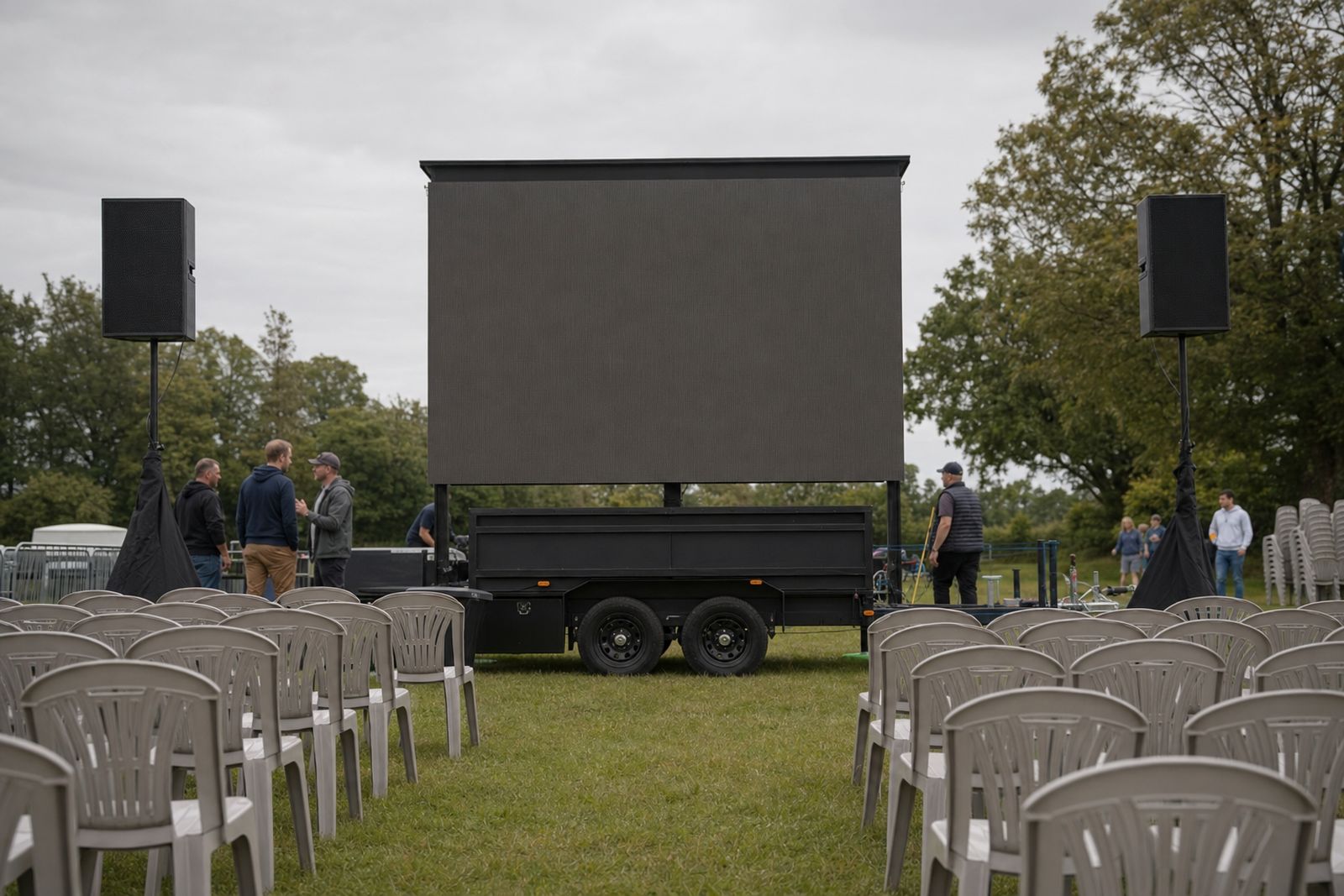
Outdoor events in Germiston, Johannesburg and the wider Ekurhuleni area often squeeze audio, video and access into one tight footprint. That is where speaker screen spacing starts to matter. A screen trailer may be standing on a forecourt, a school field or a municipal open space, and the audio stacks need to sit far enough away that they do not cut into the lower corners of the image or pull attention away from the screen face.
As a working rule, the screen should be treated as a visual centre point and the speakers as separate structures with their own footprint. If the speakers sit too close, the crowd only sees part of the content, and the technician has less space to service the trailer, check cabling and work around the lift area. That matters even more on a windy day, when the trailer must stay within its safe operating limits and the site crew needs clear access around the base.
Good spacing is not only about looks. It helps with safety, reduces vibration transfer into the trailer area and keeps the front row from feeling boxed in by equipment. For roadshows and sports days, the audience often moves in and out of the viewing zone, so a narrow gap can turn into a traffic problem very quickly.
How far the stacks should sit from the trailer
There is no single distance that works for every site, because screen size, speaker format, audience size and ground layout all change the plan. A compact display in a shopping centre parking area needs a different layout from a larger roadshow screen at a sports ground. What stays constant is the need to keep the speaker line clear of the screen edges and outside the technician’s working envelope.
- Leave enough side space for the trailer body, stabilisers and safe walk-up access.
- Keep the speaker fronts far enough from the screen so they do not block lower sightlines.
- Allow a gap for cable runs, power leads and content control points.
- Check that audience movement will not push people between the audio stack and the screen face.
- Factor in the angle of the screen when the trailer is raised and rotated into view.
With outdoor LED screens, pixel pitch and brightness also influence placement. A finer pitch gives cleaner detail at closer viewing distances, while a bright daylight screen needs its own viewing corridor so the image stays readable under direct sun. If the speakers sit too close, they can cast shadow and create a cluttered front zone that weakens the whole setup.
Sightlines for the crowd and the technician
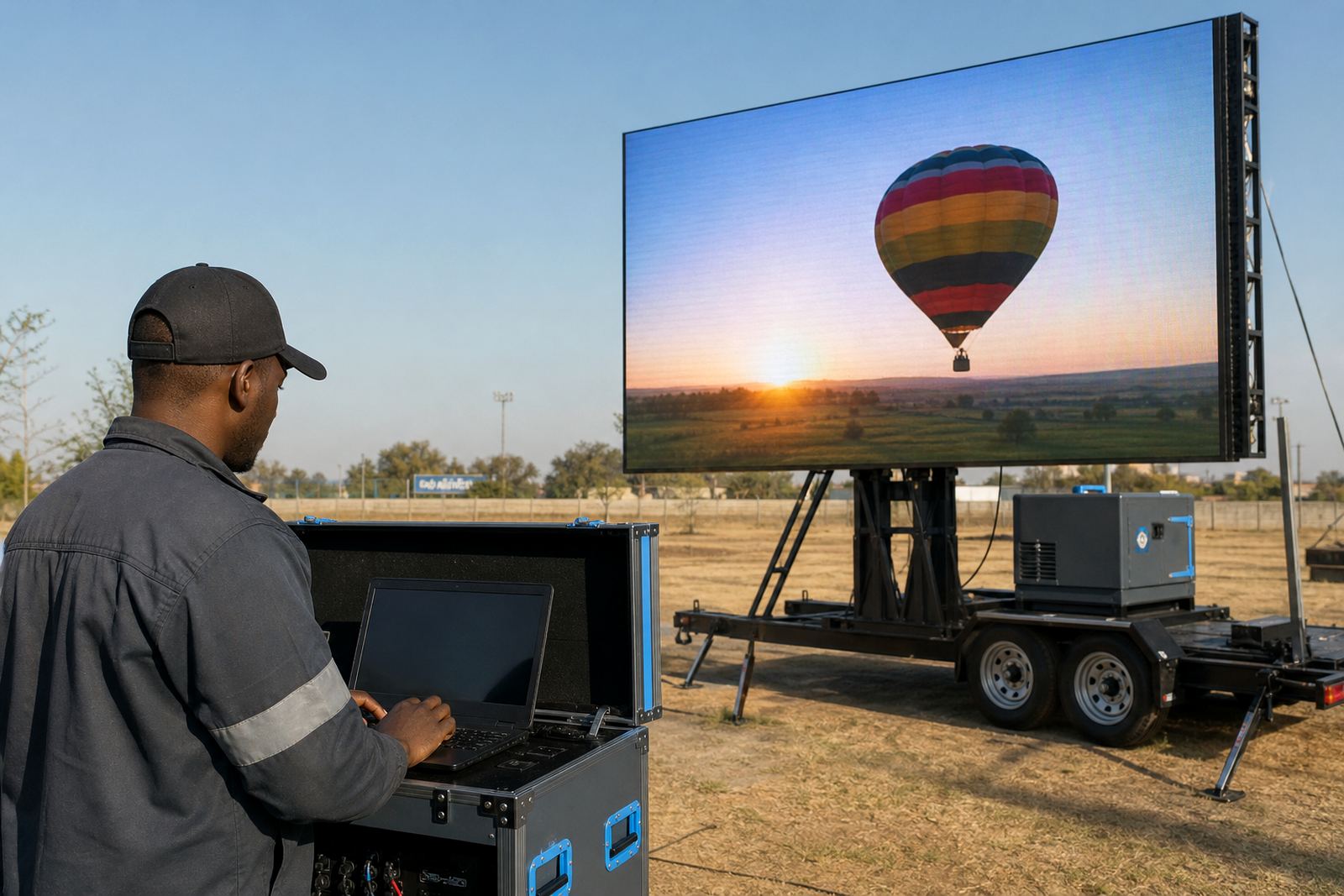
The best layout lets the audience see the full picture without craning around speaker cabinets or poles. It also leaves the technician a direct route to the trailer, especially where content playback, live feed support or power checks are happening during the event. On a busy site, the front edge of the screen area is not just a visual line, it is a working area.
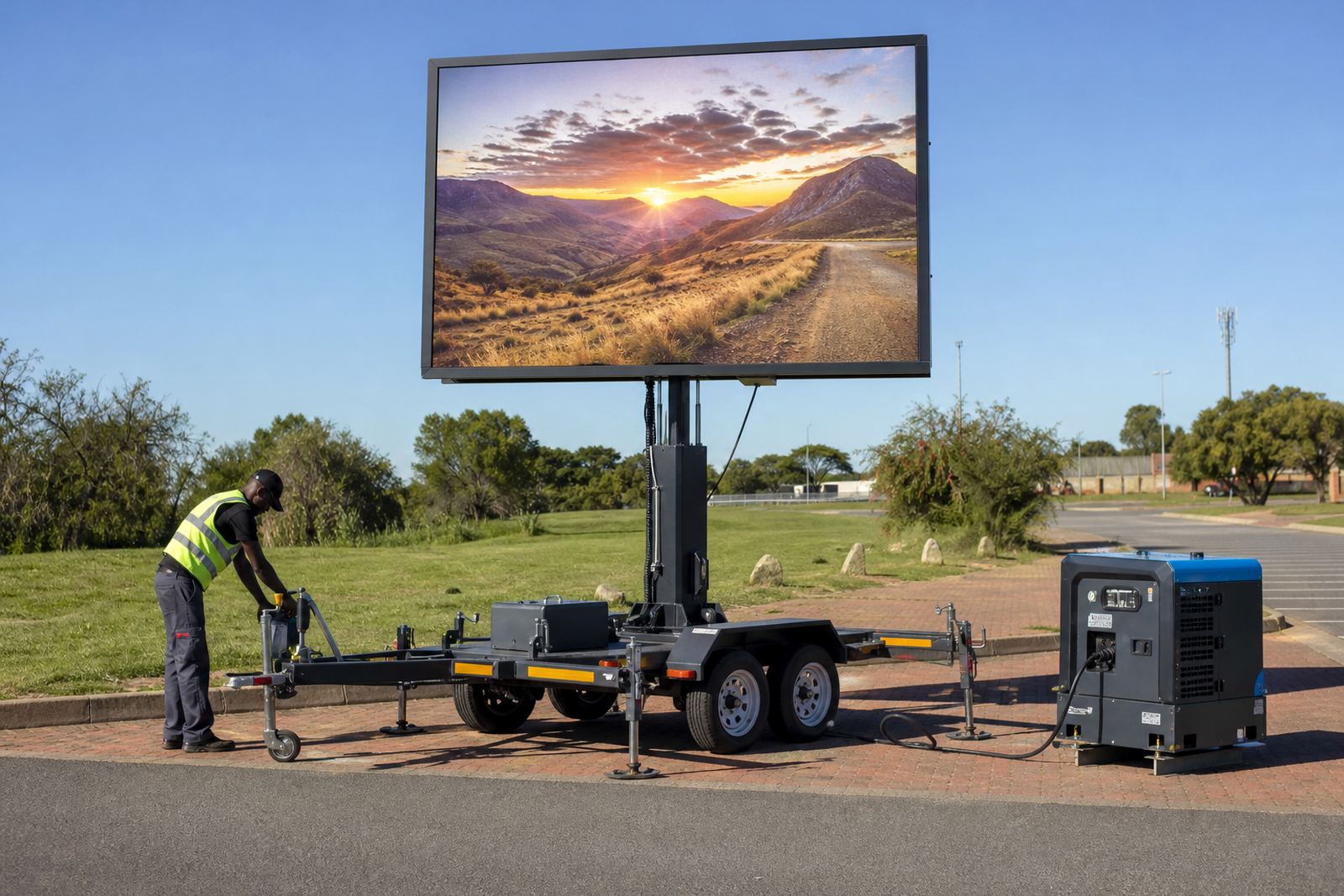
For a roadshow in Johannesburg or Pretoria, the screen may arrive on a trailer with a hydraulic lift and rotation system, then face a crowd from a parking lot or open forecourt. In that setting, the audio must not sit so close that it interferes with the lift path, the technician ladder access or the pack down route. If the sound crew has to work around the screen trailer, the whole site feels cramped and movement slows down.
Think of the view from three angles. First, the front row should see the full content. Second, the side crowd should not look past speaker boxes to catch the screen. Third, the technician should be able to inspect the trailer without stepping through the audio zone. Those three lines should not cross each other if the site plan is sound.
Wind, permits and the working envelope
Outdoor LED trailers are built for open air use, but they still need sensible spacing around them. Wind can push loose banners, cable covers and nearby equipment into the screen area, so the audio line should not sit so close that it complicates checks or emergency pack down. Where municipal rules apply, the site may also need permit guidance for public space use, noise control and placement on roads, sidewalks or open grounds.
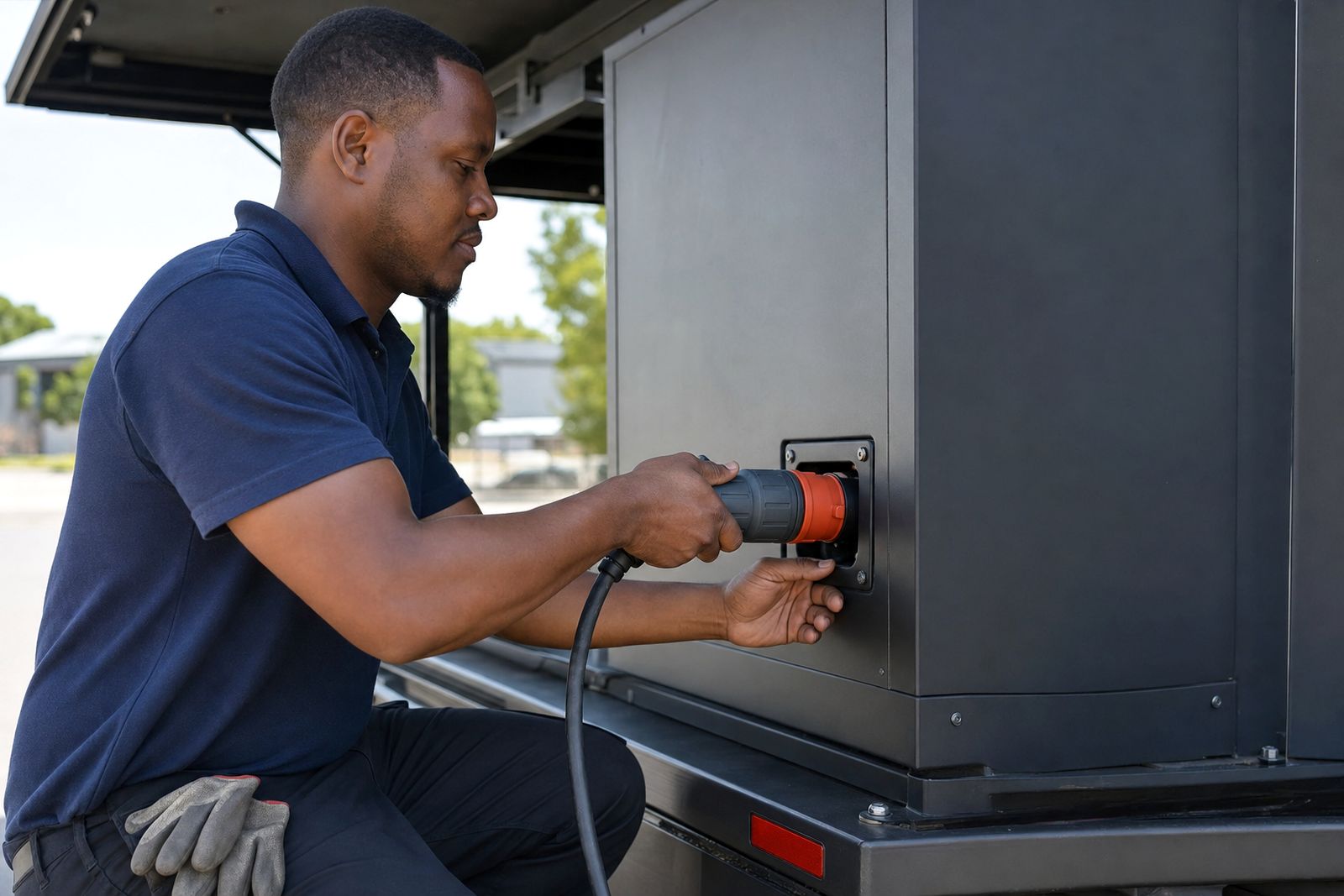
Spacing becomes even more important when the trailer runs on mains power or a generator and the crew has to manage live equipment on site. The technician needs room to inspect the display face, confirm playback, test the audio-video timing and keep the work area clear. A tight setup increases the chance of blocked access, and that is the last thing you want when the screen is playing content for a crowd in heat, dust or coastal humidity.
- Keep cabling routes short but not cramped.
- Allow a clear path for emergency pack down.
- Leave room for weather checks and equipment inspection.
- Separate the audience route from the technician route.
- Keep the audio footprint outside the trailer service zone.
A Germiston roadshow layout that worked on the ground
On a roadshow out of Germiston, the site had a long parking lane, a raised screen trailer and two speaker stacks that were originally planned too close to the viewing line. The first layout looked tidy on paper, but from the crowd position the lower edge of the screen was partly masked. The technician also had to edge around the speaker line to reach the trailer side panel, which was not ideal once playback was running.
The crew shifted the speaker stacks outward, opened the front corridor and angled the screen toward the main audience side. That small change improved sightlines straight away and gave enough working room for content loading, live feed support and routine checks. It also made the pack down easier because the audio and video gear no longer fought for the same strip of ground.
On South African sites, we often need to make that kind of adjustment. A school sports day in Polokwane may need a different spacing pattern from a concert forecourt in Durban or a campaign stop in Bloemfontein. The event type changes, but the principle stays the same: keep the speakers clear of the screen face and keep the technician’s route open.
What a clean spacing plan usually includes
A proper spacing plan starts before delivery. It considers the screen size, audience direction, access lane, power source and the ground under the trailer. It also includes what happens if the weather turns or the venue manager changes the parking line at the last moment. The aim is not a perfect drawing, it is a workable site that the team can set up and run without squeezing everything together.
- Screen position relative to the main audience line.
- Speaker stack distance from the screen edges.
- Space for technician access and cable management.
- Room for generator placement or mains connection points.
- Allowance for wind, rain cover and pack down movement.
At LEDBox, that planning sits with the delivery and on-site crew who handle outdoor LED screen trailers and LED boxes across Germiston, Ekurhuleni, Johannesburg, Pretoria, Durban, Bloemfontein and Polokwane. The practical part is always the same: make the picture visible, keep the service path open and let the sound sit where it belongs, not on top of the screen.
The short version for site managers
Speaker screen spacing is not a decorative detail. It affects sightlines, safety, servicing and the way the whole audience area feels. If the audio stacks crowd the trailer, the screen loses clarity and the technician loses room to work. If the gap is set properly, the event looks ordered and the gear stays easier to manage.
For advertisers, event teams and roadshow organisers, the cleanest approach is to treat the screen trailer as a central object with its own service zone. The speakers should support the picture, not compete with it. Once that line is respected, the rest of the layout falls into place with fewer compromises.