The ground does more work than most people notice
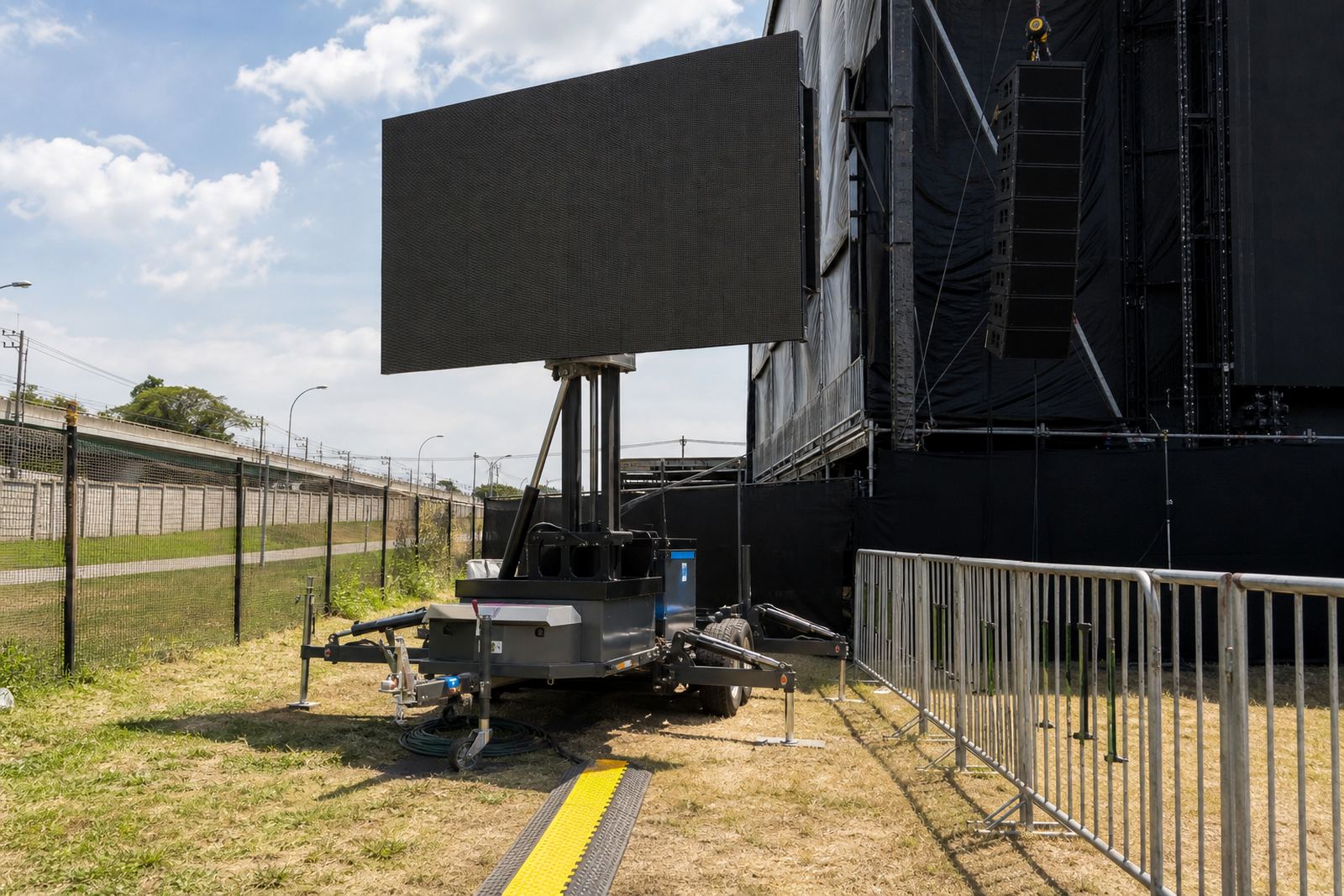
A trailer-mounted LED screen depends on its stabilisers to spread weight and hold the unit steady while the mast lifts. The trailer may carry a screen with a fine pixel pitch for close viewing or a larger outdoor display meant for daylight visibility, but none of that matters if the base moves under load. A slight lean at ground level becomes a larger movement once the screen is raised.
Firm support matters because the unit is not only holding its own weight. It is also managing wind, vibration from passing traffic and the movement that comes with lifting the screen into position. On a Kempton Park forecourt, a Germiston yard or a roadshow stop in Pretoria, the same rule applies: if the tyres or feet settle unevenly, the whole installation needs attention before content plays.
- Check for soft shoulder material, loose gravel and fresh backfill.
- Look for slope across the trailer length and width.
- Watch for hidden voids, stormwater channels or broken paving.
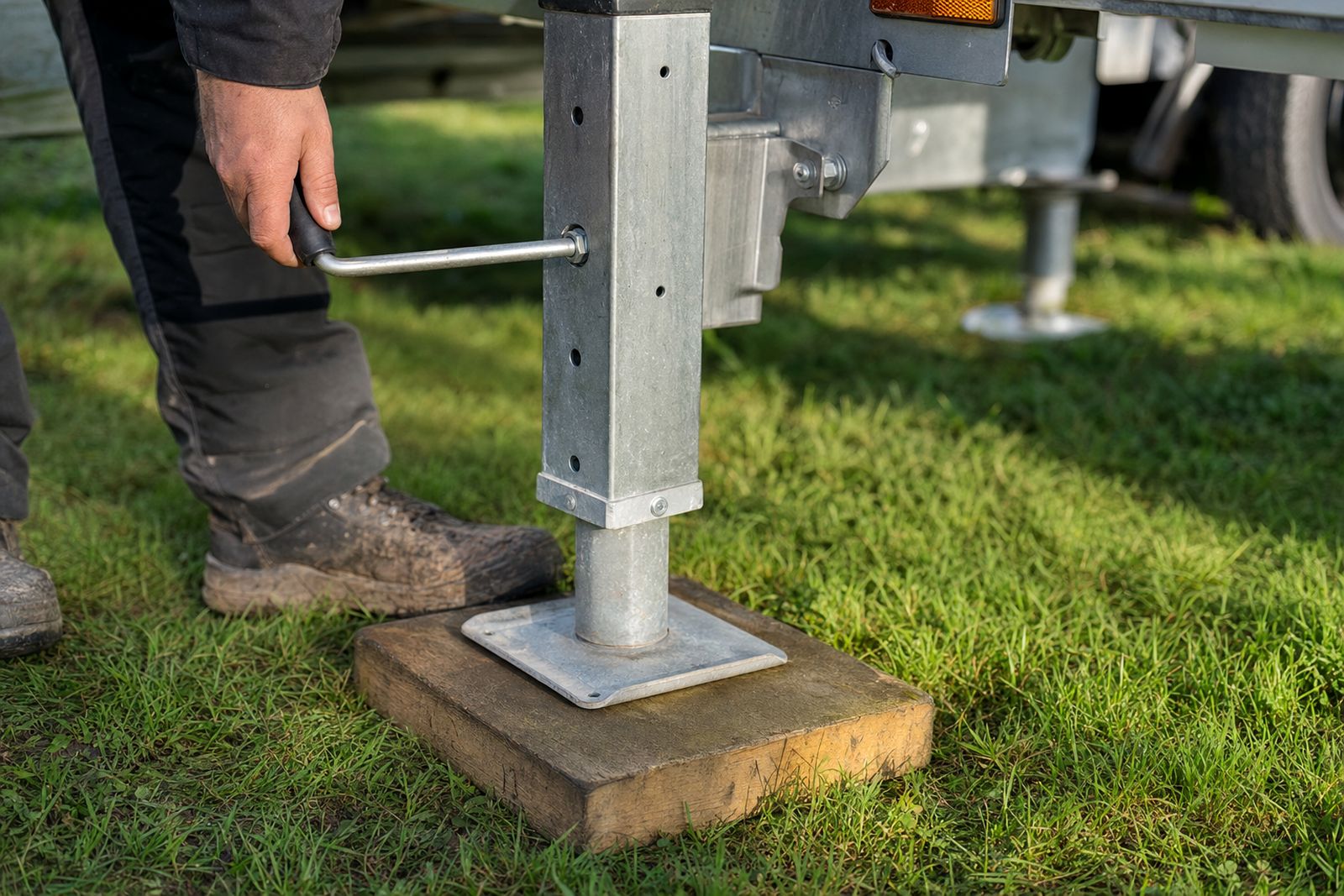
- Make sure the stabiliser feet are set on proper base plates or pads.
What a proper ground check looks like on site
A ground check starts before the screen is raised. The technician checks where the trailer will stand, how the stabilisers will settle and whether there is enough space for safe access around the unit. If the trailer is meant to run from mains power or a generator, the cable run and fuel position also need to suit the site layout. A clean site still needs checking, because a neat surface is not always a stable one.
For an LED box or trailer used at a sports day, concert or roadside promotion, the setup team should confirm that each leg is carrying weight evenly. In practice that means the trailer sits square, the mast rises without binding and the screen face remains plumb. The aim is not cosmetic neatness. It is structural balance, with enough contact area under each stabiliser to keep pressure low.
- Park the trailer on flat, firm ground before the stabiliser legs go down.
- Use pads or plates under each stabiliser foot.
- Recheck level after the screen is lifted.
- Keep public movement away from the support zone.
Wind, lift height and the moment the unit becomes vulnerable
The highest risk often appears during the lift. Before the screen reaches full height, the trailer has a lower centre of gravity. Once the hydraulic lift extends, the structure catches more wind and any ground weakness becomes more serious. Even a modest gust can shift a poorly supported trailer enough to affect the screen frame, the mast or the locking points.
Outdoor LED screens are built to be seen in bright daylight, but daylight also means heat, glare and wind exposure. That is why stabiliser checks and weather monitoring sit together on real jobs. A technician will look at the forecast, the site exposure and the surface beneath the feet before the screen goes up. If the ground is too soft or the slope is too sharp, the safer move is to adjust the position or delay the lift until the base is right.
South African surfaces can change the whole job
Germiston industrial yards, Durban coastal venues and Bloemfontein open spaces do not behave the same way. Sand, crushed stone, cured concrete and older paving each create different load patterns under the stabilisers. Coastal humidity can leave some surfaces damp, while after rain the top layer may look firm but still compress under the trailer once the screen rises.
So the crew never copies last week's leg settings onto a new field. A municipal parking area, a private lawn and a roadside pull-off each need a different read on ground firmness. On a roadshow moving between Johannesburg, Polokwane and Pretoria, the site notes from the first stop can help, but the crew still checks each new surface before raising the screen.
- Soft verge material may need larger support pads.
- Freshly laid paving may not take concentrated point loads.
- Wet grass can shift under weight and leave the trailer uneven.
- Uneven brickwork can twist the stabiliser feet.
Permits, access and the space around the trailer
Permit guidance matters when the screen sits near public access, traffic routes or municipal property. The paperwork may deal with placement, access control and visibility, but the site still has to work physically. A permit does not make weak ground stronger. It only gives permission to use the space, and the crew still needs safe footing for the stabilisers and room for pack down later.
Access also affects the ground check. If delivery trucks need to reverse into a tight Germiston yard or a roadside space in Ekurhuleni, the route must stay clear enough for the trailer to align correctly. An awkward approach can leave one stabiliser short of firm ground, and that is where a careful repositioning is better than forcing the setup.
What our technicians are watching for before playback starts
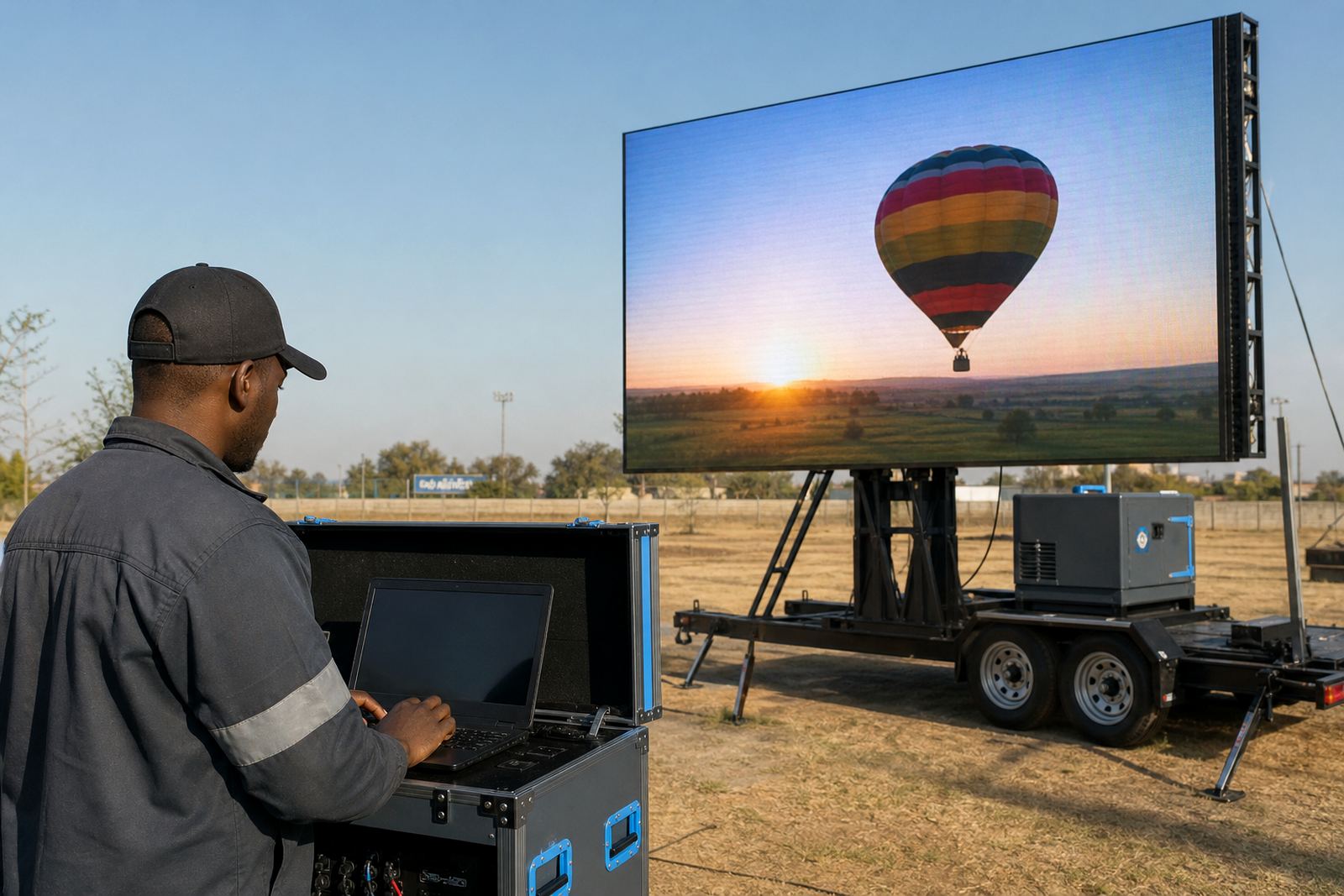
The screen may be loaded with promotional content, a live feed or a schedule for a roadshow, but playback only starts after the base is sound. Our on-site technician and screen team look at the trailer stance, the level reading, the wind exposure and the locking points before content loading begins. That sequence matters because a steady screen gives clearer pictures and avoids needless strain on the hardware.
On a live job in Johannesburg or Durban, the technician also checks whether the site can hold steady through the full display period. If the wind changes or the surface begins to settle, the screen can be lowered and the base checked again. That is ordinary field work, not drama. It is how outdoor LED screen trailers stay useful across advertising campaigns, sports days and roadshows.
- Confirm the trailer is level before power-up.
- Check each stabiliser for even pressure.
- Inspect the area after the first lift.
- Watch the screen base during extended display periods.