Plan for wind before the trailer arrives
A trailer-mounted LED screen looks solid from the road, yet the real question is how it behaves in moving air. A large screen face catches wind like a sail, and the effect grows once the cabinet is raised on the hydraulic mast. That is why a proper wind plan starts before delivery, not after the first gust.
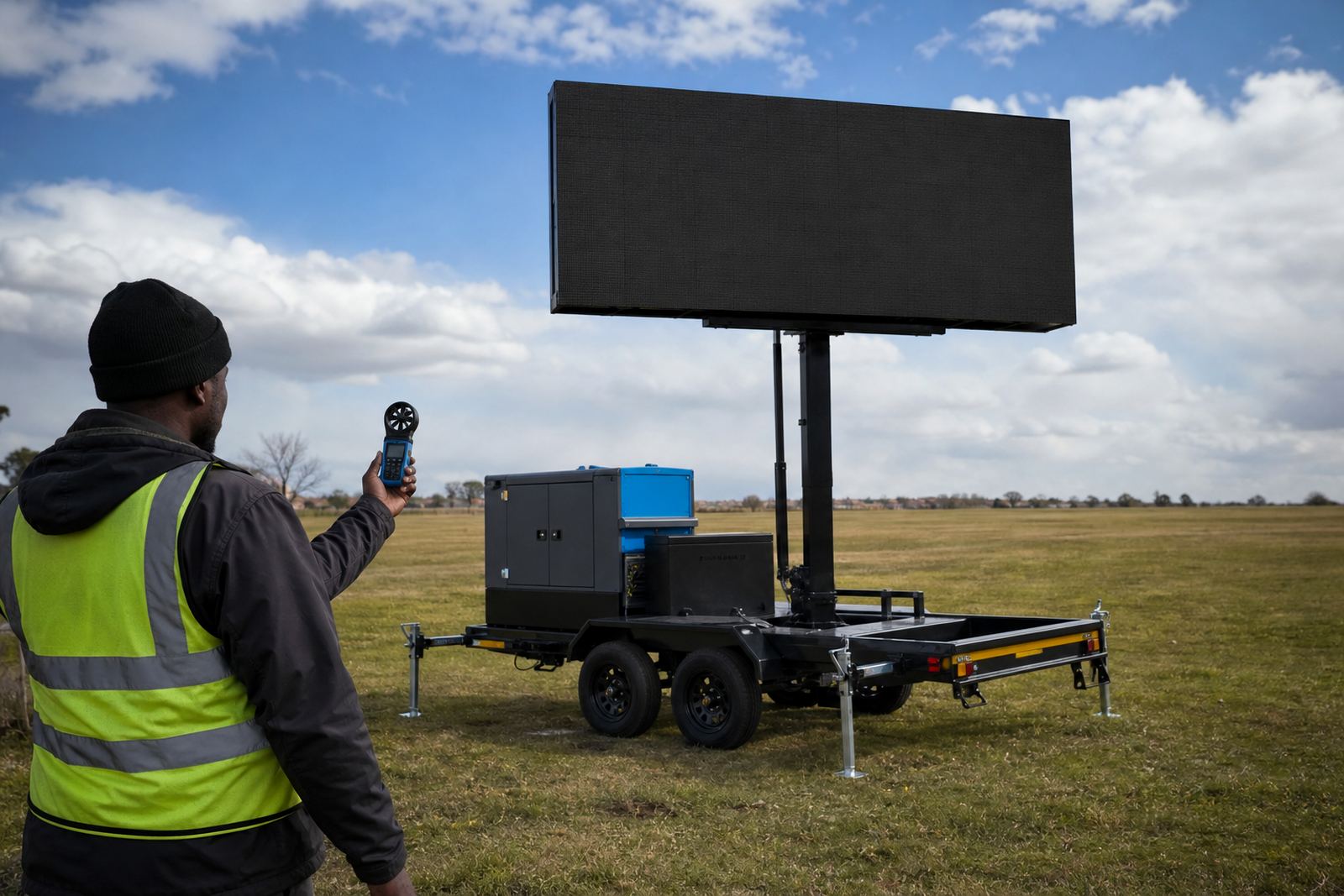
Screen size, mounting height, trailer mass and the open side of the site all change the risk picture. A compact box in a sheltered parking area behaves differently from a tall screen on a sports field in Ekurhuleni, where wind can move across open ground without much warning. Our site checks look at exposure, nearby buildings, tree cover and the direction of the strongest gusts.
- Ground slope and soft verge edges
- Open corners that channel wind
- Height once the screen is fully lifted
- Nearby structures that create turbulence
The limits are set from the trailer, the screen and the site
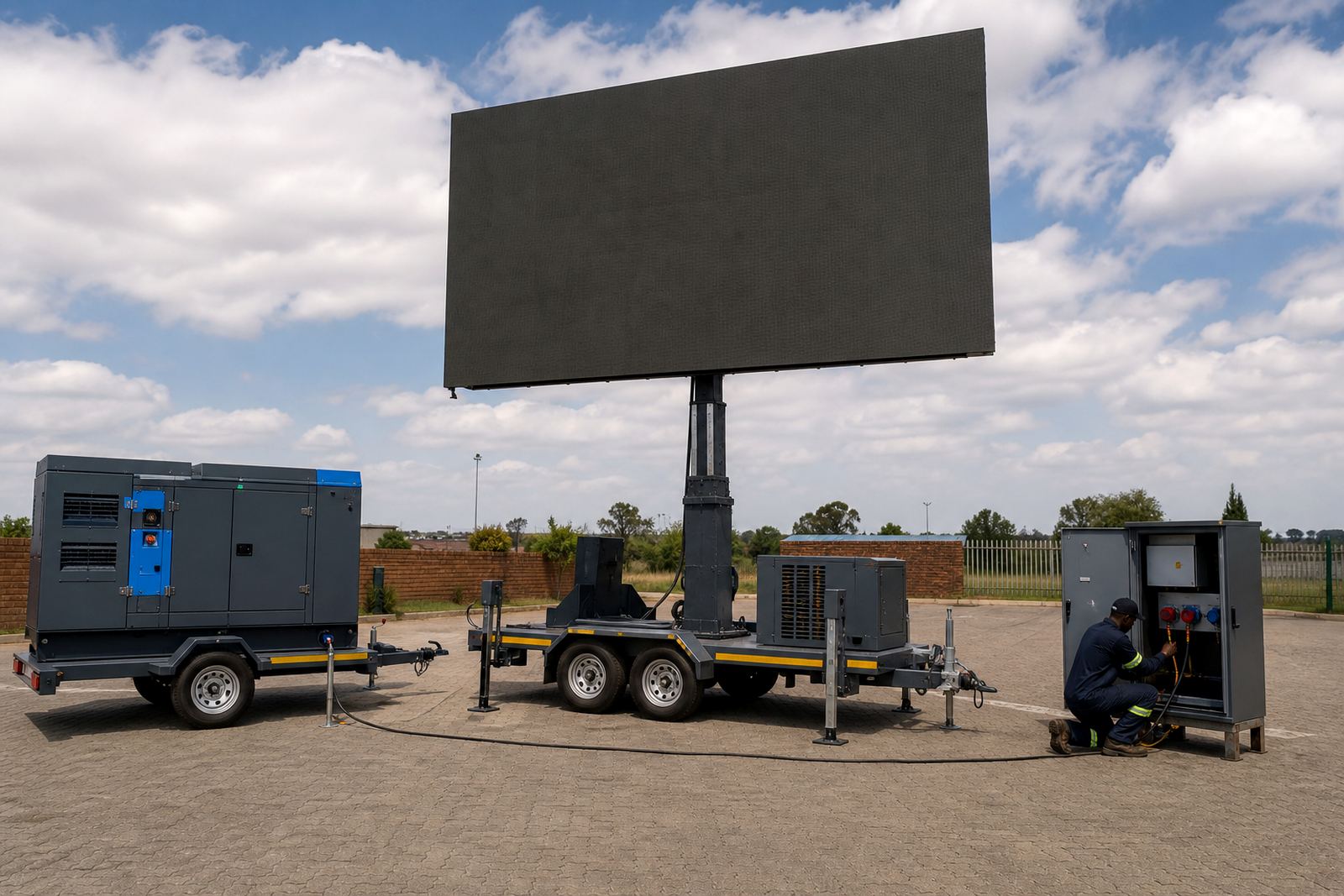
There is no single wind number that fits every outdoor LED screen job. A trailer with a lower screen face and a smaller pixel pitch panel can behave differently from a larger display with more surface area and a higher mast. The safe operating limit depends on the complete setup, including ballast, stabilisers, tow vehicle positioning and whether the unit is running from generator or mains power.
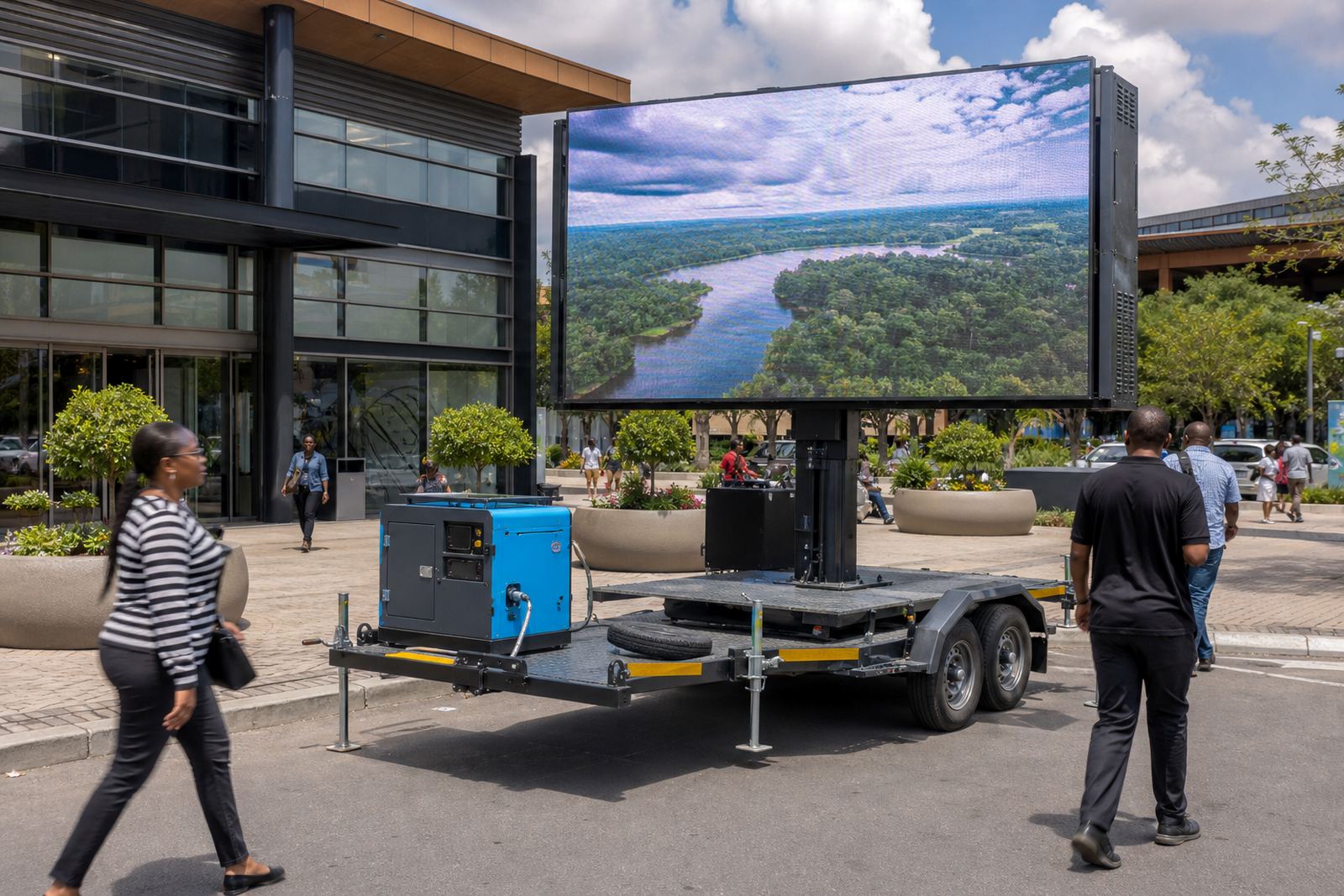
Bright daylight screens can still be used in windy conditions, but visibility is only part of the job. The technician must judge whether the screen can remain raised, whether playback can continue, and whether the site has enough clear space for a controlled lower if conditions shift. On roadshows, where the unit moves between stops, the local exposure at each address matters more than the brochure spec.
- Display face area and lift height
- Trailer stabilisers and wheel chocks
- Wind direction against the screen face
- Space needed to lower and secure the mast
What the on-site technician watches during operation
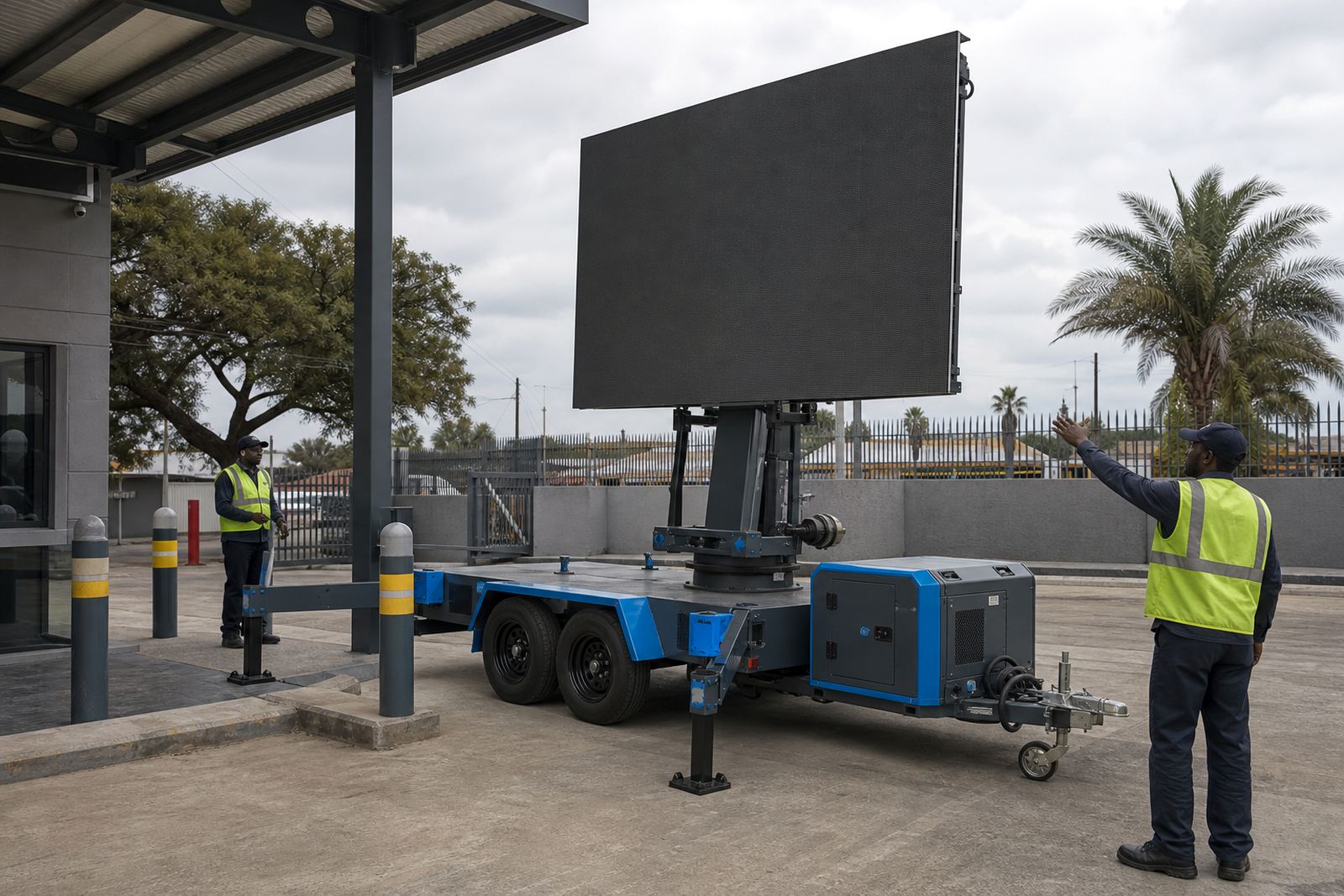
An on-site technician does more than switch the screen on. During a live run, they track the weather, look for movement in flags, poles and nearby trees, and check whether the ground is still holding firm around the trailer feet. If the screen is part of a sports day or concert queue area, they also watch how people move around the unit so the perimeter stays clear.
Live feed support and content playback both need stable conditions. A screen can run perfectly from a media player or live input, but if the wind rises the safe decision may be to pause the display, lower the mast or move the trailer to a more sheltered position. That call is site specific, not cosmetic, and it should always stay with the technician on duty.
- Monitor the wind against the screen face
- Check stabilisers after raising the mast
- Keep the safety zone free of vehicles and foot traffic
- Secure content playback before any lift adjustment
Municipal permits and exposed public spaces
When a screen sits in a public or semi-public place, permit guidance becomes part of wind planning too. Municipal rules can affect where a trailer may stand, how close it may sit to a roadway, and what level of access control is needed around the unit. In exposed spaces, the authority may also want to know how the display will be managed if conditions change.
For sites in Johannesburg, Pretoria or Durban, the setup often involves more than a parking bay and a power source. Road shoulders, civic spaces and open event grounds can all bring extra exposure to gusts, and the setup plan should allow for that from the start. A tidy permit file does not replace a practical weather check, but it supports it.
- Confirm the placement area allowed by the site owner
- Check access for the trailer, generator or mains feed
- Keep enough clearance for lowering the screen safely
- Plan a route for pack down if weather turns
Open ground and the afternoon gusts
In Germiston and wider Ekurhuleni, a roadshow stop on a broad paved area can look harmless in the morning, then pick up strong crosswinds later in the day. That is where site exposure checks earn their keep. A screen that was safe when first raised may need to be lowered if the wind starts rolling across open ground from a different angle.
Our team plans for this by looking at the exact position, the open sides of the site and the room available around the trailer. If the event is moving between Kempton Park, Johannesburg and Pretoria, each stop needs its own weather reading. The same screen, the same trailer and the same content can face very different conditions from one site to the next.
For advertisers and event teams, the practical answer is simple: use a trailer and screen arrangement that matches the site, not just the audience size. Wind limit planning is really about preserving the display, protecting people nearby and keeping the whole job under control.
Pack down decisions matter as much as setup
Wind planning does not end once the content is live. Pack down needs equal care, because a late gust while the mast is lowering can complicate the whole process. That is why the technician stays involved through the full cycle, from arrival and setup to shutdown and departure.
For multi-stop work across South Africa, the logistics also matter. A trailer that is safe in Bloemfontein may face a different exposure pattern in Polokwane or Durban, and the route plan should allow for those changes. Weather monitoring, delivery timing and stable parking positions all work together.
- Lower before conditions drift beyond the safe limit
- Keep hands clear during mast movement
- Secure panels, cables and playback gear before towing
- Check the trailer again after relocation