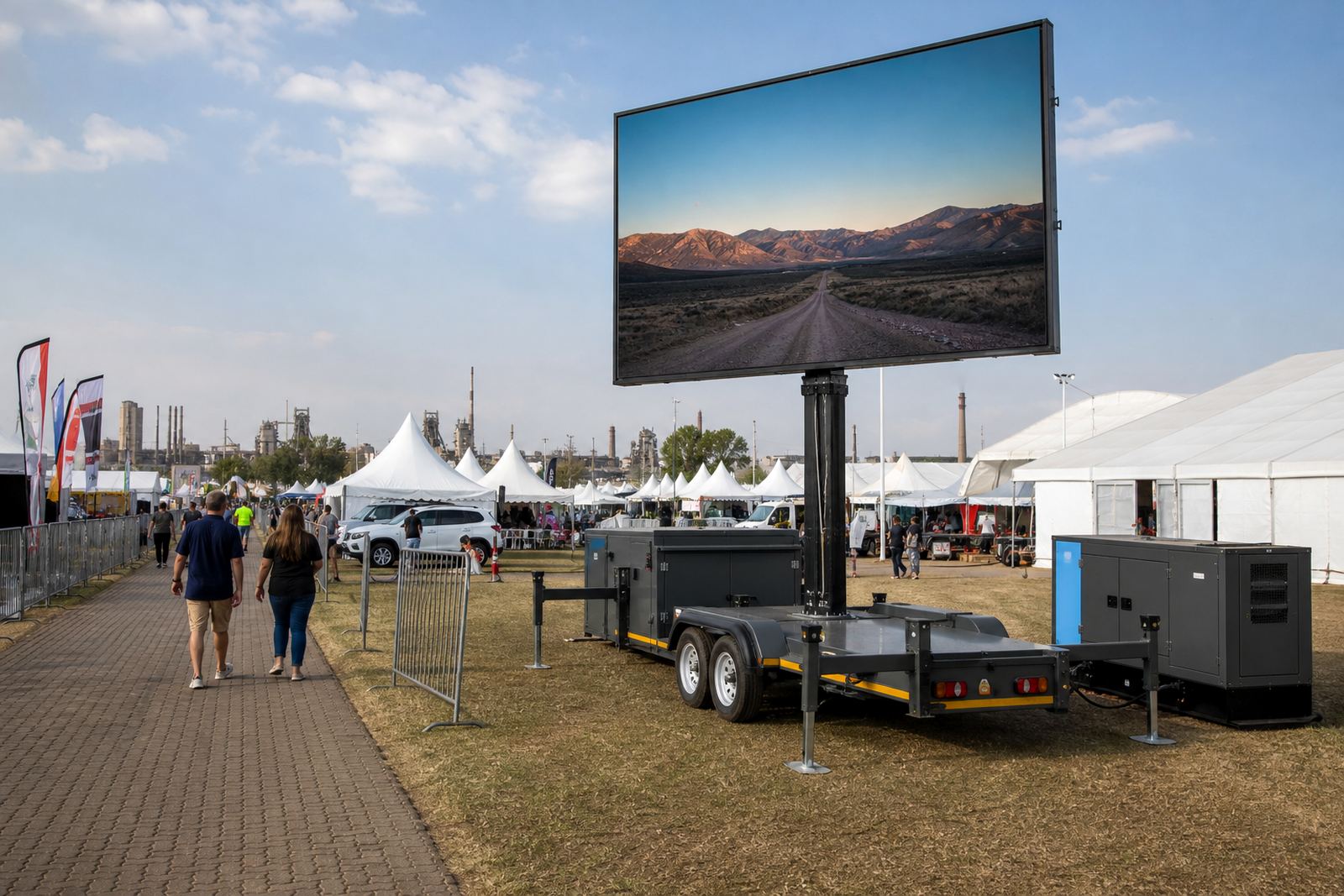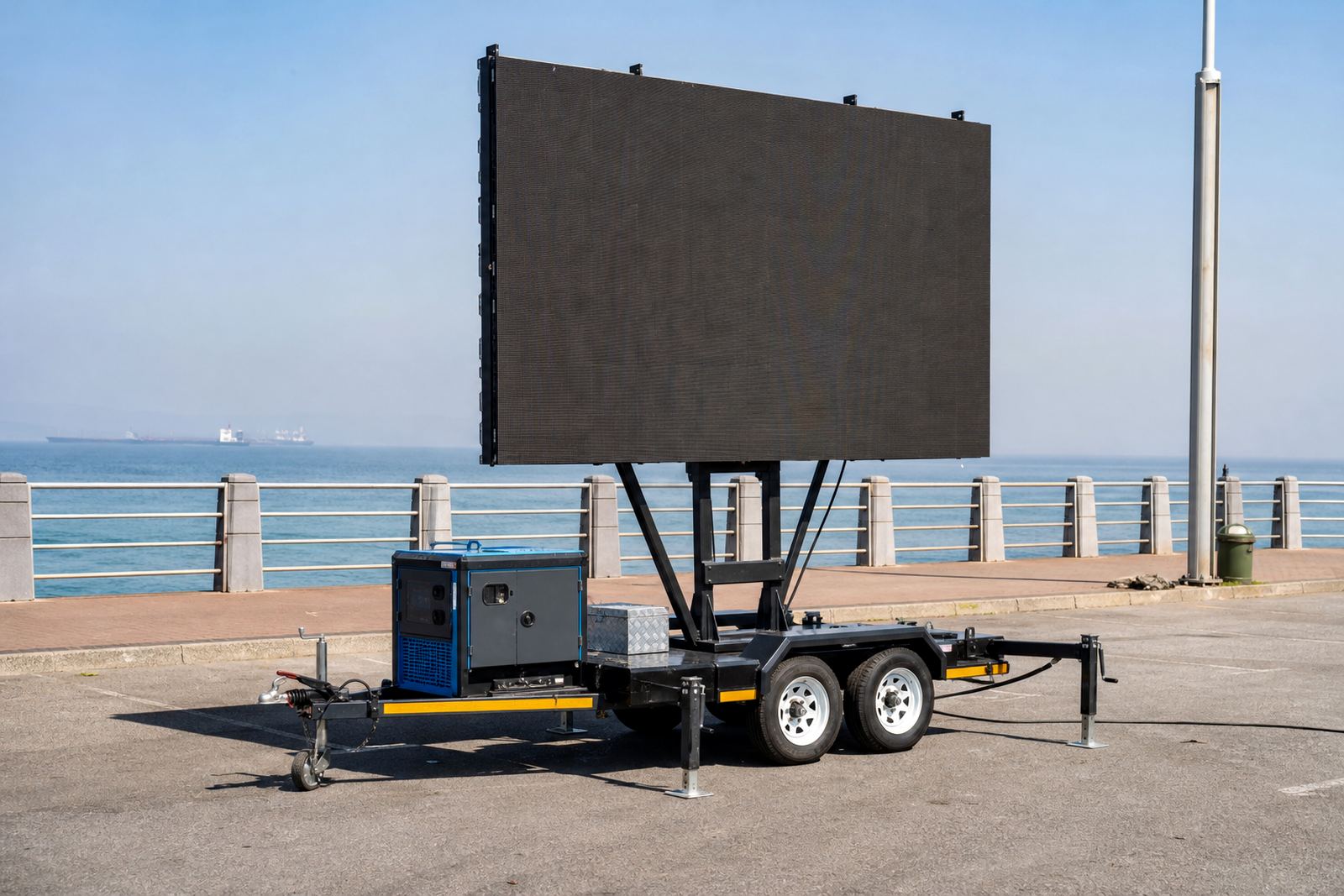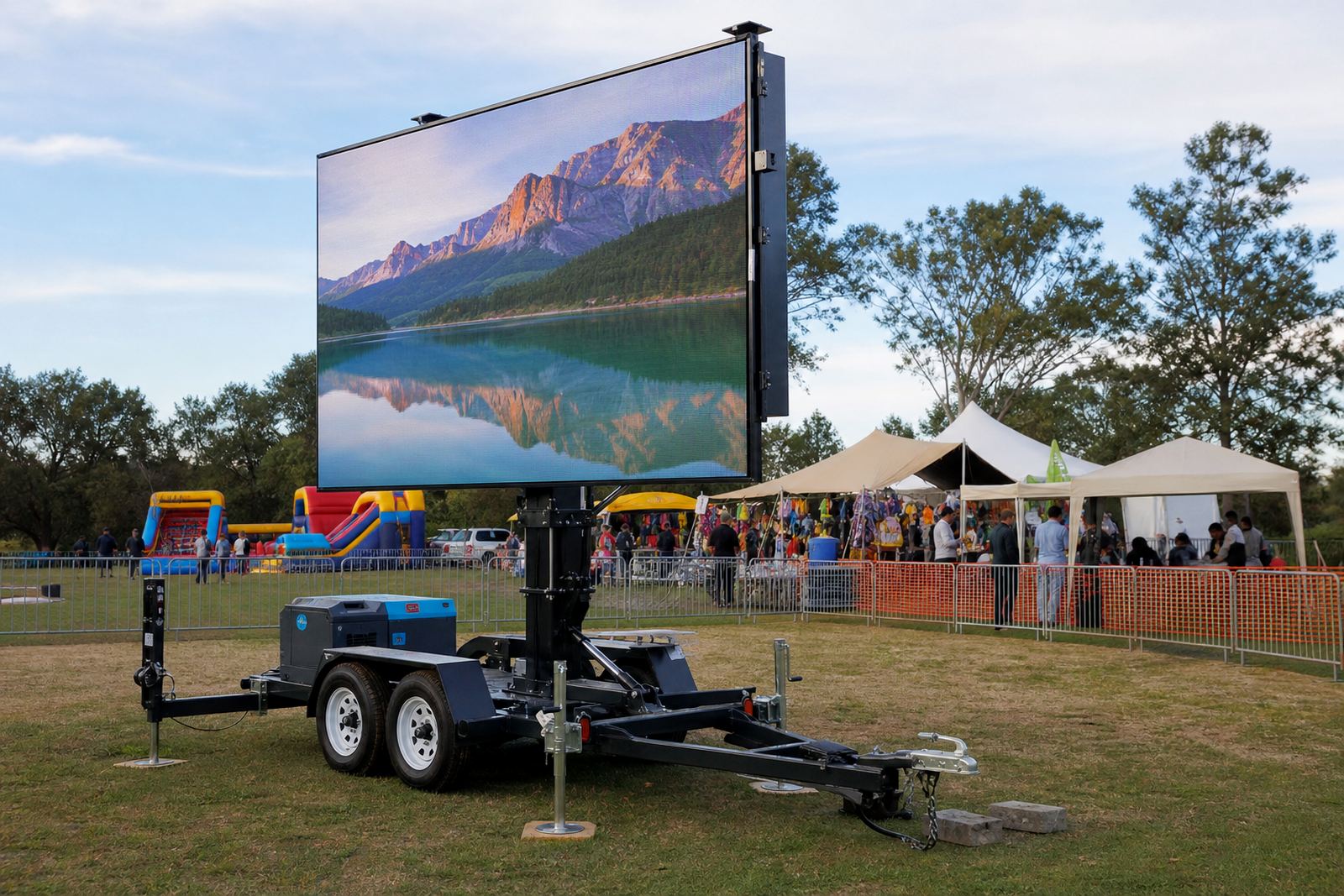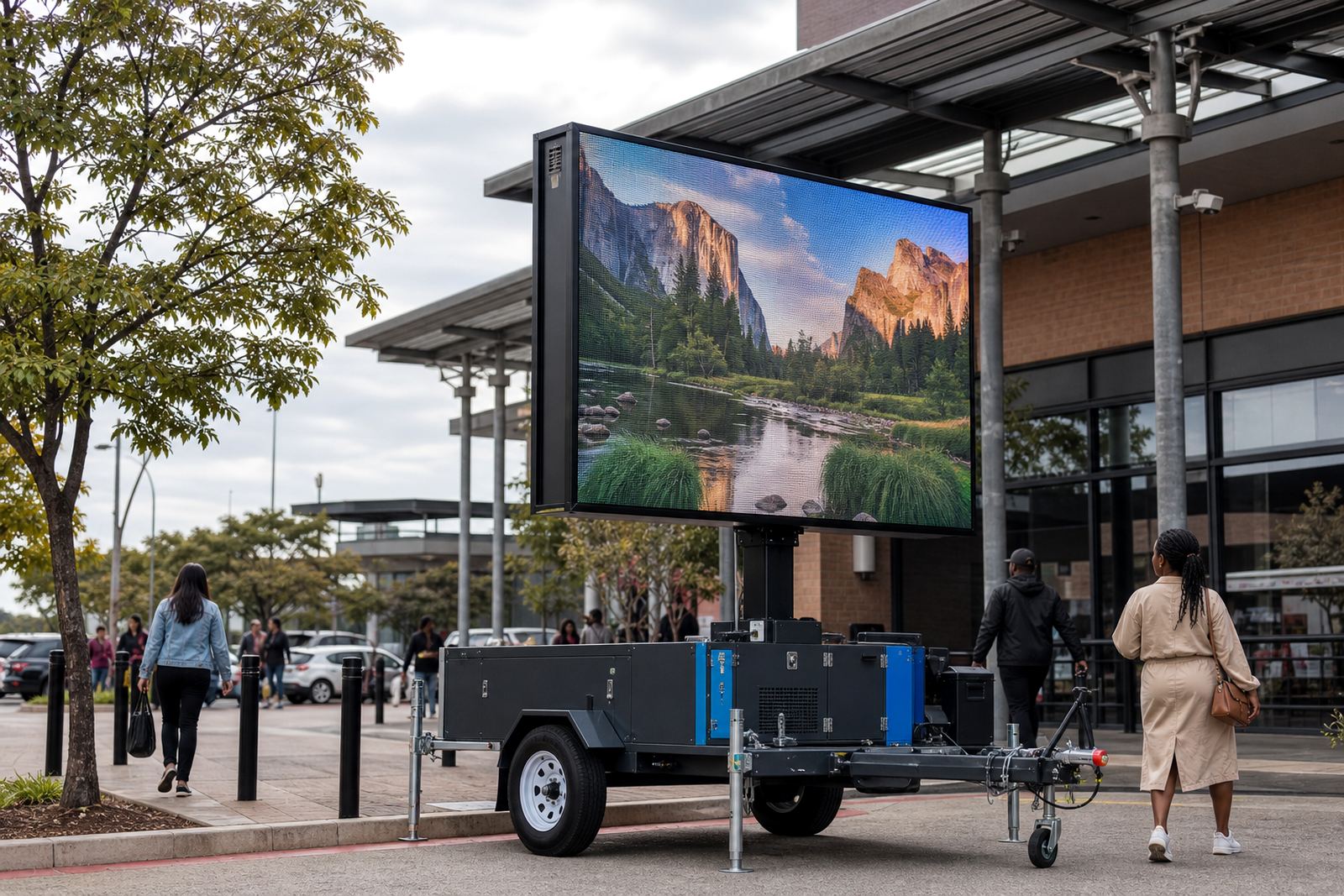
Mall frontage, foot traffic and a screen that had to earn its place
The brief came from a retail marketing team in Polokwane that wanted the mall frontage to do more than carry a banner or a static poster. They needed a moving visual point that could pull the eye from the parking area, the taxi drop-off side and the pedestrian route passing the entrance. The screen had to suit a day-long activation, not only the busy lunch window, and it had to stay clear in direct sunlight.
The setting brought its own limits. Vehicle access at the frontage was controlled, the public area could not be blocked for long, and the mall had rules around placement, safety and after-hours movement. We also had to factor in wind exposure near the open forecourt and keep the setup neat enough for a retail centre that was trading as normal around it.
- Client type: mall marketing and promotions team
- Town: Polokwane
- Use case: exterior activation to attract foot traffic
- Format: trailer-mounted outdoor LED screen
Screen spec and the working limits that shaped the plan
For this kind of activation, the screen spec matters as much as the location. The panel pitch was chosen for close to medium viewing distances so people walking past the centre could read text and recognise moving visuals without the image breaking up. Brightness had to suit daylight, because a mall frontage in Limpopo can shift from soft morning light to harsh midday glare very quickly.
The trailer unit included a hydraulic lift for raising the screen into viewing position, plus rotation adjustment so the face could be angled toward the main pedestrian flow. Depending on the site, these units can run from generator power or a mains feed, and we planned for both so the setup would not stall if the access point changed. Content playback was handled on site, with looping material prepared for a clean start and no awkward gaps between ads.
Because the screen stood outdoors, we also worked around wind limits and checked the ground area for a stable position. If conditions become unsafe, a trailer screen has to be lowered or paused, so the technician kept an eye on the sky all day.
- Pixel pitch suitable for outdoor viewing at mall distances
- High brightness for daylight visibility
- Hydraulic lift and screen rotation adjustment
- Generator or mains power option
- Wind limit checks before and during operation
Two weeks of planning, one installation window and a clean opening
The work ran across a short two week schedule. The first stage was the site check, where our team looked at access, turning space, overhead clearance and the best line of sight from the mall entrance and parking approach. We also checked where the power source would sit, and whether the screen needed to face slightly across the frontage instead of straight on. That small angle change can matter when people are moving past rather than standing still.
After the site visit, we prepared the trailer, loaded the content playlist and mapped the cable run so there would be no loose leads in public space. The delivery and setup were timed around mall movement, with the trailer positioned first, then the screen raised, levelled and tested. On the day, the technician stayed in place to manage playback and keep an eye on brightness, sound use if any, and the overall display cycle.
- First week: walk the mall frontage, sort power, start the permit chat
- Week 2: delivery, setup and content loading
- Activation day: playback management and on-site monitoring
- Close-out: pack down and removal after the run
What the centre needed from the screen during the day
Daytime mall activations tend to fail when the content is too busy or too dark. In this case the client wanted a steady stream of promotions that could keep moving without tiring the eye. We prepared a content loop with short visual blocks, large type and a pace that matched passing shoppers. The playback specialist checked that file formats, timing and transitions were ready before the trailer went live.
The mall also wanted the screen to support a mix of messages, from retail callouts to short event prompts and live updates. That meant the content structure had to allow quick changes without rebuilding the whole sequence. Our technician handled those swaps on site, and the setup let the client make practical adjustments as the activation unfolded.
- Short looped segments for passing traffic
- Large text and simple motion for daylight readability
- Flexible content order for changing promotions
- On-site playback control during trading hours
Permits, weather and the kind of small checks that save a day
Outdoor screens near retail centres often need general permit guidance, especially when the unit sits close to pedestrian routes or shared access points. We helped the team work through the usual mall and municipal steps, including placement approval, route access and safety positioning. The paperwork side was not the headline of the project, but it did matter because the frontage had to stay orderly and compliant.
Weather was another point that we watched closely. A trailer screen can be reliable in open air, but only if the crew respects the wind conditions and keeps the unit properly anchored and level. The equipment was inspected before going live, and the technician stayed alert to changes in the sky and the surrounding traffic pattern. That kept the run steady, even when the forecourt became busier than expected.
What the mall saw by the end of the run
The strongest result was visibility. The screen gave the mall frontage a moving focal point that carried across the parking area and pulled attention from people who might otherwise have walked past without looking up. It also gave the client a cleaner way to switch messages during the day, instead of relying on printed material that could not change once it was up.
By the end of the activation, the team had a reliable outdoor format that suited a retail environment where the audience keeps moving. The on-site technician made sure the content stayed active, the trailer remained positioned correctly and the display matched the pace of the centre. For a mall exterior, that mix of visibility, control and physical presence is often what makes the difference.
If we were planning a similar activation again, we would keep the same approach: early site access, a clear content loop, a screen angle set for foot traffic, and a technician on the ground to manage the full run. That is the part that keeps a trailer screen useful in a busy retail setting rather than just visible.
Key facts
| Project | Polokwane Mall Activation |
|---|---|
| Screen type | Outdoor LED screen trailer |
| Viewing use | Mall exterior foot traffic activation |
| Brightness | High-brightness daylight suitable |
| Control | Content playback and live feed support |
| Service area | Polokwane with delivery across South Africa |