A screen that had to hold a crowd from the first cue
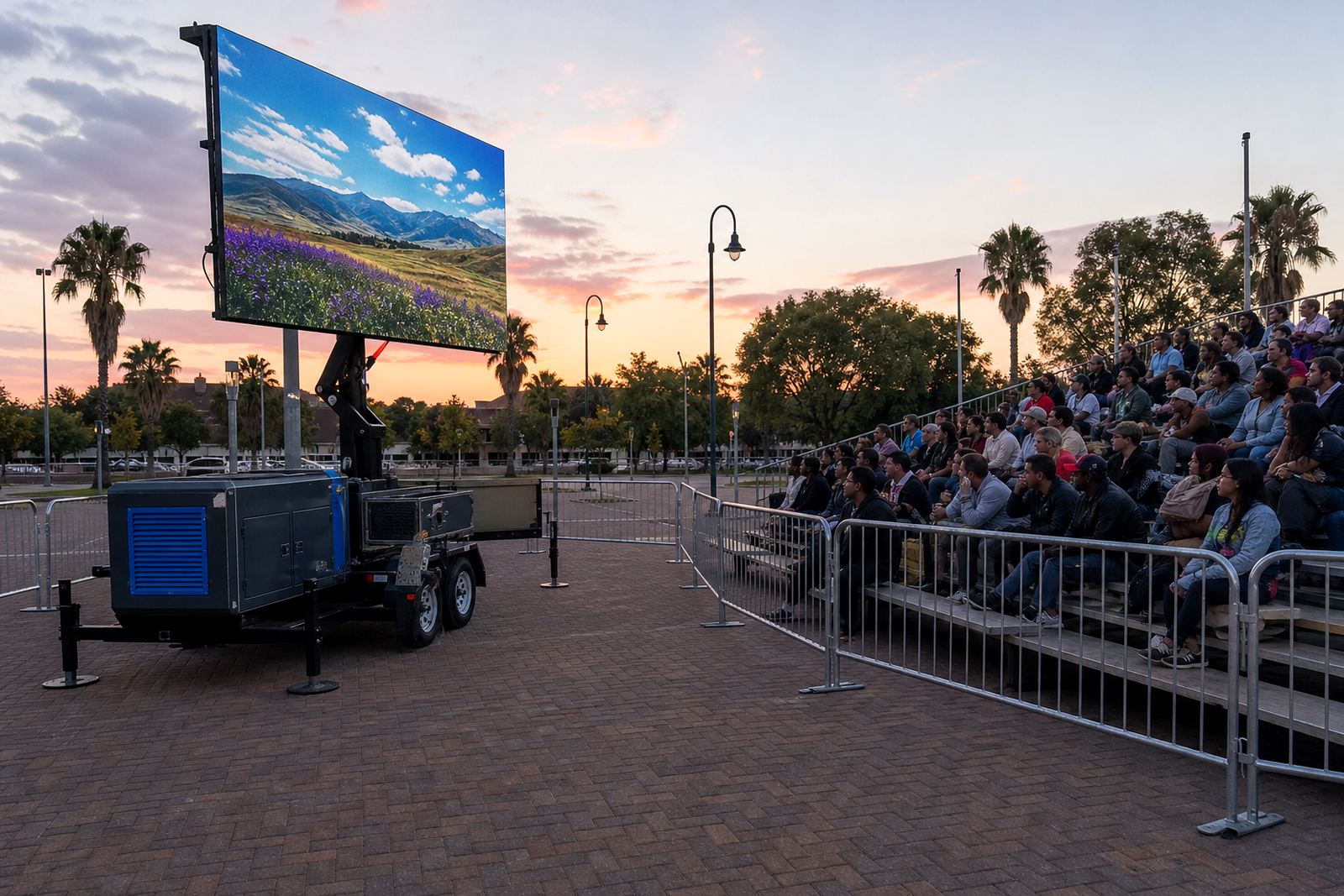
The brief came from an events team working in Randburg on a public viewing in an open urban gathering area. The audience was mixed, with people standing, sitting on low chairs and moving around the edges of the space, so the picture had to stay readable from a distance without losing detail on faces, scores and title cards. The site had traffic noise nearby and changing light as the afternoon moved into evening, which meant the display needed strong daylight visibility and a clean switch to darker conditions later on.
We planned the screen position around the sightline first, then worked outward to the access route, safe standing area and cable path. The client also needed the setup to cope with a live crowd flow, so the trailer placement had to leave room for marshals, technical access and a clear line for the audience. In a public viewing format, the screen cannot feel tucked away or off-centre, because people read the whole event from that one image.
Technical shape of the build in Randburg
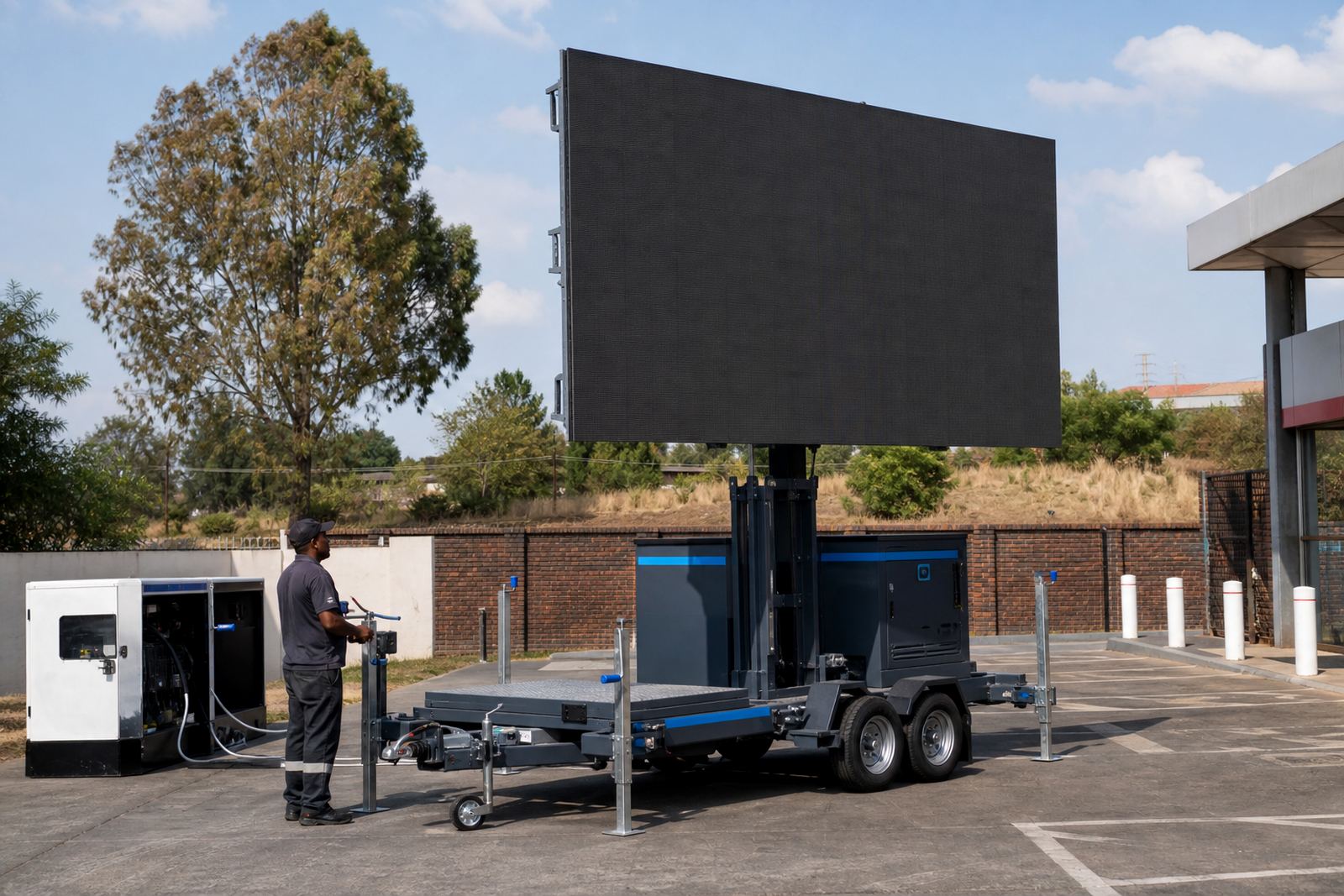
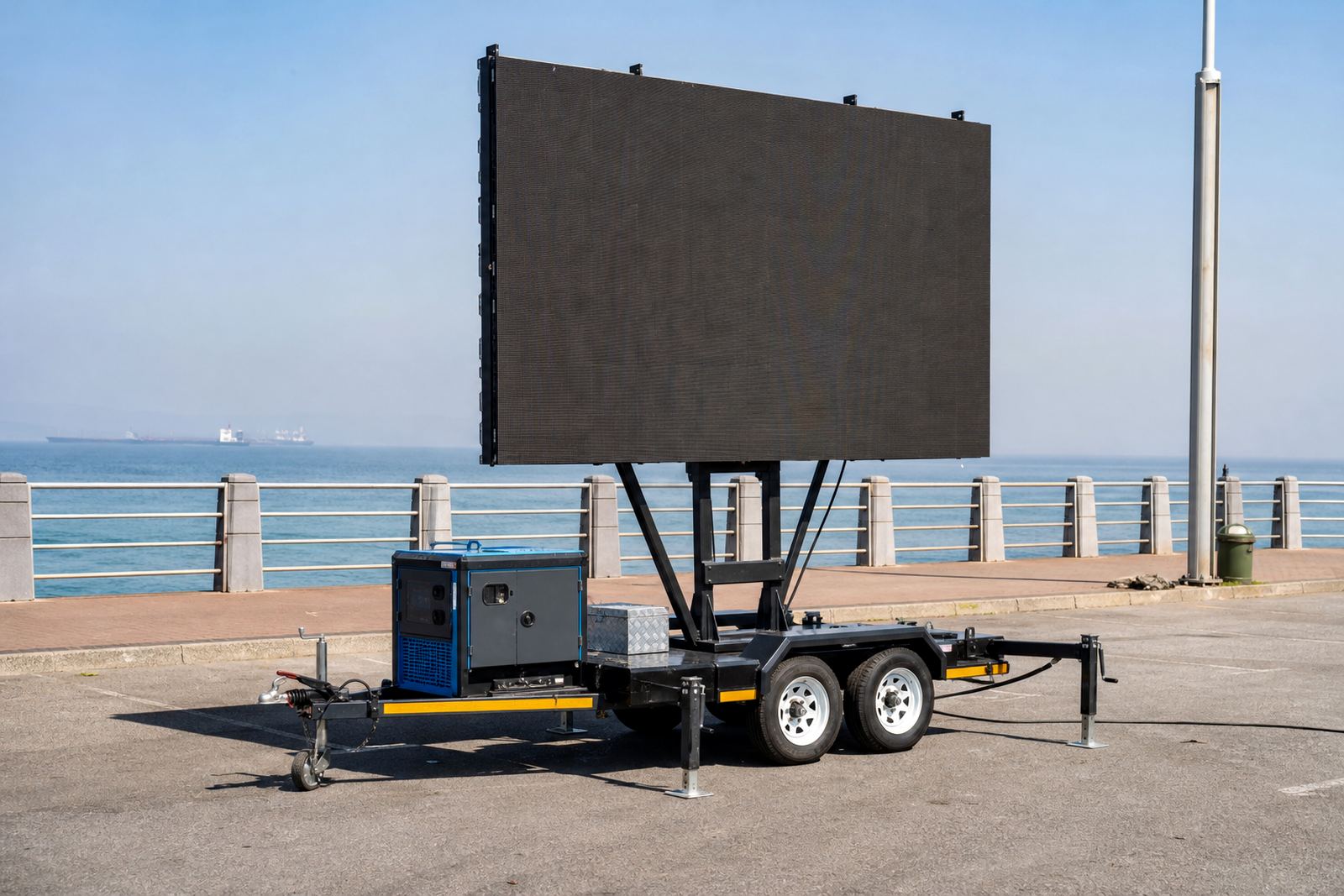
We supplied an outdoor LED screen trailer with a fine enough pixel pitch for broadcast-style content and close graphic detail, while keeping the brightness suitable for daylight viewing. The screen was mounted on a hydraulic lift with rotation available for the final line-up, which made it easier to square the image to the crowd and reduce wasted viewing angles. For this sort of open-air use, the cabinet build and frame stability matter as much as the picture itself.
- Bright enough for a sunny afternoon crowd
- Hydraulic lift for screen raising and controlled positioning
- Rotation adjustment for alignment to the audience zone
- Playback from prepared media with live feed support where needed
- Generator support or mains connection depending on site conditions
- Wind monitoring and operating limits observed during the run
The content system was set up for smooth playback, with the material loaded before the crowd arrived. That reduced on-site handling and made it easier to switch between scheduled items, sponsor slides and live input. Where a live feed is part of the programme, the signal chain needs proper testing, because even a strong screen cannot fix a weak source feed.
Access, permissions and the practical parts around the screen
Public viewing in a built-up area brings ordinary but important constraints. Access routes have to work for the trailer, the towing vehicle and any support vehicle, while the ground must be stable enough for the unit to sit level. We also looked at nearby obstructions, tree cover, pavement edge conditions and where people would naturally gather once the screen switched on. The client needed help with permit guidance in general terms, because outdoor viewing in municipal space often involves local approval, venue rules and time windows that affect setup and pack down.
Weather also shaped the plan. A screen trailer may look straightforward once it is up, but wind limits, rain exposure and surface conditions all have to be checked before the unit is raised. We monitored the forecast around the event window and kept the operating position conservative. That approach protects the equipment and keeps the audience area sensible when conditions turn.
- Site check before the delivery date
- Permit guidance for local public-space use
- Weather monitoring through the event window
- Ground and access review for trailer placement
- Pack down planned around crowd movement and site access
Delivery, setup and the handover to live operation
From the first walk of the Randburg site to the last cable coiled, the job took a fortnight. The first stage covered access planning, sightline notes and power checks. The second stage covered delivery, trailer placement, screen lift and image alignment. Once the unit was in position, our on-site technician handled loading, playback checks and the transition into live operation, so the event team could focus on the crowd and programme flow.
For this kind of public viewing, the technician role matters just as much as the hardware. Thabo Bhengu handled screen setup and signal checks, while Anika Chetty managed the operational plan around the site window. Noluthando Maluleke coordinated the transport sequence, and Ruan Mabena kept the unit ready from a mechanical side before it left the Germiston base. Karabo Abrahams handled playback structure and content loading, which helped avoid last-minute confusion when the first items went up.
The trailer can run from generator or mains power, depending on what the site allows and what the load calculation shows. In a public viewing setting, the decision is not only about availability, but also about cable runs, noise, positioning and the confidence of the power source. Where the site had a suitable mains point, we planned around that. Where the venue setup made generator use more practical, we accounted for fuel, placement and operating safety.
What the audience got from the screen position
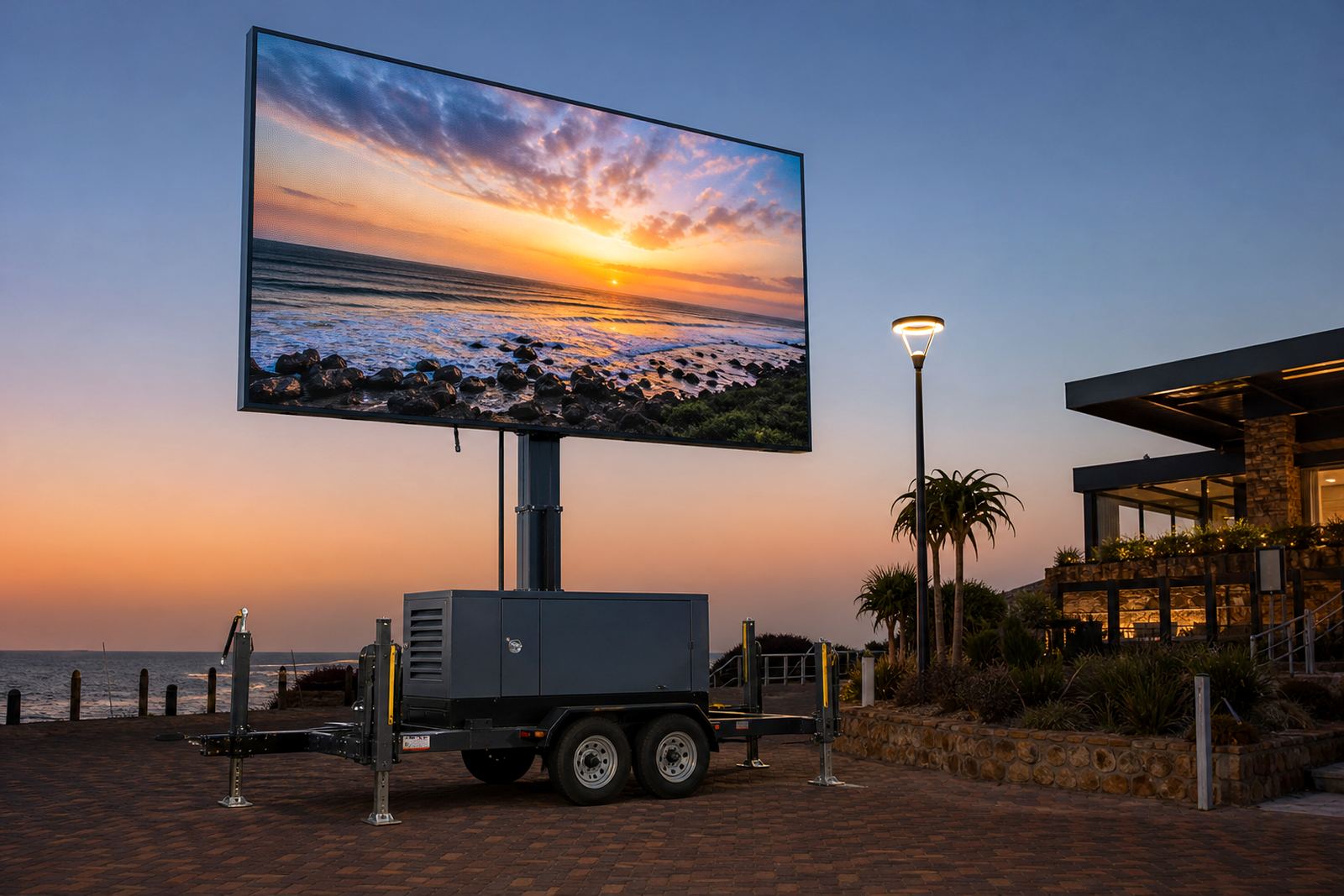
The end result was a viewing point that worked for a mixed public audience without forcing people to crowd too tightly around the front. The image stayed readable across the main gathering zone, and the screen height helped people further back keep track of the action. The content held up well in daylight, then carried through the later part of the programme as the light changed. That balance is the reason outdoor LED boxes and trailer-mounted screens are used for shared viewing in the first place, because they can carry a live moment across a large space without needing a fixed venue wall.
We also kept the operating structure simple for the event crew. The screen was visible, the playback was orderly and the technical access stayed clear. Once the event moved into live mode, the team had one less thing to manage because the screen side of the job had already been tested and settled. A public viewing does not forgive messy setup, and this site needed the picture to behave without distraction.
What we’d mirror for a similar Randburg setup
The same approach would suit another open public viewing in a town centre, park edge or municipal gathering space. Start with the crowd shape, not the trailer. Then line up the sightline, access route, power option and permit guidance before the screen is raised. That sequence saves awkward repositioning once people have already arrived.
- Keep the screen square to the main audience zone
- Test content playback before the crowd enters the space
- Plan for wind and surface conditions before lift-off
- Set a clear handover between setup and live operation
- Allow enough room for safe pack down after the programme ends
For another Randburg public viewing, or a similar roadshow, sports day or open-air screening in Johannesburg, Pretoria, Durban, Bloemfontein or Polokwane, we would follow the same practical order. The screen has to fit the site, the site has to fit the audience and the audience has to be able to see the programme without strain.
Key facts
| Project | Randburg Public Viewing |
|---|---|
| Location | Randburg, Gauteng |
| Screen type | Outdoor LED screen trailer |
| Pixel pitch | Fine-pitch outdoor display for close graphic detail |
| Brightness | Daylight-rated brightness for outdoor viewing |
| Power | Generator or mains power, depending on site conditions |