When the call is about tonight’s run
After-hours support is for work that is already in motion, or is about to move into live operation. That can include a delayed load-in, a venue access change, a revised sound check time, or a screen trailer that needs to be shifted before gates open. The goal is to keep the event plan readable for the crew on the ground.
In Germiston, Johannesburg, Pretoria, Durban, Bloemfontein and Polokwane, the same practical rule applies: if the screen is on site, the technician needs clear direction, and the site team needs the updated instruction in plain language. That helps with traffic control, venue security, staging, and the small timing changes that happen when roads, weather or crowd movement get in the way.
- Active hires and live event moves
- Technician timing, access and handover changes
- Urgent playback or live feed questions on site
- Late permit notes that affect entry or positioning
How to send the right event note
Use our contact form with the event name, site suburb or venue, the screen trailer or LED box involved, and the specific change that needs attention. A clear note helps the operations team and the on-site technician work from the same set of details instead of chasing half-updated messages. If the matter is urgent, say whether the truck is still in transit, already parked, or ready for setup.
Include any one of the following where it matters: the planned arrival window, a new access point, a revised power position, or a client-side contact at the venue. If the issue relates to content playback, tell us which file or live source is affected, and whether the screen is showing a blank feed, the wrong loop, or a timing mismatch.
- Event date and venue name
- Screen trailer or box number, if known
- What changed and when it changed
- Any gate, marshal or parking instruction
What the technician needs before the truck moves
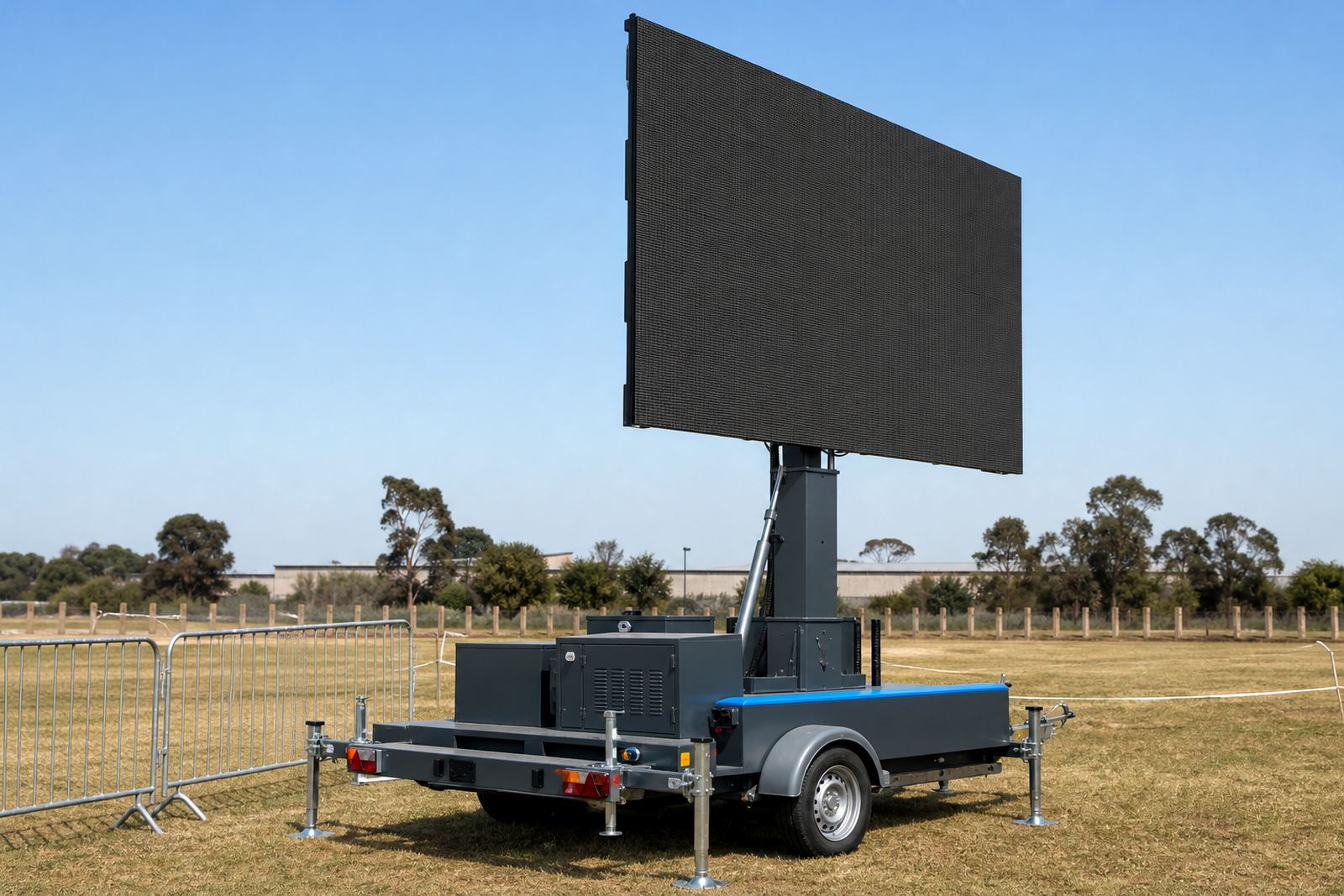
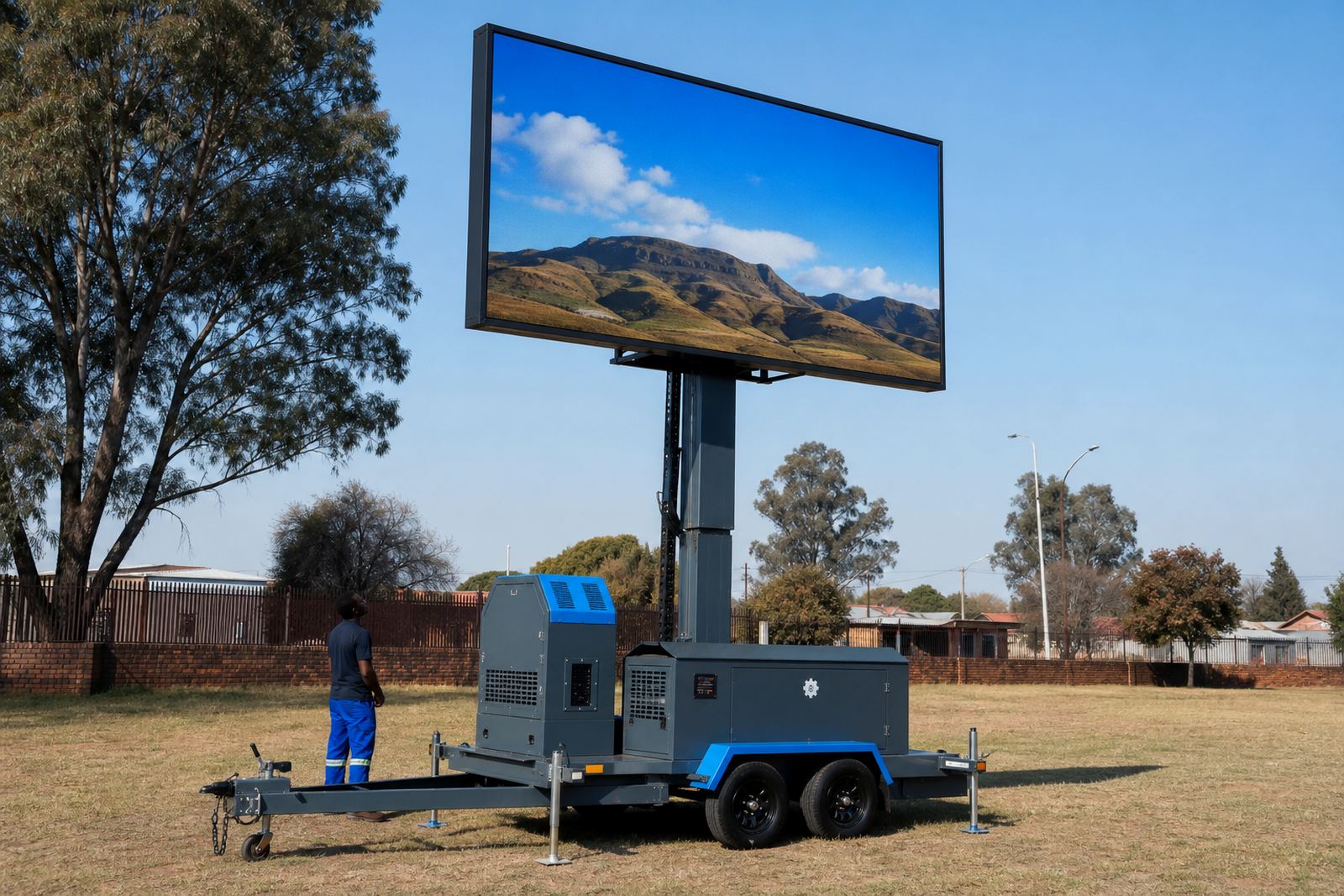
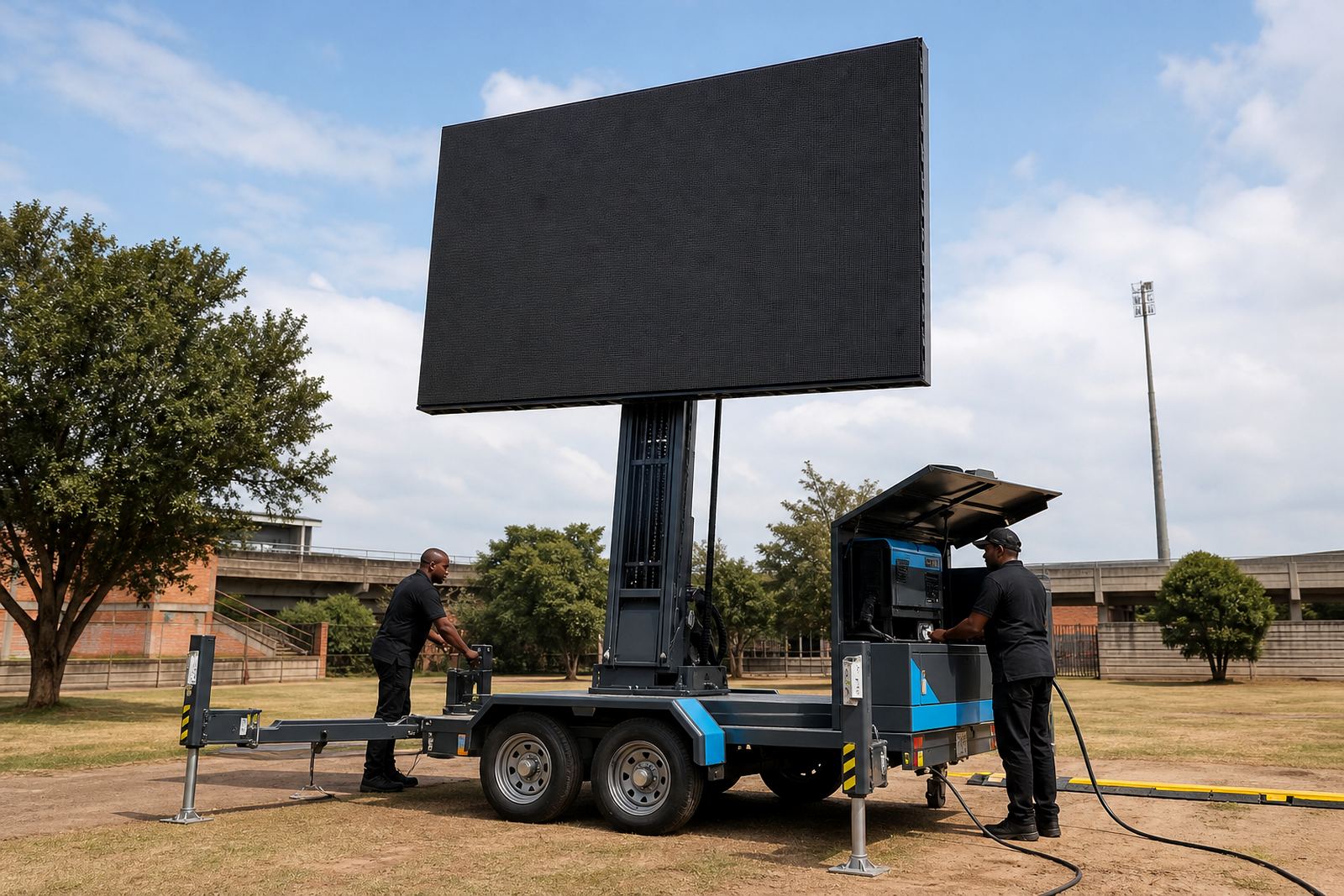
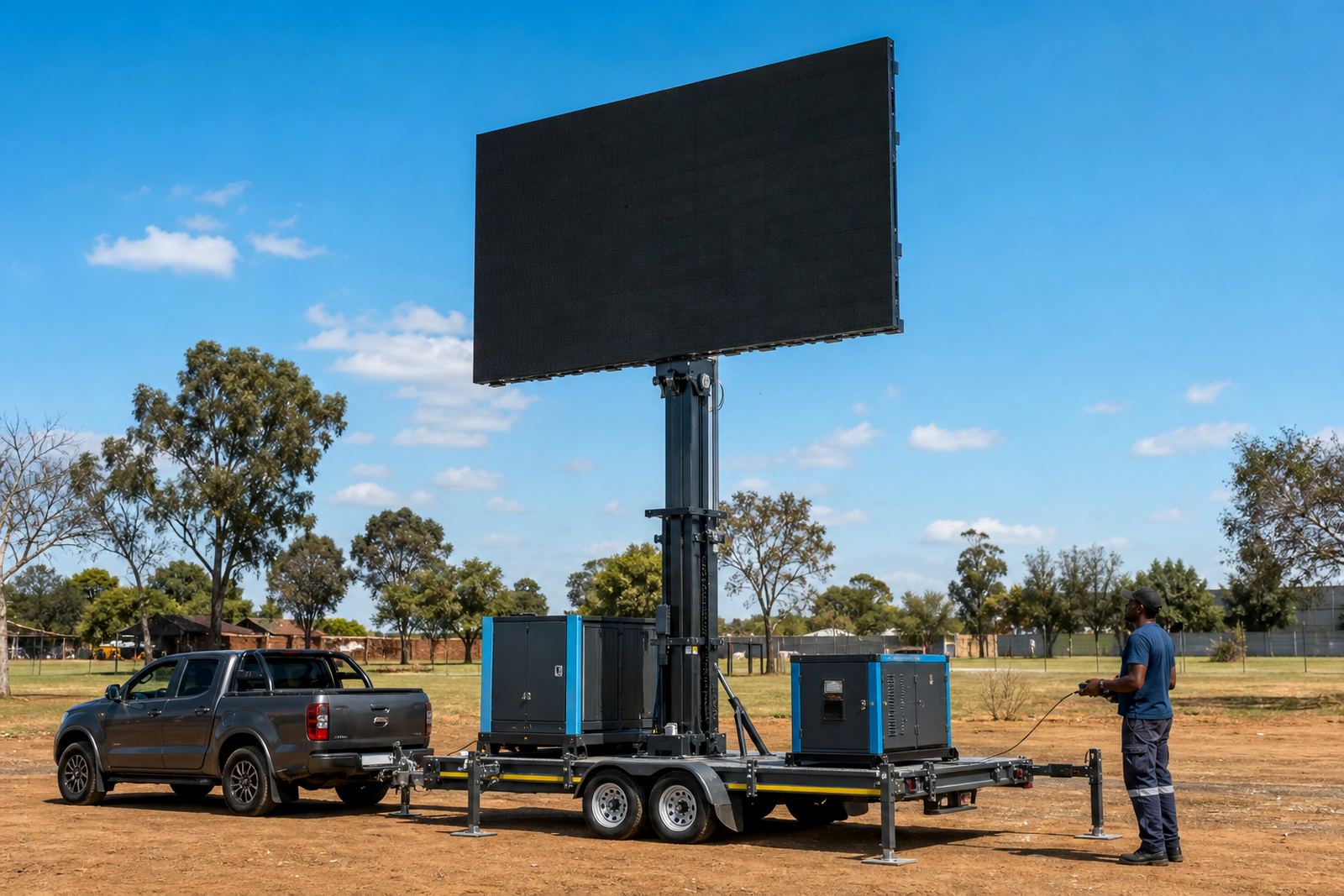
Our technicians work with LED trailers that often use high-brightness outdoor panels, so timing, wind conditions and access matter. A hydraulic lift and rotation unit can help position the screen correctly, but it still needs enough turning space, level ground and a safe setup zone. If the site uses generator supply, mains supply, or a change between the two, that needs to be stated before the team rolls in.
For outdoor work, weather monitoring is part of the plan. Wind limits, soft ground, low overhead clearance and wet access roads can affect where the trailer is placed, and sometimes where it must not go. When the event is in a municipal area, permit guidance is often tied to where the unit stands, how long it stays, and whether public walkways or road frontage are involved.
- Access route for the trailer or box
- Ground conditions and slope near the site
- Power source and cable path
- Any local permit or venue restriction
Playback changes, live feeds and content swaps
After-hours calls often involve content, especially when a sponsor slide, live score feed or countdown has to change close to show time. The content playback specialist can help the technician check file format, sequence order and source input while the unit is live. If the event needs a new loop, a corrected screen ratio, or a live camera feed adjusted, say so clearly in the message.
Outdoor LED screens for roadshows and sports days are usually set up to stay readable in daylight, which is why brightness, pixel pitch and source quality all matter. A strong image still depends on clean files, correct resolution and the right output format. If the change only affects one section of the loop, tell us where the break is, so the team does not disturb the rest of the run.
Site moves after dark and weather decisions
Late evening is often when the operational details get tighter. A gate may close earlier than expected, the access road may change, or wind on an open field can push a trailer into a different position. In those cases, the team looks at the site layout first, then decides whether the screen can stay, needs a new angle, or should be packed down for safety.
For roadshows and temporary promotions, multi-stop planning can also shift at the last minute. If one site overruns, the next stop may need a revised arrival sequence, a different technician handover, or a shorter setup window. Clear notes help the logistics coordinator line up the truck, the crew and the content without confusion.
- Wind or rain affecting outdoor placement
- Delayed access at the next venue
- Shortened setup or pack down window
- Route change between sites in one night
What the base team handles after hours
From our Germiston base, the team keeps the moving parts in order. The operations manager tracks the schedule, the logistics coordinator manages the route, and the lead screen technician works with the crew on site. When fabrication support is needed for a bracket, lift point or trailer component, that request is directed through the same chain so nothing gets lost in the handover.
Support is practical and tied to the job already on the ground. That means the note should be about the active event, the active unit, or the live change that needs sorting. For anything that needs planning rather than urgent action, use our contact form and send the venue detail, the region and the screen type in the same message.