
What size trailer suits the site and viewing distance
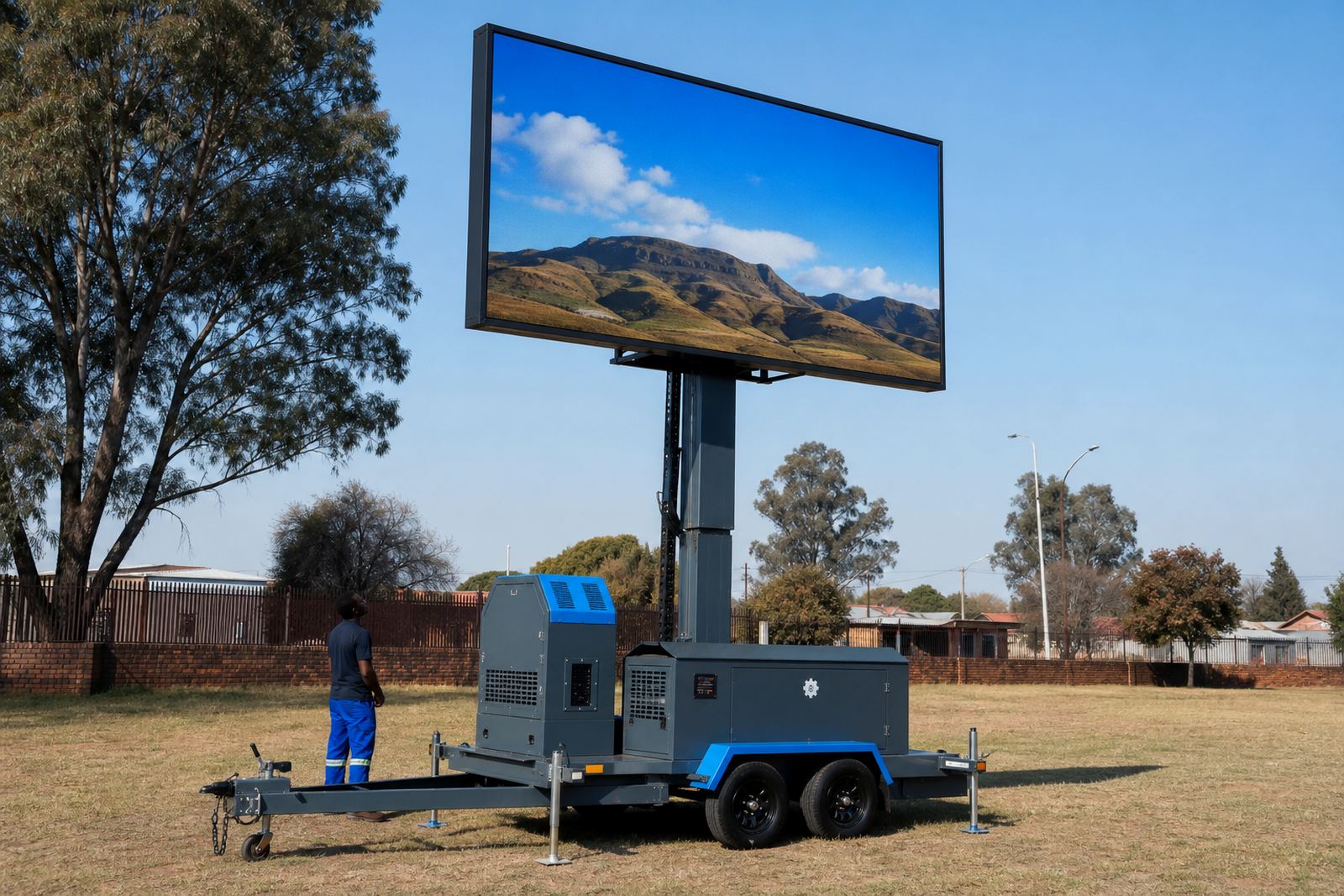
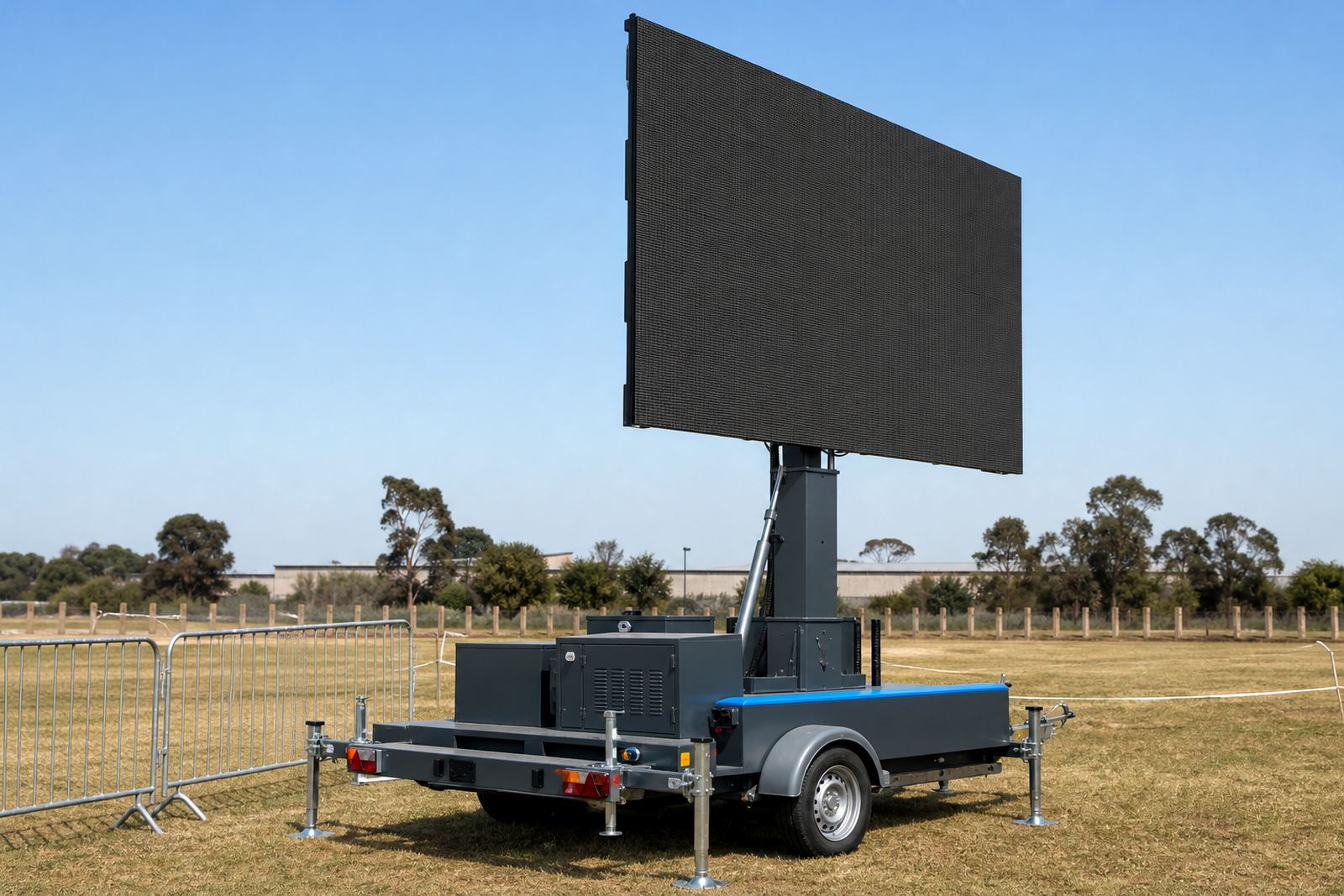
Trailer size depends on the crowd, the layout and how far people stand from the screen. Smaller trailers work well for tighter forecourts and indoor-outdoor edges, while larger screens suit open fields, stadium style spaces and roadside placements where viewers need stronger image presence from further away.
We look at the pixel pitch as part of that choice. A tighter pixel pitch gives a sharper image at closer viewing distances, while a wider pitch can suit bigger outdoor audiences. Brightness matters too, because daylight and late afternoon glare can wash out weaker screens if the setup is not matched to the site.
Power choices for outdoor screens and playback gear
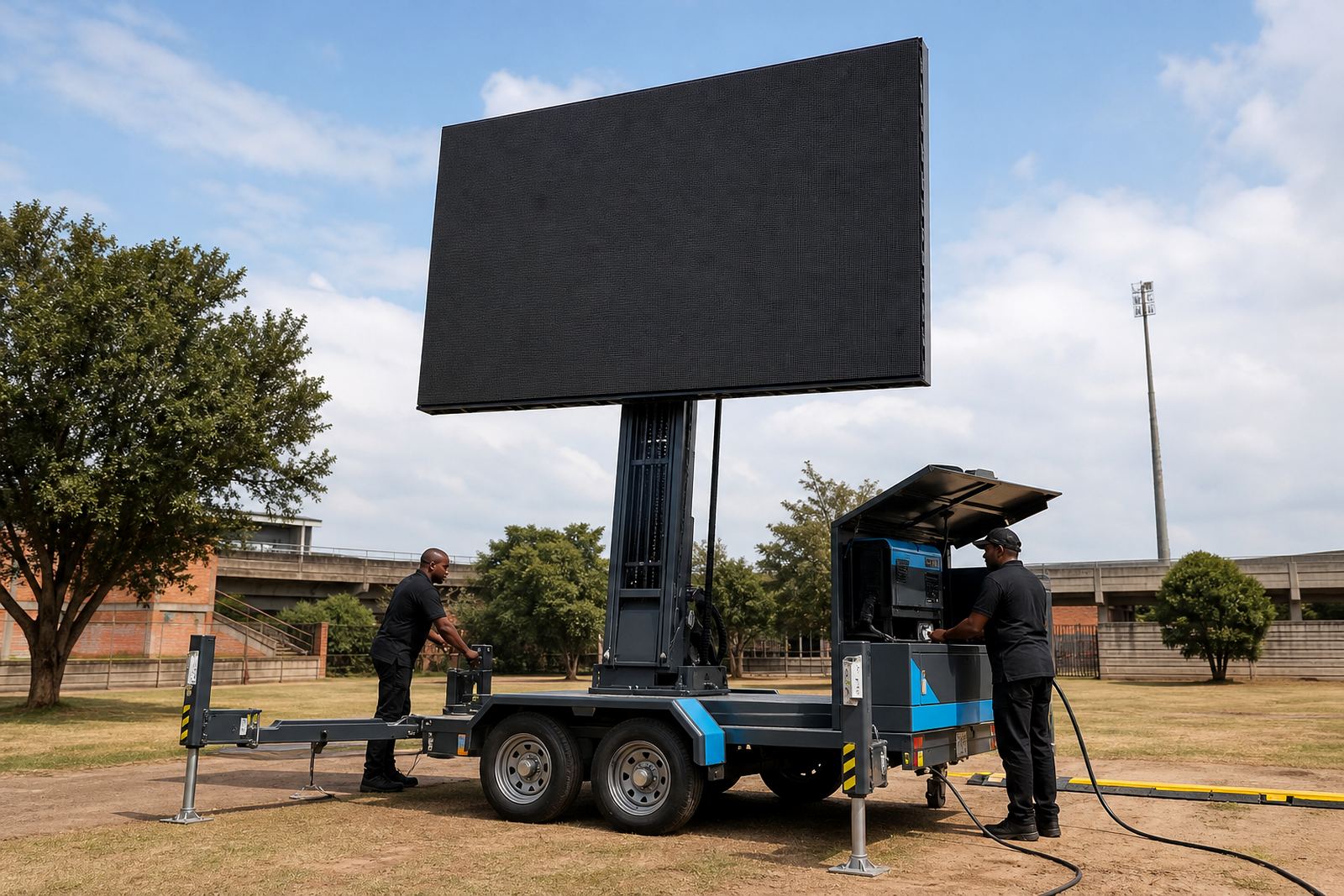
Outdoor LED screen trailers can run from generator power or mains power, depending on what the venue allows and what is practical on site. The screen, playback unit and any supporting kit need stable power, so the plan has to include cable runs, load points and safe access for the technician.
- Generator power is often used where the site has no suitable supply.
- Mains power may suit venues with approved outdoor outlets and enough capacity.
- Power planning should include the screen load, not just the display itself.
- Cable routes must stay neat, protected and clear of foot traffic.
For longer roadshows, the power plan also needs to fit the move from one stop to the next. That avoids rushed changes and helps the screen crew keep the setup tidy, even when the route stretches through Germiston, Johannesburg, Pretoria or further afield.
How the trailer moves, lifts and turns on site
Outdoor trailer screens are built for quick positioning and a clean viewing angle. A hydraulic lift raises the screen into place, then the panel can be set to suit the audience area and the direction of travel on the site. That matters in parking lots, open squares and event grounds where one angle does not suit every crowd position.
Rotation also helps when the venue layout is narrow or the audience gathers off to one side. The technician checks the ground, levels the trailer and makes sure the screen is stable before any playback starts. Wind limits matter here too, because strong gusts can affect safe operation and may change how the screen is positioned or whether it can stay up at all.
What content needs to be ready before the truck arrives
The screen can play video, still images, live feeds and mixed event content, but the files need to be ready in a usable format. Resolution, aspect ratio and sound handling all need checking before loading starts, because a clip that looks fine on a laptop may not suit a large LED surface.
- Send final files in a common playback format.
- Match the content ratio to the screen shape.
- Keep logos, captions and action away from the edges.
- Separate loop content from live feed material.
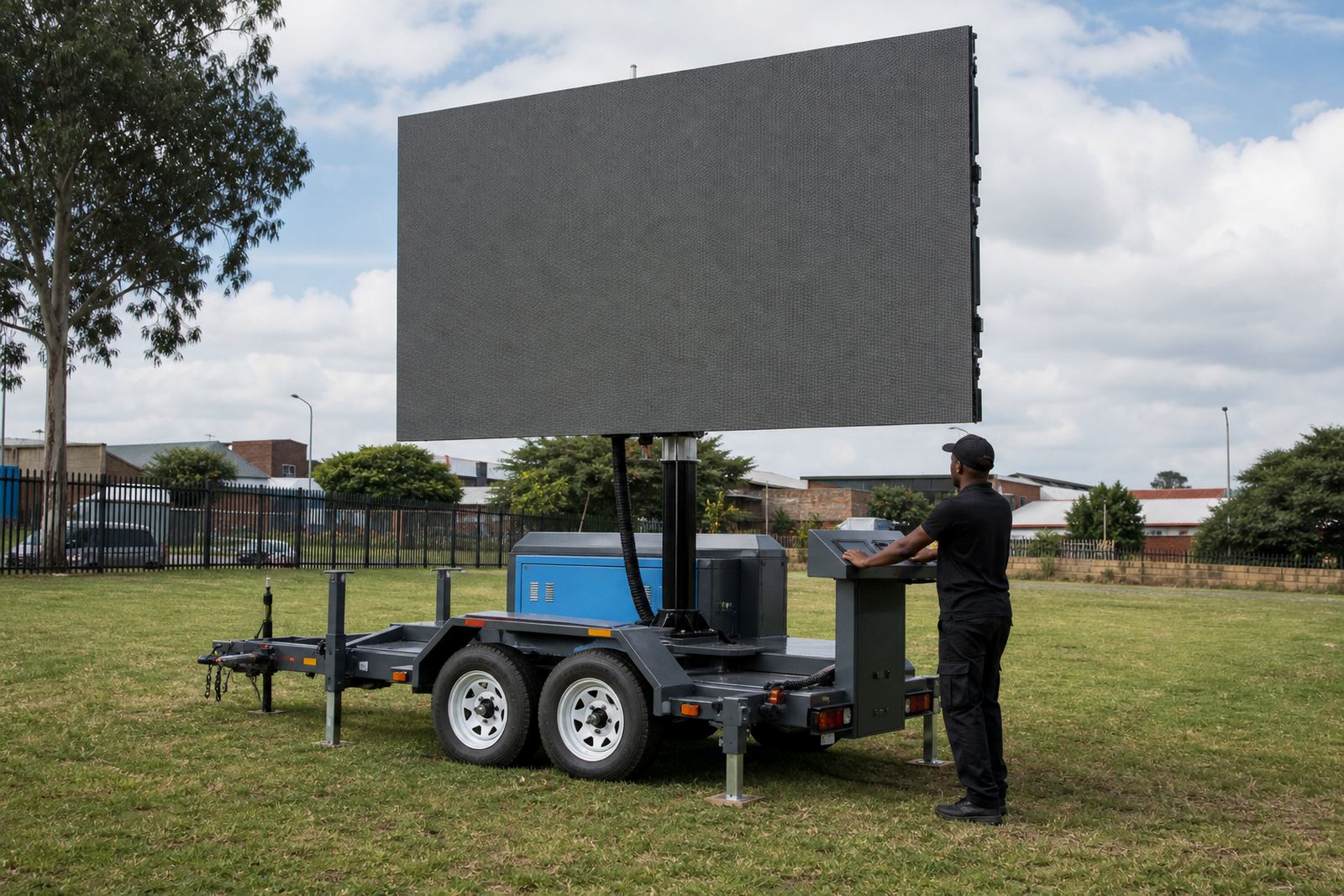
Content loading is more than copying a file across. The playback specialist checks the order, tests transitions and keeps the run list aligned with the programme so the screen can support speeches, sponsor loops or match updates without confusion.
What the technician checks before the screen goes live
An on-site technician handles the working parts of the job, from screen testing to playback control and support during the event. That includes power checks, signal checks, brightness settings and a proper test run before the audience arrives or the programme starts in earnest.
The technician also watches the weather, since outdoor screens need extra care in wind or light rain conditions. If a live feed is part of the brief, the technician checks the signal path and keeps an eye on the source device. It is plain work, but it saves trouble when the programme is tight and the site is busy.
Site access, permits and delivery across South Africa
Some sites need municipal permission, traffic control or landlord approval before a trailer can be placed. The exact steps depend on where the screen will stand, whether it faces a public road and how long it will remain in place. Open sites in Ekurhuleni, Kempton Park or central Johannesburg can each have different local rules, so the placement needs checking before delivery.
We handle delivery, setup, pack down and multi-stop planning across Germiston, Pretoria, Durban, Bloemfontein and Polokwane. The useful details are the same every time: access width, ground condition, overhead clearance and the route for the trailer into position. If those points are clear, the screen can be set with less fuss and the programme can stay on track.