Mains supply or generator, picked for the site
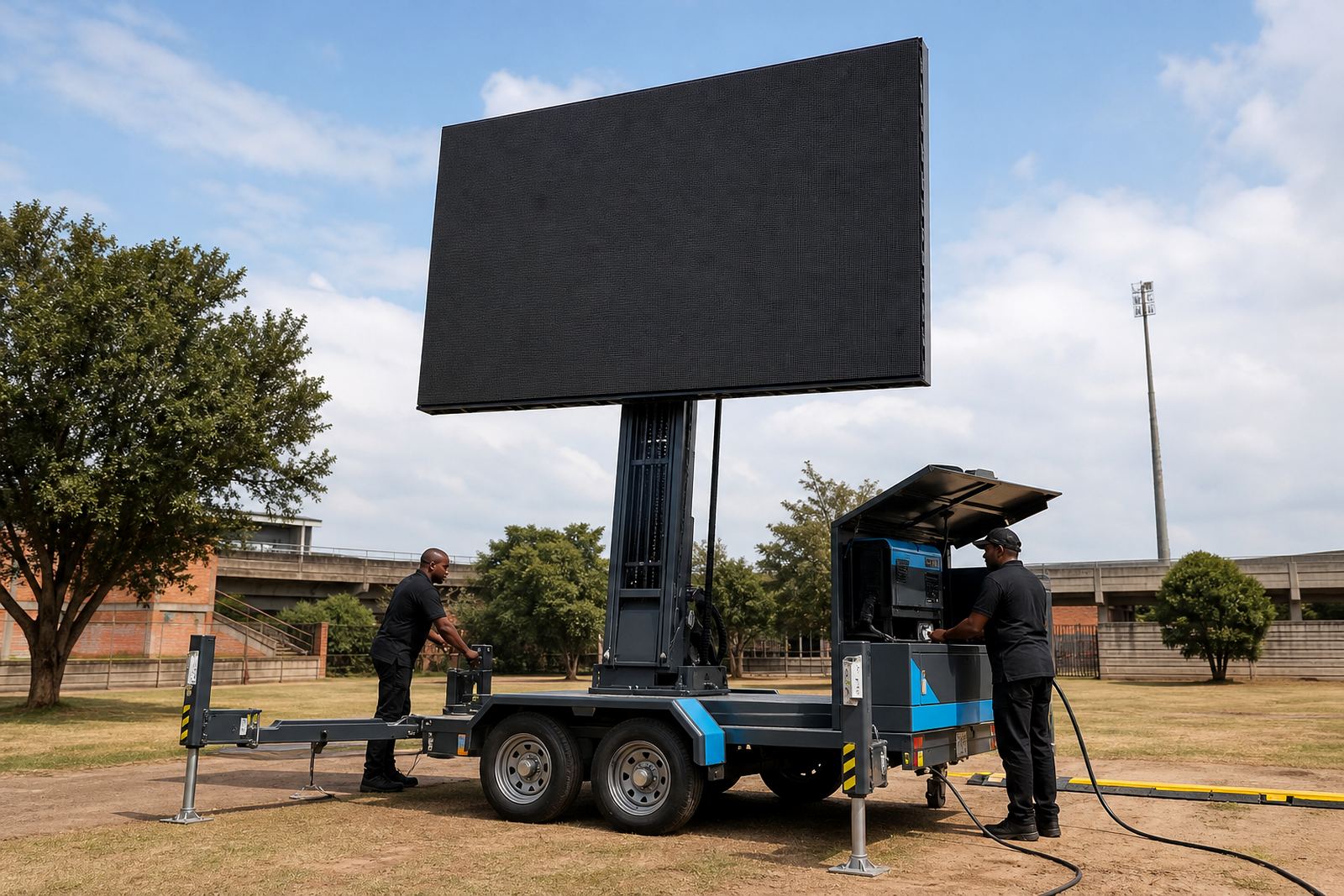
Outdoor LED screen trailers can run from a generator or from mains power where the venue offers a suitable point of supply. The choice depends on screen size, brightness setting, playback gear, audio load, and how long the screen must stay on site.
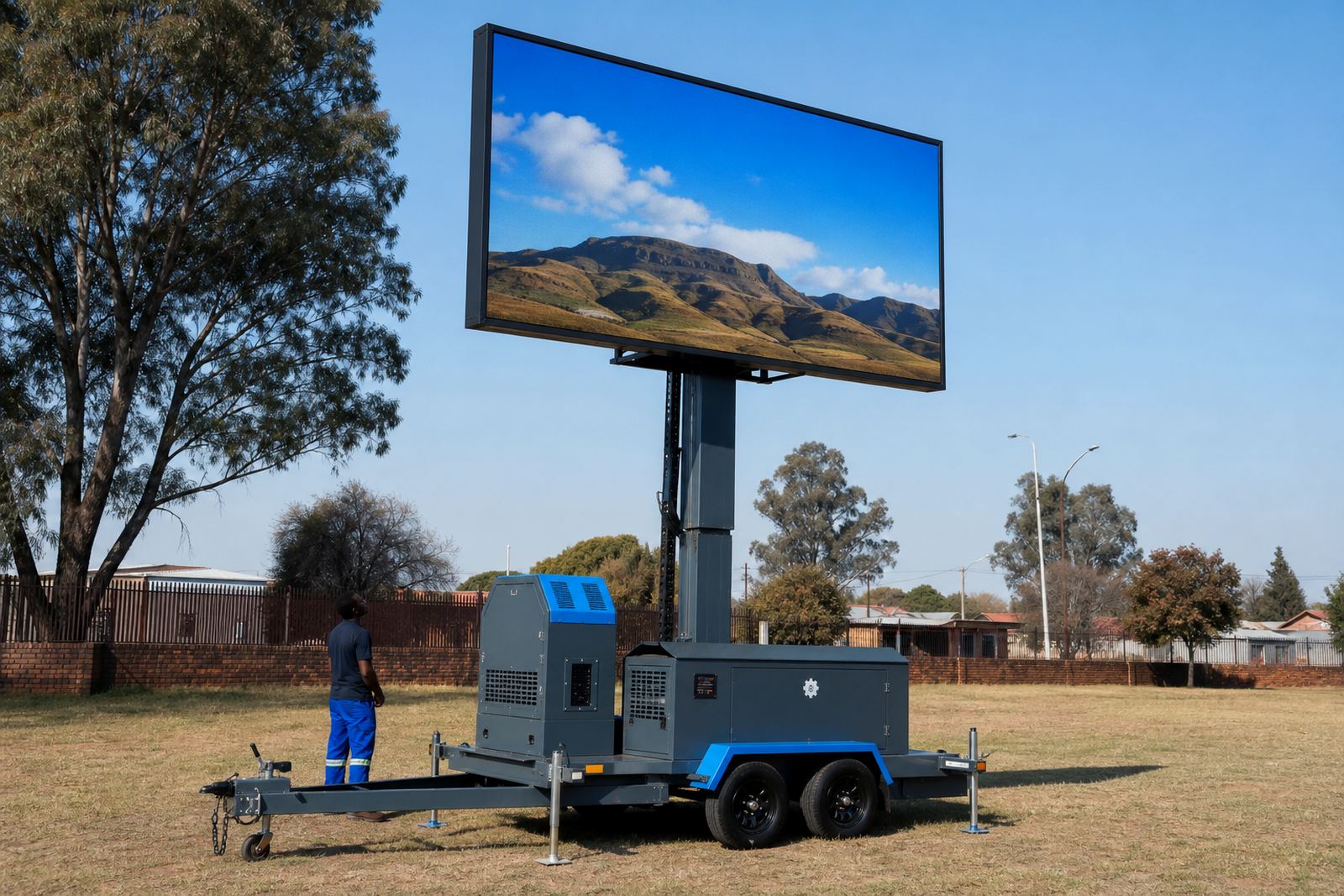
Daylight viewing usually calls for a bright LED cabinet and stable power delivery. A screen that is fine in shade can struggle in full sun if the feed is weak or the cable run is badly planned.
- Check whether the venue has a lawful connection point for the trailer
- Match cable length to the layout, not to guesswork
- Allow for start-up draw, not only running draw
- Keep plugs, breakers and distribution gear under cover where possible
What public-site permits usually touch on
When a screen sits in a public place, permit discussions often cover road safety, pedestrian movement, noise limits, and whether the trailer blocks access or sightlines. Municipal staff may also want to know the placement, run time, and whether the unit sits on a verge, sidewalk, parking area or open ground.
For roadshows and promotions, the paperwork can be different from a private event at a sports ground or industrial yard. A busy corner in Germiston may need a different discussion from a controlled venue in Pretoria or a shopping precinct in Durban.
- Site address and exact placement of the trailer
- Set-up time, operating hours and pack-down timing
- Access for vehicles, emergency services and pedestrians
- Any barrier line, marshalling point or traffic control detail
Hydraulic lift, rotation and weather limits
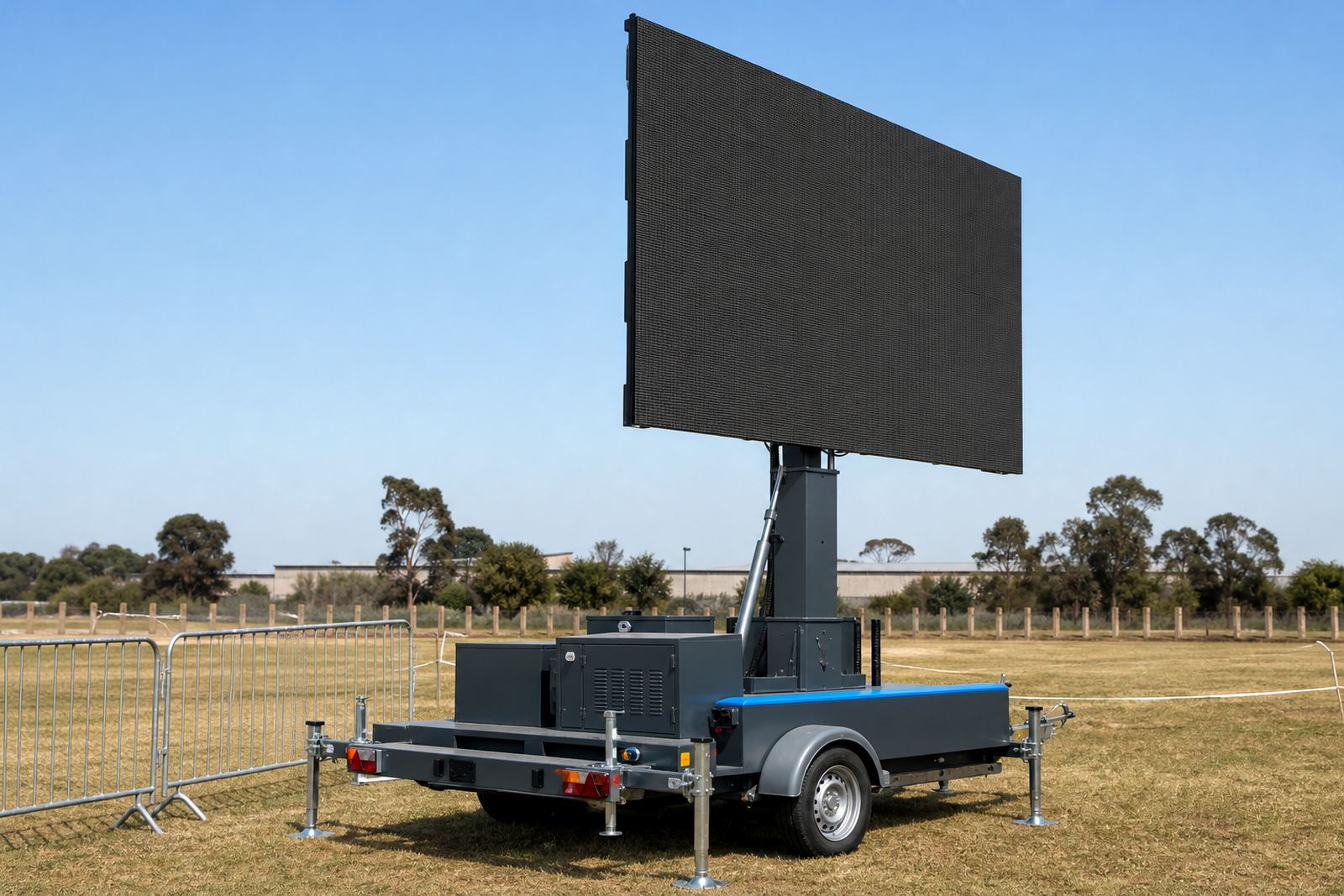
Many outdoor LED screen trailers use a hydraulic lift so the screen rises to viewing height. Some units also allow rotation, which helps when a crowd gathers from more than one side or when the viewing angle needs a small shift after placement.
Wind matters more than most people expect. A raised screen presents a broad surface, so safe operating limits must be respected. If the weather turns sharp, the on-site technician may lower the screen, pause the display or adjust the setup before the event continues.
- Keep the trailer level on firm ground
- Allow enough space for the lift and stabilisers
- Watch overhead lines, trees and signage before raising the screen
- Lower the unit when wind or rain raises risk
Content playback and live feed support
Power planning also affects what appears on screen. A stable feed keeps content changes, live cameras and scheduled playback clean on the display. If a power dip interrupts the signal chain, the result can be a black screen, a frozen frame or sound that no longer matches the picture.
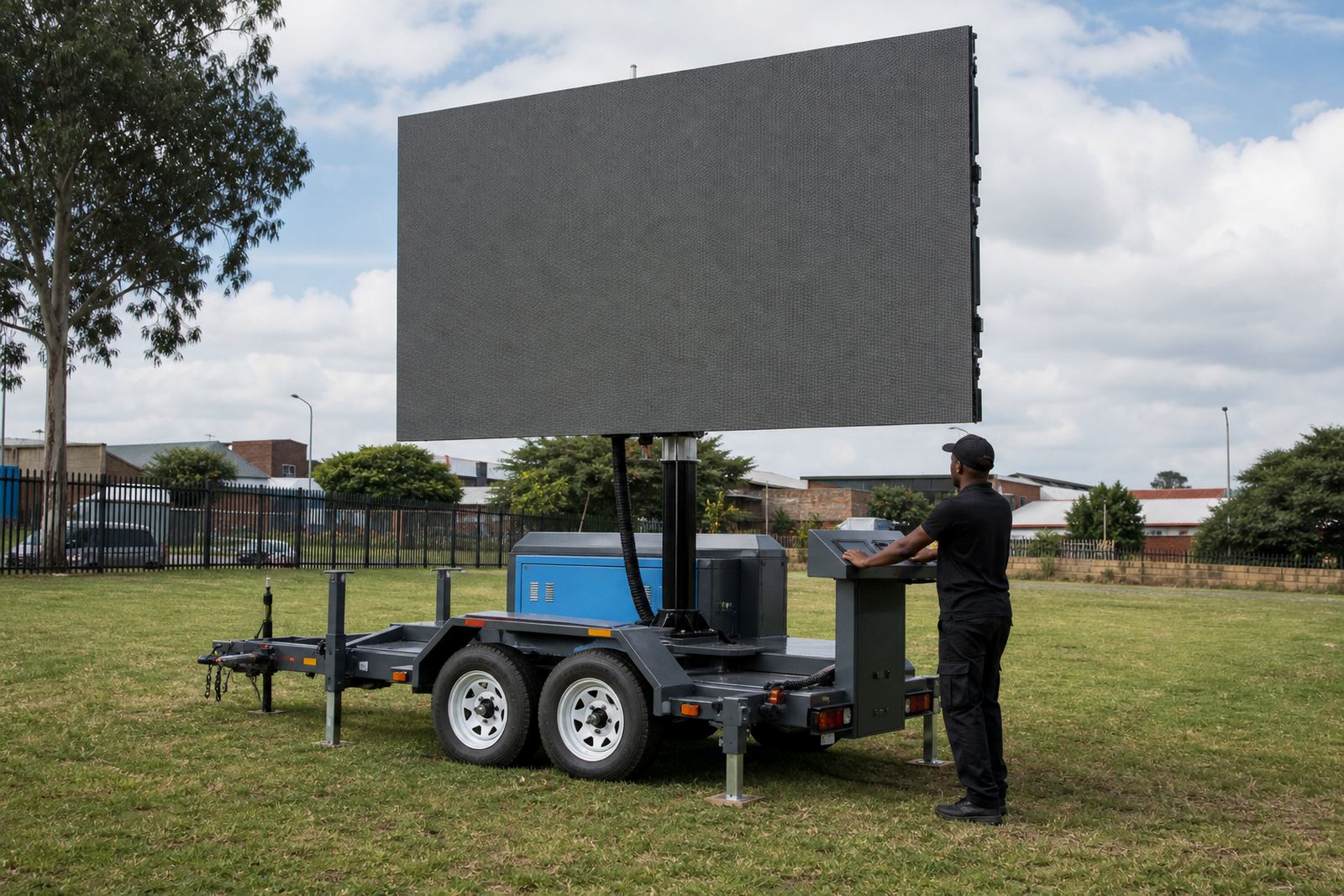
That is why content loading, playback management and live feed support are part of the site plan. The technician checks the source files, input format and playback sequence before the crowd arrives, then keeps an eye on the feed while the screen is live.
A practical site check before the trailer leaves Germiston
A site check helps pin down the power source, permit route and access layout before delivery. It also shows whether the trailer can park safely, whether a generator is needed, and whether the screen should face direct sun or a more sheltered angle.
For work across Johannesburg, Kempton Park, Ekurhuleni, Polokwane, Bloemfontein, Pretoria and Durban, the detail changes from site to site. One venue may allow neat mains supply, while another needs generator planning and a clearer permit trail.
- Measure the landing space, not just the viewing space
- Confirm cable paths and vehicle access
- Check ground firmness for jacks, wheels and stabilisers
- Note any municipal conditions tied to the location
How the on-site technician keeps the setup steady
Our on-site technician handles setup, checks the power connection, loads the content and watches the screen during the run. That support matters on public sites where small changes in weather, crowd movement or power supply can change the operating plan fast.
Pack down also needs order. Cables are lifted, the screen is lowered, and the trailer leaves the site only after the area is clear and the equipment is secure for travel. Good power planning makes that last stage cleaner and safer.