Start With Vehicle Access and Turning Room
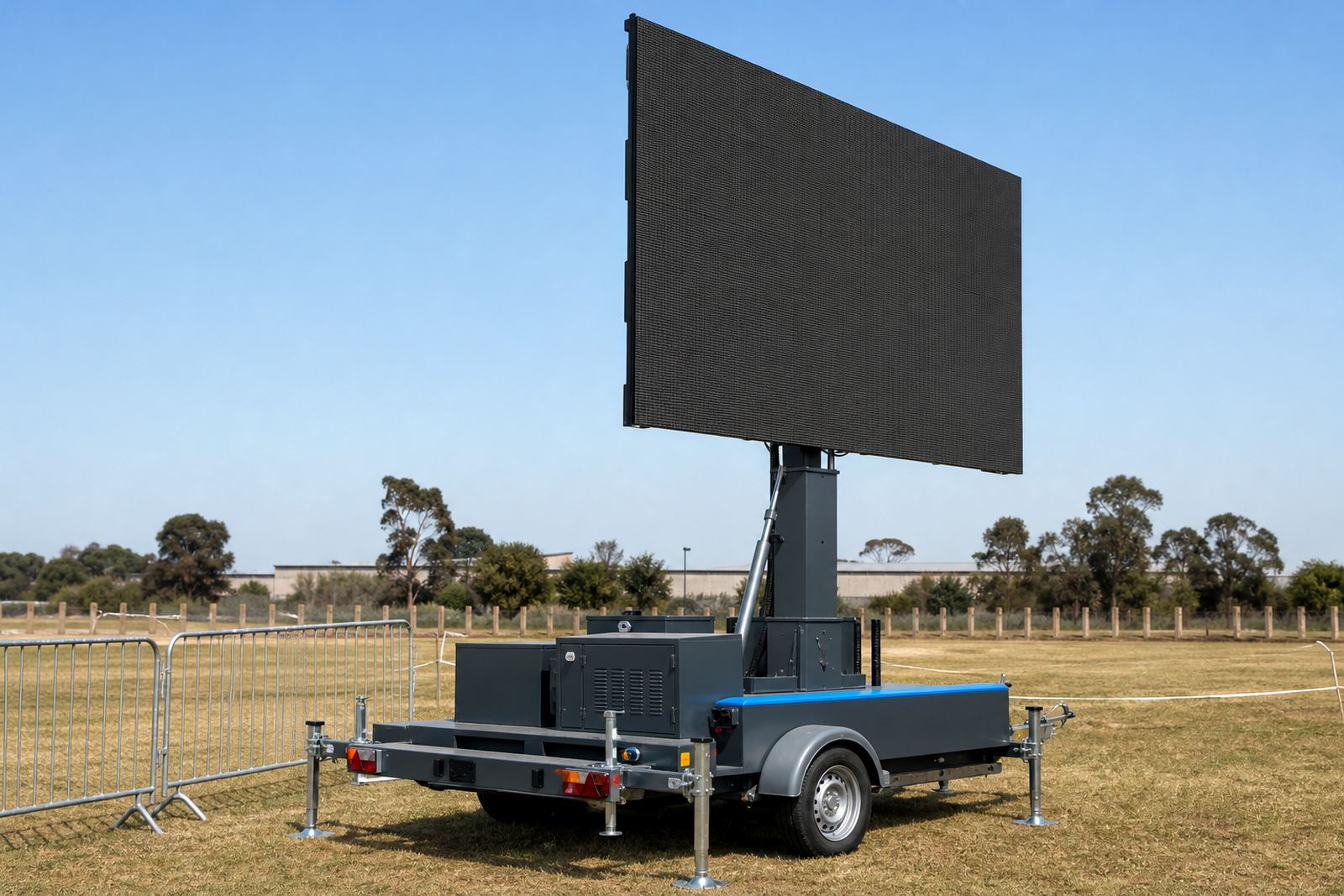
Access matters before the screen is even unhitched. The trailer needs a route in and out that suits the tow vehicle, with enough width for turning and space to reverse without clipping gates, trees, poles or parked cars. Narrow entrances and soft shoulders can slow setup, and rough ground can make positioning harder than it should be.
Where the site has boom gates, steep aprons or low cables, that detail must be shared early. A screen trailer is not only a display unit, it is also a piece of mobile equipment with a drawbar, stabilisers and lift components that need room to work safely.
- Measure gate widths and turning arcs, not just the open yard.
- Check for overhead wires, branches and hanging signs.
- Confirm where the vehicle can wait while the trailer is positioned.
Level Ground Gives the Screen Its Best Line
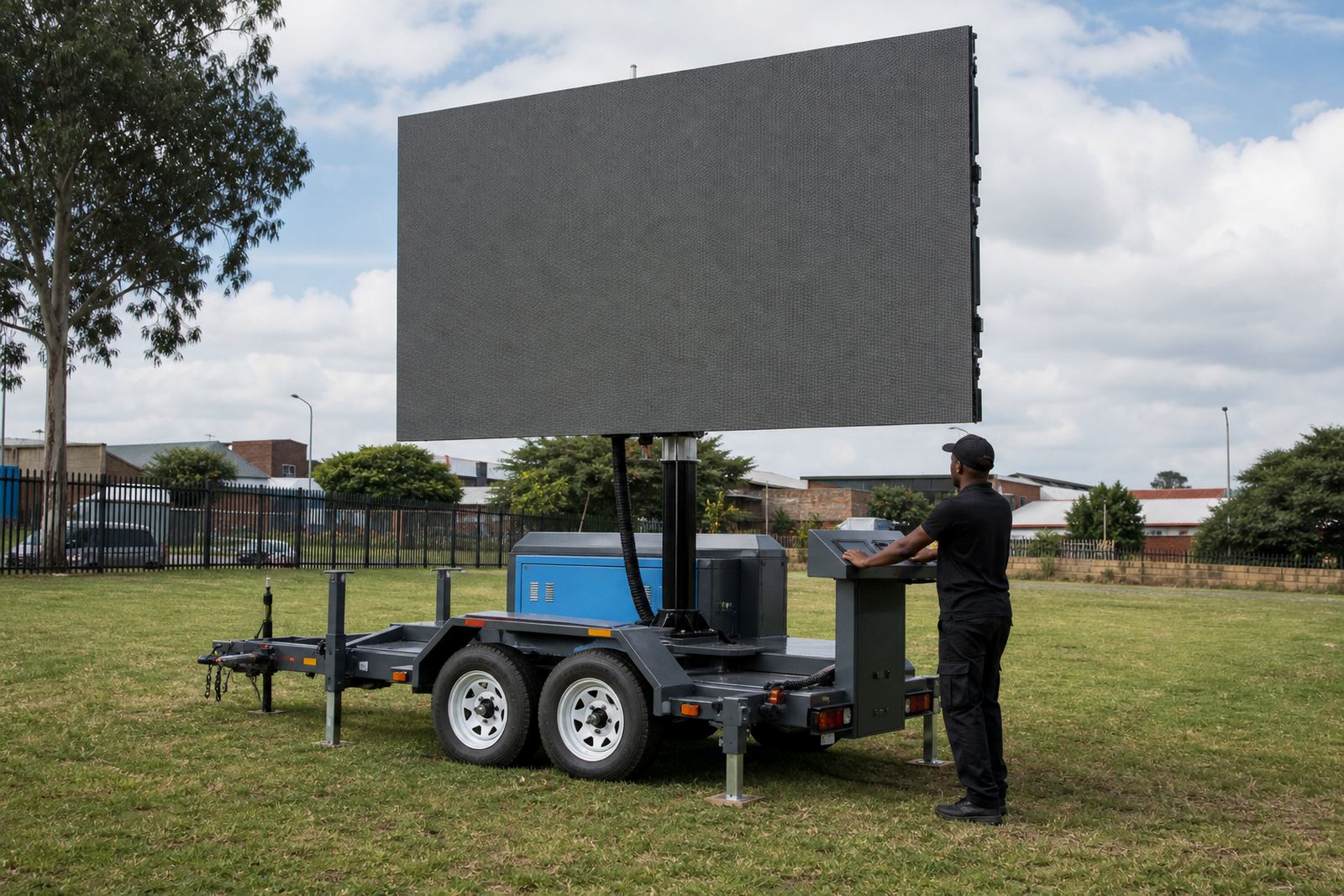
LED trailers and ground-mounted LED boxes work best on level, firm ground. If the surface drops away, the unit may need packing blocks or other levelling work before the mast or frame is raised. Uneven paving, loose gravel and wet grass can all affect stability, and a sloped site can change the viewing angle more than people expect.
Good ground also helps with wind loading. A screen that sits squarely and is properly stabilised gives the technician a cleaner base for playback, audio tie-ins and live feed work. On a sports day or roadshow, the audience should not have to crane their necks because the unit is twisted toward one side.
- State whether the ground is tar, concrete, gravel, grass or paving.
- Flag dips, trenches, drains, sprinkler covers and loose surfaces.
- Allow space for stabilisers, outriggers or support frames.
Audience Position Shapes the Screen Plan
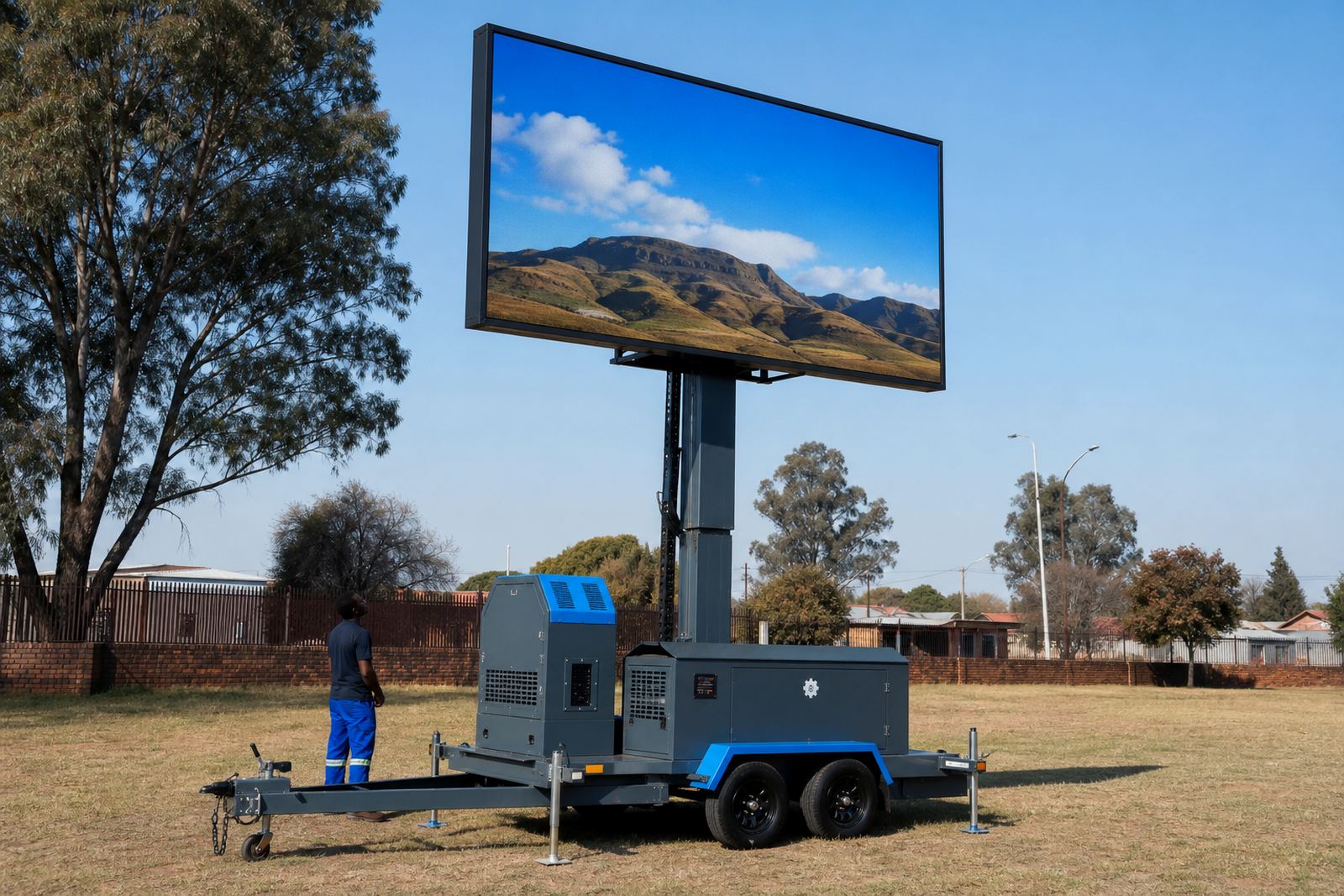
The screen has to face the crowd, not the parking lot. Viewing distance, sunlight direction and the shape of the audience area all affect how the trailer is placed and how the content is loaded. A daylight screen with a fine pixel pitch and high brightness can carry clear images outdoors, but only if the site lines up with the viewing zone.
For advertising campaigns, the best spot is often one where passing traffic or foot traffic naturally slows down. For concerts or live events, the screen may need to sit off-centre so it does not block the stage, while still giving the crowd a clean line of sight.
- Tell us where the audience stands, sits or moves through.
- Share the main viewing direction and the distance to the screen.
- Note any poles, tents, trees or barriers that interrupt sight lines.
Weather Exposure Changes the Operating Plan
Outdoor LED gear has to deal with sun, wind and rain. The site should be open enough for the screen to be seen, but not so exposed that gusts, spray or loose objects become a problem. Wind limits matter on raised units, especially where the mast is extended or the screen face is set high for visibility.
Rain, coastal humidity and dust all affect timing and handling. In places close to the coast, salty air can leave residue on fittings and connectors. If the site is open veld, a dusty roadshow stop or a beachfront event, weather checks become part of the setup plan rather than an afterthought.
- Describe whether the site is sheltered, open, coastal or exposed to strong gusts.
- Share any nearby water features, sea spray or dust sources.
- Plan for pauses if conditions make lifting or playback unsafe.
Power, Playback and Content Control
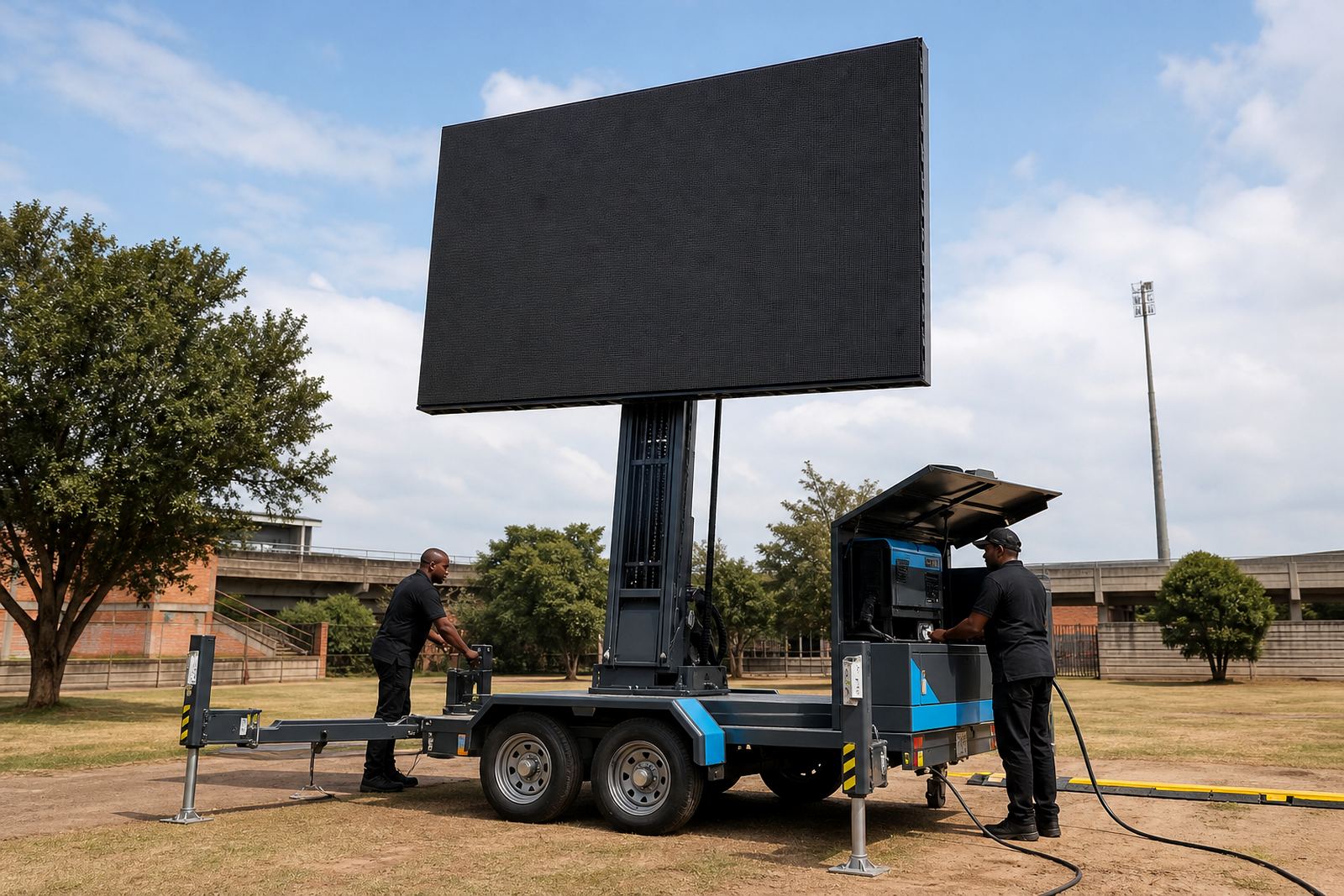
Some trailers run from their own generator, while others can tie into mains power where the site has a suitable supply. Either way, power planning needs to be matched to the screen size, playback equipment and live feed requirements. The technician also needs a clean place to load content, test loops and manage signal input without crowding the audience area.
Content should be checked before the event starts, especially where the screen will show mixed files, scheduled adverts or live camera feeds. If the brief includes audio, remote content changes or live switching, the site must allow for cable runs, safe routing and enough working space for the playback kit.
- Find out if the venue has mains power or if a generator is needed.
- Set aside a dry point for playback checks and signal handling.
- Tell us if the screen will carry still images, video or live feed.
Permits, Safety Lines and Pack Down Space
Municipal permits or venue approvals may be needed for certain public sites, road-facing positions or busy event spaces. The exact rules depend on the town, the property owner and how the screen is being used. A site with clear permission, safe access and enough room around the unit makes the whole operation cleaner from setup to pack down.
There should also be a safe operating zone around the trailer or LED box, with no crowd pressure, vehicle traffic or loose barricades inside that space. Leave space to fold everything away at the end. Once the event ends, the unit still has to lower, fold, secure and leave without fighting parked cars, broken lighting or wet ground.
If the venue has unusual rules, send the details through our contact form, including the site layout, nearest entrance and any loading limits.